Training· 4 min read
Bodyweight exercises: twelve options and progression
Bodyweight training adjusts the resistance through support, leverage, range and the chosen variation. The twelve options below span pressing, pulling, lower-body and trunk tasks. Some require suitable equipment; the list is a menu rather than a complete programme or a ranking for every person.

Certified fitness coach · CQP Instructeur Fitness
Published on
The essentials before you start.
- A bodyweight label does not mean no equipment or no fatigue.
- Record support and leverage as well as repetitions.
- There is no universal twenty-five-repetition cutoff for useful training.
- More difficult balance or a one-arm variation is not automatically better for the goal.
Ways to change demand
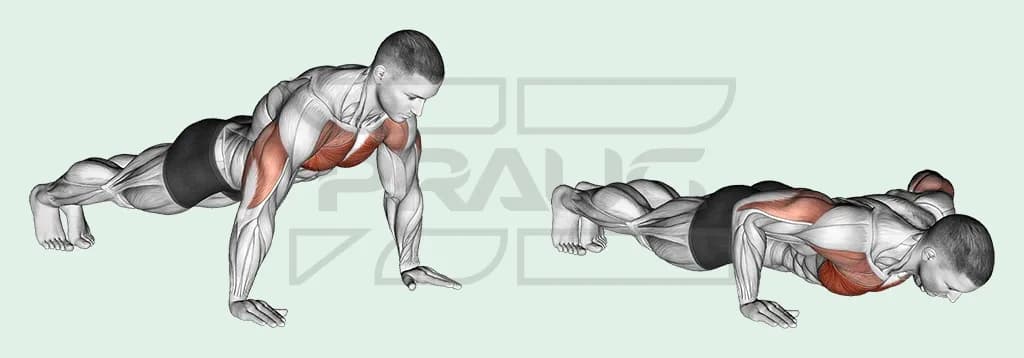
A support height or body-angle change can make a push-up or row more manageable. A pause, slower lowering phase or longer lever changes the task without an external weight. Adding repetitions remains a valid option when it suits the goal.
A harder variation is not compulsory at exactly twenty-five repetitions. Keep a repeatable range and finish point rather than changing everything while claiming progress at the same task. Rest changes density and fatigue; reducing it does not automatically measure greater strength.
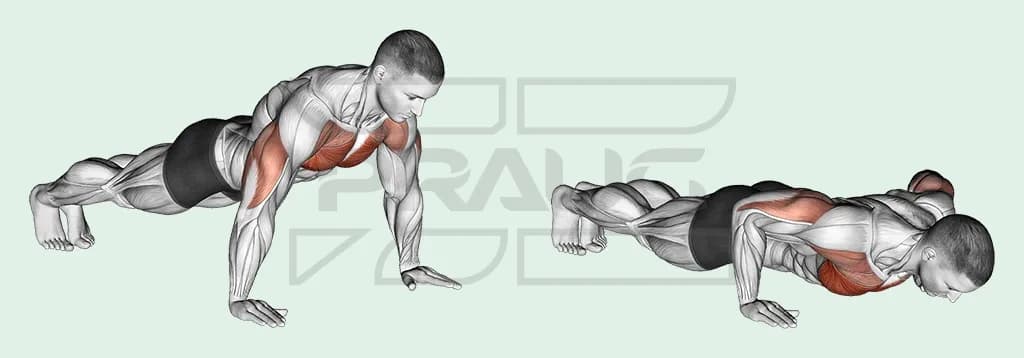
The cited four-week push-up comparison did not detect a muscle-thickness change. It therefore does not establish long-term growth equivalence for the whole menu or every trainee.
Support matters
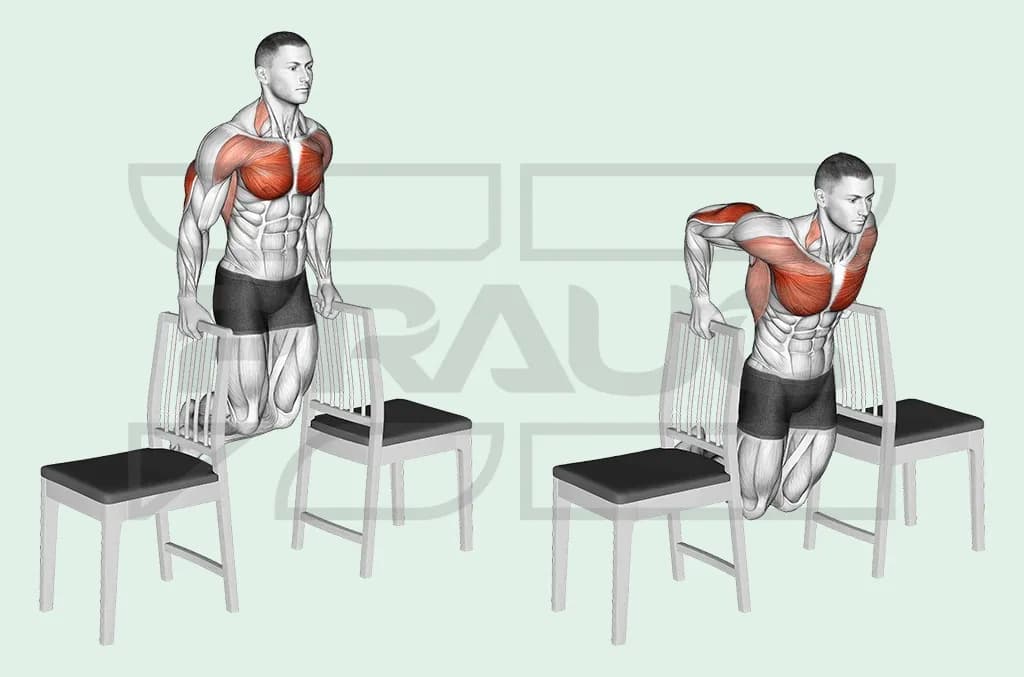
The original illustrations below include furniture-based examples. An illustration does not establish the load rating or stability of a household object. Use equipment intended for the movement, especially for rows, dips and suspended work.
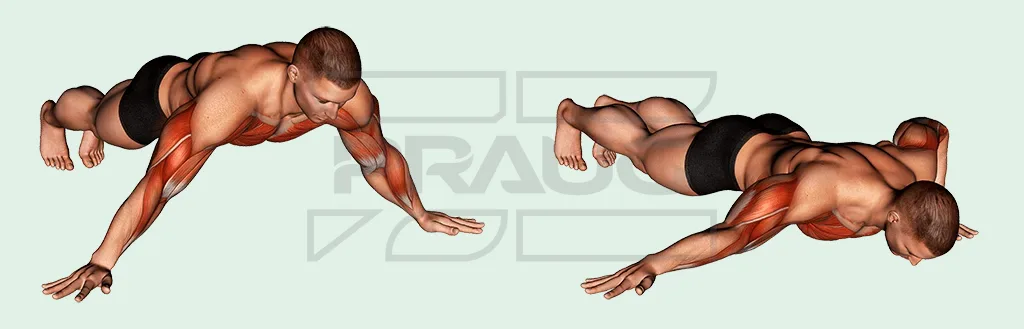
Advanced archer, one-arm, jumping or suspension tasks need their own progression. They are not mandatory stages in an equipment-free workout. Stop for sharp pain and seek individual advice for persistent symptoms.
Turn the menu into sessions
Choose a small number of tasks and a manageable weekly amount. A full-body structure can include pressing, a suitable pull if equipment is available, lower-body work and a trunk task. A PPL split is another organisation choice, not a proven superior route.
A circuit alternates tasks with planned rest. An EMOM assigns a manageable amount at the start of each minute and uses the remaining time as rest; do not race technique just to earn more seconds. These formats emphasise different constraints and are not complete measures of progress.
See the home programme, beginner calisthenics plan and equipment guide to choose a structure and setup.
Illustrated movement examples
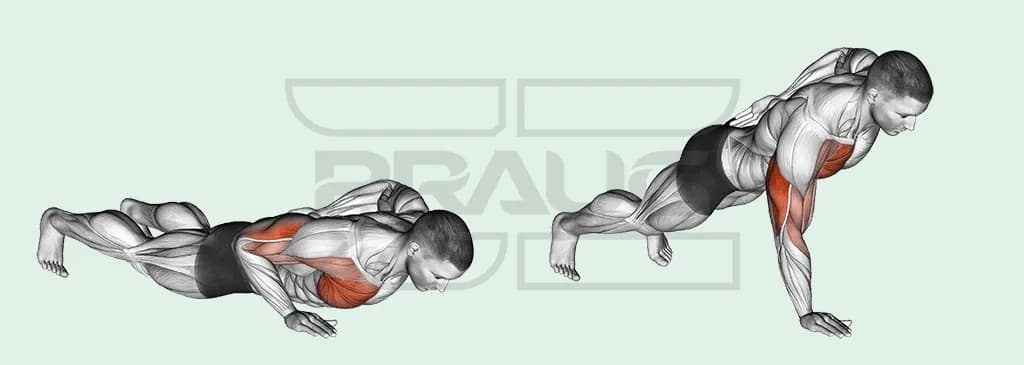
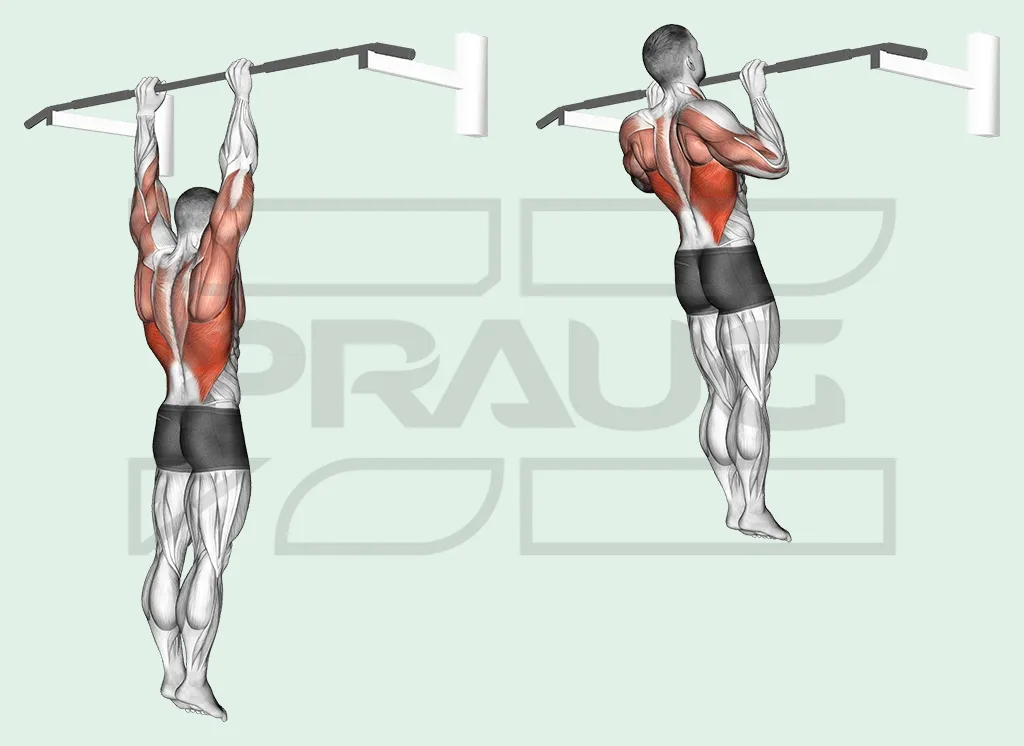
The original illustrations are retained. Furniture shown in an image is not proof of a suitable load-bearing support; choose purpose-built equipment and the controlled setup described above.
Movement example 1
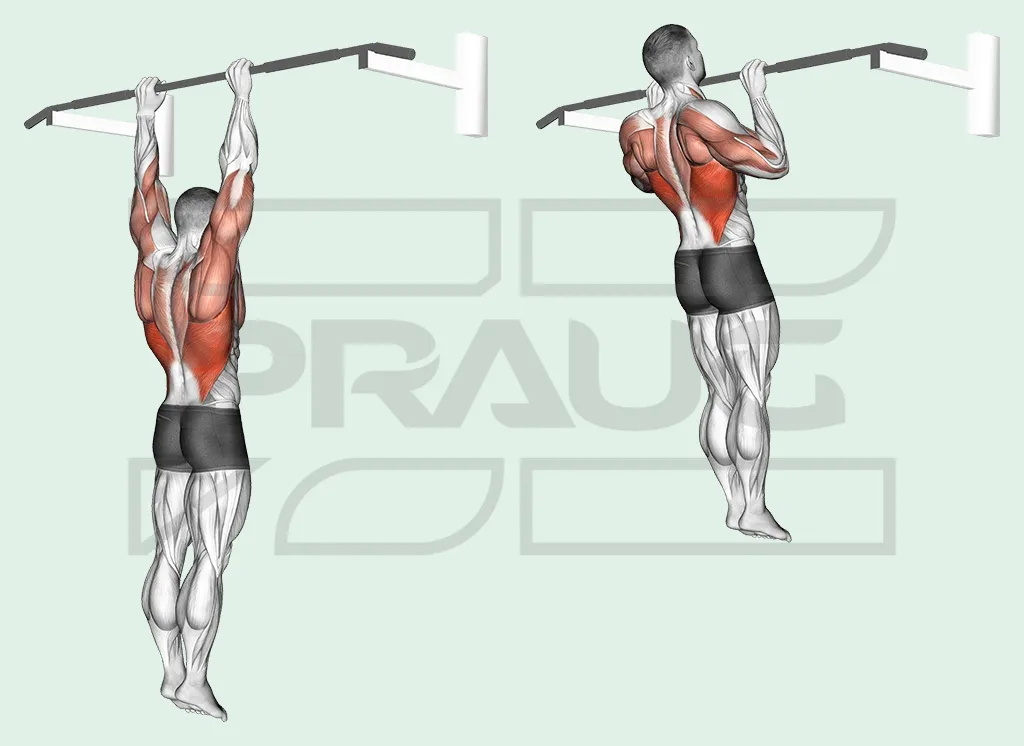
Movement example 2
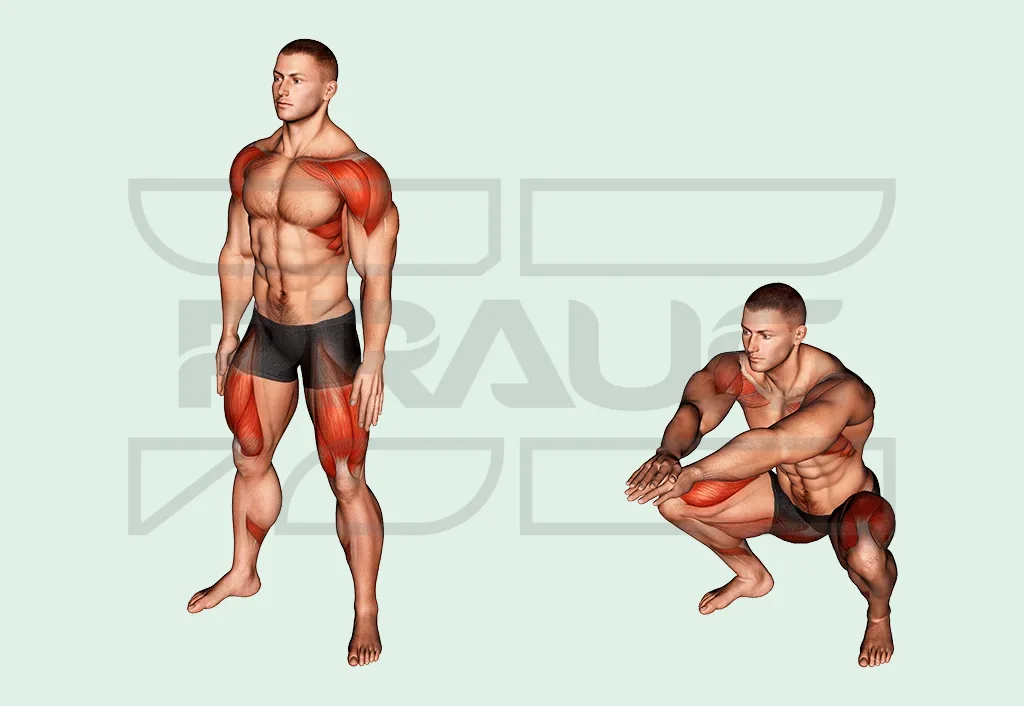
Movement example 3
Movement example 4
Movement example 5
Movement example 6
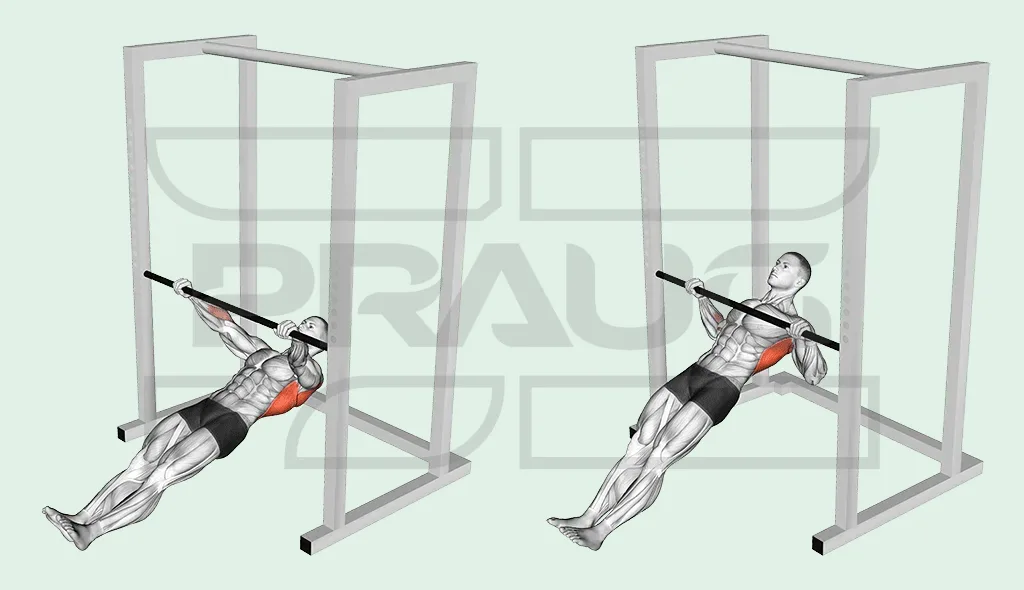
Movement example 7
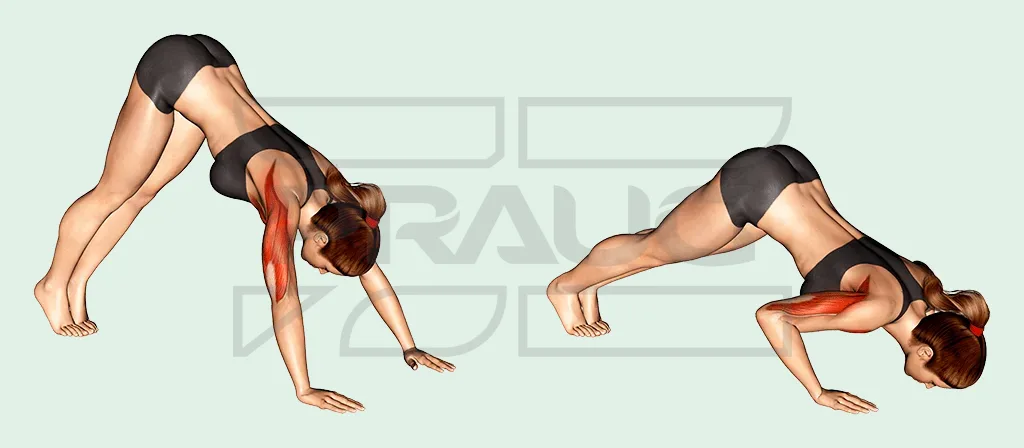
Movement example 8
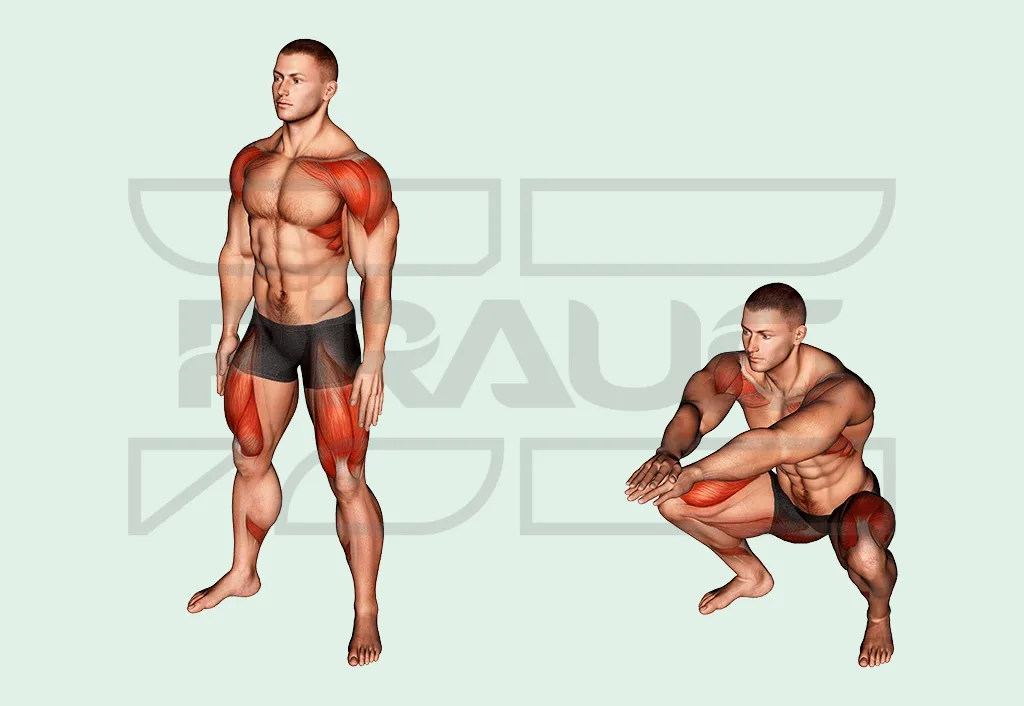
Movement example 9
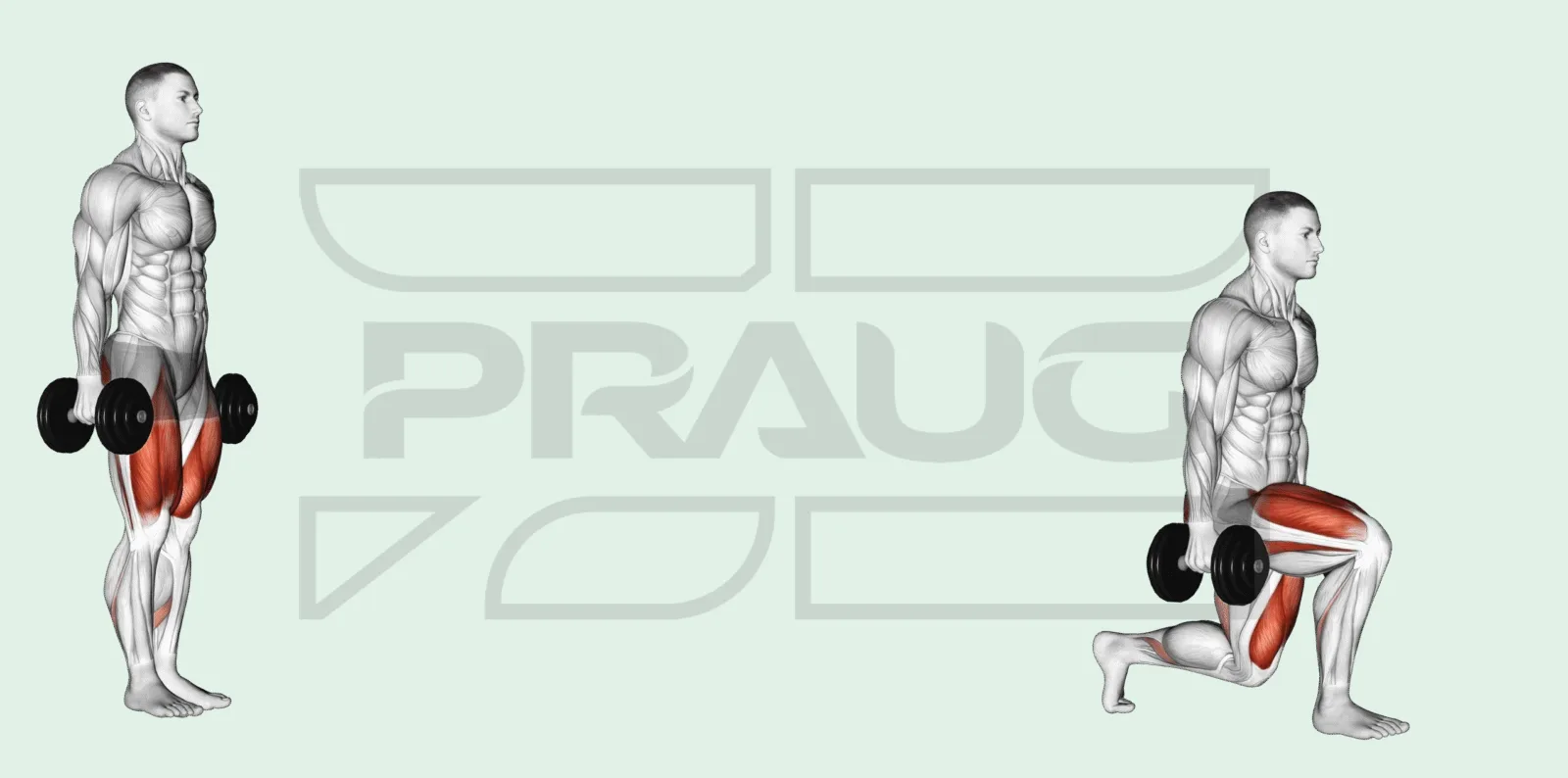
Movement example 10

Movement example 11
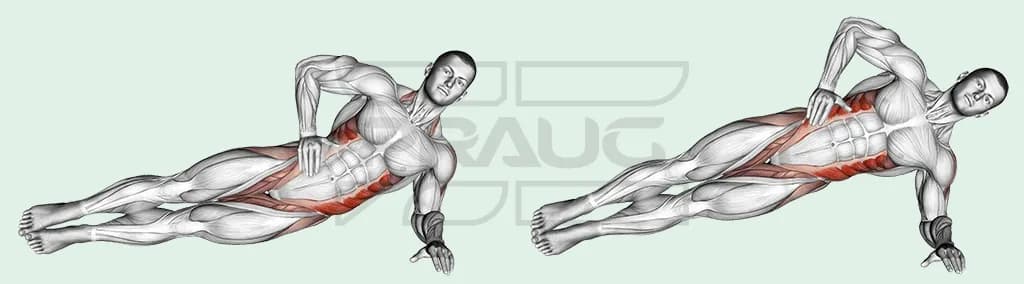
Movement example 12
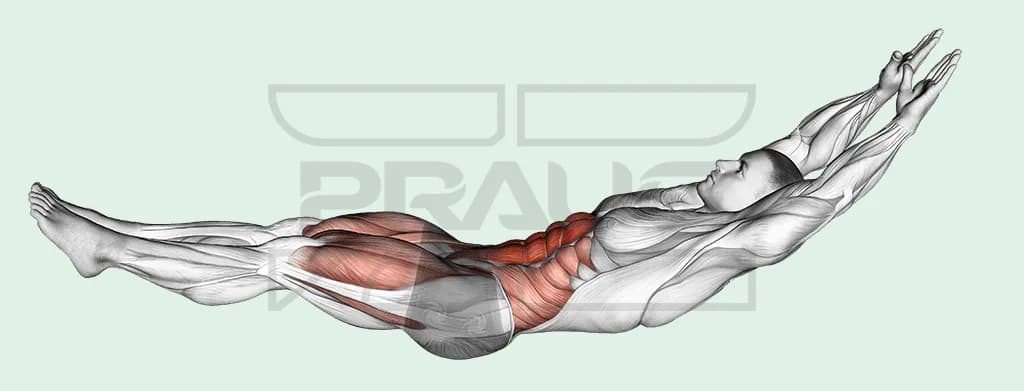
Frequently asked questions
Can I train without external weights?
Yes, by choosing and progressing suitable bodyweight tasks. Some useful pulling and supported pressing options still require appropriate equipment.
Do I need all twelve exercises?
No. It is a menu, not one compulsory workout.
Should I stop adding repetitions at twenty-five?
No universal cutoff applies. Choose repetitions or another progression according to the task and goal.
Is a row under furniture equivalent to a safe gym row?
The movement still requires an appropriate load-bearing support. A picture of furniture is not evidence that your furniture is suitable.
Sources and limitations
Sources support the passages that cite them. Practical suggestions are coaching choices to adapt to your own situation.
- Kotarsky et al. · 2018 · Short progressive push-up training trial. ↗
Strength outcomes do not validate this whole plan or establish long-term hypertrophy equivalence.
This general information does not replace individual advice. Zepraug’s limitations.