Training· 4 min read
Pike push-up: setup, technique and progression
Other names: Inverted-V push-up
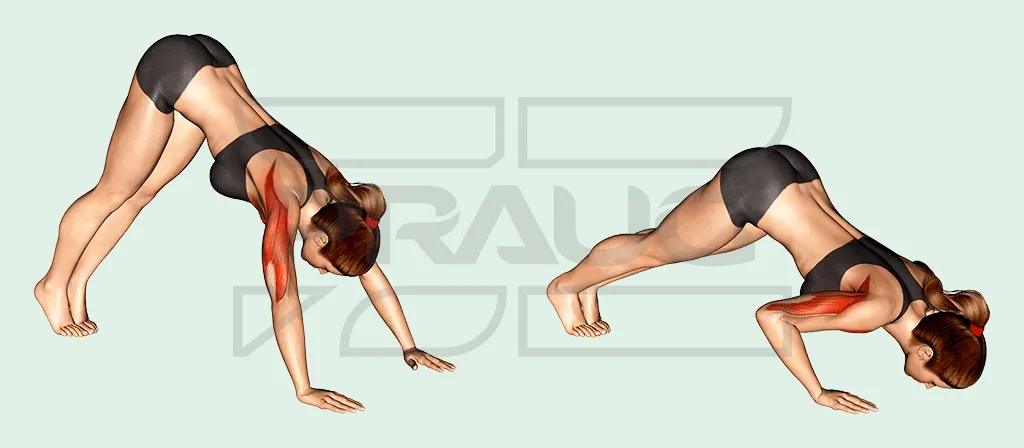
A pike push-up presses through the hands with the hips raised in an inverted-V shape. It changes the shoulder angle and support relative to a standard push-up. Keep the head clear of the floor and choose a range that can be controlled; a near-floor repetition is not required.

Certified fitness coach · CQP Instructeur Fitness
Published on
The essentials before you start.
- Use secure support and practise the pickup and return.
- Keep the intended arm path and range repeatable.
- Research results apply to specific tasks and measured outcomes.
- Choose the workload within the whole week.
Exercise facts
- Main muscles
- Anterior deltoid, Triceps
- Secondary muscles
- Lateral deltoid, Upper trapezius, Serratus anterior, Pectoralis major, clavicular portion, Abdominals
- Equipment
- Bodyweight
What the movement trains
The shoulders and triceps contribute to pressing while the trunk and hips maintain position. The feet still share support. A more vertical torso changes the demand but does not convert body mass into an equivalent barbell load.
Set up and perform the movement
- Use a clear non-slip surface and secure hand and foot contact. Start with a manageable range.
- Raise the hips into an inverted V, bending the knees as needed instead of forcing straight legs or heels onto the floor.
- Choose hand spacing and an elbow path that permit control. There is no fixed elbow angle that fits everyone.
- Bend the elbows and lower the head forwards and downwards along a clear path, keeping the hips at the intended height.
- Stop before the head or neck takes load. Press back smoothly without collapsing onto the floor.
- Return to secure support before fatigue makes the next repetition or exit uncertain.
Range, support and control
Hand elevation on equipment intended for the task or a shorter range can change demand. Foot elevation adds a separate balance and access challenge and needs a stable exercise support. A headstand, handstand or floor-touch depth is not a required milestone.
Keep the intended support and path
These are coaching adjustments, not a validated progression ladder or individual diagnosis.
| Change noticed | What it changes | Possible adjustment |
|---|---|---|
| Hips drop during lowering | Body angle and load distribution change | Use a shorter range or manageable elevation and restore the intended hip position |
| Elbows flare beyond the chosen path | The shoulder task changes | Use a comfortable repeatable hand and elbow path rather than forcing a universal angle |
| Head path is blocked | Clearance and balance are reduced | Allow a clear forwards-and-downwards path, reducing range as needed |
| Torso shape changes suddenly | The intended support changes | Reduce demand and retain a controllable trunk position |
| Descent becomes a fall | The bottom and exit cannot be controlled | End the set or reduce demand |
| Head or neck takes support | The task becomes a different loaded position | Stop before contact; no near-floor depth is required |
What the cited research supports
The shoulder-activity study did not test pike push-ups. The four-week push-up trial studied progressive standard push-ups versus bench pressing, finding strength improvements without detected thickness changes. Neither establishes pike-specific growth, exact equivalence to pressing or a mandatory handstand progression.
Variations and alternatives
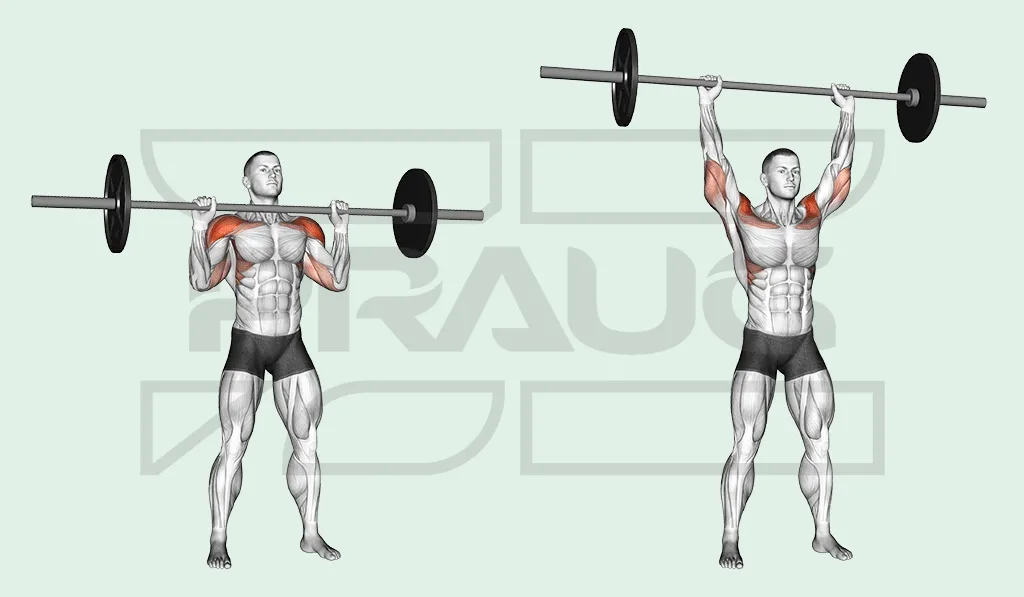
A standard push-up changes body angle. A barbell overhead press uses external load and a different support arrangement. Choose by the task and controllable handling.
Sets, progression and tracking
One option is 2–4 short sets of 4–10 controlled repetitions at an appropriate range, with enough rest to retain the position. Use fewer repetitions if learning. Record hand and foot height, range, stance and effort alongside the rest of the week’s pressing.
Illustrated positions and options
The images show example positions rather than individual range or load prescriptions. Bench adaptations require stable equipment intended for the task.
Illustrated option 1
Illustrated option 2
Frequently asked questions
Must my head nearly touch the floor?
No. Use a range that keeps the head and neck unloaded and lets you return securely. More depth is not automatically progress if control changes.
When should I add demand?
When the chosen setup, range and effort are repeatable and the next increment is manageable. Record changes rather than comparing different tasks as if they were identical.
Sources and limitations
Sources support the passages that cite them. Practical suggestions are coaching choices to adapt to your own situation.
- Campos et al. · 2020 · Brief activity comparison of presses, flyes and lateral raises in thirteen trained men. ↗
Neither front raises nor pike push-ups were tested; not a long-term growth or workload trial.
- Kotarsky et al. · 2018 · Four-week progressive push-up versus bench-press training trial in twenty-three men. ↗
Strength improved without detected thickness changes; no pike-specific growth or handstand-progression comparison.
This general information does not replace individual advice. Zepraug’s limitations.