Training· 6 min read
Push-up: technique, easier options and progressions
Other names: Press-up
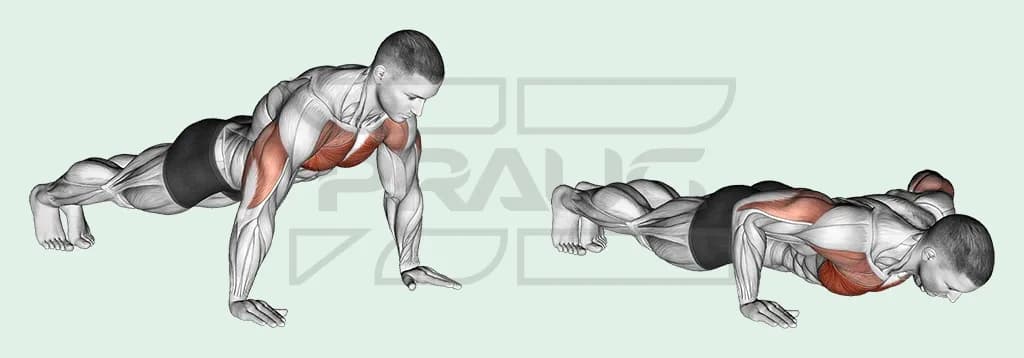
A push-up is a horizontal press in which you lower and raise your body through the arms while keeping the trunk controlled. The chest, triceps and front of the shoulders contribute. Hands on a stable raised surface make it easier; feet raised generally increase the load through the hands.

Certified fitness coach · CQP Instructeur Fitness
Published on
The essentials before you start.
- Choose a version that lets you lower and press without the hips sagging or the head reaching forwards.
- Raise the hands on a secure support to reduce difficulty; lowering that support offers a gradual progression.
- Small trials support push-ups as a training option, without proving every variation equivalent to heavy bench pressing.
- Progress the task when useful; twenty repetitions is not a biological boundary between endurance and muscle growth.
Exercise facts
- Main muscles
- Pectoralis major
- Secondary muscles
- Triceps, Anterior deltoids, Serratus anterior, Abdominals
- Equipment
- Bodyweight, Stable floor
Muscles worked and what the studies establish
The pectoralis major moves the upper arm across the body, the triceps extend the elbows and the anterior deltoids assist. The serratus anterior helps control shoulder-blade movement. The abdominal, hip and leg muscles help keep the body position. A push-up therefore combines pressing with a sustained support task.
An eight-week trial in 18 young men compared adjusted push-ups with low-load bench pressing and found similar improvements in the measured outcomes. A separate four-week trial in 23 men found strength improvements without a detectable change in muscle thickness. Neither establishes that all push-ups and bench-press programmes are interchangeable.
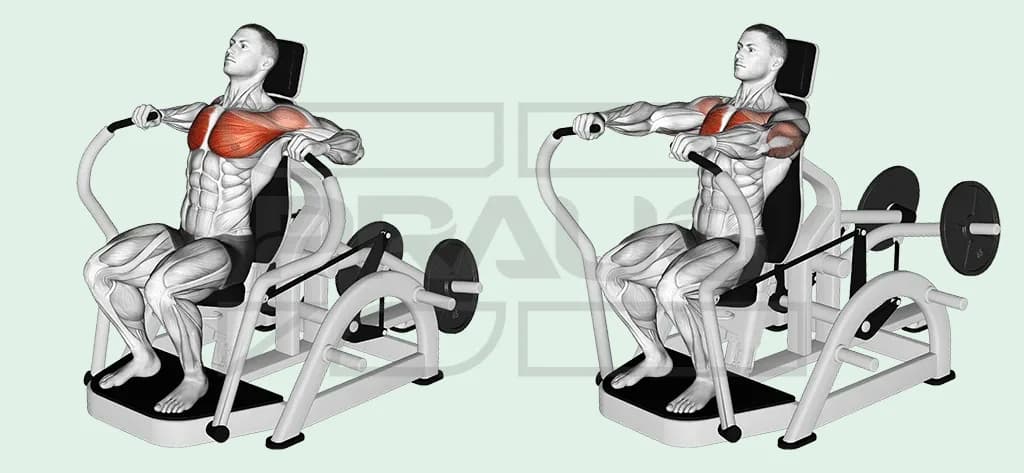
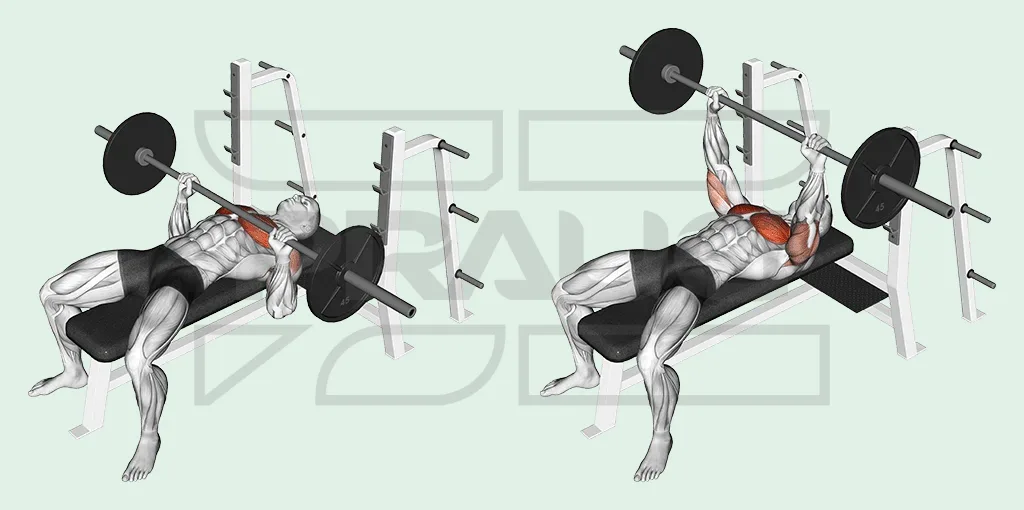
For other setups, compare the barbell bench press and machine chest press. Choose for equipment, practice goals and progression rather than declaring one universally superior.
How to perform a floor push-up
Begin with an incline version if holding and moving from the floor is currently too demanding. Choose a firm, non-slip surface with room to finish the set.
- Place the hands around shoulder width or a little wider, fingers spread, then step the feet back.
- Set a repeatable line through the head, trunk and hips. Look towards the floor rather than lifting or dropping the chin.
- Bend the elbows and lower the chest between the hands, allowing the shoulder blades to move. An elbow path diagonally back from the torso is a useful starting cue, not an exact angle everyone must copy.
- Use a controlled depth you can repeat without pain. Do not reach the floor by dropping the head or hips.
- Press through the hands and let the shoulder blades move around the rib cage as you return. Avoid holding them forcibly squeezed together.
- End the set when the chosen range or body position changes substantially. Breathe in a rhythm you can maintain.
Hands raised or feet raised?
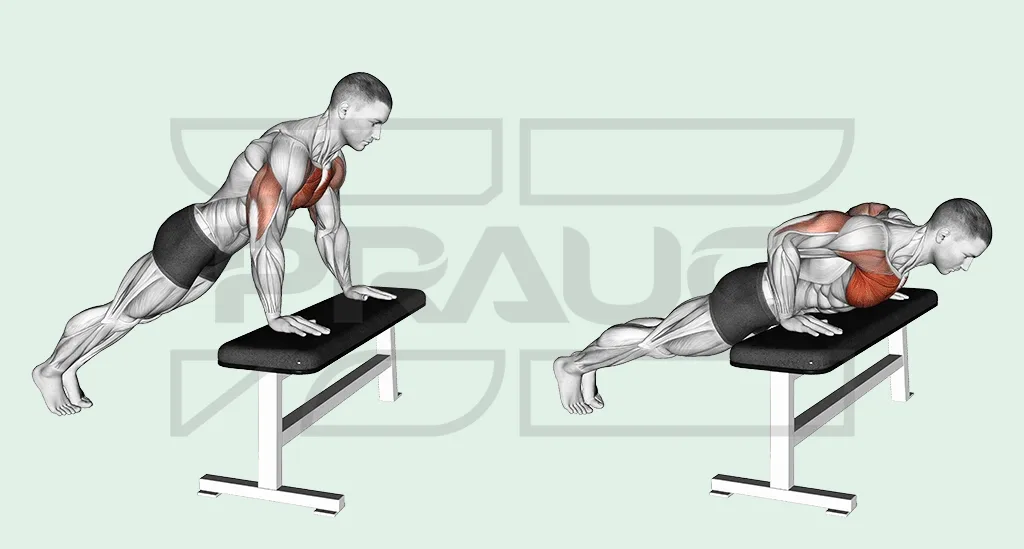
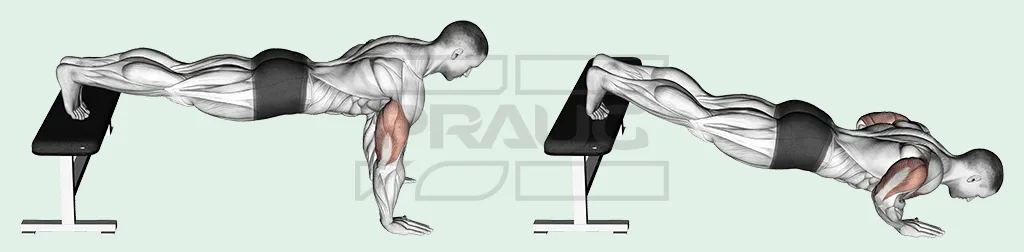
For an incline push-up, put the hands on a stable bench or other support designed to bear the load, with the feet on the floor. The force-platform study cited here found less force through the hands in the tested raised-hand conditions. Use the same support height when comparing sessions.
Lower the support in manageable stages as the existing version becomes repeatable. A kitchen table or movable chair is not automatically a suitable substitute for exercise equipment.
In a decline push-up the feet are raised and the hands remain lower. This increases the demand through the arms in the tested setups and changes the pressing angle. It does not prove a particular upper-chest growth advantage. Additional hand supports change the range as well: use secure equipment and avoid chasing depth you cannot control.
Tempo, added resistance and one-arm variations
A slower lowering phase or a brief pause can make the same setup more demanding and help you notice position changes. These are options, not requirements for every repetition. Added resistance also needs a secure method rather than a loose weight balanced on your back.
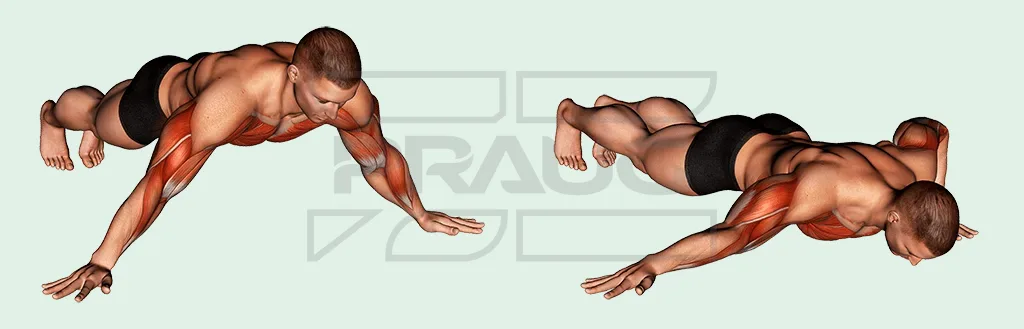
An archer push-up shifts more demand towards one arm while the other provides assistance from a wider position. A one-arm push-up adds a substantial pressing and rotational-control demand. They are separate skills with adjustable progressions; there is no guaranteed timetable from floor push-ups to either version.
The original illustrations below include advanced options. They do not imply that everyone needs to reach them or that the pictured technique suits every individual.
Common errors and useful adjustments
Watch for a sagging trunk, the hips rising before the chest, repeated neck reaching or a steadily shorter range. Reduce the difficulty or stop the set when you can no longer repeat the intended movement. A faster or shorter repetition is a different comparison in the log.
For wrist discomfort, a suitable push-up handle can change the wrist angle. Any support must be stable and intended for the task; rounded dumbbells can roll. A different handle is not a guaranteed treatment. Stop for sharp pain and seek individual advice for persistent symptoms.
Prepare with manageable movements and easier practice sets. Fatiguing the shoulders before the main work is not the aim of a warm-up.
Sets, repetitions and progression
One coaching example is 3–5 sets, two or three times weekly, with a variation allowing roughly 8–20 controlled repetitions. Adjust the amount to your experience, recovery and other pressing. You do not need to take every set to failure.
Record hand height, foot height, range, repetitions and perceived effort. Add repetitions or change one difficulty setting when the existing task remains repeatable. Higher-repetition work is not automatically incapable of contributing to muscle growth, and a harder variation is not compulsory at exactly twenty repetitions.
Place push-ups early when improving this skill is the priority, or later when they are additional pressing work. Account for bench pressing and other overlapping work rather than adding the full example on top of every session.
Illustrated positions and variations
These illustrations show example positions and options. Choose a setup and difficulty you can control.
Hands-elevated push-up
Feet-elevated push-up
Advanced push-up options
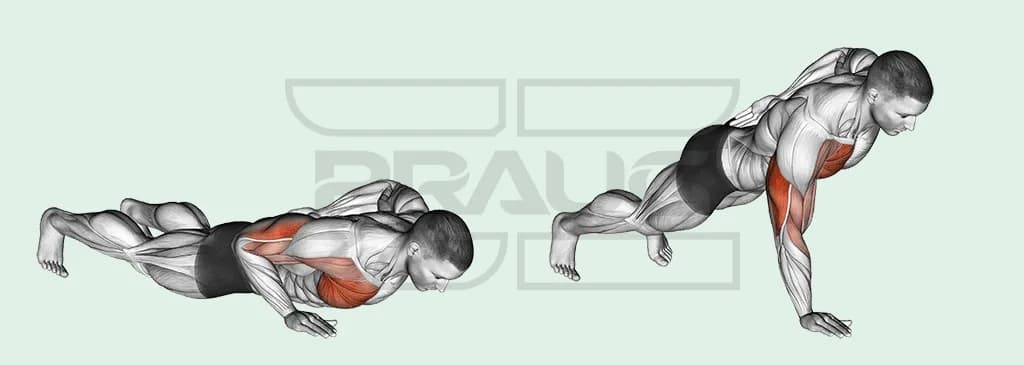
Frequently asked questions
How many push-ups should I do each day?
There is no required daily total. Choose a manageable weekly amount and a version you can progress, accounting for other pressing and recovery.
Are hands-on-bench push-ups easier?
Generally yes in the tested setups. Feet on a bench have the opposite effect. Record which part is raised and the support height.
Do I have to touch the floor?
Choose a controlled, repeatable depth for your current setup. Do not force floor contact by losing body position or working through pain.
Can push-ups build chest muscle?
They can provide progressive pressing resistance. The small trials support that use under their tested conditions, rather than proving equivalence for every trainee or programme.
Must I keep my shoulder blades pinned back?
No. They move with the arms and around the rib cage. Keep the movement controlled instead of forcing one fixed position.
Sources and limitations
Sources support the passages that cite them. Practical suggestions are coaching choices to adapt to your own situation.
- Kikuchi et al. · 2017 · Low-load bench pressing and adjusted push-up training over eight weeks. ↗
Small sample of young men and a specific low-load protocol. It does not establish equivalence for every variation, heavy programme or experienced trainee.
- Kotarsky et al. · 2018 · Progressive push-up and bench-press training over four weeks. ↗
Twenty-three men completed the short trial. Strength improved but muscle thickness did not detectably change; this is not evidence of equal hypertrophy.
- Ebben et al. · 2011 · Force-platform comparison of six push-up setups. ↗
Acute force measurements in 23 adults, not a trial of muscle growth, individual comfort or injury risk.
This general information does not replace individual advice. Zepraug’s limitations.