Training· 6 min read
Barbell bench press: setup, grip and controlled technique
Other names: Bench press, Flat bench press
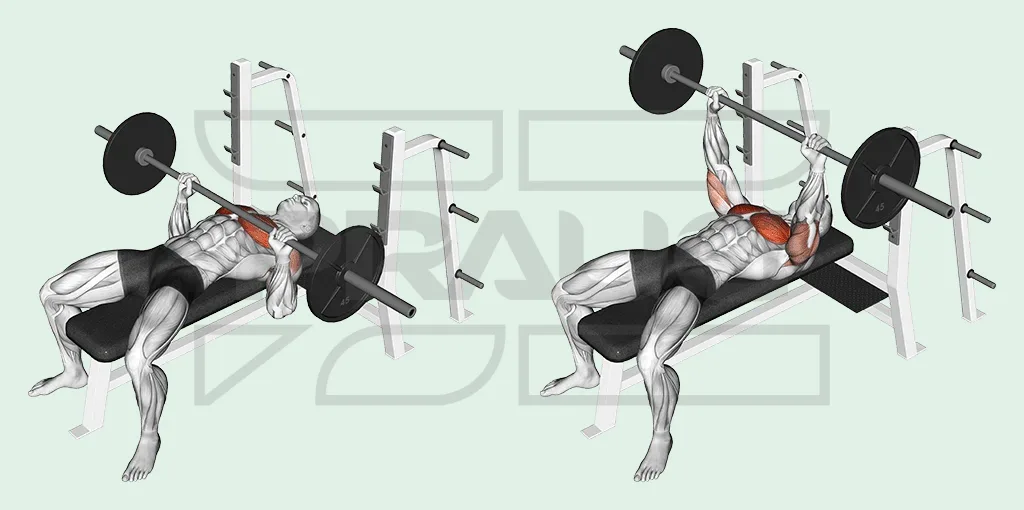
In a barbell bench press, you lower a bar towards the chest while lying on a flat bench, then press it back above you. The chest, triceps and front of the shoulders work together. Begin with a secure rack setup, a full grip and a range you can repeat without bouncing or losing your support.

Certified fitness coach · CQP Instructeur Fitness
Published on
The essentials before you start.
- Set and test the rack, safeties and unracking position before a demanding set.
- Use a full grip and a hand spacing that supports a controlled wrist and elbow position.
- A lightly controlled chest touch is a common reference, not a depth to force through pain.
- Bench angle and grip alter the task; acute muscle activity does not establish an optimal injury-proof technique.
Exercise facts
- Main muscles
- Pectoralis major, Triceps, Anterior deltoids
- Secondary muscles
- Serratus anterior, Trapezius, Latissimus dorsi
- Equipment
- Barbell, Flat bench, Rack and appropriate safeties
Muscles worked and the limits of comparisons
The pectoralis major moves the upper arm, the triceps extend the elbow and the anterior deltoid assists at the shoulder. The upper back, trunk and lower-body support help organise a stable pressing position. Contributions vary with technique, load and individual proportions.
The cited bench-angle study measured electrical activity in one session across five inclinations. The biomechanics paper examined joint demands and the importance of lateral forces at the bar. Neither measured long-term growth or injury rates. They do not establish a single best grip or an angle that protects every shoulder.
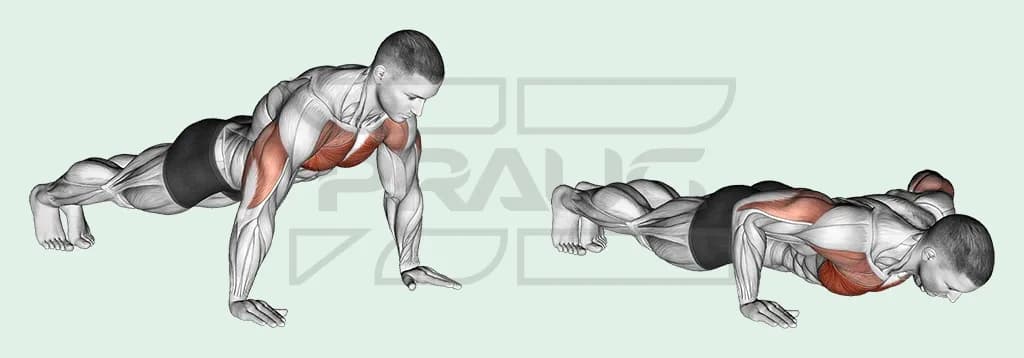
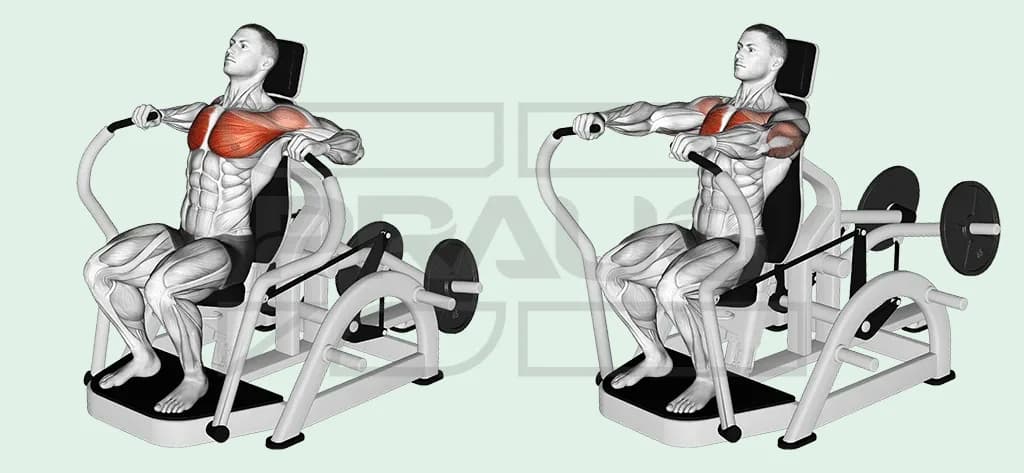
Compare the task with a machine chest press or push-up in the chest collection. The equipment changes support and progression options, not whether the chest can work at all.
Prepare the rack and the set
Use equipment intended for bench pressing. Check the bench position, rack height and safeties with an empty or light bar. A spotter needs to know when and how you want assistance.
- Lie with the eyes approximately under the racked bar and the feet on stable support. Keep the buttocks in contact with the bench.
- Organise a comfortable upper-back position against the bench. A natural back arch is one setup option; do not force a maximal arch.
- Grip the bar with thumbs around it. Start a little wider than shoulder width, adjusting so the wrists and forearms support the bar through the intended range.
- Unrack under control without losing the setup, using an agreed handoff if needed. Settle the bar above the chest before lowering.
- Lower smoothly towards a consistent point on the chest. A diagonal elbow path is a useful starting cue; exact angles vary with grip and proportions.
- Touch lightly if that range is comfortable, without bouncing. Press upwards and slightly back towards the starting position while keeping your supports.
- Finish with control, then guide the bar fully into the rack. Do not reach for the hooks before the bar is stable.
Range, shoulder position and breathing
A repeated chest touch offers a clear range reference. If you cannot use it comfortably, reduce the load, adjust the task or choose another press rather than forcing the depth. A different tool may help you find a usable movement, but it is not a guaranteed treatment.
The shoulder blades provide contact with the bench; a cue to organise them is not proof of injury prevention. Avoid letting the bar drift towards the face, bouncing it, or lifting the buttocks to finish a repetition that was meant to use a different position.
Use breathing you can maintain. This guide does not prescribe prolonged breath-holding or a maximal bracing strategy. Follow individual medical advice about straining or breath-holding where applicable.
Incline, decline, Smith machine and dumbbells
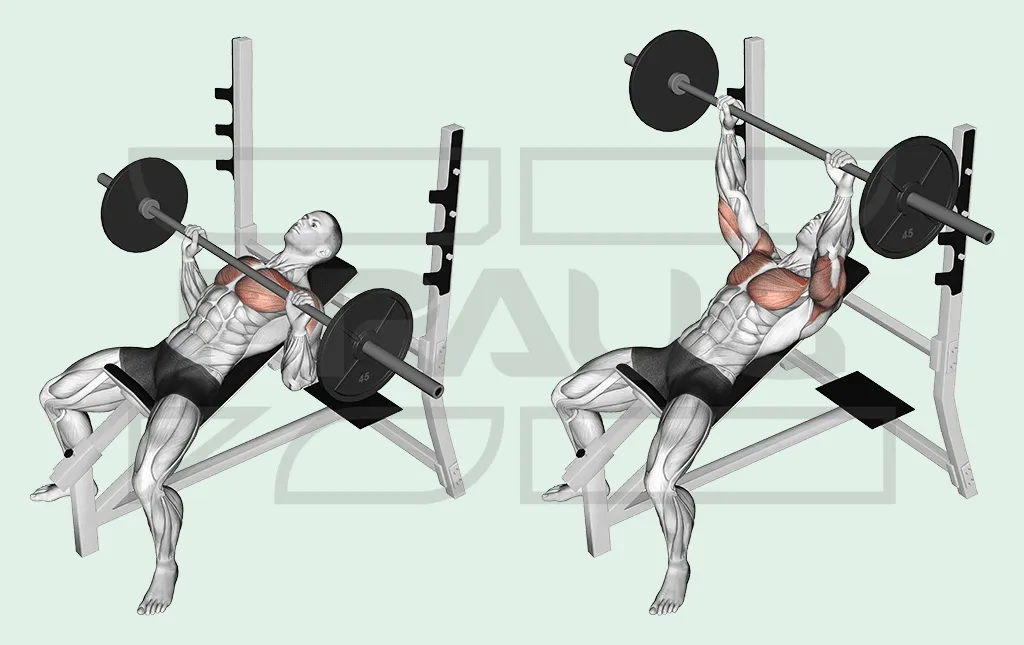
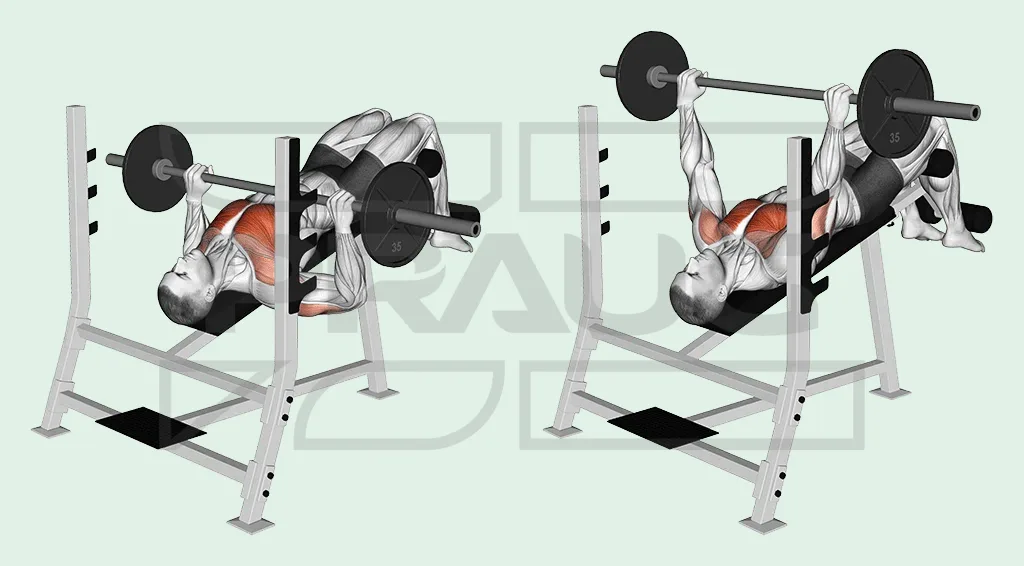
An incline raises the backrest; a decline places the head below the hips with suitable leg support. Both change the pressing angle and setup. Muscle-activity differences in an acute experiment are not proof that a specific angle produces the most long-term growth.
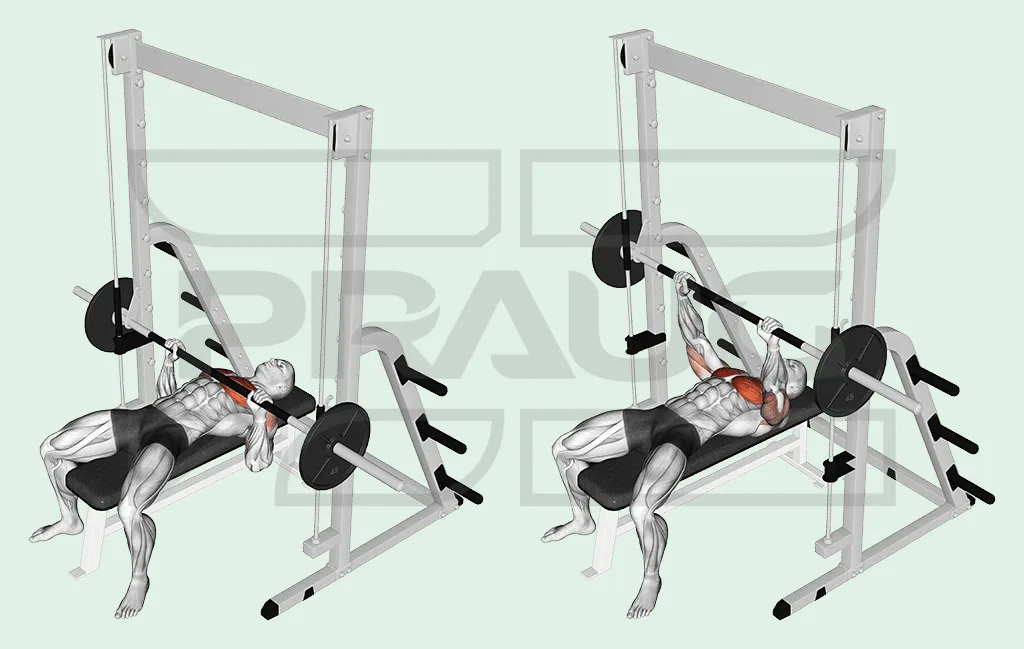
A Smith machine constrains the bar path and has its own hook and stop system. Position the bench for that path and check the stops; rails do not make failed repetitions automatically harmless.
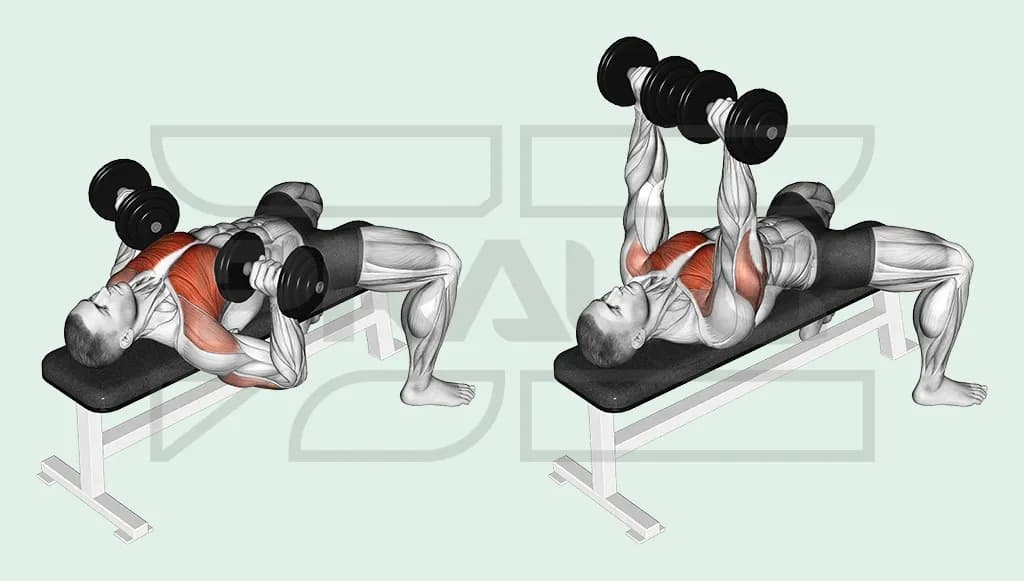
Dumbbells let the hands move independently and alter the start and finish demands. A close-grip barbell press changes the leverage and elbow task. These are options for a purpose, rather than variations that all need to appear in one session.
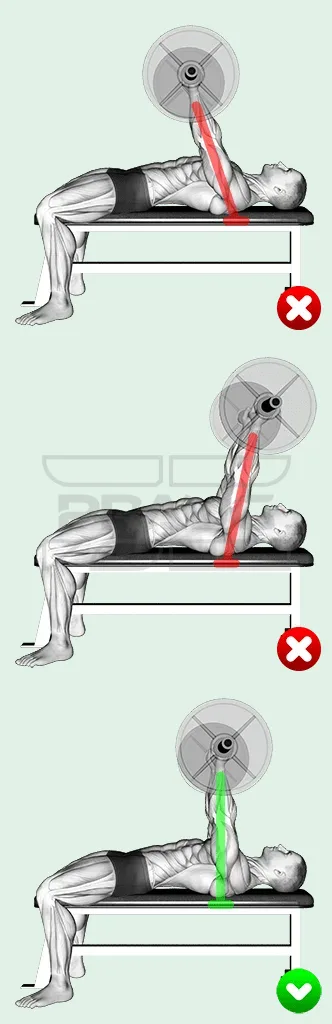
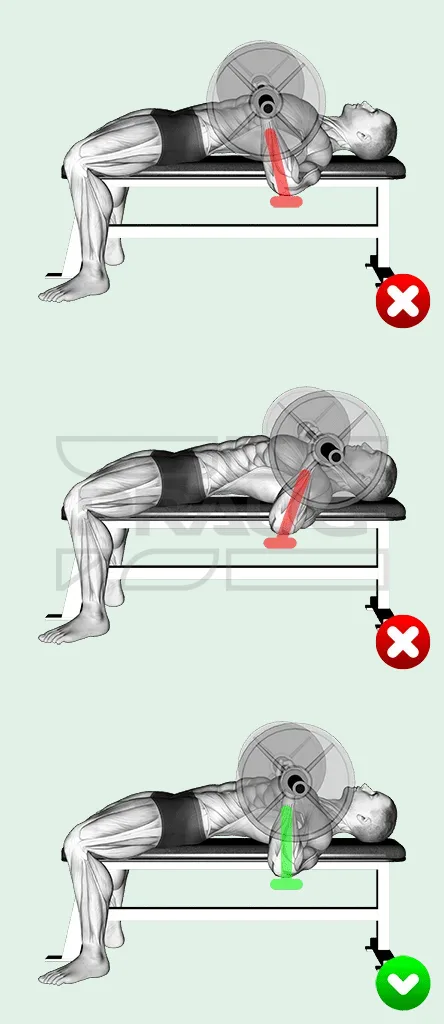
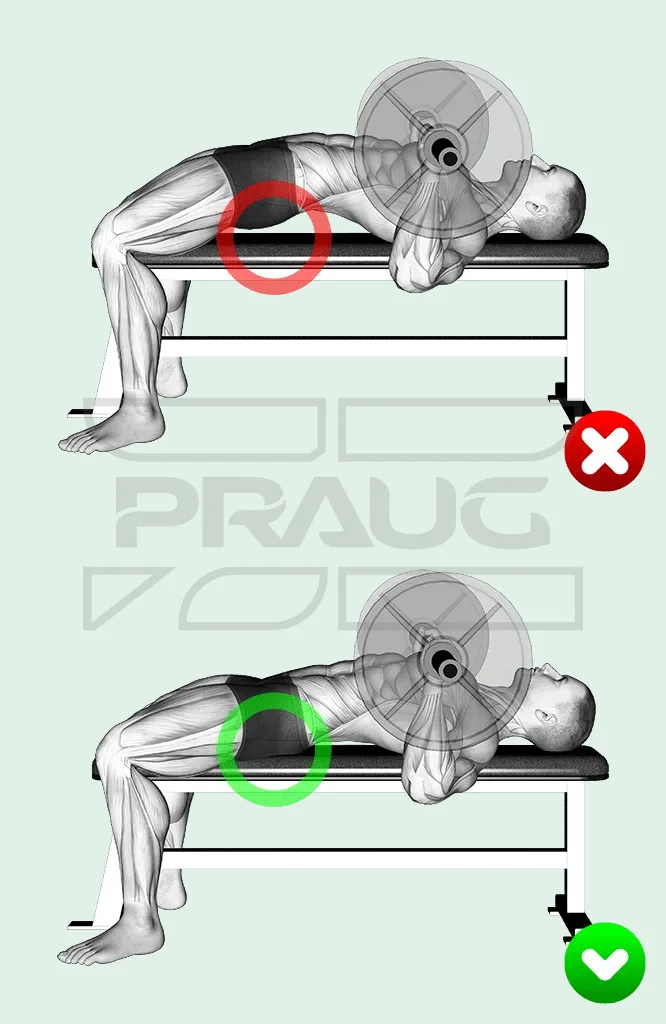
The original diagrams below illustrate arm, forearm and buttock positions alongside several press variants. Treat the alignment cues as practical examples rather than a diagnostic test of whether someone is safe to lift.
Sets, repetitions and progression
Coaching examples include 3 sets of 8–12 repetitions for a beginner and 3–4 sets of 6–10 for muscle-focused work, with longer rest for demanding sets. Choose an amount appropriate to current skill and the rest of the week; these examples are not doses proved by the cited biomechanics studies.
Practise the bench press early when it is the priority. Leave some repetitions possible while learning the setup. Use appropriate safeties or assistance rather than assuming you can always rescue a failed rep.
Build repetitions within your chosen range, then consider a manageable load increment. A possible increment is 1–2.5 kg, but equipment increments and your response vary. Do not assume that one stalled session diagnoses weak triceps or a need for more volume. Compare several sessions, setup, fatigue and consistency first.
Illustrated positions and variations
These illustrations show example positions and options. Choose a setup and difficulty you can control.
Starting arm position
Forearm support
Contact with the bench
Incline barbell press
Decline barbell press
Smith-machine press
Dumbbell bench press
Frequently asked questions
How wide should I grip the bar?
A little wider than shoulder width is a starting point. Adjust for your proportions and a controlled wrist, forearm and elbow position instead of copying an exact width.
Does the bar have to touch my chest?
A light touch is a common reference. Do not bounce or force a painful depth; adapt the range or movement and seek advice for persistent symptoms.
Should I arch my back?
A comfortable natural arch can be part of the setup. An extreme competition arch is a different technique choice, not a requirement for ordinary training.
Is a Smith machine safe without a spotter?
Check that model’s hooks, stops, bench position and exit method. A guided bar does not eliminate the consequences of a failed repetition.
What if my bench press stops improving?
Review consistent technique, training demand, recovery and several sessions of data before changing everything or assuming one muscle is the cause.
Sources and limitations
Sources support the passages that cite them. Practical suggestions are coaching choices to adapt to your own situation.
- Rodríguez-Ridao et al. · 2020 · Muscle activity across five bench inclinations. ↗
Thirty trained adults tested in one session at moderate load. No long-term hypertrophy or injury outcome was measured.
- Mausehund et al. · 2022 · Bench-press biomechanics including lateral forces at the bar. ↗
Acute joint-demand and muscle-activity analysis, not proof of one universally optimal grip, growth outcome or injury-prevention technique.
This general information does not replace individual advice. Zepraug’s limitations.