Training· 6 min read
Machine chest press: seat height, grip and technique
Other names: Seated chest press, Vertical chest press
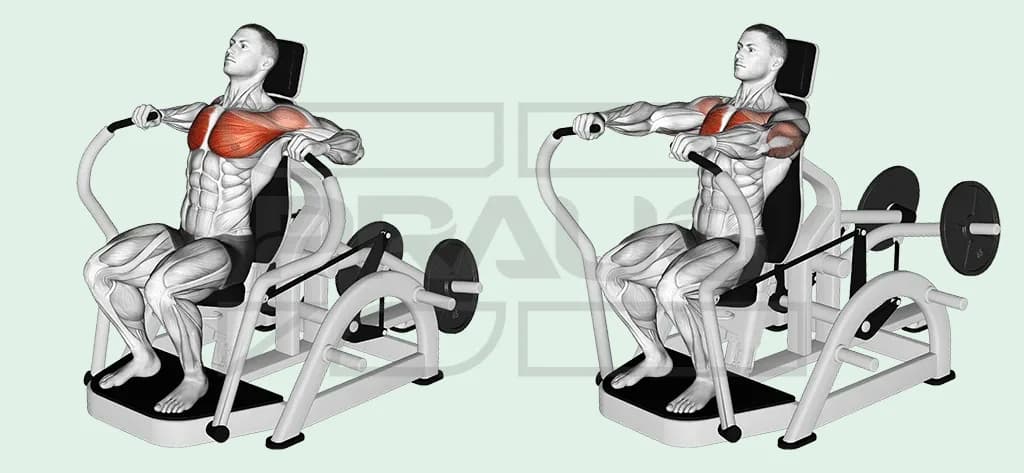
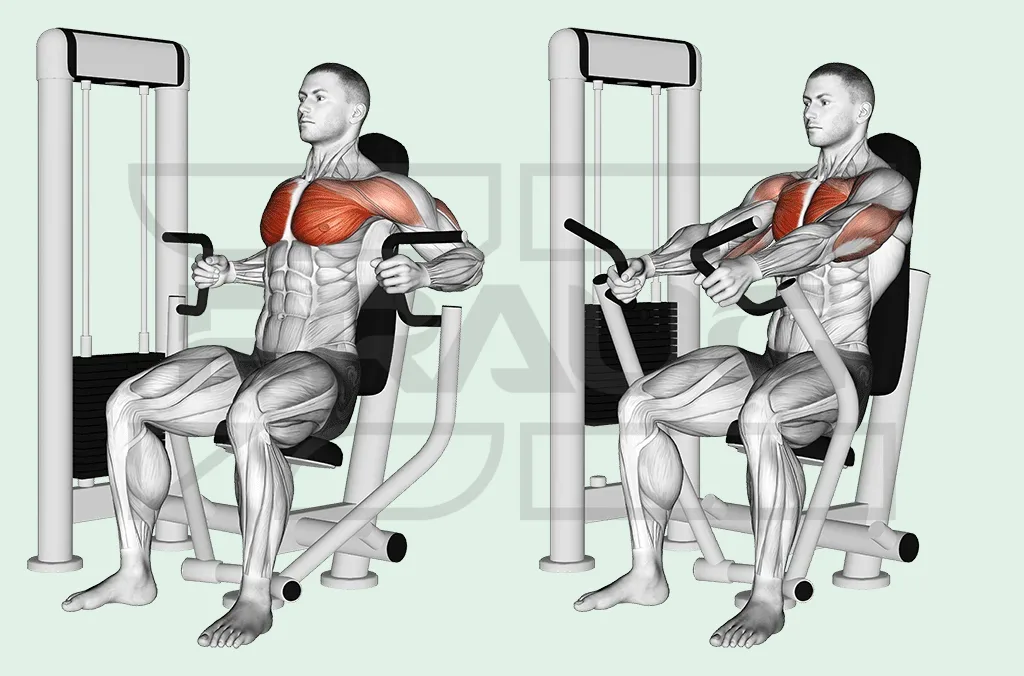
A machine chest press is a seated press along the machine’s path. The chest, triceps and front of the shoulders work together. Adjust the seat and starting position before loading, so you can press and return through a controlled range without being pulled into an uncomfortable shoulder position.

Certified fitness coach · CQP Instructeur Fitness
Published on
The essentials before you start.
- Start with the handles around chest height, then adapt to the machine instructions and your proportions.
- Check both the starting depth and how you will finish the set. A guided path does not remove every risk.
- Neutral and overhand grips change hand and elbow positions; choose a usable setup.
- Compare progress on the same machine: stack numbers are not directly interchangeable between models.
Exercise facts
- Main muscles
- Pectoralis major
- Secondary muscles
- Triceps, Anterior deltoids, Serratus anterior
- Equipment
- Chest press machine
What the machine chest press trains
The pectoralis major contributes to moving the upper arms forwards, the triceps extend the elbows and the anterior deltoids assist at the shoulder. The backrest and machine path change the support demands compared with a free-weight press. They do not switch off every stabilising muscle.
Small studies compared electrical muscle activity across bench-press angles, chest-press models and grips. These acute comparisons do not show which option produces more chest growth over months. The separate eight-week free-weight versus machine trial measured thickness at the arms and thighs, not the chest. It cannot establish chest-specific equivalence.
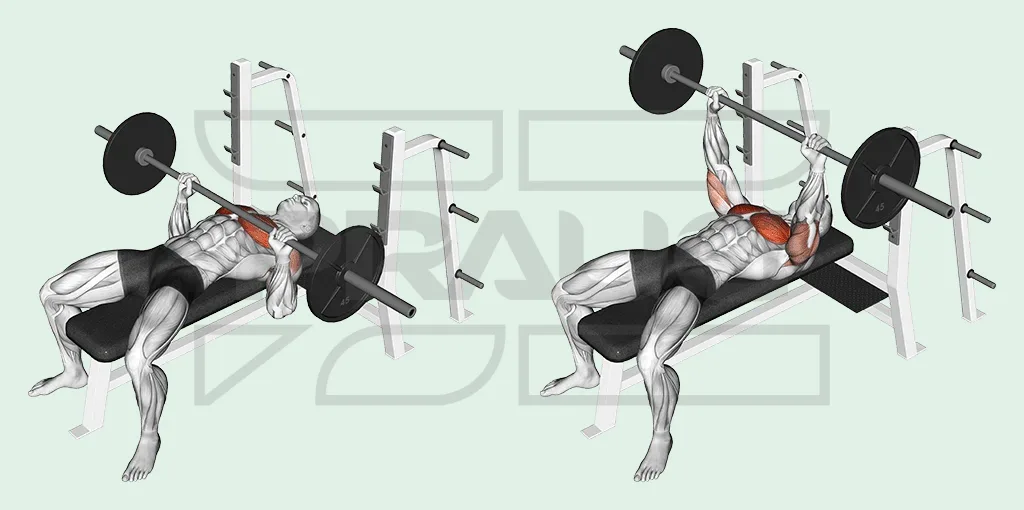
Use the chest exercise collection to compare this supported task with a barbell bench press or push-up.
Set the seat, starting depth and load
Machines differ in the seat, handles, lever path and start-assistance mechanism. Follow the instructions for the model rather than assuming every chest press works alike.
- Begin with a light setting. Adjust the seat so the handles are around mid-chest height and the feet have stable support.
- Adjust starting depth if available. You should be able to reach the handles without being pulled far behind a position you can control.
- Sit against the support and organise a steady trunk and shoulder position. Avoid forcing the shoulders down as far as possible.
- Take a full grip and press smoothly along the machine path, keeping the wrists supported over the forearms.
- Return under control to the same starting range. Avoid letting the stack pull the shoulders backwards or crash down.
- Use the machine’s intended return or release mechanism to finish before standing up.
When to adjust the setup
If you lift away from the backrest or swing to begin each repetition, reduce the load and recheck the starting depth. A seat setting that works for someone else may place your handles too high or too low.
Changing the range as fatigue rises makes the repetition count less comparable. Choose a clear end point and stop before the return becomes uncontrolled. There is no need to slam the elbows straight or deliberately keep them bent at every point.
A machine is not automatically safe to fail on without checking its stops and exit method. Stop for sharp pain, and seek individual advice if symptoms persist rather than assuming a different grip will cure them.
Converging paths, grips and one-arm work
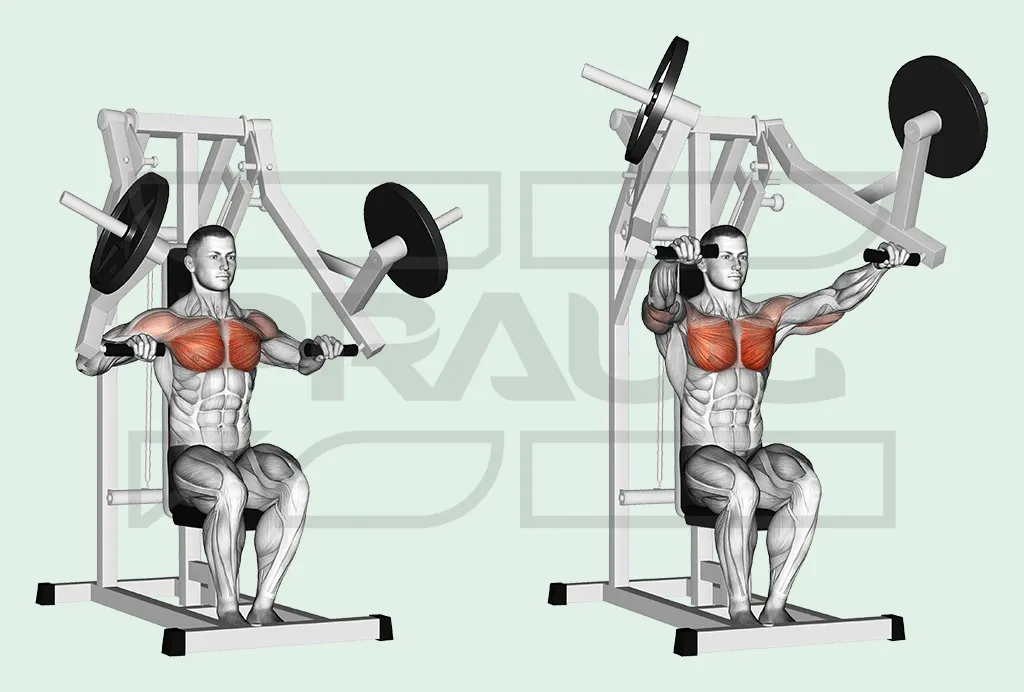
Converging machines bring the handles closer together as you press. Some paths rise, some remain more horizontal and some travel downwards. The exact resistance and movement depend on the model; the path alone is not proof of a superior regional chest-growth result.
A neutral grip has the palms facing each other, while an overhand grip faces them forwards. Choose the available option that allows a controlled movement. Comfort varies, and no grip is universally protective.
A machine with independent arms may allow one-arm pressing if the manufacturer permits it. Keep the body supported and use comparable conditions on both sides. Noticing a difference does not prove an imbalance needs extra sets on one side.
The barbell bench press, dumbbell bench press and cable fly are different alternatives. You do not have to use all of them in the same session.
Where to place it and how to progress
One coaching example uses 3–4 sets of 8–12 repetitions with about 90 seconds to 2 minutes of rest as one coaching example. It also gives lighter finishing work or lower-repetition strength work. These are adaptable programming choices, not prescriptions established by the muscle-activity studies.
Place the machine first if improving it is the main goal. It can also supply additional pressing after another movement, but count overlapping chest, shoulder and triceps work. Beginners do not need to earn permission to use machines by first mastering a barbell.
When all planned sets reach the top of your range with consistent technique, consider the next manageable load increase. Keep a record of the machine, seat, grip and starting-depth settings so the numbers mean the same thing next time.
Illustrated positions and variations
These illustrations show example positions and options. Choose a setup and difficulty you can control.
Converging chest press
One-arm chest press
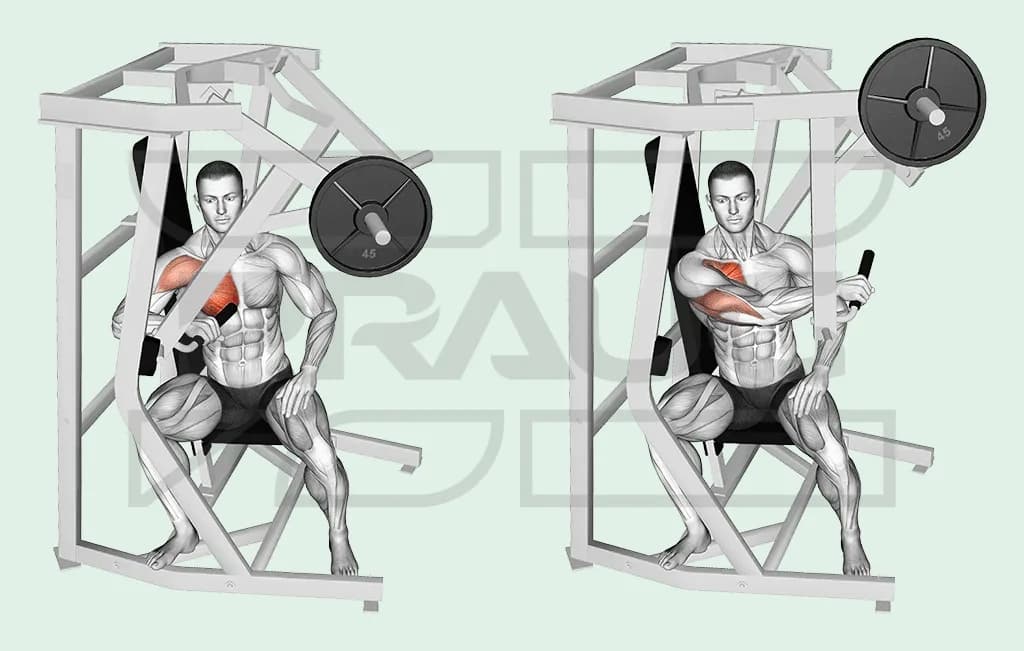
Downward converging path
Frequently asked questions
Is a chest press the same as a bench press?
Both are presses using overlapping muscles, but one follows a machine path while the other requires control of a free bar. Strength practice remains specific to the task.
What seat height should I use?
Handles around mid-chest height are a starting point. Adapt to the model instructions, your proportions and a range you can control.
Neutral grip or overhand grip?
Both are options. Choose a comfortable, repeatable hand and elbow position; a grip change is not a guaranteed solution to pain.
Can I train one arm at a time?
Only on equipment intended for that use. Keep the trunk supported and the settings comparable rather than rotating to complete the press.
Can the machine be my main chest exercise?
Yes, if it suits your goal and allows useful progression. A free-weight exercise is not mandatory in every programme.
Sources and limitations
Sources support the passages that cite them. Practical suggestions are coaching choices to adapt to your own situation.
- Coratella et al. · 2020 · Muscle-activity comparison of bench-press variations and a chest-press machine. ↗
Ten competitive bodybuilders and acute electrical measurements. It does not compare long-term chest growth or all machine models.
- Muyor et al. · 2023 · Muscle activity in bench pressing and seated chest pressing with different grips. ↗
Twenty adults, one set at moderate load and a specific machine. Electrical activity does not establish a universally best grip or training outcome.
- Schwanbeck et al. · 2020 · Eight-week comparison of free-weight and machine training. ↗
Thickness measurements were taken at the biceps and quadriceps, not the pectorals. The trial cannot establish chest-specific hypertrophy equivalence.
This general information does not replace individual advice. Zepraug’s limitations.