Training· 3 min read
Standing barbell overhead press: setup, technique and progression
Other names: Military press
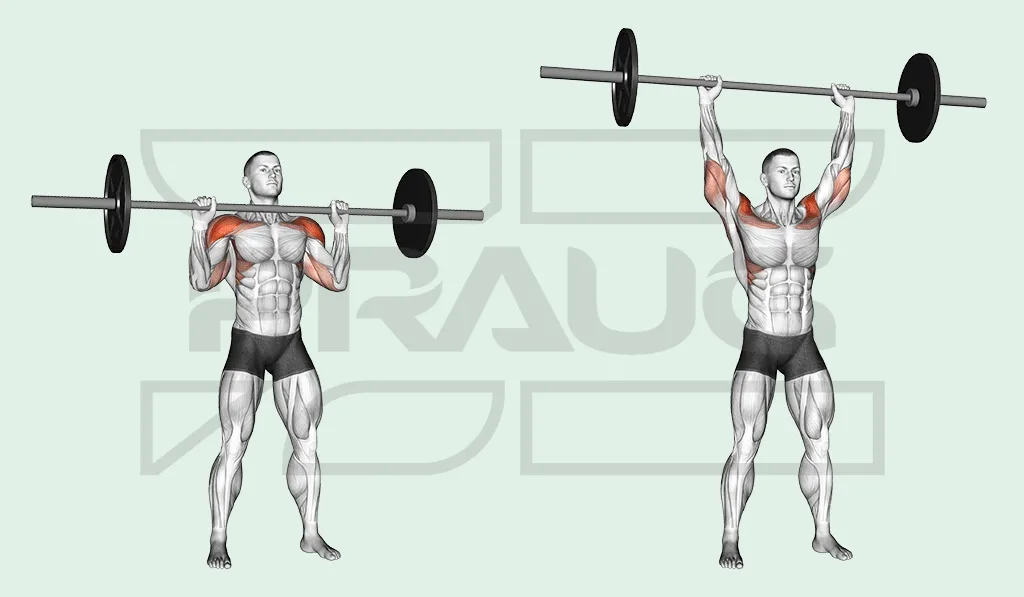
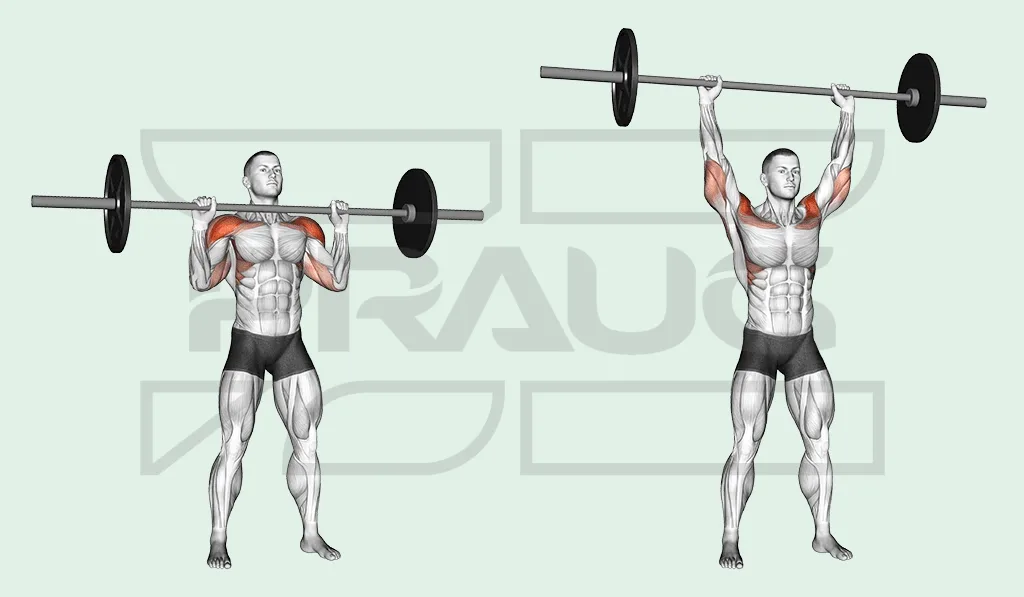
A standing barbell overhead press moves a bar from in front of the shoulders to a controlled overhead position. The shoulders and triceps press while the trunk and legs support the stance. Use a suitable rack and clear return path rather than turning a difficult repetition into a large backward lean.

Certified fitness coach · CQP Instructeur Fitness
Published on
The essentials before you start.
- Use secure support and practise the pickup and return.
- Keep the intended arm path and range repeatable.
- Research results apply to specific tasks and measured outcomes.
- Choose the workload within the whole week.
Exercise facts
- Main muscles
- Anterior deltoid, Lateral deltoid, Triceps
- Secondary muscles
- Trapezius, Serratus anterior, Posterior deltoid, Abdominals and obliques, Spinal erectors, Gluteals
- Equipment
- Barbell, Suitable rack and safety supports
What the movement trains
The anterior and lateral deltoids and triceps contribute, with the shoulder-blade muscles, trunk and hips helping maintain the setup. Standing changes stability demands; more instability is not automatically a better training choice.
Set up and perform the movement
- Set suitable rack hooks and available safety supports. Check bar security, ceiling clearance and a controlled rerack method.
- Take a full grip at a width that permits a comfortable forearm and wrist position, with stable feet.
- Unrack the bar in front of the shoulders at a height you can control. Keep the trunk organised without an exaggerated back arch.
- Press upwards along a path clear of the face, moving the head only as needed rather than pushing the bar far forwards.
- Allow the shoulder blades to rotate as the arms rise. Finish with the bar balanced over the intended support without snapping the joints.
- Lower in front of the face under control and rerack securely before fatigue compromises the return.
Range, support and control
Keep breathing in a controlled pattern rather than prescribing a prolonged breath hold for every reader. A small knee drive creates a push-press variation; record it as a different task. The bar need not be forced onto the collarbones if that position cannot be controlled.
What the cited research supports
The fifteen-man comparison measured activity and maximum loads across seated or standing barbell and dumbbell presses. Higher activity in some more demanding stability conditions came with lower usable loads. It did not establish a universal best press, growth advantage or individual tolerance.
Variations and alternatives
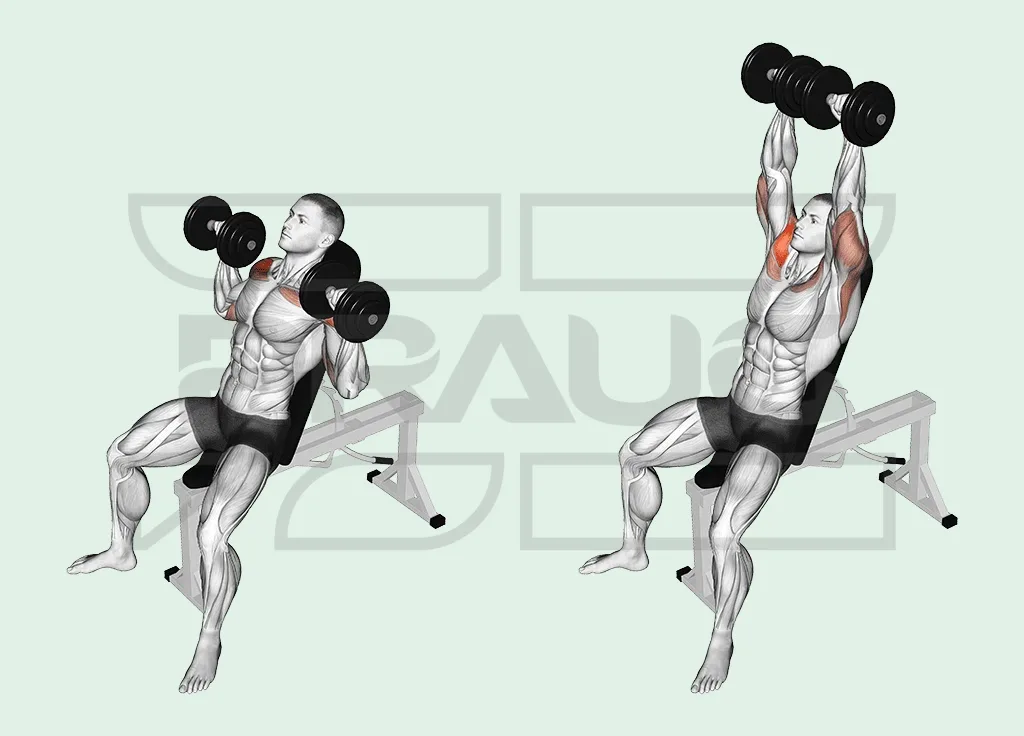
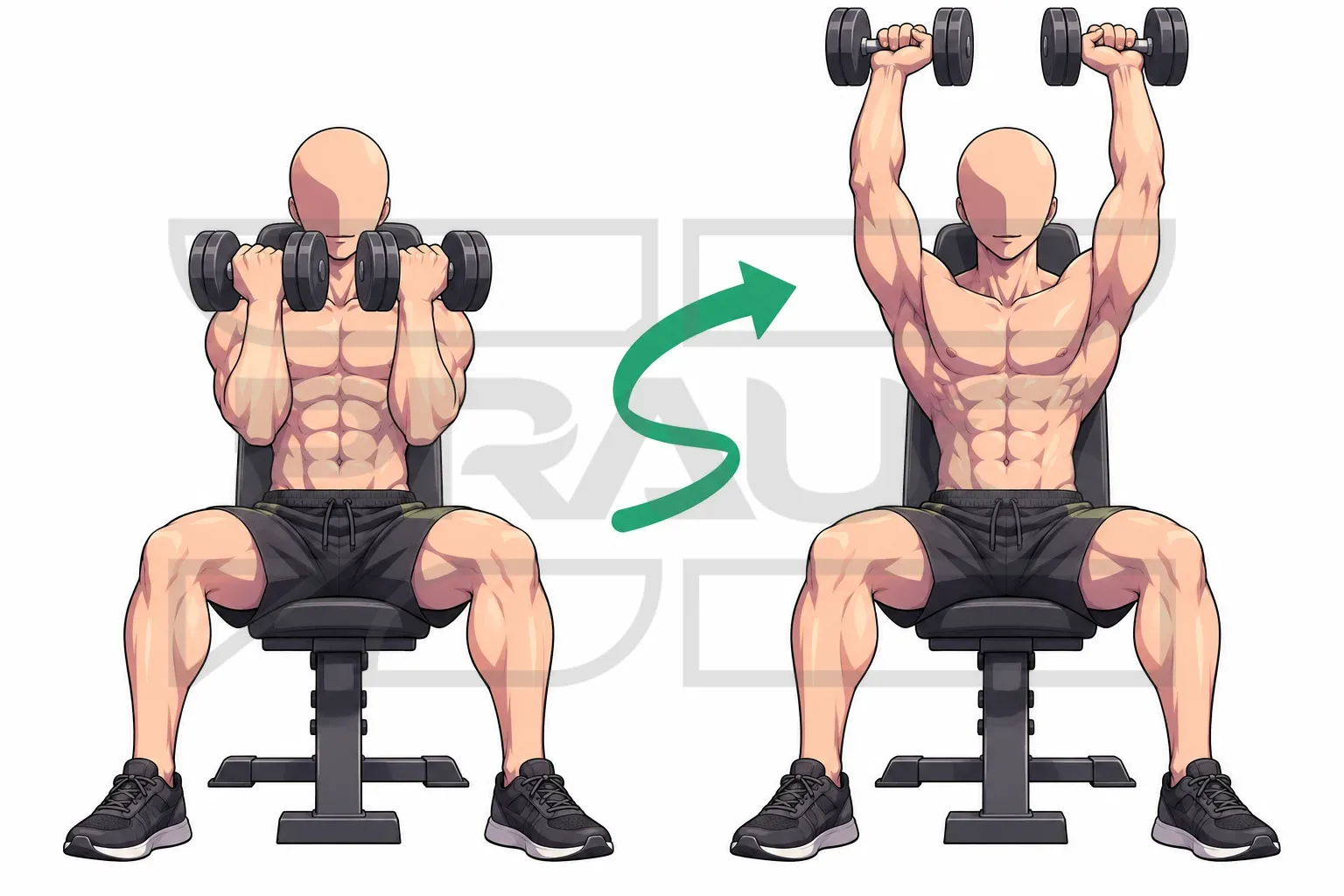
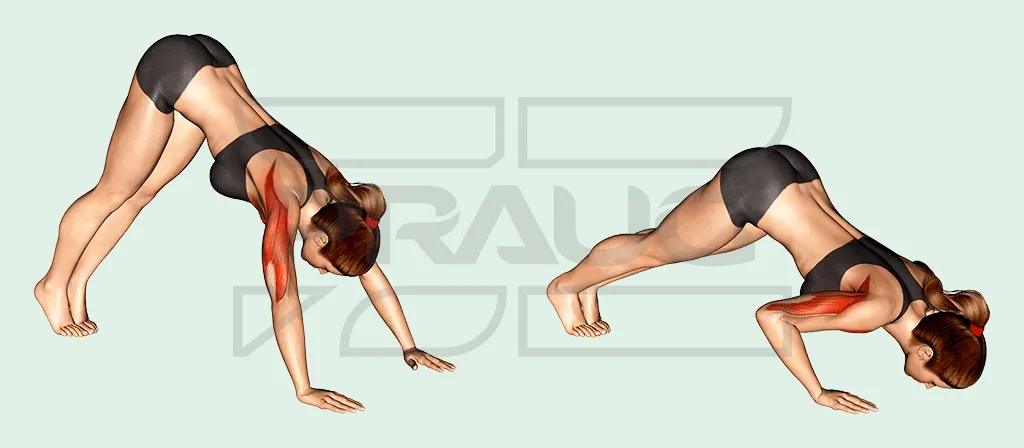
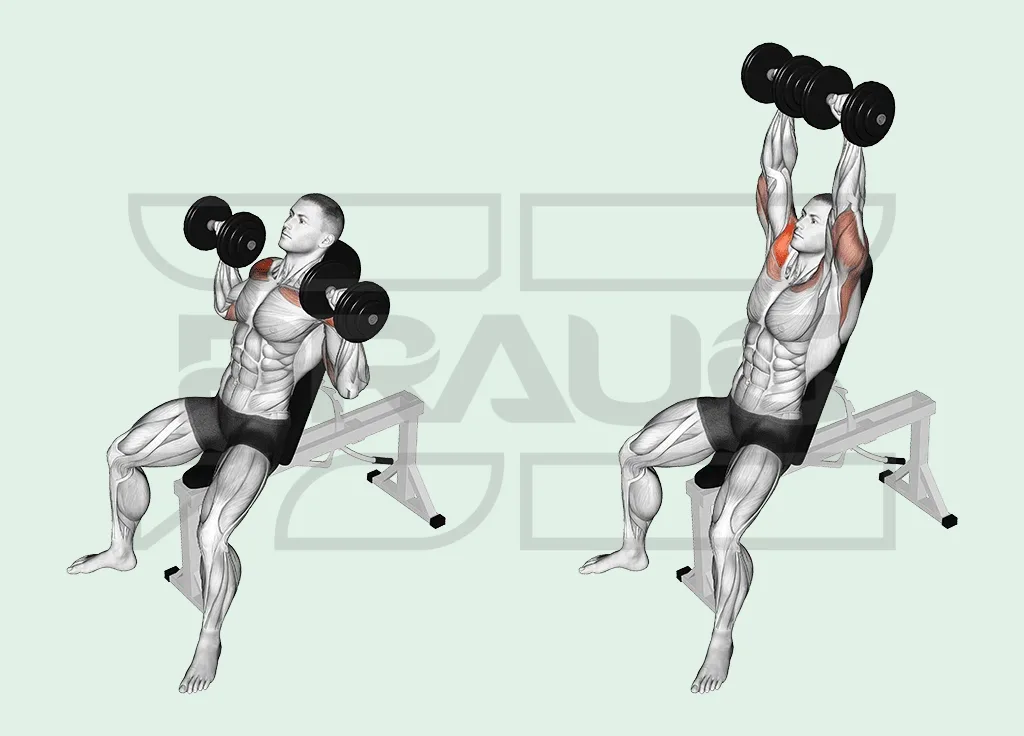
A seated dumbbell press changes support and independent hand paths. An Arnold press adds rotation. A pike push-up is a separate bodyweight task, not an equivalent barbell load.
Sets, progression and tracking
An example is 2–4 sets of 6–12 controlled repetitions, resting around two minutes or more when needed. Record bar load, stance, range and effort. Adjust the total alongside bench pressing and direct triceps work.
Illustrated positions and options
The images show example positions rather than individual range or load prescriptions. Bench adaptations require stable equipment intended for the task.
Illustrated option 1
Illustrated option 2
Illustrated option 3
Frequently asked questions
Must I keep the shoulder blades pulled down?
No fixed downward hold is required throughout the lift. The shoulder blades move as the arms rise; choose a controlled overhead path.
When should I add demand?
When the chosen setup, range and effort are repeatable and the next increment is manageable. Record changes rather than comparing different tasks as if they were identical.
Sources and limitations
Sources support the passages that cite them. Practical suggestions are coaching choices to adapt to your own situation.
- Saeterbakken and Fimland · 2013 · Activity and maximum-load comparison of seated and standing barbell and dumbbell overhead presses. ↗
Fifteen men; no Arnold press, long-term growth or individual tolerance comparison.
This general information does not replace individual advice. Zepraug’s limitations.