Training· 4 min read
Arnold press: setup, technique and progression
Other names: Rotating dumbbell press
An Arnold press combines a dumbbell overhead press with a gradual change in hand and upper-arm orientation. Start with the weights in front of the shoulders and rotate only through a path you can control. More movement does not automatically mean better growth.

Certified fitness coach · CQP Instructeur Fitness
Published on
The essentials before you start.
- Use secure support and practise the pickup and return.
- Keep the intended arm path and range repeatable.
- Research results apply to specific tasks and measured outcomes.
- Choose the workload within the whole week.
Exercise facts
- Main muscles
- Anterior deltoid, Lateral deltoid
- Secondary muscles
- Triceps, Posterior deltoid, Rotator cuff, Upper trapezius, Serratus anterior
- Equipment
- Dumbbells, Adjustable exercise bench
What the movement trains
The shoulder muscles raise the upper arms while the triceps extend the elbows. The shoulder blade also moves as the arms rise. Rotation changes the task without making this a complete isolation of all three deltoid regions.
Set up and perform the movement
- Use a stable seat or stance, check overhead clearance and practise a controlled pickup and return.
- If seated, choose suitable back support and keep the feet securely supported.
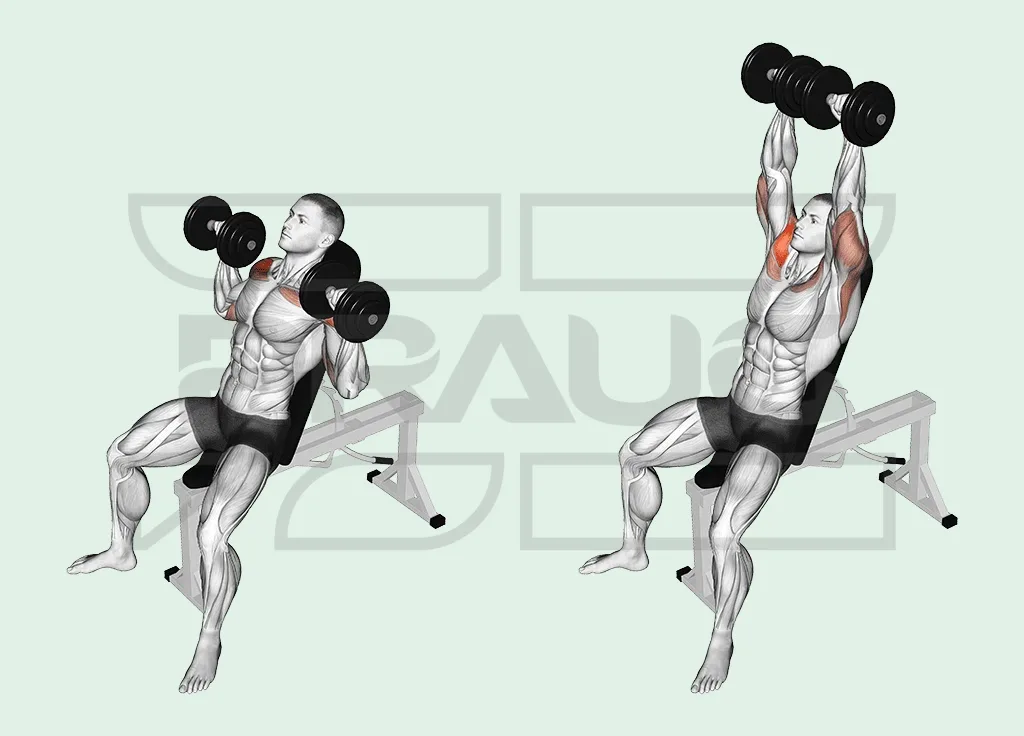
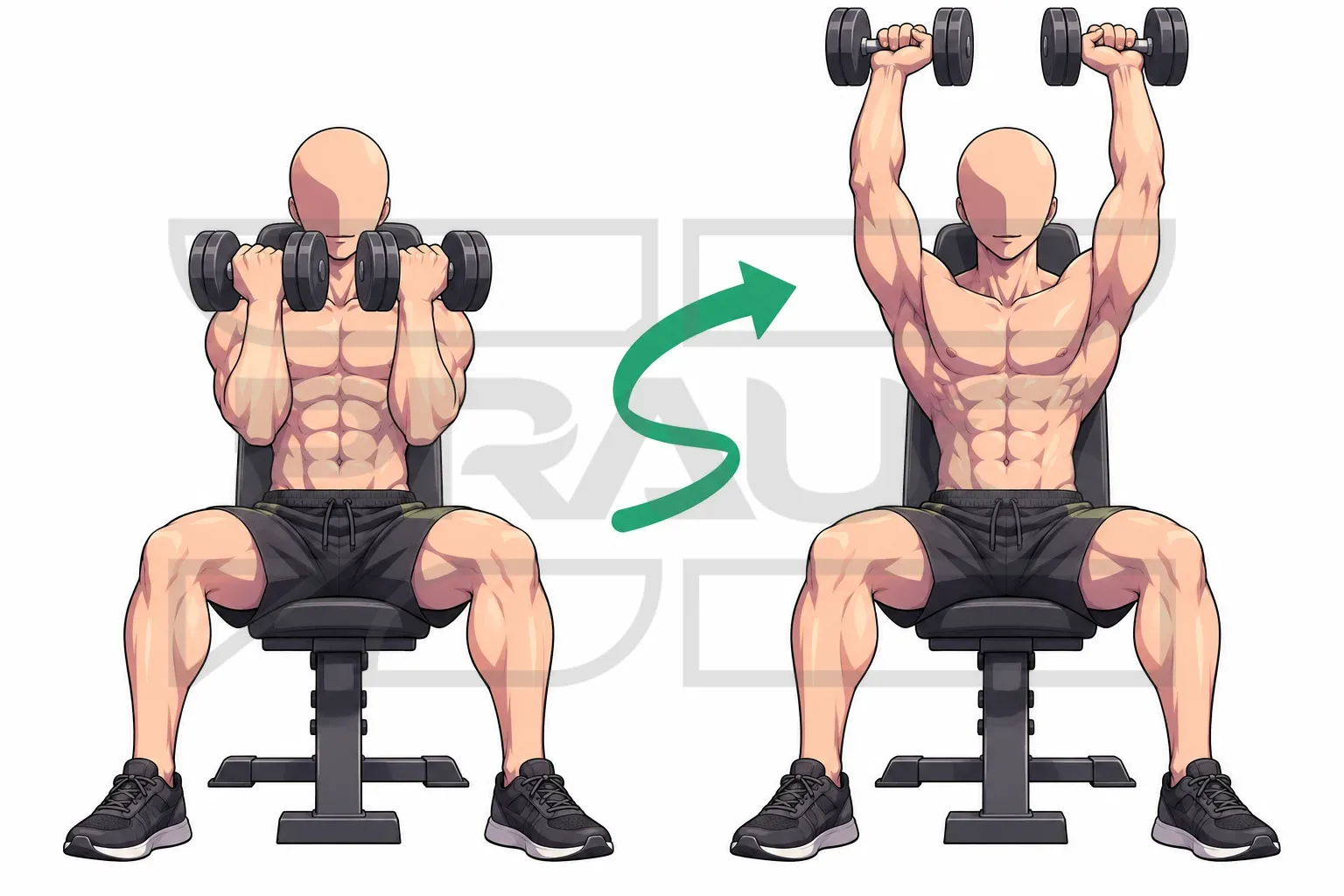
- Hold manageable dumbbells in front of the shoulders, with palms generally towards the body as comfortable.
- Press upwards while gradually turning the hands and opening the upper-arm path. Do not force a prescribed wrist rotation.
- Finish through a controlled overhead range without throwing the ribs up or snapping the elbows.
- Reverse the path smoothly and return the weights securely before leaving the setup.
Range, support and control
The elbows need not touch at the start. Do not pin the shoulder blades down throughout an overhead movement. A simpler dumbbell press is useful if coordinating rotation changes control; neither variation must be a compulsory progression.
What the cited research supports
The cited study compared seated and standing barbell and dumbbell presses in fifteen men. The Arnold press was not tested. Differences in acute activity and one-repetition load do not establish better later growth or safety from adding rotation.
What changes from a conventional dumbbell press
This describes the two tasks; the cited comparison did not test Arnold presses or establish a growth ranking.
| Feature | Arnold press | Conventional dumbbell press |
|---|---|---|
| Forearm orientation | Deliberate gradual turn during the press | Chosen grip is more consistent through the path |
| Starting position | Weights generally in front of the shoulders | Weights generally beside or slightly in front of the shoulders |
| Range | Depends on starting position and individual control | Depends on starting position and individual control |
| Load | Re-establish a manageable load for the turning task | Re-establish a manageable load for this task |
| Coordination | Turning and pressing are coordinated | A simpler hand-orientation task |
Variations and alternatives
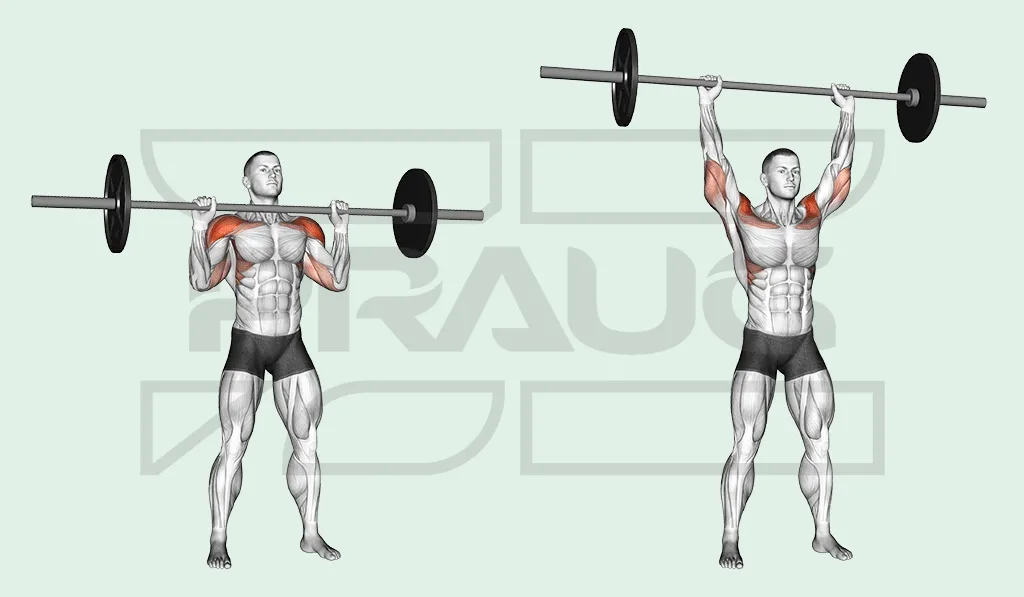
A front barbell overhead press changes implement and hand path. A conventional dumbbell press removes the deliberate turning phase. Use a separate manageable load for each task.
Sets, progression and tracking
One coaching option is 2–4 sets of 8–12 repetitions, with sufficient rest to preserve coordination. Record support, starting hand position, range, weight per hand and effort. Count other chest and overhead pressing across the week.
Choose one row or fewer sets, rather than performing all rows. These coaching examples are not doses validated by the cited press experiment.
| Possible emphasis | Example sets | Example repetitions | Example rest |
|---|---|---|---|
| Moderate repeated work | 3–4 | 8–12 | 90–120 s or more as needed |
| Heavier controlled work | 4 | 6–8 | 2–3 min or more as needed |
| Lighter repeated work | 3 | 15–20 | 45–60 s or more as needed |
Frequently asked questions
Does the cited study prove an Arnold-press advantage?
No. It tested other press setups and brief activity and strength outcomes, rather than Arnold presses or long-term growth.
When should I add demand?
When the chosen setup, range and effort are repeatable and the next increment is manageable. Record changes rather than comparing different tasks as if they were identical.
Sources and limitations
Sources support the passages that cite them. Practical suggestions are coaching choices to adapt to your own situation.
- Saeterbakken and Fimland · 2013 · Activity and maximum-load comparison of seated and standing barbell and dumbbell overhead presses. ↗
Fifteen men; no Arnold press, long-term growth or individual tolerance comparison.
This general information does not replace individual advice. Zepraug’s limitations.