Training· 6 min read
Inverted row: bar height and body-angle progression
Other names: Bodyweight row, Australian pull-up
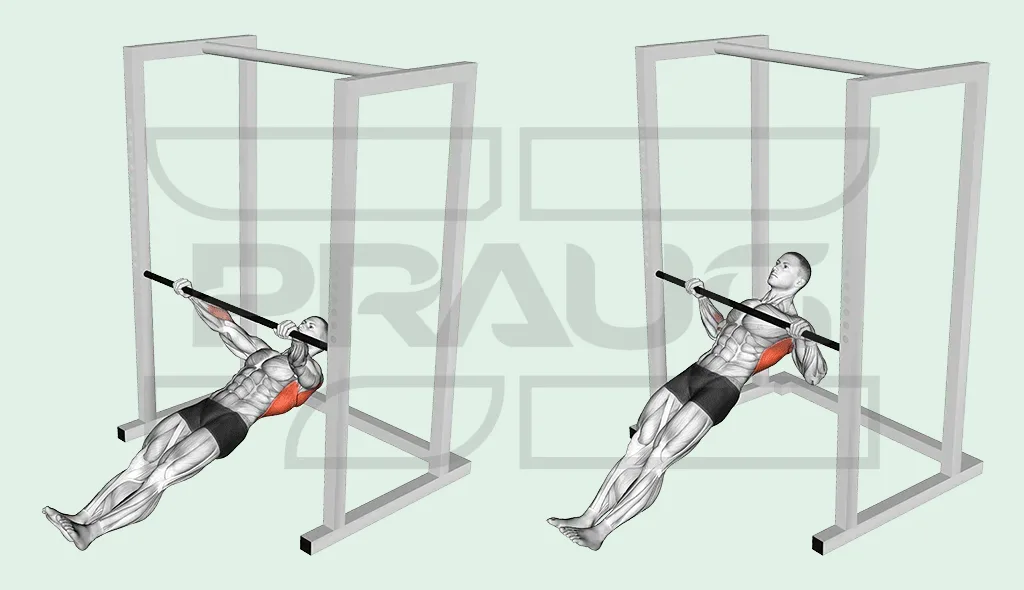
An inverted row is a horizontal bodyweight pull under a fixed bar. You bring the chest towards the bar while keeping a controlled body position. It is also called a bodyweight row or Australian pull-up. Raising the bar or changing the leg position can make the movement more accessible.

Certified fitness coach · CQP Instructeur Fitness
Published on
The essentials before you start.
- Use equipment intended to support your weight, with secure fixings and room to dismount.
- A more upright body angle generally reduces the demand; record the setup when tracking progress.
- The back and elbow flexors work together while the trunk helps keep the position.
- Rows and pull-ups overlap in muscles used but remain different movements.
Exercise facts
- Main muscles
- Latissimus dorsi, Rhomboids, Middle trapezius, Rear deltoids
- Secondary muscles
- Biceps, Brachialis, Forearms, Abdominals, Glutes
- Equipment
- Secure low bar or rack
What an inverted row trains
The shoulders and elbows move as the chest approaches the bar. The lats, rhomboids, trapezius and rear shoulders contribute to the pull; the elbow flexors and forearms work with them. The trunk and hips help prevent the body from sagging or turning.
One small study compared rowing exercises and measured trunk activity and spinal loading. Another examined grip and foot-support variations during inverted rows. These acute measurements do not establish long-term muscle growth, injury prevention or a treatment for back pain.
An inverted row allows pulling practice without lifting the full body vertically. It is a useful exercise in its own right, not a promise that reaching a fixed number of rows will automatically produce a first pull-up.
How to set up and perform an inverted row
Use a rack, fixed bar or suspension system designed and securely set for the task. A household table or improvised support is not automatically suitable. Check floor grip and the space around you before getting underneath.
- Set the bar higher for an easier, more upright version. Grip it with the palms facing away from the face and hands at a comfortable width.
- Place the feet so the chosen body angle is manageable. Use a bent-knee variation if that makes it easier to control the position.
- Keep the head, trunk and hips aligned for the chosen setup. Pull smoothly as the shoulder blades and elbows move.
- Guide the lower chest towards the bar without pushing the hips up to meet it or reaching with the neck.
- Lower under control to your starting range. Keep the same body angle and finishing point across repetitions.
- End the set before the position changes substantially, then move out from under the equipment with control.
Adjust bar height, legs and body angle
A higher bar and more upright body position generally make the pull easier. Moving towards a more horizontal position increases the demand. Changing knee bend or foot position also changes the task, so record more than the repetition count.
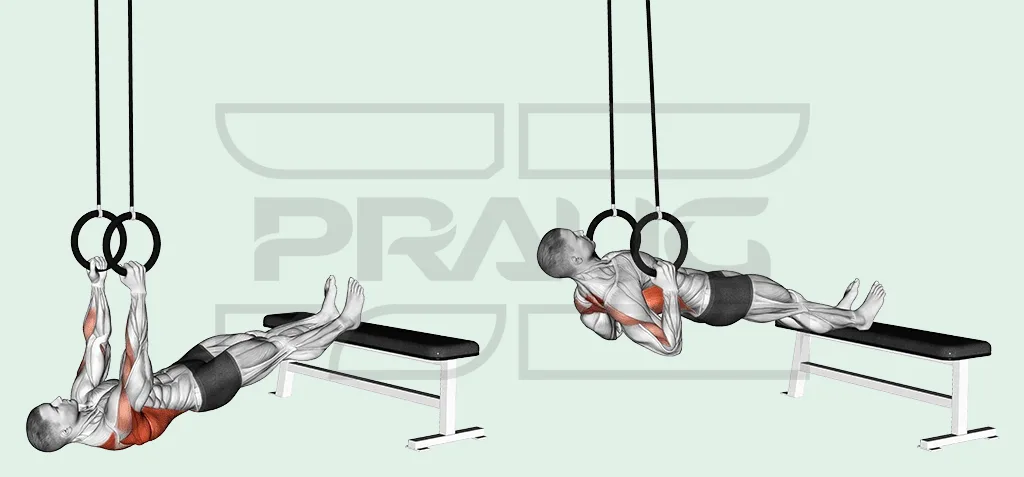
Elevated feet, additional load or rings can make a version more demanding, but they are options rather than compulsory milestones. Check stability before changing the setup. A loose weight balanced on the torso is not the only way to progress; use secure equipment intended for loading if extra resistance is needed.
The source gives 3–4 sets of 8–15 repetitions as a coaching example. Start with work that fits your current ability and other training. When the same setup becomes comfortably repeatable, change one variable rather than automatically chasing a longer set.
Grip, suspension straps and rings
An underhand grip turns the palms towards the face. Parallel handles, rings or straps allow the hands to face each other or rotate. A study found differences in some muscle-activity measures between tested grips, but it cannot identify the best long-term programme for everyone.
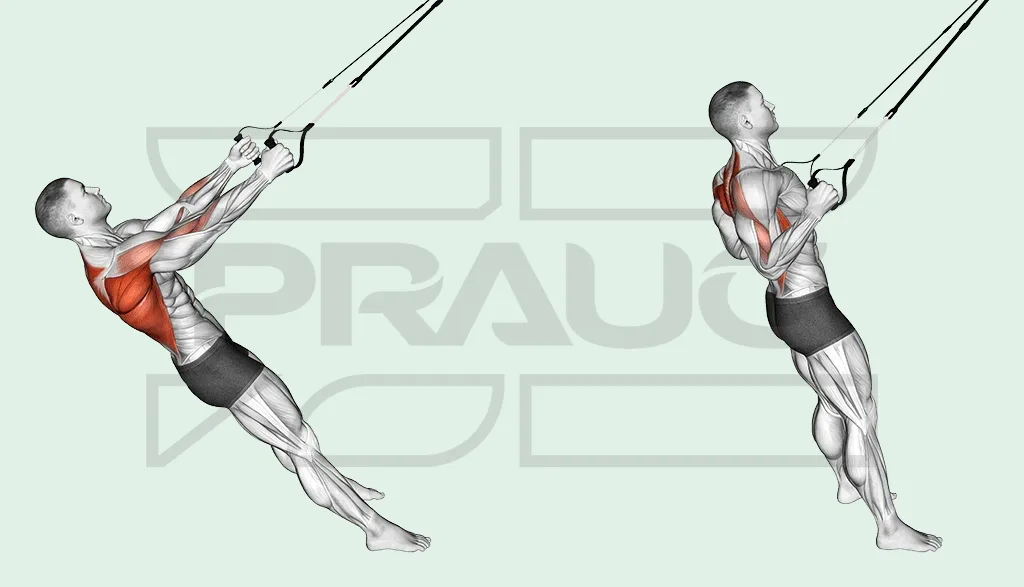
Suspension straps allow you to adjust the body angle by moving the feet. The anchor and straps must be suitable for the load and installed according to their instructions. Rings allow more movement at the hands and require additional control.
A one-arm dumbbell row is a different horizontal pull using external resistance. A lat pulldown or assisted pull-up provides vertical practice. Choose according to available equipment and the task you want to improve.
What to watch as fatigue rises
If the hips drop, the chest no longer reaches the same point or the head moves forward to finish each repetition, reduce the difficulty or end the set. Keep the return controlled rather than dropping away from the bar.
One-legged versions add a balance demand, but a harder balance task does not automatically mean more useful back training. Choose the version that lets you perform the intended pulling work.
Discomfort is not a reason to tighten the rules until every shoulder moves identically. Adjust grip and range, and seek an individual assessment for persistent or concerning pain. The illustrations show examples, not proof that every support or advanced setup is suitable for the reader.
Illustrated setup and variations
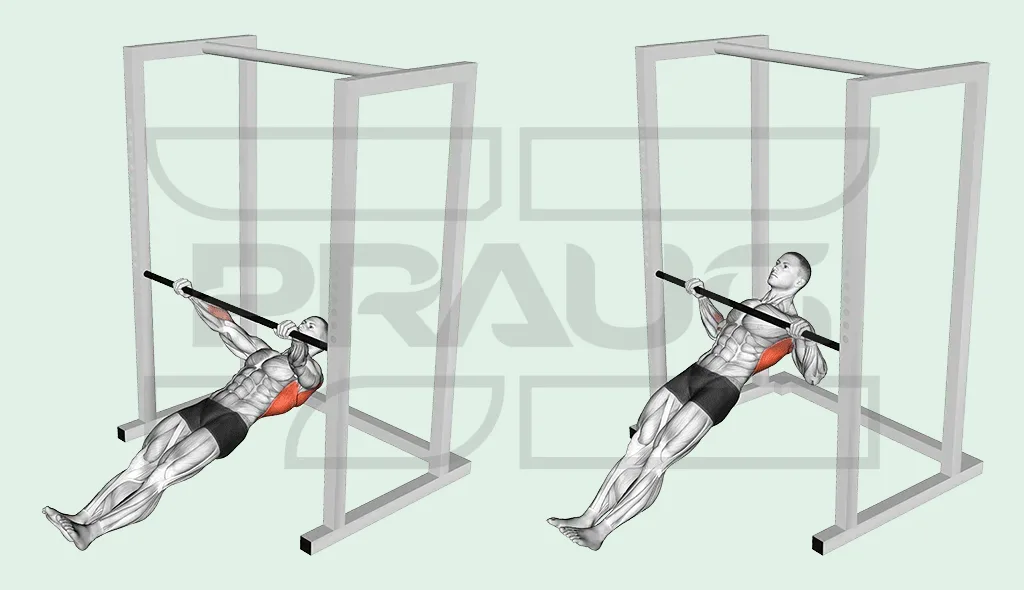
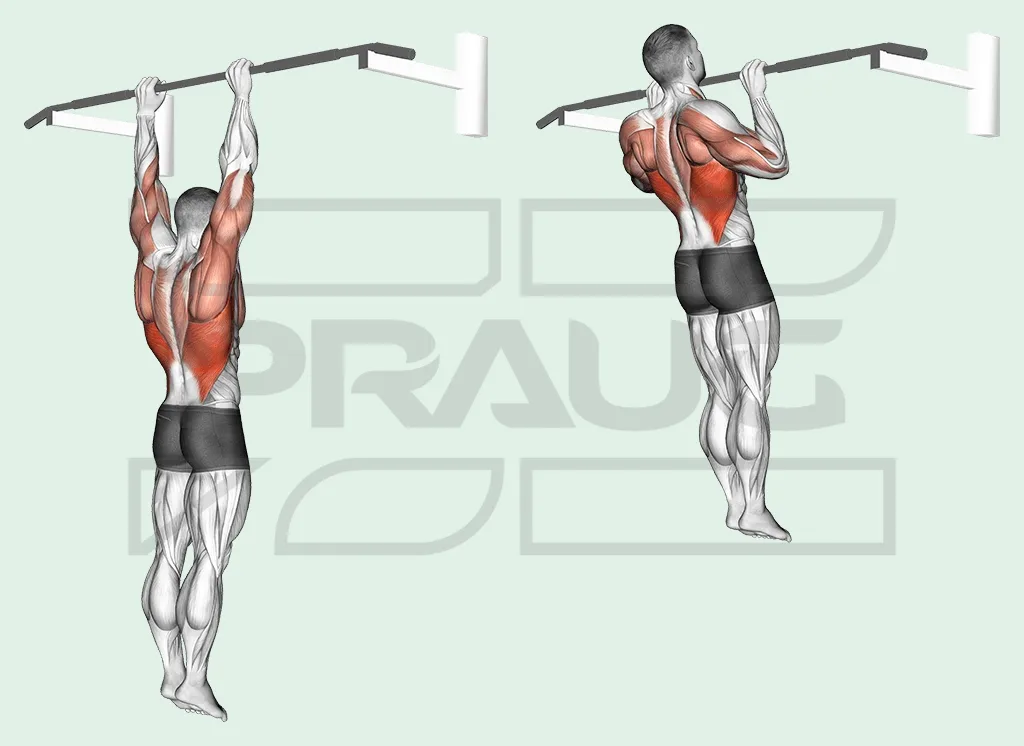
The illustrations show example setups and variations. Use a difficulty you can control; the drawings do not prescribe an individual load.
Bar row
Higher-bar variation
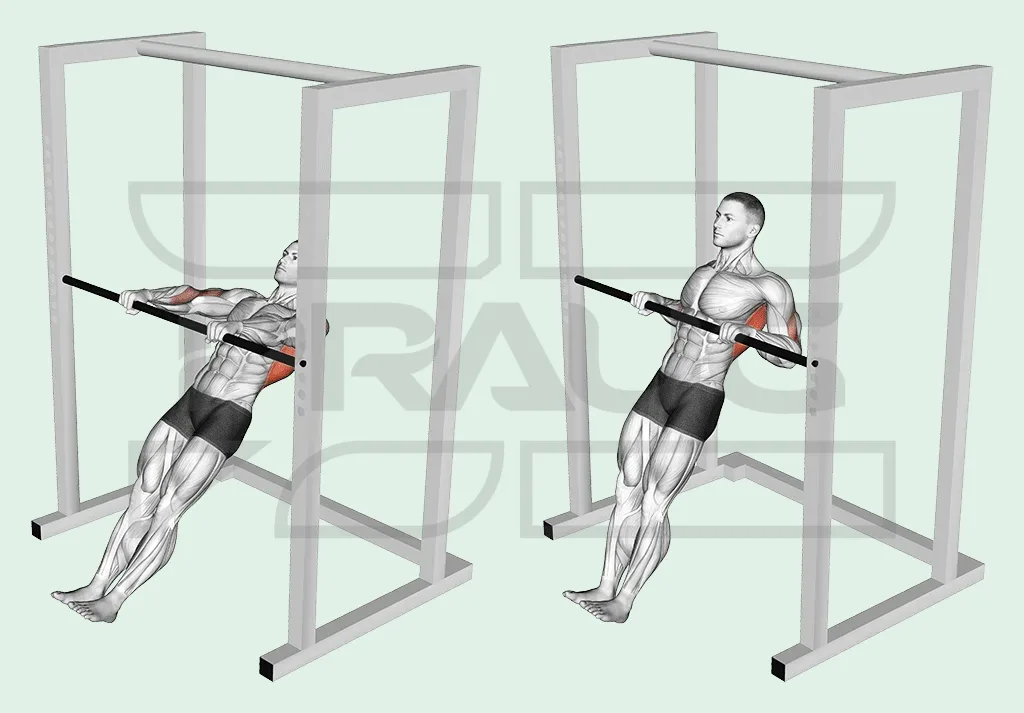
Suspension straps
Elevated-foot ring variation
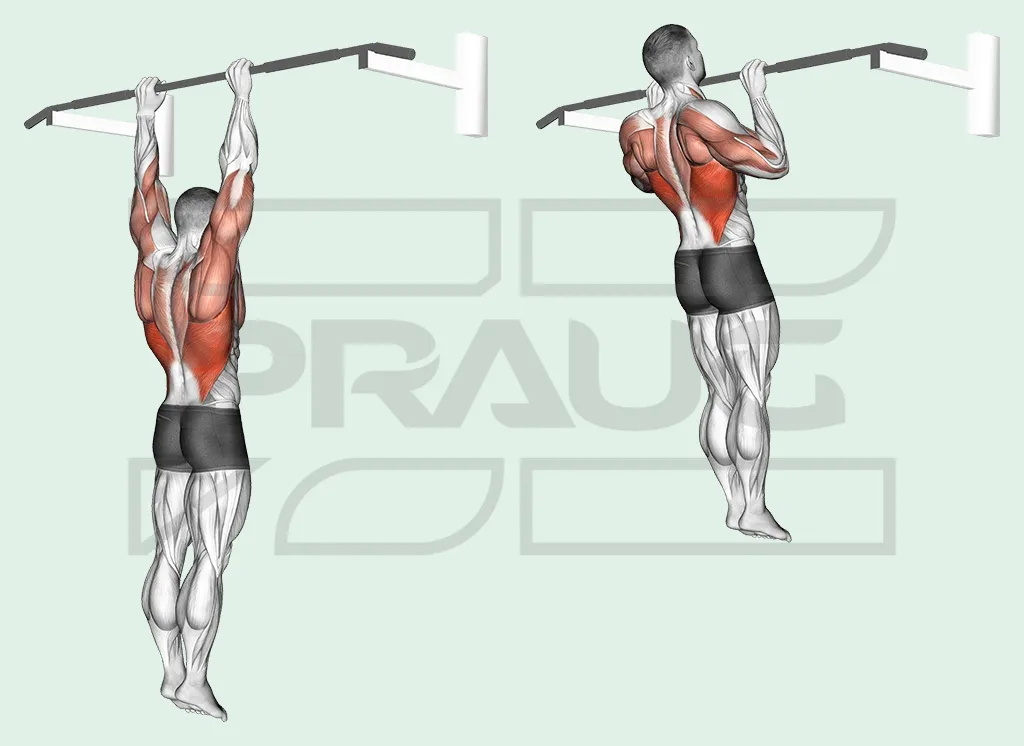
Vertical pull-up
Frequently asked questions
Is an Australian pull-up the same as an inverted row?
These names commonly refer to the same horizontal bodyweight row. Inverted row is the main name used here; it is different from a vertical overhand pull-up.
How do I make it easier?
Raise the bar, use a more upright body angle or choose an appropriate bent-knee setup. Check that the equipment remains secure and that the new position is repeatable.
Where should I pull towards?
Aim the lower chest towards the bar while keeping your body position controlled. Do not force contact by lifting the hips or pushing the neck forward.
What if I have no low bar?
Properly installed suspension straps or rings are options. A supported dumbbell row is another horizontal pulling exercise. Do not assume furniture is designed to support the movement.
Do rows prepare me for pull-ups?
They develop a related pulling task. For a pull-up goal, combine them with suitable vertical practice rather than relying on a fixed row-repetition threshold.
Sources and limitations
Sources support the passages that cite them. Practical suggestions are coaching choices to adapt to your own situation.
- Youdas et al. · 2016 · Electrical activity during inverted-row grip and foot-support variations in adults. ↗
Acute measurements with a portable pulling apparatus. The study does not compare long-term muscle growth from the different setups.
- Fenwick et al. · 2009 · Comparison of different rowing exercises: trunk muscle activation and lumbar spine motion, load, and stiffness. ↗
Very small healthy male sample. Acute loading measurements do not establish treatment effects for back pain, injury rates or hypertrophy.
This general information does not replace individual advice. Zepraug’s limitations.