Training· 6 min read
Pull-up: overhand technique and assisted progressions
Other names: Pull-up, Pronated pull-up
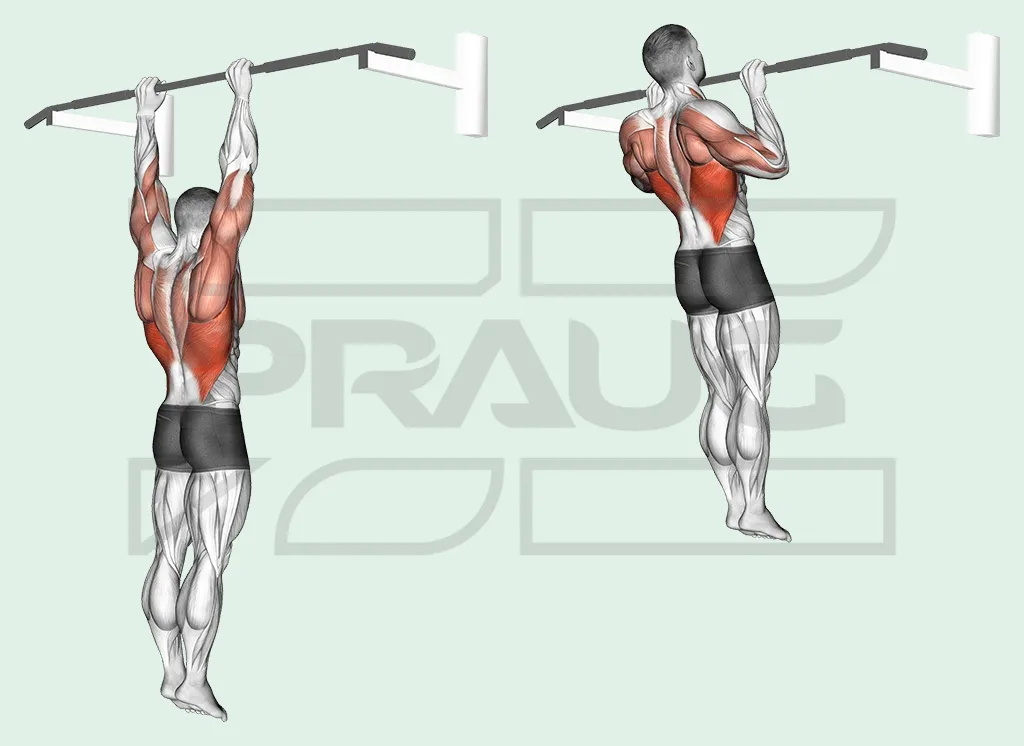
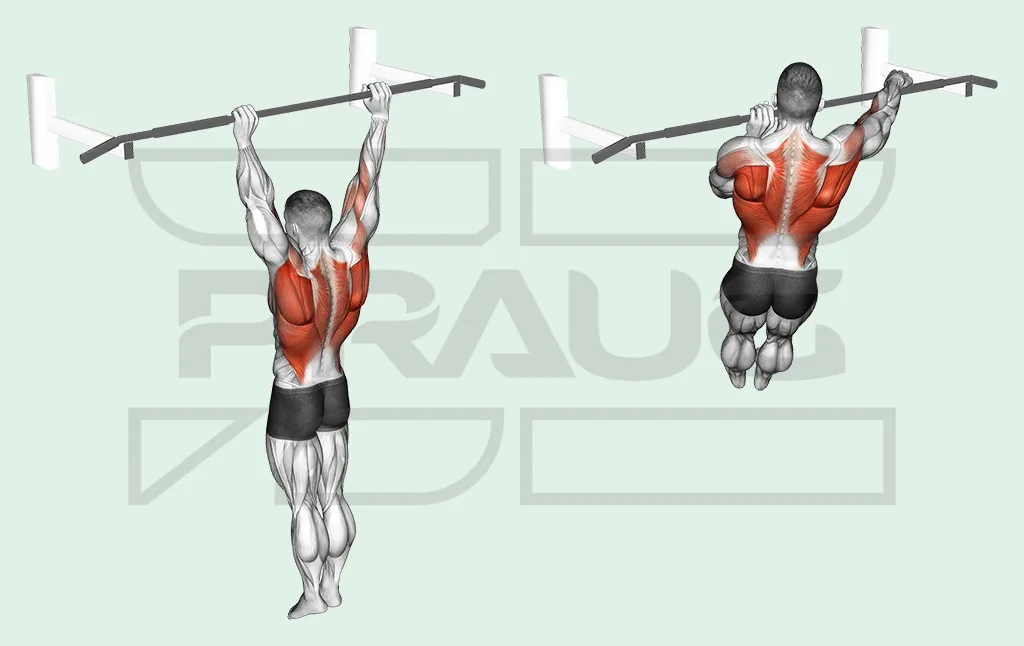
In an overhand pull-up, you hang from a fixed bar with your palms facing away and pull your body upwards. The back, elbow flexors and grip work together while the trunk limits unnecessary swinging. Assistance is useful when bodyweight is more than you can currently lift with the intended movement.

Certified fitness coach · CQP Instructeur Fitness
Published on
The essentials before you start.
- Use a secure bar, a full grip and a hand spacing you can repeat comfortably.
- Let the shoulder blades and elbows move together; avoid jerking from the bottom.
- Assisted repetitions, controlled lowering and pulldowns offer different ways to practise.
- A study of muscle activity does not establish the best grip for long-term growth.
Exercise facts
- Main muscles
- Latissimus dorsi, Teres major, Middle and lower trapezius, Rhomboids
- Secondary muscles
- Biceps, Brachialis, Rear deltoids, Infraspinatus, Pectoralis major, Forearms
- Equipment
- Secure pull-up bar
Muscles worked and the difference from a chin-up
The latissimus dorsi and teres major help bring the upper arms towards the body. The trapezius, rhomboids and other shoulder muscles control the shoulder blades; the biceps and brachialis bend the elbows. The forearms hold the bar and the trunk helps maintain body position.
A chin-up uses an underhand grip, with the palms facing towards you. In the cited comparison, the tested variations produced different activity in some upper-body muscles. That is not evidence that one grip will build more muscle over months or suit every shoulder.
The grip-width study compared shoulder-width and self-selected wider grips in trained men. It did not establish a universal best width or measure shoulder comfort. Start with a usable width rather than widening the hands simply to make the back wider.
How to perform an overhand pull-up
Check that the bar is securely installed, intended for the load and high enough for the movement. A stable step can help you reach it and dismount. Begin with assistance if you cannot control the starting position.
- Hold the bar with the palms facing away and thumbs wrapped around it. Start around shoulder width or slightly wider.
- Find a controlled hanging position with the arms overhead and the trunk steady. Keep the legs in a position that does not encourage swinging.
- Begin the pull smoothly as the shoulder blades and elbows move. Think of bringing the upper arms towards your sides.
- Raise the body until the chin clears the bar without craning the neck. Keep the finishing point consistent; reduce difficulty if you cannot reach it without a large swing.
- Lower under control towards the starting range you can manage. Avoid dropping into a position you cannot control.
- Finish the set when the intended range or technique is no longer reproducible, and dismount with control.
Building towards a first unassisted repetition
A small shoulder-blade movement with straighter arms can help you explore hanging control, but it is a drill rather than a compulsory separate stage at the start of every pull-up. Assisted repetitions practise more of the complete movement.
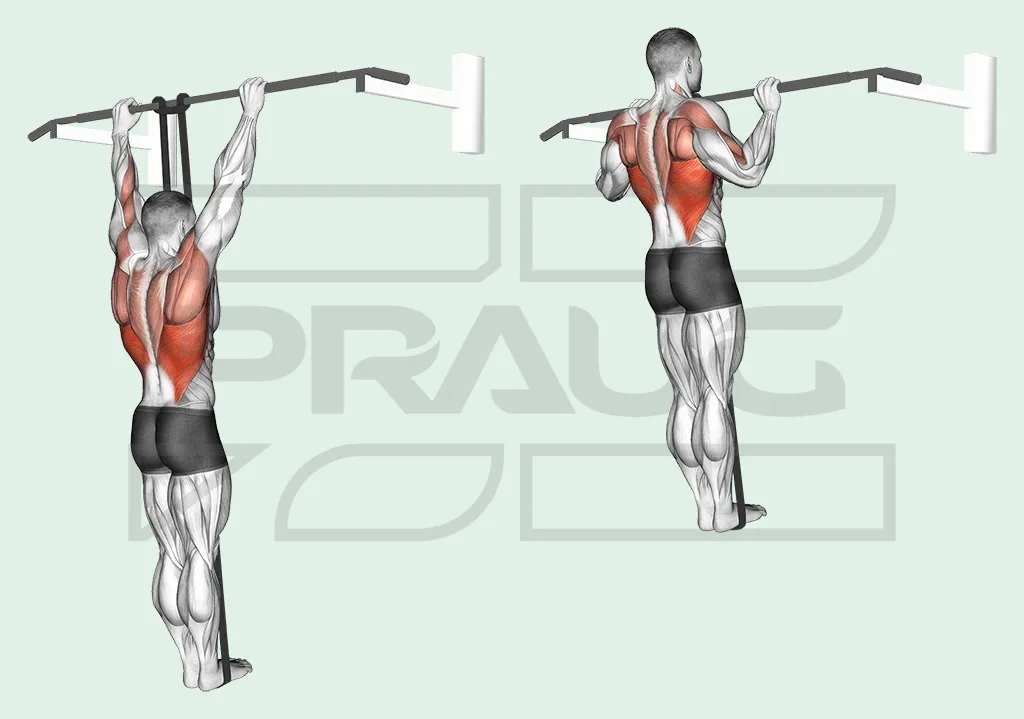
A machine provides adjustable assistance. A band generally helps more when it is stretched further, so the assistance changes through the repetition. Check the band, attachment and entry/exit method; record the setup rather than treating band colours as standard loads.
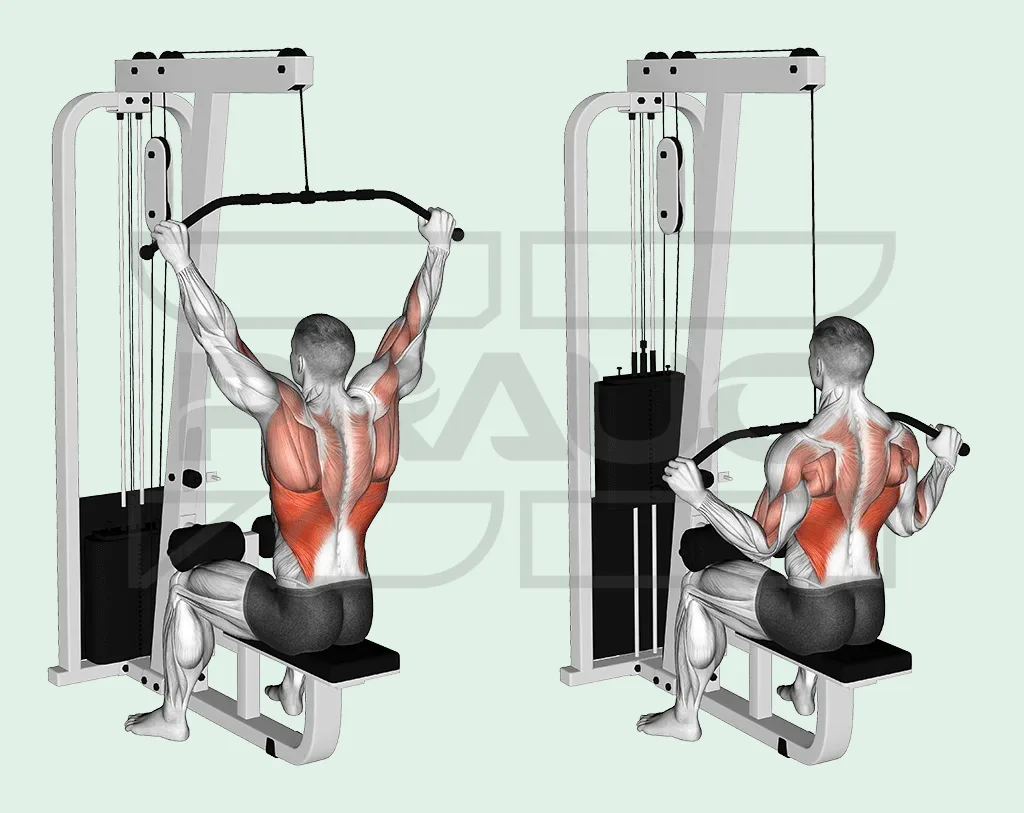
For controlled lowering, use a stable step or assistance to start higher, then lower only as slowly and as far as you can manage. Start with a small amount of unfamiliar work. The lat pulldown is another vertical pulling exercise; the inverted row is a horizontal option. Neither is a guarantee of a first pull-up on a fixed schedule.
Common errors and useful adjustments
Swinging the legs, throwing the chest up or repeatedly reaching the chin with the neck changes what you are comparing. Reduce the demand or use assistance to keep the chosen criteria.
A very wide grip can shorten the movement without making it more useful for your goal. A grip that hurts does not become appropriate because a chart recommends it. Stop for sharp pain and seek advice about persistent symptoms.
Do not confuse a difficult last repetition with an obligation to attempt another one. Secure surroundings and a controlled dismount matter when fatigue rises.
How to organise practice and progression
One coaching arrangement uses two or three weekly sessions and an intermediate example of 15–25 controlled repetitions divided across sets. These are coaching starting points, not minimum requirements or a protocol validated by the cited grip studies. Adjust the amount to ability, other pulling work and recovery.
Track the grip, assistance, range, sets, repetitions and perceived effort. Add a repetition or reduce assistance when the existing work remains repeatable. Change one variable at a time so the log can tell you what improved.
There is no universal number of bodyweight repetitions that makes weighted pull-ups compulsory. Add external load only when it serves the goal and you can set it up, lift and dismount securely.
L-sit, archer and weighted variations
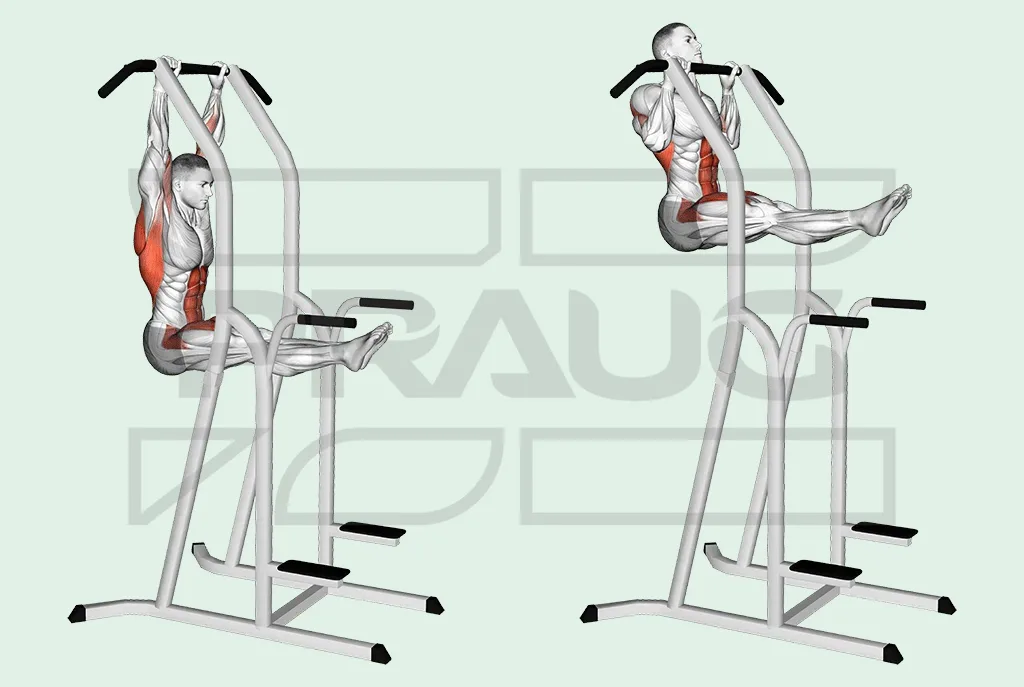
An L-sit pull-up keeps the legs raised in front and adds a demand on trunk and hip-flexor control. An archer pull-up shifts more work towards one side while the other arm remains straighter. Both change the task and need their own progressions; they are not routine starting exercises.
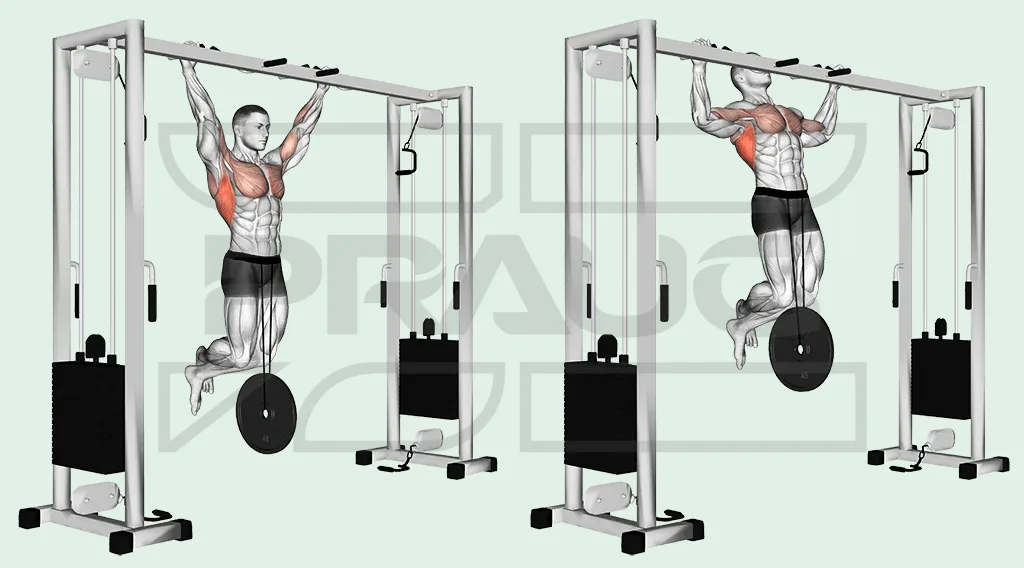
A weighted pull-up uses a secure belt or vest to add resistance. Begin with a manageable change and keep the same movement criteria. A chin-up changes the grip instead of adding load. Choose a variation for a clear reason rather than collecting difficult-looking movements.
Illustrated setup and variations
The illustrations show example setups and variations. Use a difficulty you can control; the drawings do not prescribe an individual load.
Shoulder-blade drill
 Shoulder-blade drill
L-sit variation
Archer variation
Band assistance
Weighted variation
Underhand chin-up
 Underhand
Frequently asked questions
Are pull-ups or chin-ups better?
Both train overlapping muscles. Grip changes joint positions and the task. Choose for comfort and the movement you want to improve; acute electrical activity does not establish a universal winner for growth.
Can inverted rows replace pull-up practice?
They train a horizontal pull and can build useful pulling capacity. If the goal is an overhand pull-up, retain some appropriately assisted vertical practice as well.
How often should I practise?
Choose an amount you can recover from alongside the rest of your programme. Two or three weekly exposures are one coaching example, not a requirement for everyone.
When should I add weight?
When controlled bodyweight work is established and extra resistance serves your goal. There is no threshold of ten repetitions that automatically makes loading necessary.
Should my shoulders stay pulled down throughout?
The shoulder blades move during the repetition. Use a controlled overhead position and a smooth pull rather than forcing one rigid position for everyone.
Sources and limitations
Sources support the passages that cite them. Practical suggestions are coaching choices to adapt to your own situation.
- Youdas et al. · 2010 · Surface electromyographic activation patterns and elbow joint motion during a pull-up, chin-up, or rotational pull-up exercise. ↗
Acute measurements from a small adult sample, not a comparison of long-term grip-specific progress.
- Ortega-Rodríguez et al. · 2021 · Grip-width comparison of maximal strength and repetitions in overhand pull-ups. ↗
Small sample of trained men. The study does not establish shoulder comfort, individual safety or a universal best grip.
- Di Fonza et al. · 2026 · Narrative review of latissimus dorsi electrical activity during pulling exercises. ↗
A review of acute electrical activity, not a long-term comparison of muscle growth. It does not validate every progression described here.
This general information does not replace individual advice. Zepraug’s limitations.