Training· 3 min read
Walking lunge: setup, technique and progression
Other names: Walking lunges
A walking lunge advances through repeated lunge steps, with or without external weights. It adds travel and repeated balance demands. Clear space and a controlled finish are part of the setup.

Certified fitness coach · CQP Instructeur Fitness
Published on
The essentials before you start.
- Practise the setup, support and return before adding demand.
- Keep the intended range and movement repeatable.
- The cited outcomes apply to particular tasks and populations.
- Choose the workload within the whole week.
Exercise facts
- Main muscles
- Quadriceps, Gluteus maximus
- Secondary muscles
- Gluteus medius, Hamstrings, Calf muscles, Abdominals and lower-back muscles
- Equipment
- Dumbbells
What the movement trains
The quadriceps and gluteals contribute while the trunk and hip muscles help manage each step. A deliberate torso lean or one-sided carry changes the task, rather than isolating one muscle completely.
Set up and perform the movement
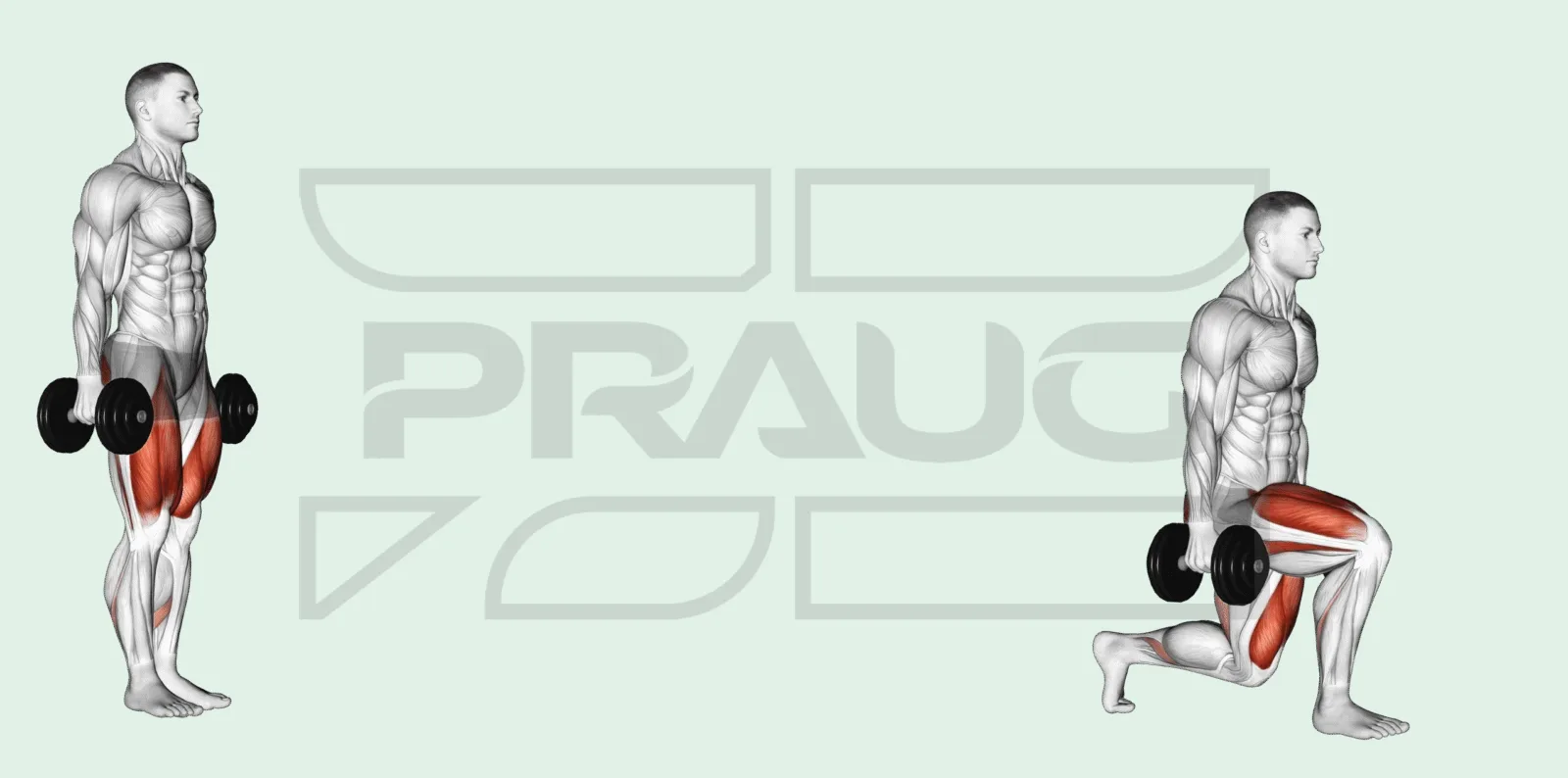
- Choose a clear non-slip route with enough space to stop safely. Begin without load if useful.
- Hold manageable dumbbells securely at the sides if using them, with enough room for the knees and feet.
- Step forwards at a controllable distance and bend both knees through a manageable range.
- Rise through the intended foot support without throwing the torso or striking the rear knee on the floor.
- Bring the feet together briefly if helpful, then advance with the other leg.
- Stop in a stable stance and put weights down securely before turning or leaving the route.
Range, support and control
A specific step length or fully upright torso is not mandatory. Holding one dumbbell changes balance and should be logged by side. Do not walk backwards under fatigue merely to reset a narrow route.
What the cited research supports
The acute studies found differences with lunge type, torso position and dumbbell-carrying side. They did not measure later growth or prove a universal best carry. The step-length study tested bodyweight forward and lateral lunges, not loaded walking lunges.
Variations and alternatives
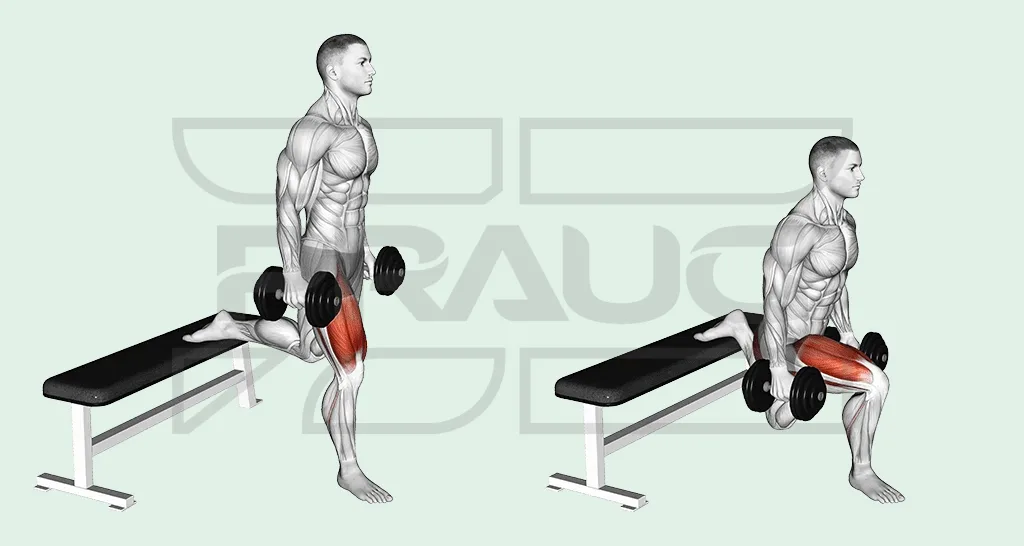
A stationary forward or reverse lunge reduces travel. A Bulgarian split squat changes foot support. Different implements are not identical loads.
Sets, progression and tracking
An example is 2–3 sets of 6–12 steps per leg with enough rest to retain the route and balance. Ten per leg means twenty alternating steps in total. Record distance, load per hand, torso position and effort.
Illustrated positions and options
The images show example positions rather than individual depth, load or exercise-order prescriptions. Choose suitable support and a controlled finish.
Illustrated option 1
Frequently asked questions
Does a stronger activity signal prove more later growth?
No. The cited measurements were brief exercise comparisons. They do not establish the best long-term lunge for every person.
When should I add demand?
When the setup, range and effort are repeatable and the next change is manageable. Log changed support or assistance rather than comparing different tasks as if they were identical.
Sources and limitations
Sources support the passages that cite them. Practical suggestions are coaching choices to adapt to your own situation.
- Bezerra et al. · 2021 · Activity across three lunge types and two torso positions in twelve trained women. ↗
One specified load and brief testing; not later strength or growth.
- Stastny et al. · 2015 · One-sided dumbbell carrying during walking lunges and split squats in twenty-eight men. ↗
Activity and motion at tested loads; not a long-term growth or universal carrying-side comparison.
- Riemann et al. · 2013 · Forward and lateral bodyweight lunges at two step-length conditions in thirty-two adults. ↗
Joint mechanics, not loaded walking-lunge growth or a universal step length.
This general information does not replace individual advice. Zepraug’s limitations.