Training· 5 min read
Barbell hip thrust: setup, technique and variations
Other names: Barbell hip thrust
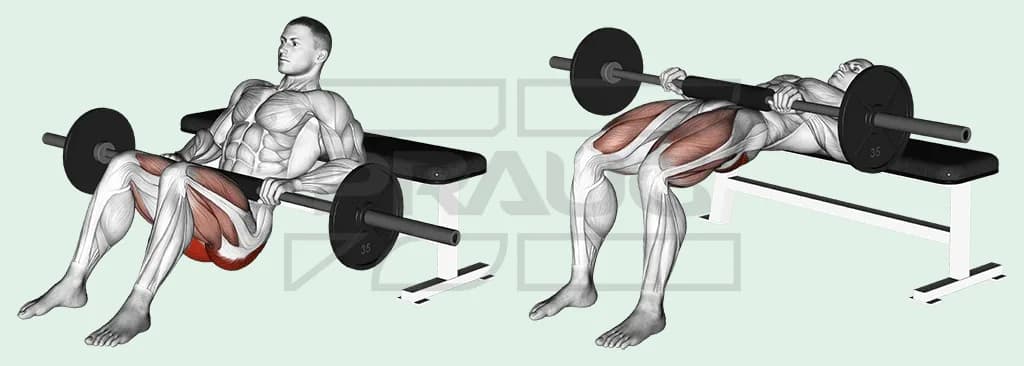
A barbell hip thrust raises the hips while the upper back is supported on a bench and a padded bar rests across the hip crease. The glutes contribute to hip extension, while the feet and trunk help control the movement. Check the bench, loading space and return method before starting.

Certified fitness coach · CQP Instructeur Fitness
Published on
The essentials before you start.
- Use a stable bench or purpose-built station and a comfortable pad.
- Finish the hip extension without throwing the ribs up or leaning back to lift higher.
- Higher electrical activity in one exercise does not prove greater long-term growth.
- A machine, dumbbell or floor bridge changes the setup; none is a compulsory progression.
Exercise facts
- Main muscles
- Gluteus maximus
- Secondary muscles
- Gluteus medius, Hamstrings, Quadriceps, Abdominals
- Equipment
- Barbell, Stable bench or hip-thrust station, Protective pad
What the hip thrust trains
The gluteus maximus contributes to hip extension, while the hamstrings and other hip, thigh and trunk muscles help manage the movement and support. Relative contributions change with foot distance, range and equipment.
The cited acute comparison found higher glute electrical activity during hip thrusts than squats in its tested conditions. In a separate nine-week study in beginners, glute cross-sectional area changes were similar after the two exercises. The activity result therefore did not establish a universal growth ranking.
Neither study proves that combining the exercises is necessary or that one removes every demand on the back. Training strength in a specific task still requires practice of that task. Browse the glute collection for alternative arrangements.
How to set up and perform the hip thrust
Check that the bench cannot slide or tip and is suitable for this use. Ensure there is a controlled method of bringing the bar into place and removing it; plate diameter, body size and the station design affect that method.
- Set the upper-back support at a height that permits a controlled movement, typically contacting around the lower shoulder-blade region.
- Position a suitable padded bar across the hip crease and secure the load as intended for the equipment. Keep the hands on the bar to control it.
- Place the feet around hip width or a little wider. Choose a distance that supports the intended top position; near-vertical shins are a starting cue, not an exact requirement.
- Brace enough to keep the trunk controlled and press through the feet to raise the hips.
- Finish at a comfortable line through trunk and thighs without extending the lower back to gain height.
- Lower smoothly and repeat the same range. At the end, bring the load to a supported position and exit with control.
Common errors and practical limits
A bench that moves, an uncomfortable bar position or a load you cannot enter and leave safely needs changing before a working set. A barbell is not unlimited in safe capacity: equipment ratings and your control still matter.
Watch for the head being thrown back, ribs flaring to gain height, feet shifting or one side lifting differently as fatigue rises. Adjust demand and setup instead of forcing an exact shin angle.
A pause can make the top position clearer, but a deliberately long squeeze is not proven necessary for growth. Use a breathing rhythm you can maintain. Stop for sharp pain and seek individual advice for persistent symptoms.
Machine, dumbbell, band and single-leg options
A purpose-built machine may simplify loading through a belt or pad, but follow its adjustment and release instructions. Its plate or stack number is not directly comparable with the free bar.
A manageable dumbbell changes the hold and loading limits. A single-leg version changes support and pelvic-control demands rather than simply doubling every muscle’s load. A band above the knees adds a separate leg-position demand.
A top pause changes the repetition without extra weight. A floor glute bridge removes the bench and changes the range. Cable kickbacks and other hip exercises are further tasks, not required additions to every session.
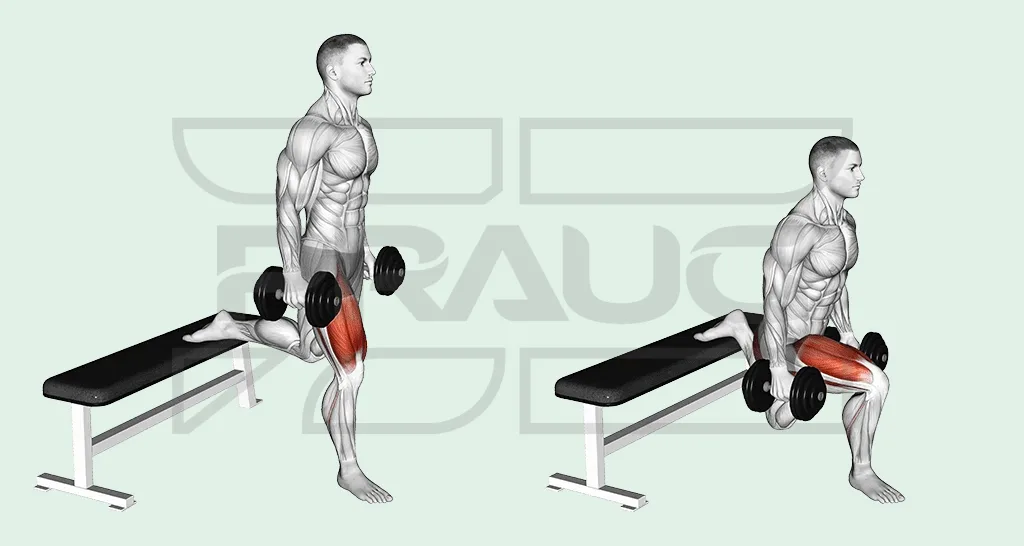
At home, choose appropriate supports rather than assuming a sofa or chair cannot move. A Bulgarian split squat or air squat is another movement choice, with different setup demands.
Sets, repetitions and progression
One coaching example uses 3–5 sets of 8–12 repetitions, with other ranges for lighter or heavier work. Treat these as coaching examples and adapt the amount to experience, recovery and overlapping leg work. A heavy hip thrust is not a requirement to train the glutes.
Place it early if improving the hip thrust is the priority. When additional to squats or hinges, count the combined demand rather than automatically adding a full example programme.
Record bench height, foot position, load, range, pause and repetitions. Progress only when setup, movement and return remain repeatable. A larger top number with a shorter range is a changed task to record, not necessarily progress at the original one.
Illustrated positions and variations
These original illustrations show example setups. Choose a range, support and difficulty you can control.
Floor bridge options
 Floor bridge options
 Floor bridge options
Frequently asked questions
Hip thrust or squat for the glutes?
Both can provide training demand. A short beginner trial did not establish a universal winner, and their movement and setup requirements differ.
Must my shins be exactly vertical?
That is a starting cue. Foot position and proportions vary; choose a controlled top position.
Is it automatically easier on every back?
No. A different load position does not establish individual suitability or eliminate spinal demand.
Can I start with a floor bridge?
Yes. It is a distinct, adjustable hip-extension option and does not require a bench or bar.
Sources and limitations
Sources support the passages that cite them. Practical suggestions are coaching choices to adapt to your own situation.
- Contreras et al. · 2015 · Electrical activity during back squats and barbell hip thrusts. ↗
Thirteen trained women and an acute comparison, not long-term growth or individual safety.
- Plotkin et al. · 2023 · Nine weeks of squat or hip-thrust training in beginners. ↗
Specific short protocol and muscle cross-sectional-area outcomes. It did not test the combination or establish results for advanced trainees.
This general information does not replace individual advice. Zepraug’s limitations.