Training· 5 min read
Air squat: bodyweight technique and progression
Other names: Bodyweight squat
An air squat is a squat using bodyweight rather than an external load. You bend at the hips and knees to lower the body, then stand again. Start with stable foot contact, a stance that suits your proportions and a depth you can control. It can be movement practice or training in its own right.

Certified fitness coach · CQP Instructeur Fitness
Published on
The essentials before you start.
- Keep the feet supported and let the hips and knees move together.
- Knees moving beyond the toes are not automatically an error.
- Choose a repeatable depth rather than forcing an identical shape on every body.
- There is no requirement to add weight at exactly 25 repetitions.
Exercise facts
- Main muscles
- Quadriceps, Gluteus maximus
- Secondary muscles
- Adductors, Trunk muscles, Calves
- Equipment
- Bodyweight
What an air squat trains
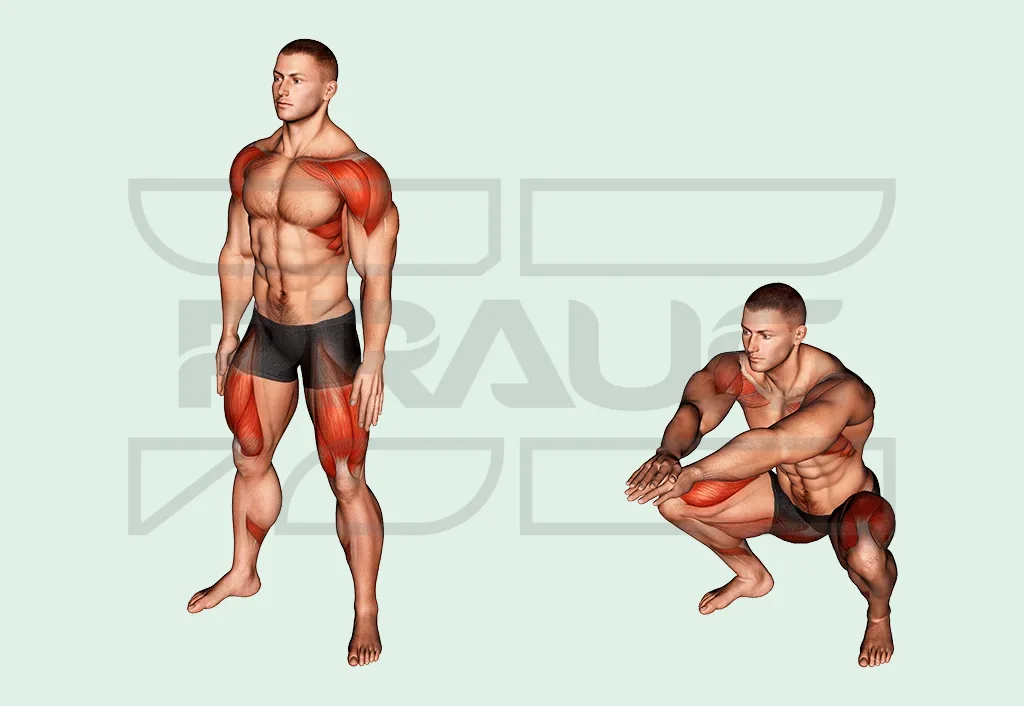
The quadriceps contribute to extending the knees; the glutes and adductors contribute at the hips. The trunk and lower legs help organise the position and balance. The amount of effort depends on your current capacity, range, tempo and the number of repetitions.
The depth trial cited here used loaded barbell squats, not high-repetition air squats. The knee-position experiment also used a barbell. Their results cannot directly establish an optimal bodyweight-squat programme or a universal safe depth.
An air squat requires little equipment. Use a clear, non-slip area and, if needed, a secure support or a stable seat-height target. A movable chair is not automatically a reliable support.
How to perform an air squat
Begin with a comfortable stance around hip to shoulder width. Toe angle and torso inclination vary with proportions and the chosen task.
- Stand with the whole foot supported and the arms where they help balance.
- Bend the hips and knees together, letting the knees move broadly in the direction of the feet.
- Lower through a range you can control, keeping a steady trunk and a comfortable head position.
- Pause briefly if useful, then stand by pushing through the supported feet.
- Finish standing without throwing the hips forwards or leaning back. Repeat the same range and pace.
Depth, knees and foot contact
A useful depth is one you can repeat for the intended task. You do not have to force the thighs below parallel to count any training, and a small movement at the pelvis is not by itself an injury diagnosis. If depth changes substantially under fatigue, adapt the demand.
Let the knees travel as needed rather than holding them behind the toes at all costs. Restricting forward knee travel changed hip and knee demands in a small loaded-squat experiment; it did not measure future injuries.
If the heels lift or you lose balance, review stance, depth, pace and available support. That observation alone does not diagnose a stiff ankle. Heel elevation changes the task and needs a firm, suitable platform.
Common errors, variations and progressions
Watch for bouncing into an uncontrolled bottom position, the chest dropping abruptly, or standing by shifting away from the intended foot support. Slow down, reduce depth or use support rather than forcing a repetition count. Stop for sharp pain and seek individual advice for persistent symptoms.
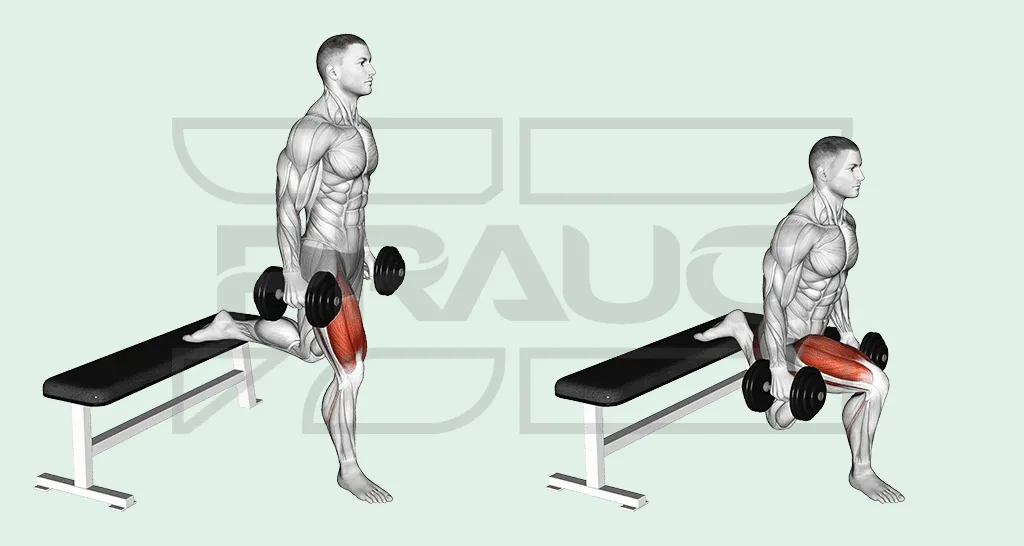
A pause or slower lowering phase changes difficulty without adding equipment. A box target changes the depth reference; avoid dropping onto it. A split squat changes the stance and balance demand rather than being the same task on one leg.
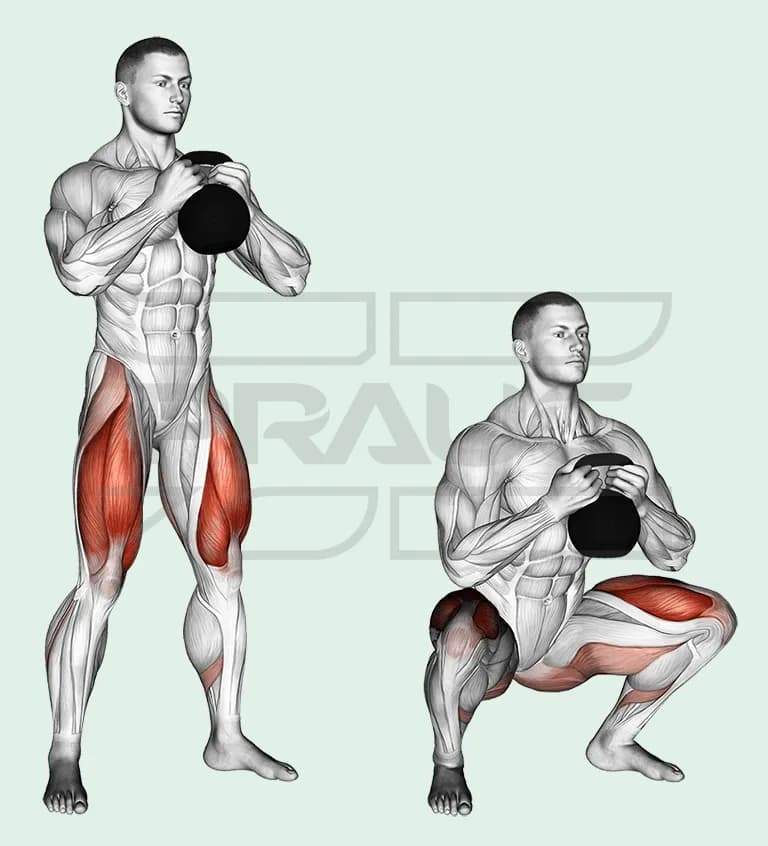
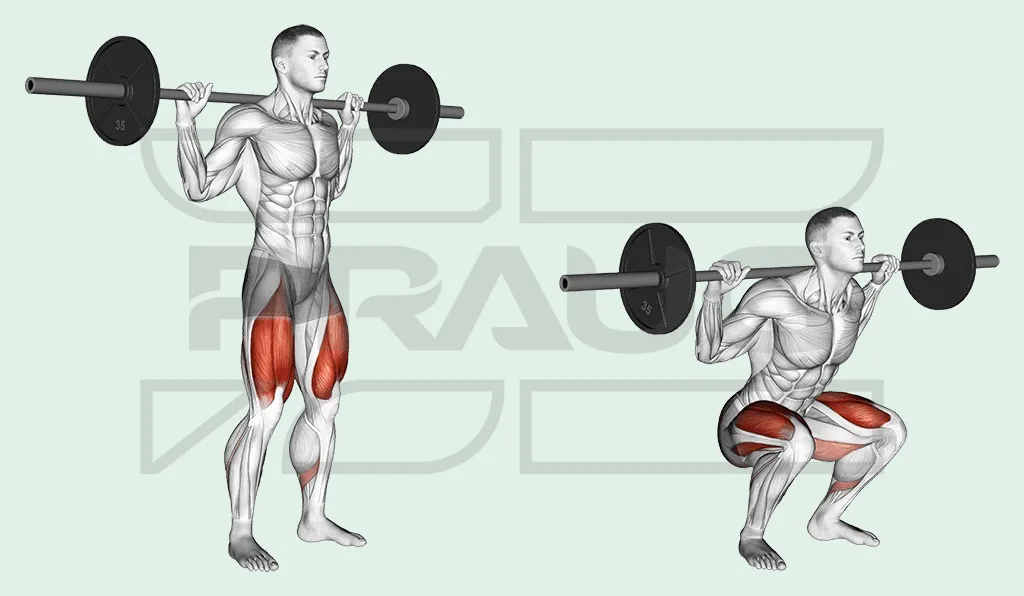
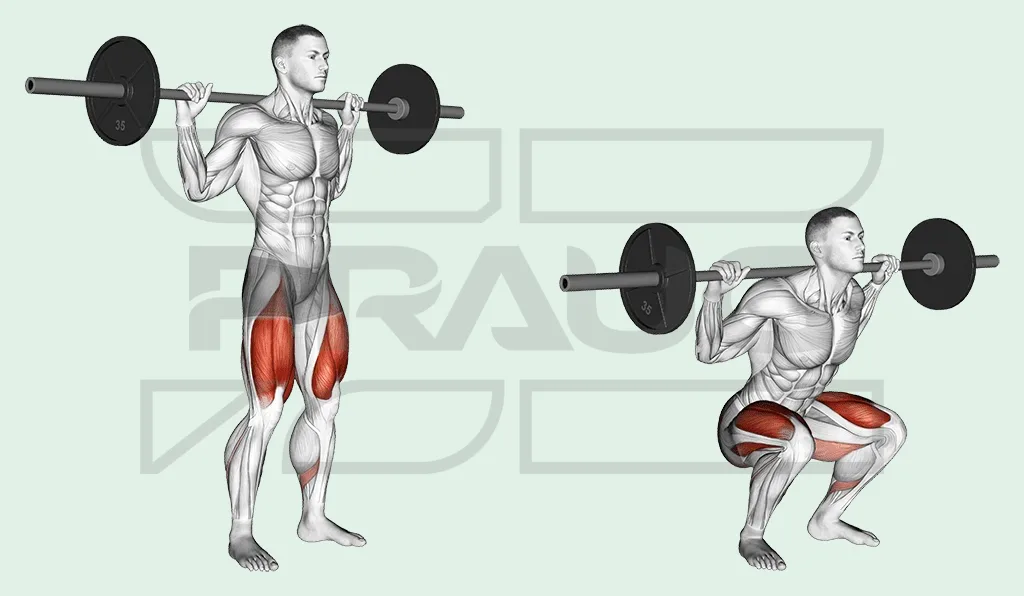
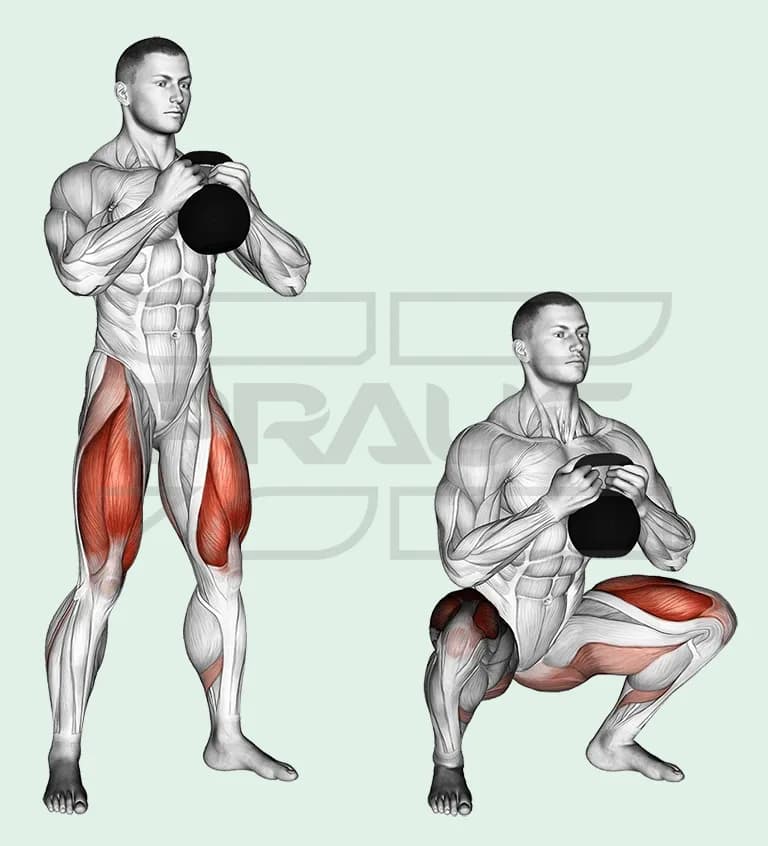
A goblet squat adds a weight held in front. A barbell back squat uses a rack and a different loading arrangement. These are options for a purpose, not milestones everyone must reach.
Sets, repetitions and progression
One coaching example uses 3–4 sets of 15–25 repetitions per session as a coaching example, with lighter practice before loaded work. Adapt the amount to ability and the rest of the session. A beginner may need fewer repetitions or a supported version.
Track stance, depth, tempo, support and repetitions. When the existing task becomes easier, add repetitions or change one difficulty setting. More than 25 repetitions is not automatically useless, and external load is not compulsory.
For other knee-dominant options, browse the quadriceps collection. The Romanian deadlift provides a different hip-hinge task; an air squat does not cover every lower-body function.
Illustrated positions and variations
These original illustrations show example setups. Choose a range, support and difficulty you can control.
Air squat movement
Other squat setups
Frequently asked questions
Is an air squat the same as a bodyweight squat?
These names commonly describe the same unloaded squat. Record your exact stance and range when comparing sessions.
Can the knees go past the toes?
Yes, depending on the setup and your proportions. Holding them back is not a universal technique requirement.
How low should I go?
Choose a controlled and repeatable range. Do not force a depth through pain or treat a video alone as a diagnosis.
When should I add weight?
When it serves your goal and the existing task is manageable. There is no compulsory 25-repetition threshold.
Sources and limitations
Sources support the passages that cite them. Practical suggestions are coaching choices to adapt to your own situation.
- Kubo et al. · 2019 · Barbell-squat training at two depths over ten weeks. ↗
Small male sample; loaded squats, not a direct test of air or goblet squats. No universal depth or safety rule follows.
- Fry et al. · 2003 · Hip and knee torque with restricted forward knee travel in barbell squats. ↗
Seven trained men and acute measurements. No injury follow-up or direct bodyweight-squat training trial.
This general information does not replace individual advice. Zepraug’s limitations.