Training· 5 min read
Romanian deadlift: hip hinge, range and technique
Other names: RDL
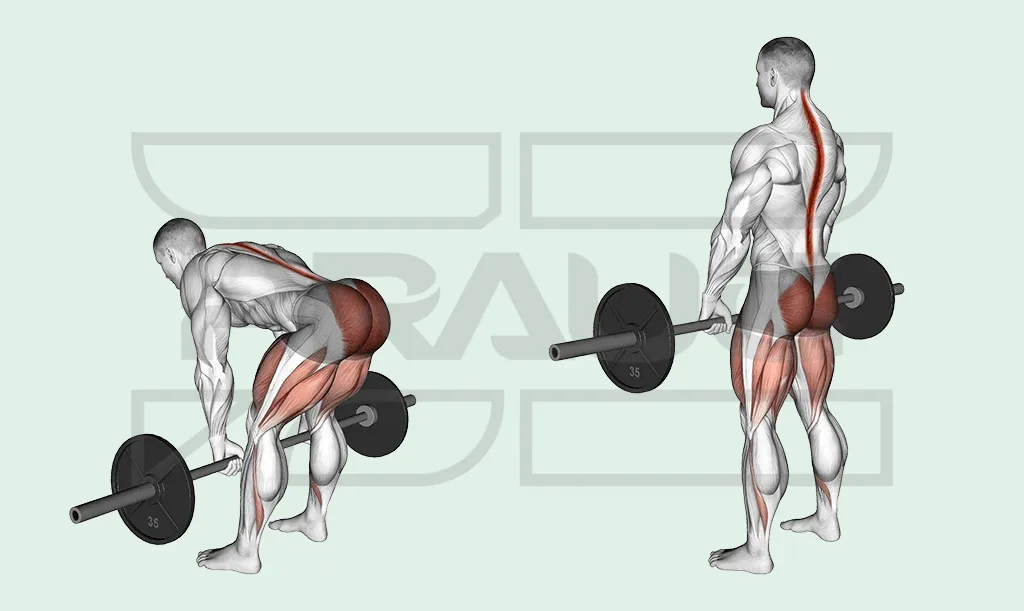
A Romanian deadlift, or RDL, starts standing with a weight held in the hands. You move the hips backwards while the knees stay softly bent, lower through a controlled hip hinge and stand again. It trains the hamstrings and glutes in hip extension without requiring the weight to touch the floor between repetitions.

Certified fitness coach · CQP Instructeur Fitness
Published on
The essentials before you start.
- Begin with a load you can hold and hinge with control.
- Keep the weight close and choose depth from the movement you can manage, not a compulsory floor target.
- Soft knees are a starting cue; do not force a locked-knee position.
- The cited acute comparison does not prove superior growth or injury prevention.
Exercise facts
- Main muscles
- Hamstrings, Gluteus maximus
- Secondary muscles
- Spinal erectors, Trapezius, Forearm muscles
- Equipment
- Barbell or dumbbells
What the RDL trains
The hamstrings and glutes contribute to hip extension. The trunk, upper back and grip support the position and weight. Their work is not removed by calling it a hamstring exercise.
The cited comparison tested squats, RDLs and hip thrusts in eight trained men with electrical measurements in one session. It does not establish long-term growth rankings, injury risk or the best hinge range for every person.
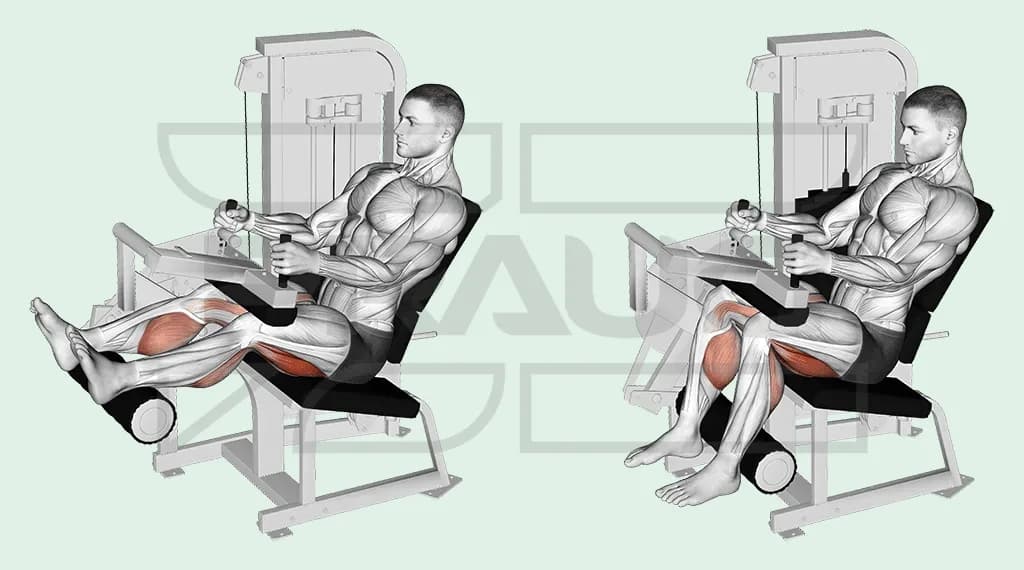
Unlike a conventional deadlift, the repeated RDL begins from standing and usually reverses before the plates reach the floor. A seated leg curl trains knee flexion instead of the same hinge.
How to perform a Romanian deadlift
Use a light implement to practise first. Plan how to obtain and return the weight, for example from a suitable rack height. Do not improvise a difficult floor pickup just to begin the set.
- Stand with stable feet around hip width and hold the load close in front of the thighs.
- Set a manageable trunk position and a small knee bend. Maintain enough knee movement to stay controlled rather than locking the joints.
- Move the hips backwards as the torso inclines, keeping the weight close to the legs.
- Lower only as far as you can retain the intended hinge and control. A hamstring stretch can be a cue, but it is not a sensation to force.
- Reverse smoothly and bring the hips forwards to stand. Finish without leaning backwards.
- Repeat the same range and return the load with control when the set ends.
How low should the weight go?
Body proportions, implement, knee bend and current control affect the lowest point. There is no universal mid-shin or floor requirement. Lowering further by changing the trunk position is not the same hinge range.
A rigidly identical spinal curve is not an individual safety test, but an abrupt loss of the intended position under load is a reason to reduce demand. A side video can help compare technique; it does not diagnose a condition.
Avoid jerking the weight up, drifting it away from the legs or repeatedly turning the movement into a deeper knee-dominant squat. Use a sustainable breathing and bracing strategy. Stop for sharp pain and seek advice for persistent symptoms.
Dumbbells, single-leg work and other hinges
Dumbbells change the hand position and freedom around the legs. Record their combined load and range rather than assuming the barbell number transfers directly.
A single-leg RDL adds a balance and pelvic-control demand; a supported version can change that requirement. It is not automatically more effective for the hamstrings or a correction for an imbalance.
A deficit raises the feet relative to the load. Extra depth is not a compulsory progression and can exceed the hinge range you can control. Stiff-leg deadlift naming varies; record the actual knee bend, range and start position instead of relying on the name alone.
A Nordic curl trains a different knee-flexion task and needs secure anchoring and an appropriate progression. The source cited for this RDL does not establish a Nordic injury-prevention effect or make it a required partner exercise.
Sets, repetitions and progression
One coaching example uses 3–4 sets of 8–12 repetitions as one example. Choose demand and rest according to skill, the whole session and recovery rather than treating that range as a study-proved prescription.
Record the implement, grip, knee bend, range, load, repetitions and effort. Add a manageable demand only when the current work remains repeatable, including the start and finish. More stretch is not automatically more useful.
See the hamstring collection for the distinction between hinges and curls, and the glute collection for other hip-extension setups.
Illustrated positions and variations
These original illustrations show example setups. Choose a range, support and difficulty you can control.
Romanian deadlift movement
Frequently asked questions
Does the bar need to touch the floor?
No. The repeated RDL reverses within your chosen controlled hinge range. A floor-start deadlift is a different task.
Should my knees be straight?
Use a soft bend rather than forcing locked knees. Record how much knee motion you use.
Does a deeper stretch mean better training?
Not automatically. Choose a range you can control rather than chasing stretch at any cost.
Can I use dumbbells?
Yes, with a secure grip and planned start and finish. Their position and load are not identical to a barbell setup.
Sources and limitations
Sources support the passages that cite them. Practical suggestions are coaching choices to adapt to your own situation.
- Delgado et al. · 2019 · Electrical activity during squats, Romanian deadlifts and hip thrusts. ↗
Eight trained men in one session. No long-term hypertrophy, safety ranking or optimal individual hinge depth was established.
This general information does not replace individual advice. Zepraug’s limitations.