Training· 5 min read
Seated leg curl: machine setup and controlled technique
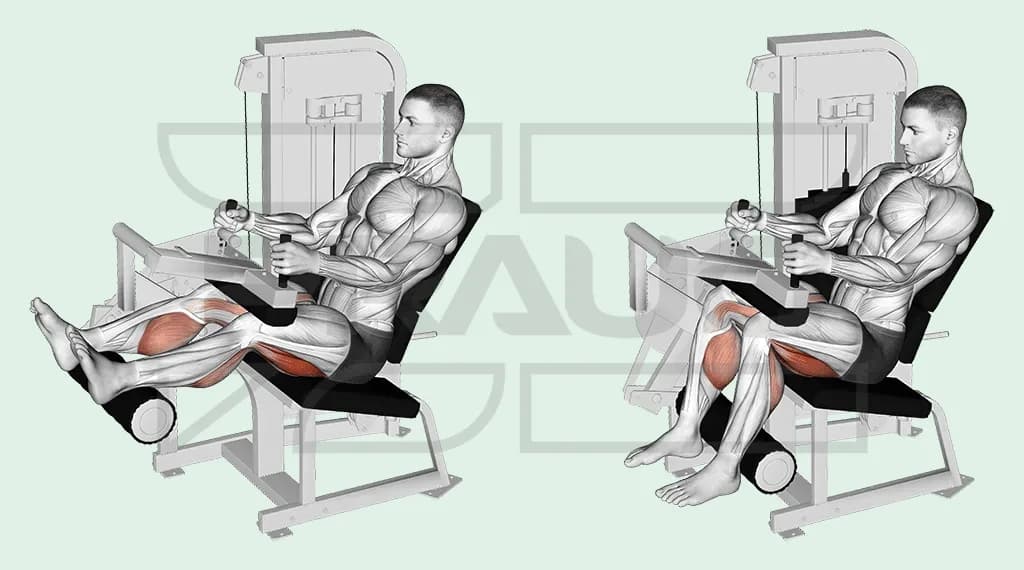
A seated leg curl bends the knees against the machine’s resistance while the hips remain flexed and the thighs supported. It directly trains knee flexion, with the hamstrings doing much of that work. Set the seat, thigh pad, lower-leg roller and starting range before choosing the load.

Certified fitness coach · CQP Instructeur Fitness
Published on
The essentials before you start.
- Follow the model’s settings and align the knee region with its intended pivot.
- Keep the thighs supported and control both the curl and return.
- A twelve-week study favoured seated over prone training for measured hamstring growth under its conditions.
- That result does not prove every machine, range or trainee will respond identically.
Exercise facts
- Main muscles
- Hamstrings
- Secondary muscles
- Gastrocnemius
- Equipment
- Seated leg-curl machine
What a seated curl adds
The hamstrings bend the knee, with the gastrocnemius at the calf also able to assist. Hip flexion lengthens the hamstring portions that cross both hip and knee compared with a less flexed hip position. This does not mean every hamstring head changes length in the same way.
A twelve-week trial assigned one leg of each participant to seated curls and the other to prone curls. MRI-measured hamstring growth was greater in the seated condition under that protocol. The small sample and specific training do not establish the same difference in advanced trainees or all machines.
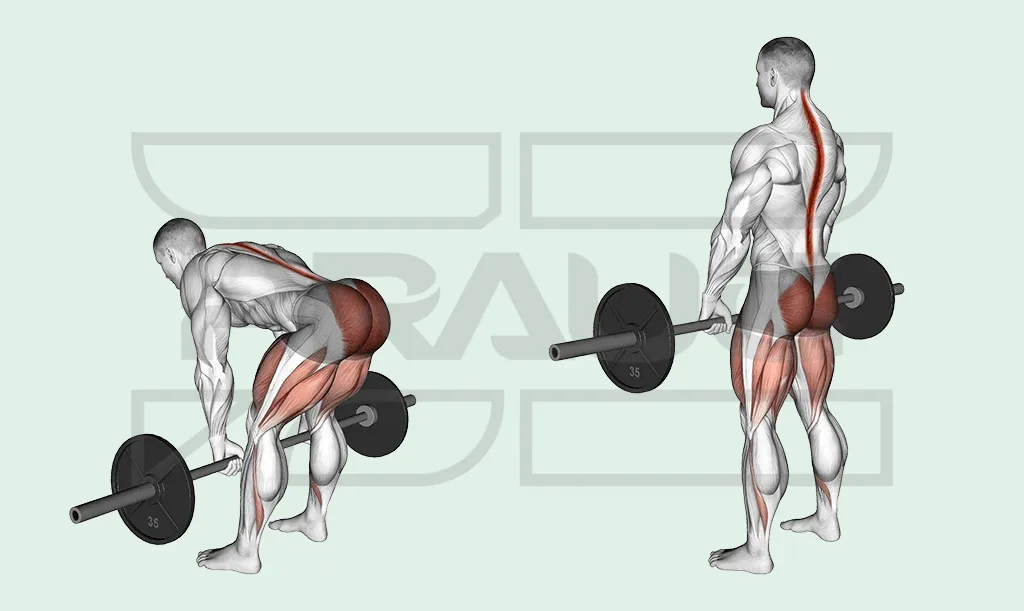
A Romanian deadlift trains a different hip-hinge task. A curl and a hinge can be chosen together, but there is no need to claim they each account for exactly half of a complete programme.
How to adjust and use the machine
Begin lightly and follow the instructions for that model. Do not force the machine’s pivot or pads into an uncomfortable fit.
- Adjust the backrest so the knees align with the intended pivot and the pelvis remains supported.
- Place the thigh restraint on the thighs as designed, rather than directly pressing on the kneecaps. Set the lower-leg roller near the lower calf above the heel as the model requires.
- Choose a starting extension range you can control without being pulled into discomfort. Hold the handles for support.
- Bend the knees smoothly against the resistance, maintaining the intended seated position.
- Pause briefly if useful, then return under control to the same starting range.
- Finish with the weight supported and use the intended release method before standing.
Range, support and common errors
Avoid lifting the pelvis, jerking to start the curl or changing torso angle on each repetition to move a heavier stack. The machine does not make compensation impossible. Keep a repeatable setup or reduce the demand.
Do not force the legs straighter than the range you can manage. A strong stretch is not a requirement to push through pain, and changing the seat is not a guaranteed solution to a hamstring or knee condition.
If the starting position feels excessively stretched, adjust the machine and range while keeping support consistent rather than rocking through repetitions. Seek individual advice if a comfortable fit is not possible.
One-leg, prone and standing curls
One-leg work is possible on suitable equipment and lets you record each side under comparable conditions. A difference is not automatically a diagnosis or a reason to double one side’s work.
A prone curl changes hip position and pad arrangement; a standing curl changes support again. Use the instructions for each model rather than transferring identical seat settings or load numbers.
A Romanian deadlift is a hinge alternative for a different task, not a seated curl without a machine. Nordic curls are another knee-flexion option with their own anchoring and progression requirements; they are not automatically an accessible bodyweight replacement.
Sets, repetitions and progression
One coaching example is 3–4 sets of 8–15 repetitions with a controlled return and optional brief curl pause. Adapt the amount to your experience and other lower-body work; this is not the exact protocol or a minimum dose established by the trial.
It can follow a more demanding compound movement or appear earlier when knee-flexion practice is the priority. Muscle fatigue alone does not show the set has the right demand for your current plan.
Record the machine, seat, pads, range, load and repetitions. Add demand when the same work remains repeatable. Review the hamstring collection to compare knee-flexion and hip-extension choices.
Frequently asked questions
Is seated always better than lying?
The cited trial favoured seated training for measured growth in its protocol. It does not prove the same advantage for every person, machine or goal.
Where should the pads sit?
Use the model instructions: thigh restraint on the thighs and the lower roller in its intended lower-leg position, with the knee aligned to the pivot.
Should I rock my torso to get more range?
Keep the chosen setup repeatable. Adjust the machine, range or load instead of using a changing torso position to move the stack.
Does a squat replace a leg curl?
It is a different task. Knee-flexion work can serve a goal that a squat does not specifically practise.
Sources and limitations
Sources support the passages that cite them. Practical suggestions are coaching choices to adapt to your own situation.
- Maeo et al. · 2021 · Twelve weeks of seated versus prone leg-curl training. ↗
Small sample and a specific within-participant protocol. Results do not establish the same difference for all machines or experienced trainees.
This general information does not replace individual advice. Zepraug’s limitations.