Training· 5 min read
Goblet squat: dumbbell or kettlebell technique
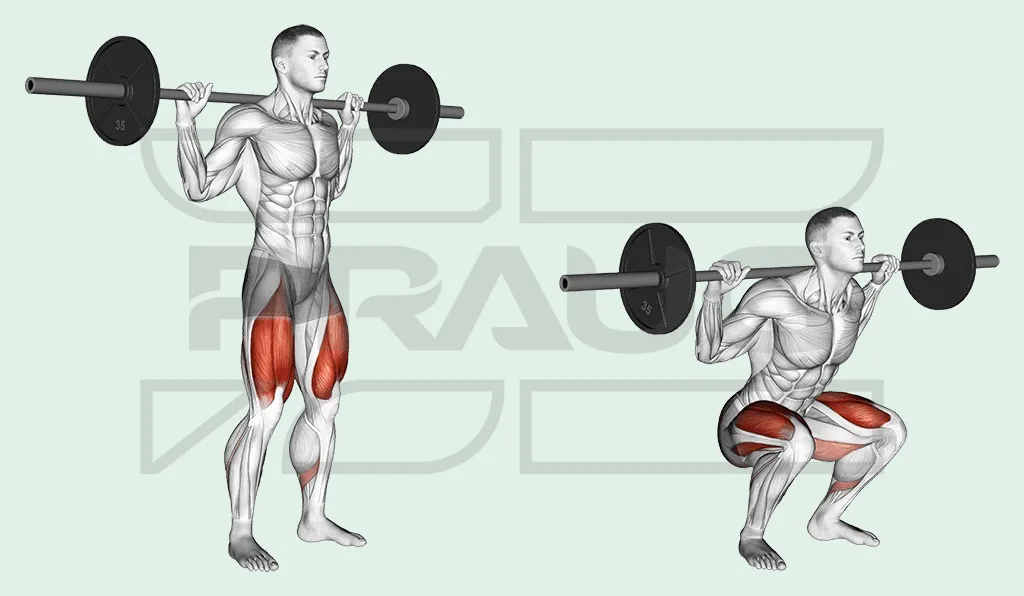
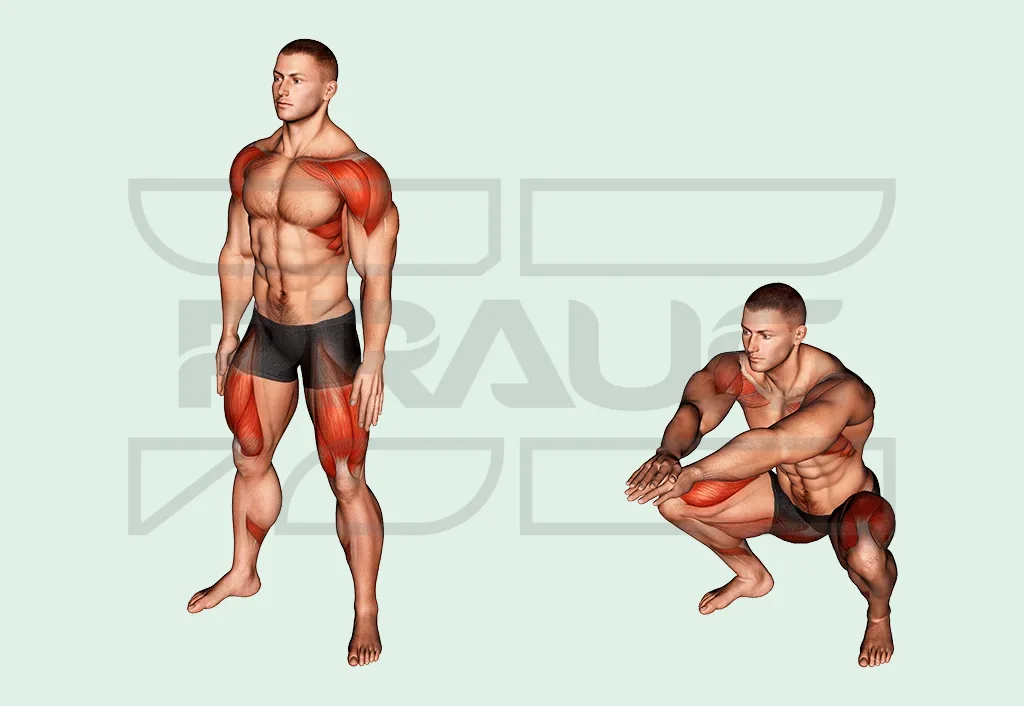
A goblet squat holds a dumbbell or kettlebell in front of the chest while you squat. The front-held weight changes balance and loading compared with an air squat. It can be a useful way to practise and load the movement, but it does not automatically create the right position for every person.

Certified fitness coach · CQP Instructeur Fitness
Published on
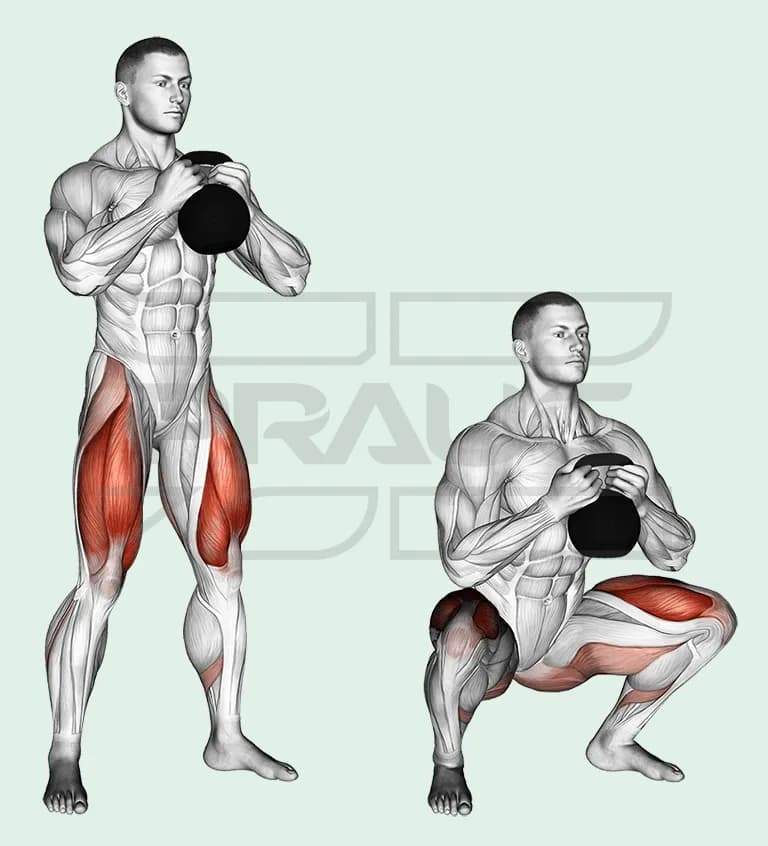
The essentials before you start.
- Choose a weight you can lift into position, hold securely and put down with control.
- Keep the weight close while the hips and knees bend together.
- Use a comfortable stance and repeatable depth rather than a compulsory upright torso.
- The grip or holding position can become limiting before the legs.
Exercise facts
- Main muscles
- Quadriceps
- Secondary muscles
- Gluteus maximus, Adductors, Abdominals, Spinal erectors
- Equipment
- Kettlebell or suitable dumbbell
What the goblet squat trains
The quadriceps, glutes and adductors contribute as the knees and hips extend. The trunk and upper body support the front-held weight. The torso angle depends on the load, stance and your proportions; the kettlebell does not do all the positioning for you.
One acute study compared goblet and landmine squats at one relative load. It recorded thigh activity and ground forces, not glute growth or long-term training outcomes. The separate squat-depth trial used a barbell, so its findings are indirect for a goblet squat.
This option fits alongside the air squat and barbell squat in the quadriceps collection. It need not be only a beginner exercise.
How to hold and perform the squat
Check the weight, handle and floor space. Do not assume every adjustable dumbbell is designed to be held by a plate.
- Bring a manageable kettlebell to the chest using a secure grip on its handle, or hold a suitable dumbbell with a grip intended for that equipment.
- Stand with stable foot contact and a comfortable stance. Keep the weight close rather than reaching it forwards.
- Brace enough to maintain the intended trunk position, then bend the hips and knees together.
- Lower to a controlled depth while the knees travel broadly with the feet. Avoid forcing the elbows to push the knees apart.
- Stand smoothly through the supported feet. Finish without leaning backwards.
- Return the weight using a planned, controlled method when the set ends.
When to change the load or range
If the weight drifts away, the upper back collapses or you cannot control the return, use less load and restore the intended range. The goal is a repeatable squat, not a weight held up at any cost.
Heels lifting or a torso that inclines does not identify a single cause. Review stance, depth and support rather than diagnosing ankle stiffness or declaring everyone must remain vertical.
Use a stable, non-slip heel wedge if deliberately changing heel height. Loose stacked objects can move. Stop for sharp pain and seek advice for persistent symptoms; a different squat variation is not a guaranteed treatment.
Dumbbells, pauses and heel elevation
A dumbbell and a kettlebell change the grip and the way the load is held. Choose the one you can support securely. A brief bottom pause or slower lowering phase changes the task without requiring a heavier weight.
Heel elevation changes ankle and knee positioning and may make a chosen depth more accessible. It is an option, not a diagnosis or a temporary correction everyone needs.
If the hold is the limiting factor, a barbell squat or suitable leg machine changes the loading arrangement. The inclined leg press provides support but has its own setup and stop system. None is an obligatory next step.
Other options include kettlebell circuits and wide-stance squats. These can be different training tasks; alternating them without rest is not required to make a goblet squat effective.
Sets, repetitions and tracking
One coaching example is 3–4 sets of 8–15 repetitions with around 1–2 minutes of rest. Use less work for initial practice or a warm-up, and adapt training volume to the rest of the week. This prescription was not tested by the acute comparison.
Record the implement, total weight, grip, heel height, range and repetitions. Add a manageable demand when the existing work remains repeatable. If the grip gives out first, change the setup or exercise instead of assuming the legs have reached their limit.
Pair exercises according to your overall goal. A hip hinge offers a different movement, but a second exercise is not required just to label one session balanced.
Illustrated positions and variations
These original illustrations show example setups. Choose a range, support and difficulty you can control.
Goblet squat movement
Frequently asked questions
Dumbbell or kettlebell?
Use the implement you can hold securely, bring into position and return under control. Check the design of adjustable weights before holding them by a plate.
Must my torso stay vertical?
No. The load and your proportions affect the angle. Aim for a controlled, repeatable position.
Should I raise my heels?
It is an optional setup change using stable equipment, not a compulsory correction.
What if my arms tire before my legs?
The hold can be the limiting factor. Choose another appropriate loading arrangement if that better serves the goal.
Sources and limitations
Sources support the passages that cite them. Practical suggestions are coaching choices to adapt to your own situation.
- Collins et al. · 2021 · Goblet and landmine squat activity and ground forces at one load. ↗
Acute thigh measurements, not glute hypertrophy or a long-term comparison of squat progressions.
- Kubo et al. · 2019 · Barbell-squat training at two depths over ten weeks. ↗
Small male sample; loaded squats, not a direct test of air or goblet squats. No universal depth or safety rule follows.
This general information does not replace individual advice. Zepraug’s limitations.