Training· 5 min read
Glute bridge: floor setup, technique and progressions
Other names: Floor glute bridge, Hip bridge
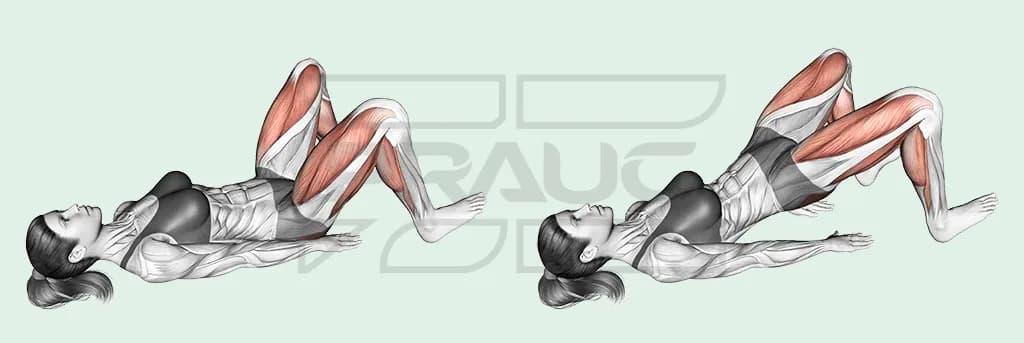
A glute bridge raises the hips from a back-lying position with the knees bent and feet on the floor. The glutes contribute to hip extension while the trunk helps control the position. Lift to a comfortable body line rather than chasing extra height by arching the lower back.

Certified fitness coach · CQP Instructeur Fitness
Published on
The essentials before you start.
- Set the feet where you can press and move without cramping or losing control.
- Raise the hips with a steady trunk, then lower smoothly.
- Pauses, single-leg versions and suitable loading change the task without a compulsory twenty-repetition threshold.
- Research on electrical activity or other exercises does not directly establish floor-bridge growth or treatment effects.
Exercise facts
- Main muscles
- Gluteus maximus
- Secondary muscles
- Hamstrings, Gluteus medius, Spinal erectors, Abdominals
- Equipment
- Bodyweight, Mat
What the glute bridge trains
The gluteus maximus contributes to extending the hips, with the hamstrings assisting. The trunk and other hip muscles help maintain the chosen position, particularly when support becomes asymmetric. Feeling a muscle work does not identify the exact share of the load.
The bodyweight-exercise review cited here describes electrical activity rather than growth. The sex-comparison synthesis was not a glute-bridge trial, and the squat-versus-hip-thrust study did not test a floor bridge. None establishes a special bridge technique or toning protocol for women.
Use it as a chosen training task or light movement practice, not a guaranteed way to reverse a day of sitting, activate an otherwise inactive muscle or treat back pain. Individual pregnancy or postpartum advice takes precedence over a general exercise guide.
How to perform a floor bridge
Use a comfortable mat and a clear area. Begin without added load.
- Lie on the back with the knees bent and feet flat around hip width. Let the arms rest where they provide comfortable support.
- Choose a foot distance that permits a controlled lift. Being able to touch the heels is a rough setup cue, not a requirement for every body.
- Organise the ribs and pelvis so you can lift without a large uncontrolled arch.
- Press through the supported feet and extend the hips until the trunk and thighs form a comfortable line.
- Pause briefly if useful, keeping the knees broadly aligned with the feet.
- Lower smoothly and repeat the same range, breathing throughout rather than holding a long strained breath.
Foot position, cramps and common errors
Feet further away change the knee and hip arrangement and may feel more demanding at the hamstrings. Bring them closer if that improves control, but do not treat every cramp as proof of inactive glutes. Stop and reset if a cramp occurs.
Avoid lifting by throwing the ribs upwards, bouncing from the floor or repeatedly rolling onto the toes. Keep a repeatable foot contact and finish position. A smaller range can be appropriate when learning.
A brief top pause can help define the end point; it is not a proven requirement for growth. Stop for sharp pain and seek individual advice for persistent symptoms rather than assuming the bridge is automatically suitable for every back or hip.
Pauses, single-leg bridges and added resistance
A slower bridge or an isometric top hold changes the duration and demand. A single-leg version shifts support and increases the need to control pelvic rotation; it is not simply exactly twice the load and is not compulsory for everyone.
A band above the knees changes the task and adds a demand to maintain the chosen leg position. Do not force the knees as wide as possible or assume a band guarantees a particular muscle outcome.
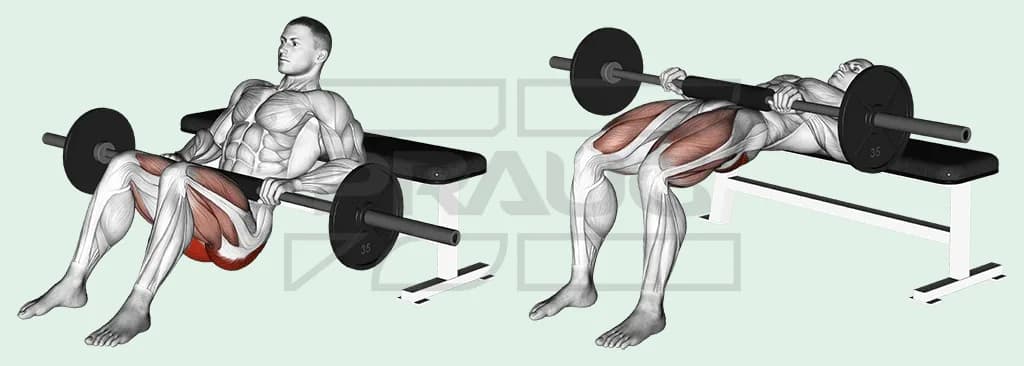
Added load needs a secure position and a comfortable protective pad, with a planned method of getting it on and off. A loose household object is not automatically an appropriate weight. The hip thrust raises the upper-back support and changes the range and setup.
A squat or Bulgarian split squat provides a different knee-and-hip task. The studies here do not prove that combining any fixed pair is superior for every trainee.
Sets, repetitions and use in the week
One coaching example uses 3–4 sets of 12–20 bodyweight repetitions, or a lower range with added demand, as adjustable examples. Adapt those amounts to ability, recovery and other hip-extension work. For warm-up use, keep the work light enough to prepare rather than fatigue.
Record foot distance, support, range, pause, load and repetitions. Increase one demand when useful without assuming a twenty-repetition boundary changes the exercise’s biological effect.
See the glute collection for related movement choices. The setup can be adapted to the individual; sex alone does not determine a different floor-bridge technique.
Frequently asked questions
Is a glute bridge the same as a hip thrust?
Both extend the hips, but a floor bridge supports the upper back on the floor while a hip thrust raises that support. Range and setup differ.
What if I feel my hamstrings?
They contribute to hip extension. Review foot distance and control, reset for cramping, and do not diagnose a glute problem from sensation alone.
Do women need a different bridge programme?
There is no sex-specific bridge technique established by these sources. Choose demand and progression for the individual.
Should I progress at twenty repetitions?
It is an optional coaching reference, not a compulsory threshold. Choose a progression that serves your goal.
Sources and limitations
Sources support the passages that cite them. Practical suggestions are coaching choices to adapt to your own situation.
- Macadam et Feser · 2019 · Systematic review of glute activity during bodyweight hip-extension exercises. ↗
Electrical-activity comparisons with varied methods, not measured growth or a ranking of loaded bridge training.
- Roberts et al. · 2020 · Meta-analysis of sex differences under comparable resistance training. ↗
Not specific to glute bridges. Relative responses do not determine an individual technique or programme.
- Barbalho et al. · 2020 · Squat and hip-thrust training in trained women. ↗
Small groups and thickness measurements; no floor bridge was tested. This reference is not used to rank floor-bridge outcomes.
This general information does not replace individual advice. Zepraug’s limitations.