Training· 4 min read
One-arm push-up: setup, technique and progression
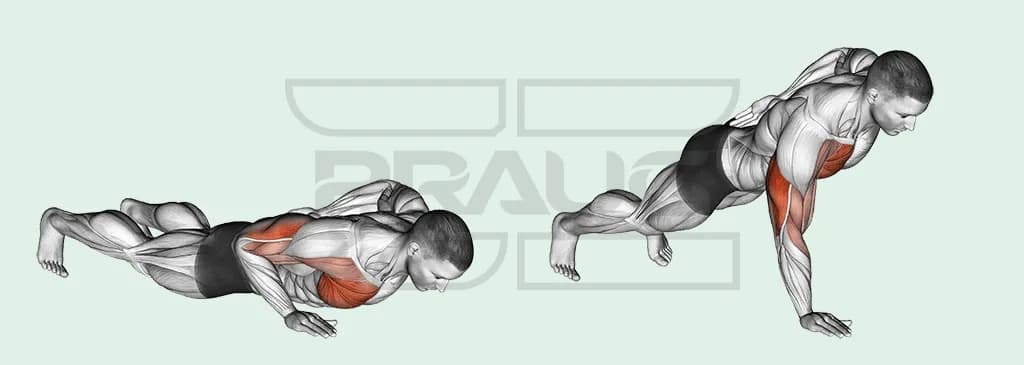
A one-arm push-up presses through one hand while the feet and trunk help control the body. It adds substantial balance and rotational-control demands. Choose suitable assistance, elevation or range rather than treating a floor repetition as a required achievement or a universal measure of pressing strength.

Certified fitness coach · CQP Instructeur Fitness
Published on
The essentials before you start.
- Choose a secure setup and a manageable starting demand.
- Keep the intended support, arm path and range repeatable.
- The cited studies have specific populations and exercise limits.
- Count this work within the whole week rather than adding every variation.
Exercise facts
- Main muscles
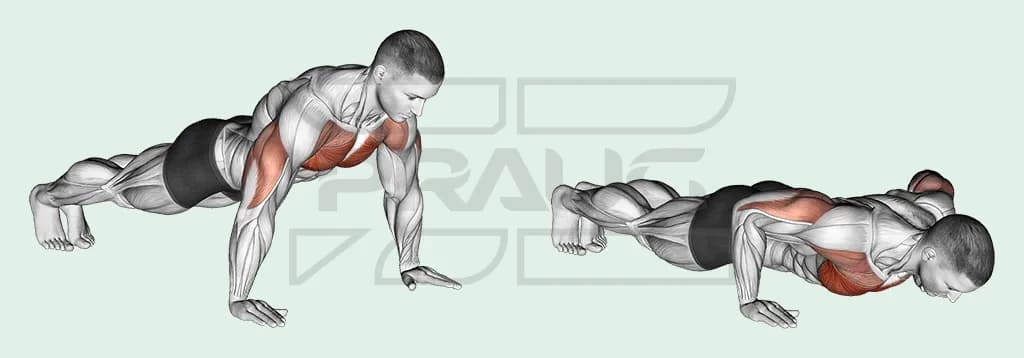
- Pectoralis major, Triceps brachii
- Secondary muscles
- Anterior deltoids, Obliques, Abdominal wall, Rotator cuff
- Equipment
- Bodyweight
What the movement trains
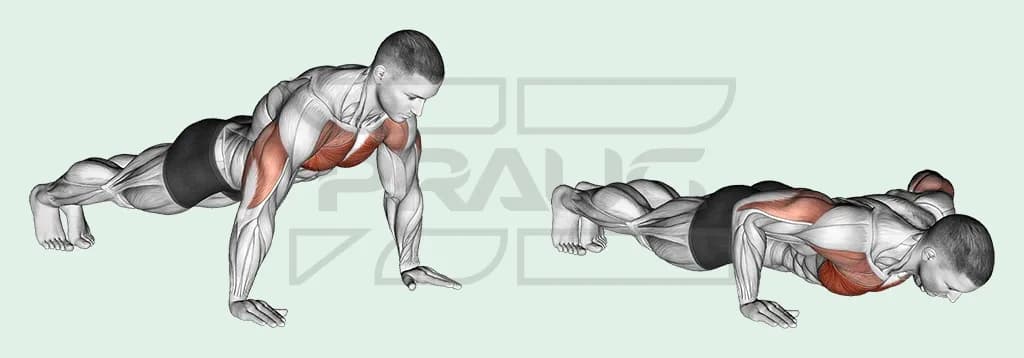
The chest, triceps and front shoulder contribute to the press, while the trunk and hips resist unwanted rotation. Load distribution depends on hand and foot positions and body proportions. It is inaccurate to treat the whole body mass as a dumbbell load held by one arm.
Set up and perform the movement
- Use a non-slip floor or a stable raised exercise support intended for the task. Start at a manageable height or with appropriate assistance.
- Place the working hand at a position that supports the press without forcing it to a fixed number of centimetres from the body’s midline.
- Set the feet with enough width for the intended balance, and establish a controlled trunk position. Arrange the other arm so it does not create an uncontrolled twist.
- Bend the working elbow and lower through a range you can retain without the hip dropping or the head reaching down first.
- Press smoothly back to the intended start, keeping the body position repeatable instead of rotating substantially to finish.
- Rest on secure support, then use comparable conditions on the other side. End before a failed repetition becomes an uncontrolled fall.
Range, control and common changes
Wider feet, elevation, assistance and reduced range are coaching adjustments, not a validated fixed ladder. Record them explicitly. A narrow-foot floor version is a different challenge; a shallower repetition after fatigue is not automatically progress at the original task.
What the cited research does and does not show
The ten-person study estimated the highest spine compression in its one-arm condition among the tested push-ups. It did not measure injury rates, later growth or a readiness threshold for individuals.
Variations and alternatives
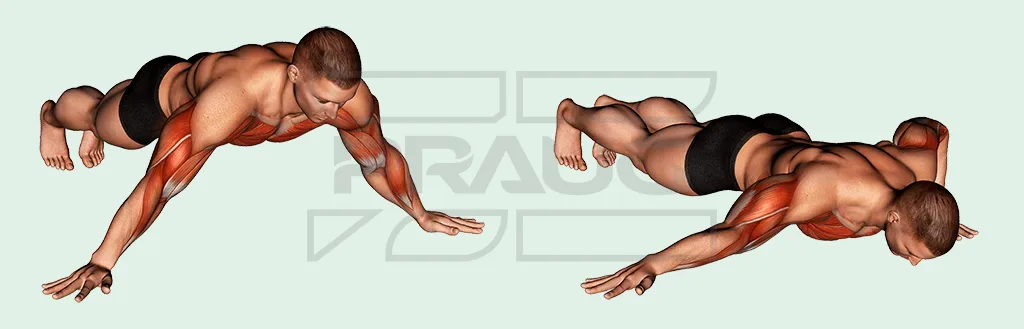
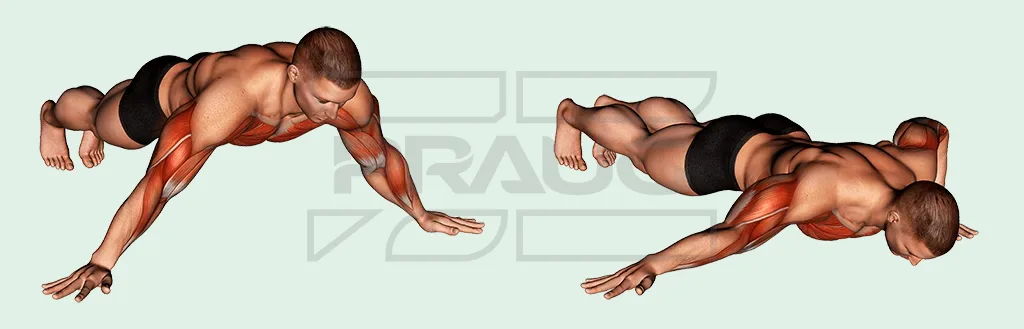
A standard push-up, archer push-up or appropriately assisted one-arm task can provide related practice. None is a mandatory prerequisite validated by the cited acute experiment. Weighted or unstable versions add separate demands rather than an automatic next step.
Sets, progression and tracking
One adaptable option is a few short sets of 1–5 controlled repetitions per side at a manageable elevation or assistance. Rest enough to retain the setup and account for the rest of the week’s pressing. Log range, height, hand and foot positions and effort instead of recording only a repetition count.
Illustrated positions and options
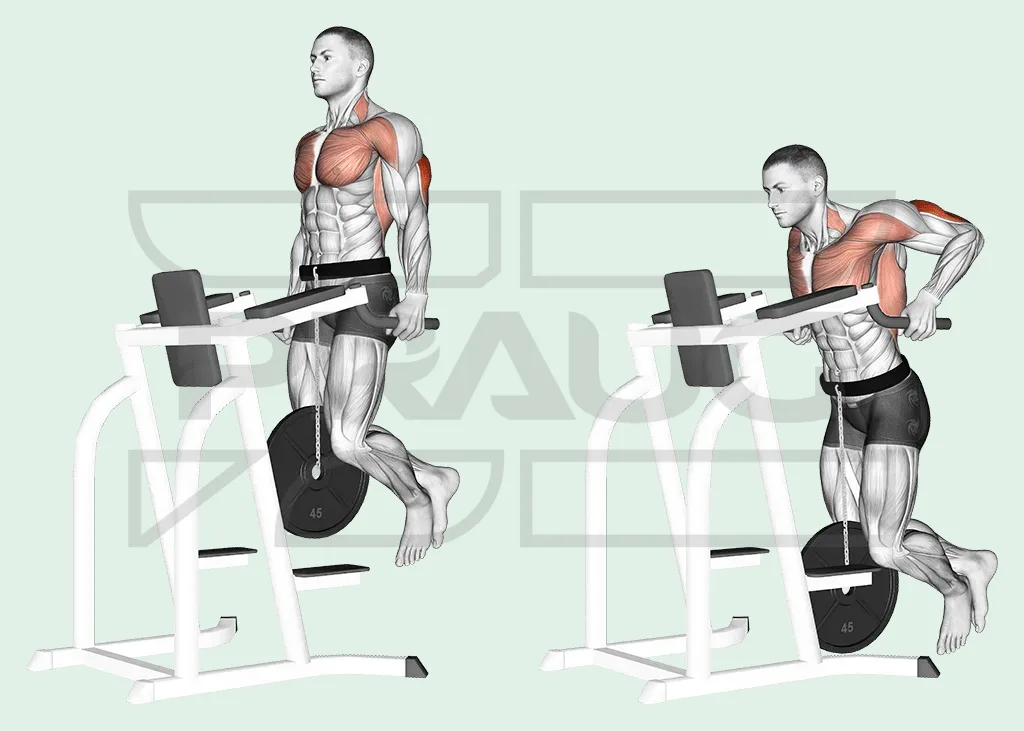
The images show example positions, not an individual range or loading prescription. A pictured household chair does not establish a suitable exercise support. Use equipment intended for the task.
Illustrated option 1
Frequently asked questions
Must the working hand be ten to fifteen centimetres from the midline?
That is not a universal fit rule. Hand position depends on proportions, support and a controlled pressing path.
Does the modelled spinal load prove this exercise causes injury?
No. An acute load estimate is not an individual injury prediction or a long-term training outcome.
When should I add demand?
When the chosen task, support and range are repeatable and the next increment is manageable. Record the setup and effort, and account for the rest of the week.
Sources and limitations
Sources support the passages that cite them. Practical suggestions are coaching choices to adapt to your own situation.
- Freeman and al. · 2006 · Push-up activity and modelled lumbar loading. ↗
Ten participants; no archer-specific training or injury-rate comparison.
This general information does not replace individual advice. Zepraug’s limitations.