Training· 4 min read
Weighted parallel-bar dip: setup, technique and progression
Other names: Weighted dip
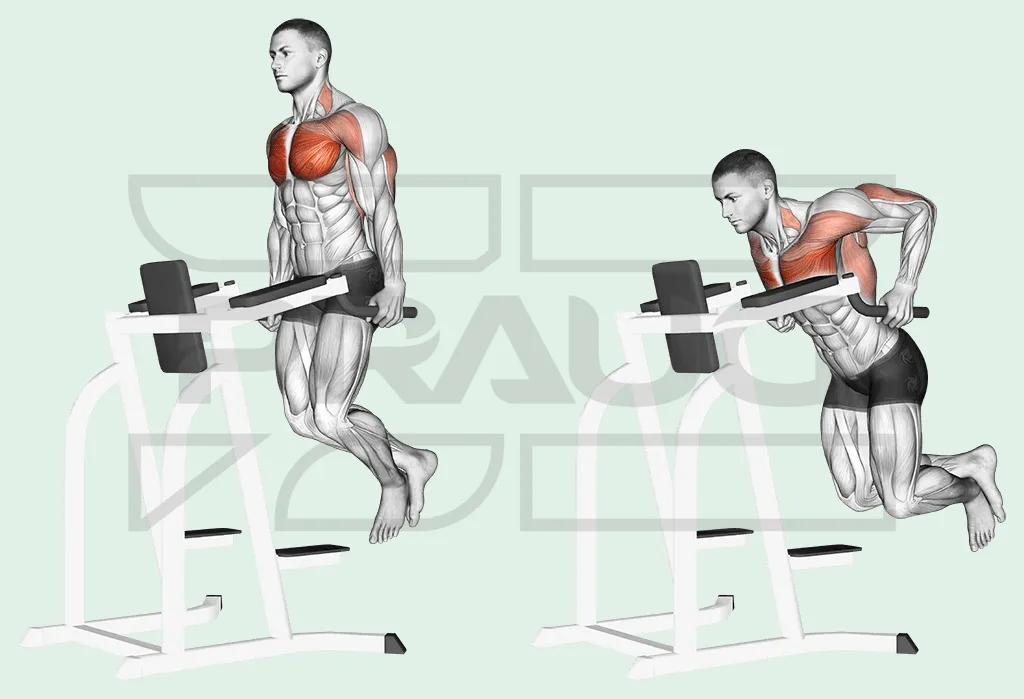
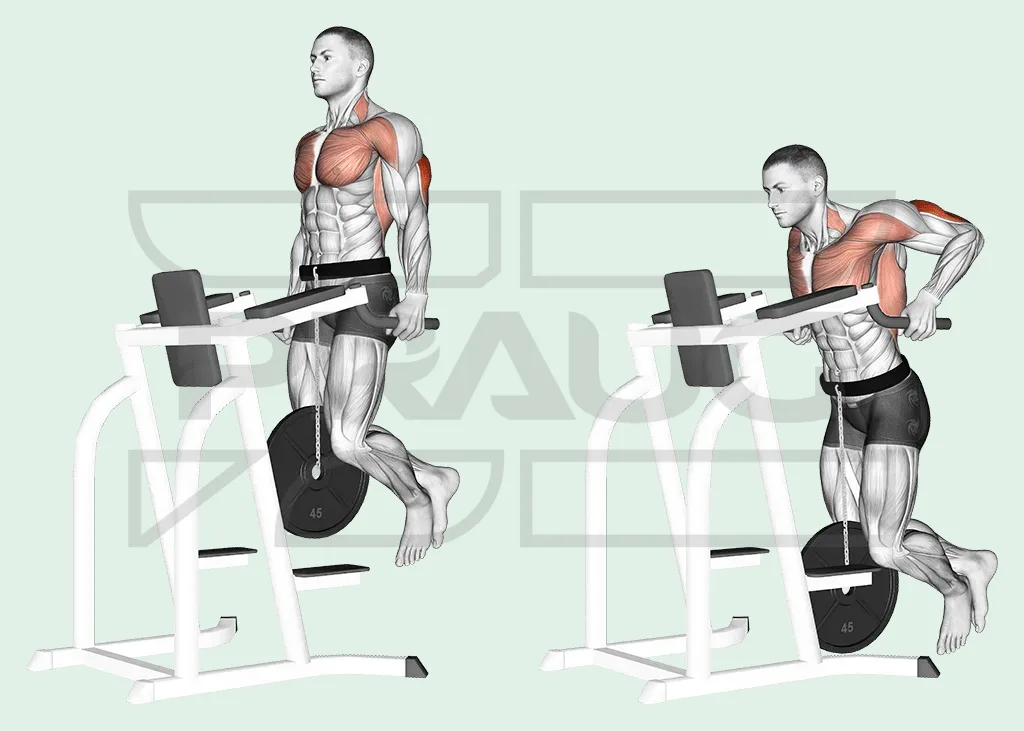
A weighted dip adds securely attached resistance to a parallel-bar dip. It increases the load to handle as well as the demand of the repetition. Establish repeatable bodyweight or assisted practice and a safe mounting and unloading method first; twelve to fifteen repetitions and a five-kilogram start are examples, not universal gates.

Certified fitness coach · CQP Instructeur Fitness
Published on
The essentials before you start.
- Choose a secure setup and a manageable starting demand.
- Keep the intended support, arm path and range repeatable.
- The cited studies have specific populations and exercise limits.
- Count this work within the whole week rather than adding every variation.
Exercise facts
- Main muscles
- Pectoralis major, Triceps brachii
- Secondary muscles
- Anterior deltoids, Latissimus dorsi, Abdominal wall
- Equipment
- Suitable parallel bars, Suitable dipping belt
What the movement trains
The chest, triceps and shoulder muscles contribute while the trunk and grip support the body. The load’s position affects clearance and swing. Record body mass and external mass separately; a higher plate total with reduced range is not the same performance.
Set up and perform the movement
- Use a station, belt or fitted weighted vest intended for the task. Check attachment security and clearance from the floor and body.
- Plan how to mount, reach support and unload before attaching a demanding weight. Use a secure access step or suitable assistance.
- Begin in a controlled support position with the load settled rather than swinging. Keep the legs arranged so they do not kick the load.
- Lower smoothly by bending the elbows through a repeatable range, without forcing a fixed shoulder depth or bouncing.
- Press back under control with the intended trunk angle and a stable grip. End before the finish or dismount becomes uncertain.
- Return the feet to secure support before removing or releasing the load. Lower and detach it using the equipment’s intended method.
Range, control and common changes
Choose a small added load that preserves the movement, instead of treating five kilograms as a compulsory minimum. A loose dumbbell held between the feet or a plate resting precariously on the body is not an automatic equivalent to a fitted belt or vest. Rings add another support change and need separate practice.
What the cited research does and does not show
The cited studies tested bodyweight dips, not added loads. They do not establish a weighted dose, loading threshold or long-term growth and injury outcomes.
Variations and alternatives
A suitable weighted vest changes loading and handling relative to a belt. A bodyweight or assisted parallel-bar dip remains a useful task. A bench dip is a different shoulder arrangement, not a necessary preparation for adding load.
Sets, progression and tracking
One coaching option is 3–4 sets of 5–10 controlled repetitions, with adequate rest, often two minutes or more. Begin with less work when adding resistance and account for other pressing. Keep bar spacing, depth, body angle and effort comparable before changing the load again.
Illustrated positions and options
The images show example positions, not an individual range or loading prescription. A pictured household chair does not establish a suitable exercise support. Use equipment intended for the task.
Illustrated option 1
Frequently asked questions
Must I reach fifteen bodyweight dips or start at five kilograms?
No fixed threshold or starting load was established by the cited research. Loading is optional and needs a repeatable movement and secure handling.
Can I extrapolate the fatigue study to heavy weighted dips?
The study used bodyweight. It does not validate every added load, deep range or fatigued weighted set.
When should I add demand?
When the chosen task, support and range are repeatable and the next increment is manageable. Record the setup and effort, and account for the rest of the week.
Sources and limitations
Sources support the passages that cite them. Practical suggestions are coaching choices to adapt to your own situation.
- McKenzie and al. · 2022 · Bodyweight bar-dip motion and activity with fatigue. ↗
One set in fifteen men; not weighted outcomes or injury rates.
- McKenzie and al. · 2022 · Acute comparison of bench, bar and ring dips. ↗
Thirteen men; not a longitudinal progression or injury study.
This general information does not replace individual advice. Zepraug’s limitations.