Training· 4 min read
Parallel-bar dip: setup, technique and progression
Other names: Bar dip
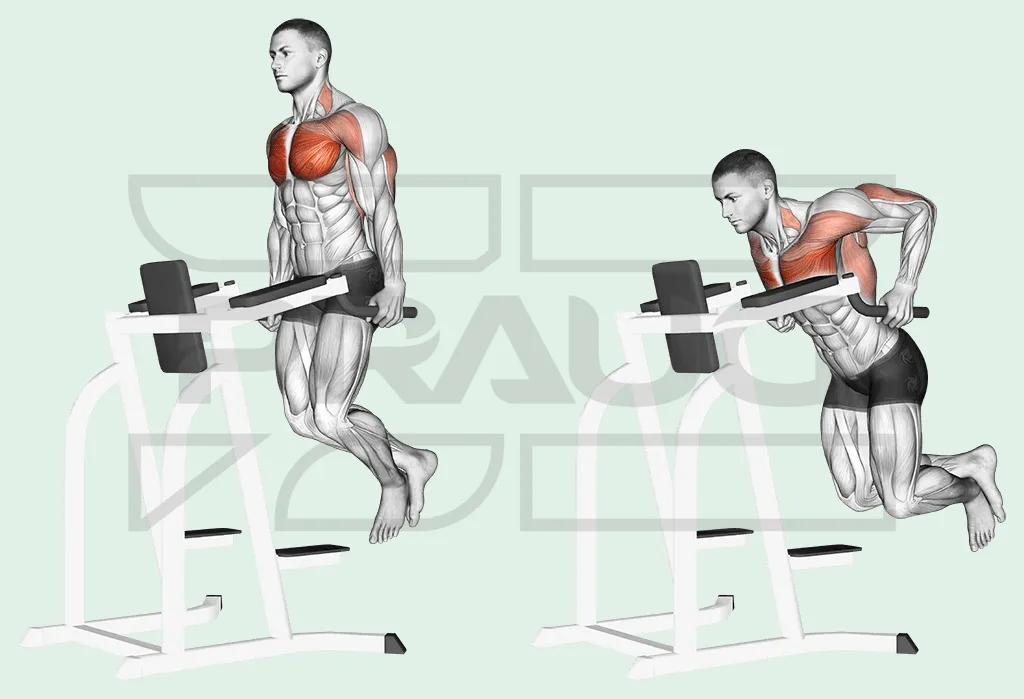
A parallel-bar dip lowers and raises the body by bending and extending the elbows while supported through the hands. The chest, triceps and front shoulder contribute together. Choose a suitable station, controlled range and assistance if needed; shoulder-to-elbow depth is not a universal requirement.

Certified fitness coach · CQP Instructeur Fitness
Published on
The essentials before you start.
- Choose a secure setup and a manageable starting demand.
- Keep the intended support, arm path and range repeatable.
- The cited studies have specific populations and exercise limits.
- Count this work within the whole week rather than adding every variation.
Exercise facts
- Main muscles
- Pectoralis major, Triceps
- Secondary muscles
- Anterior deltoids, Serratus anterior, Pectoralis minor, Trapezius and rhomboids, Abdominals
- Equipment
- Suitable parallel bars
What the movement trains
The triceps extend the elbows while the chest and shoulder muscles contribute to moving and supporting the upper arms. Trunk angle and the bar setup change the task without cleanly separating a chest-only dip from a triceps-only dip. The shoulder blades can move in coordination rather than being forced permanently down.
Set up and perform the movement
- Check that the parallel bars are intended for the load, stable and spaced suitably. Plan a secure mount and dismount.
- Use a step or the station’s intended access support to establish hand support. If bodyweight is too demanding, choose a suitable assisted station or another pressing task.
- Begin in a controlled top position with a full grip, steady trunk and feet clear as the station permits.
- Bend the elbows and lower smoothly through a range you can manage, with a torso angle you can repeat. Do not drop or bounce into the bottom.
- Press back to a controlled support position without a forceful elbow snap or a leg kick.
- Finish on the planned support before releasing the grip, and stop the set when the movement or dismount becomes uncertain.
Range, control and common changes
Choose depth by the task and control rather than forcing the upper arms horizontal. Leaning forwards changes the movement, not a validated on/off switch for chest involvement. Fatigue can change timing and position, so an acute study with few visible angle changes does not mean every fatigued set is appropriate.
What the cited research does and does not show
The small studies used bodyweight dips, brief trials or one exhausting set. They did not establish a chest-versus-triceps torso-angle rule, injury rates or long-term growth.
Variations and alternatives
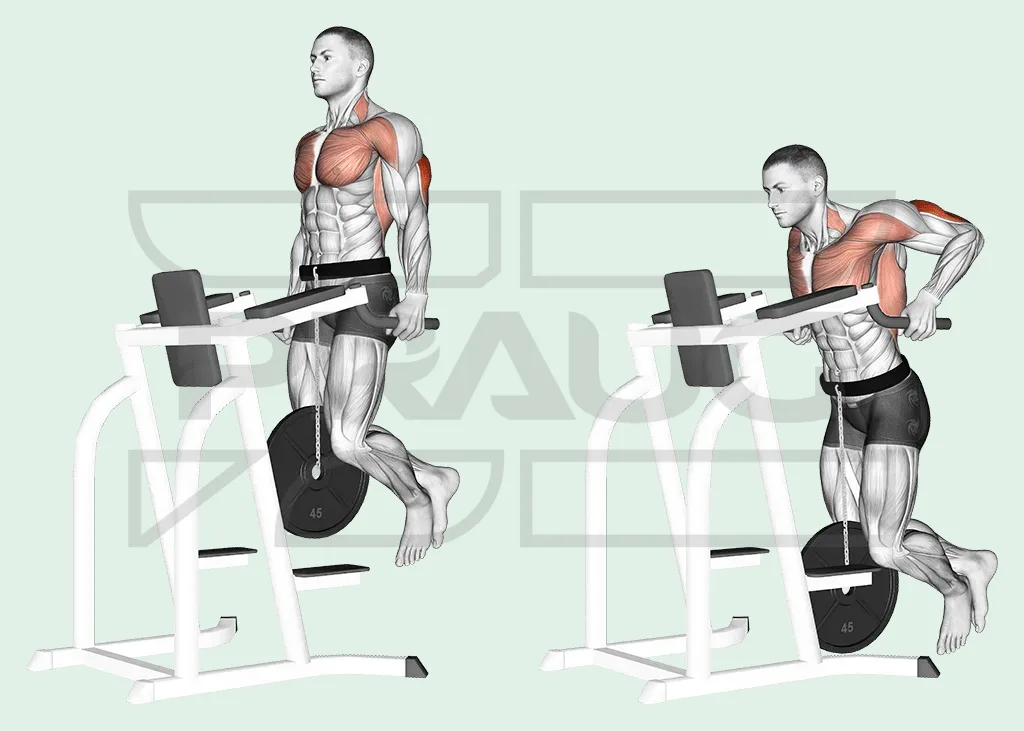
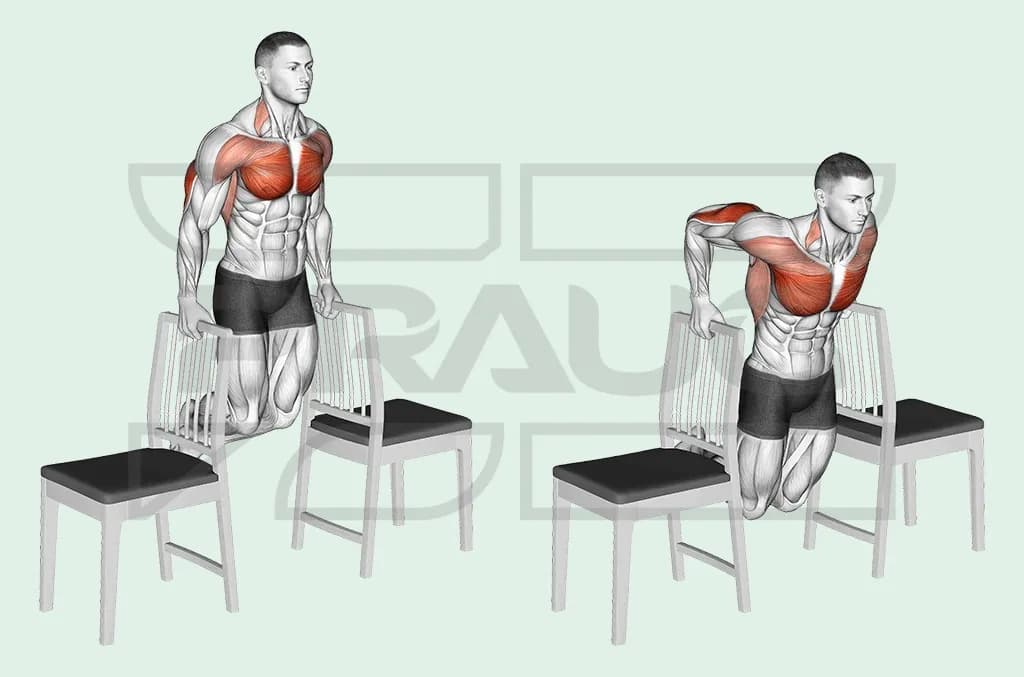
An assisted dip machine reduces the lifting demand with its own setup. Weighted dips add handling and swing control. Rings and bench dips change the support and shoulder task; they are not a mandatory progression ladder. The pictured chair setup is retained for context, not recommended as load-bearing exercise equipment.
Sets, progression and tracking
One adjustable example is 2–4 sets of a repeatable repetition count, using suitable assistance when needed and leaving controlled repetitions possible. Use enough rest to repeat the intended range. Count other pressing and triceps work and record station, assistance, body angle and depth.
Illustrated positions and options
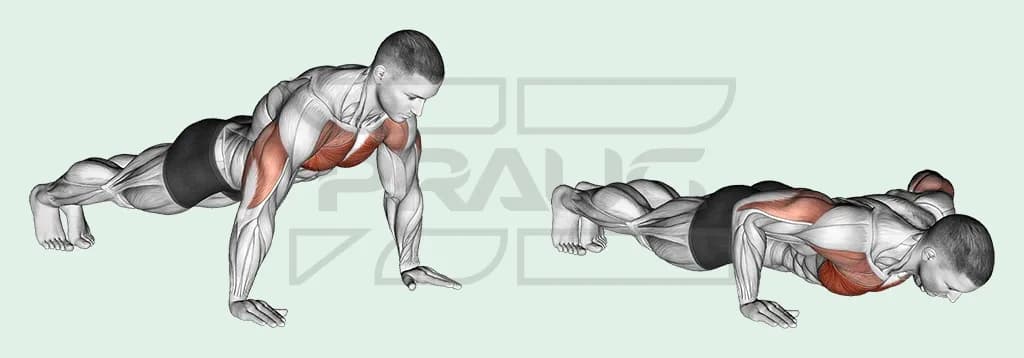
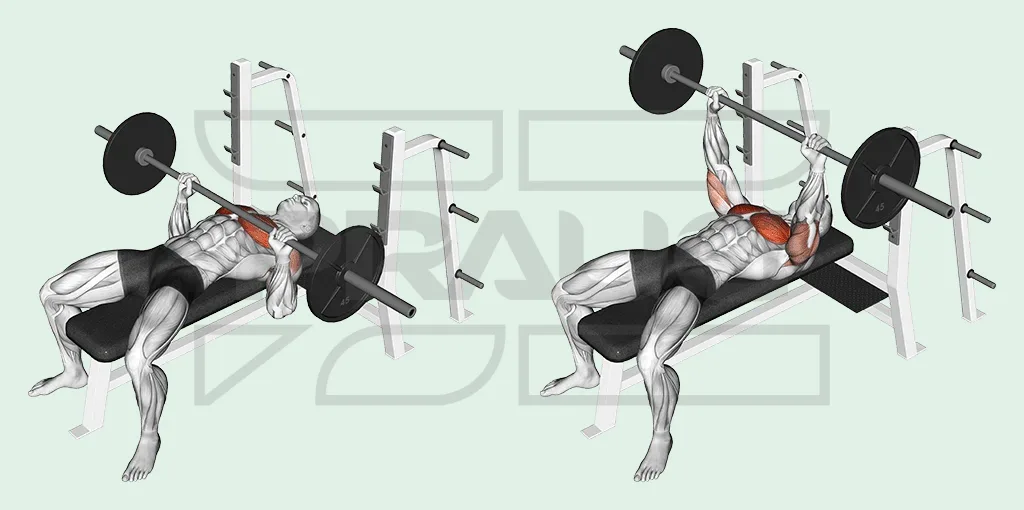
The images show example positions, not an individual range or loading prescription. A pictured household chair does not establish a suitable exercise support. Use equipment intended for the task.
Illustrated option 1
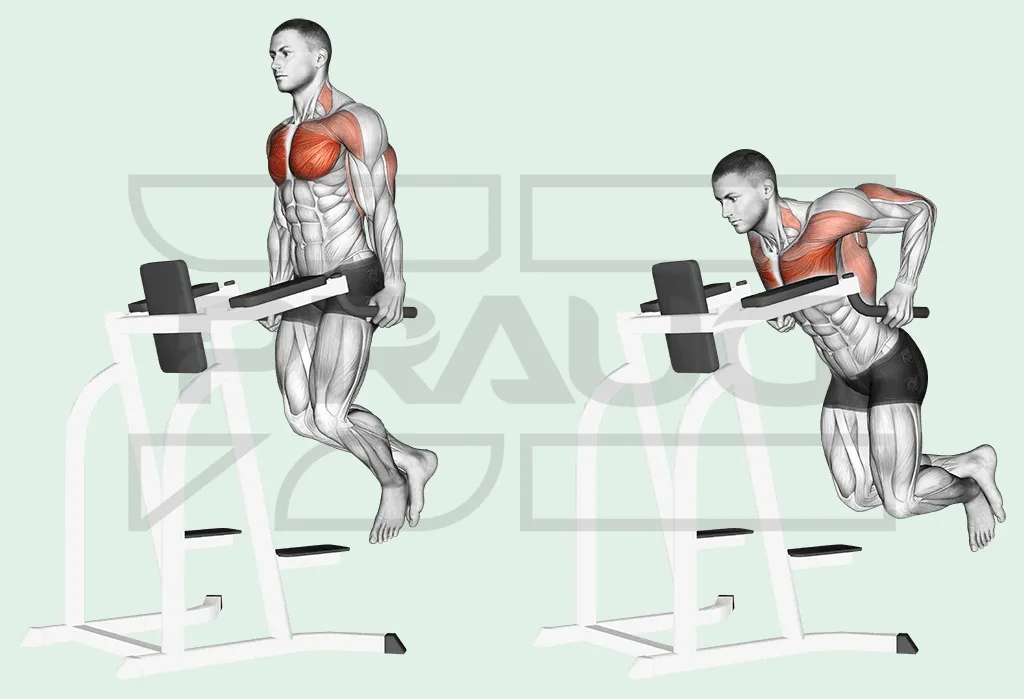
Illustrated option 2
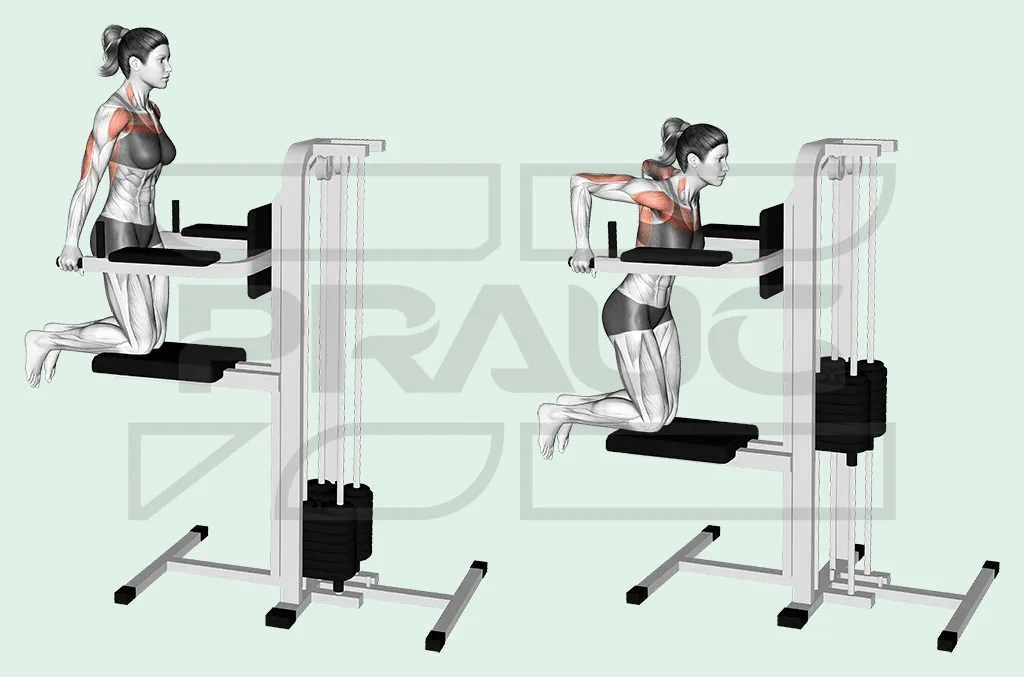
Illustrated option 3
Illustrated option 4
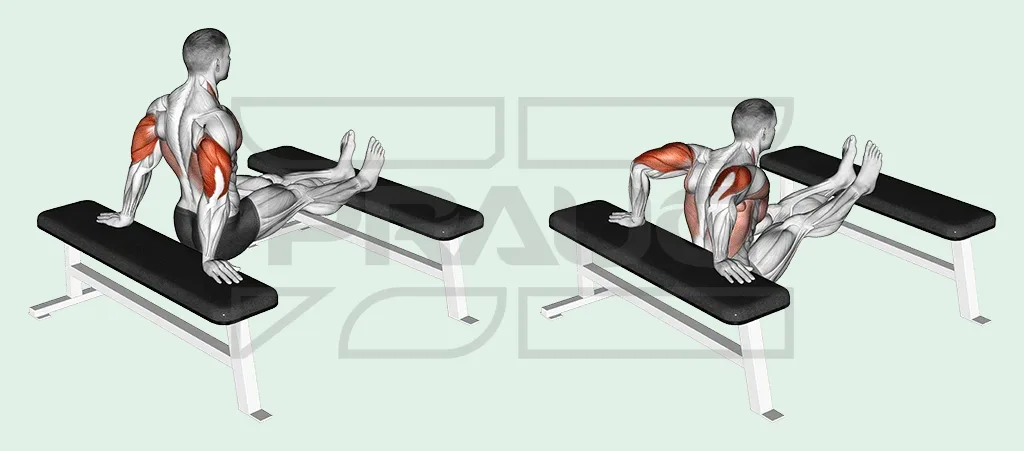
Illustrated option 5
Frequently asked questions
Must I lower until the upper arms are horizontal?
That is an example reference, not a universal depth requirement. Use a range you can control and a secure way to finish.
Does leaning forwards isolate the chest?
No. Chest, shoulder and triceps demands overlap, and the cited studies did not validate an exclusive torso-angle rule.
When should I add demand?
When the chosen task, support and range are repeatable and the next increment is manageable. Record the setup and effort, and account for the rest of the week.
Sources and limitations
Sources support the passages that cite them. Practical suggestions are coaching choices to adapt to your own situation.
- McKenzie and al. · 2022 · Bodyweight bar-dip motion and activity with fatigue. ↗
One set in fifteen men; not weighted outcomes or injury rates.
- McKenzie and al. · 2022 · Acute comparison of bench, bar and ring dips. ↗
Thirteen men; not a longitudinal progression or injury study.
This general information does not replace individual advice. Zepraug’s limitations.