Training· 4 min read
Bench dip: setup, technique and progression
Other names: Two-bench dip
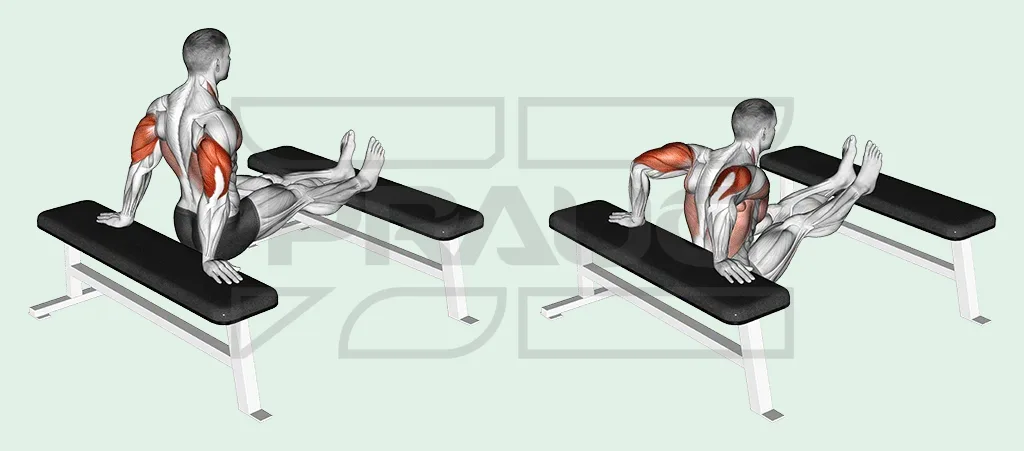
A bench dip supports the hands behind the torso while the elbows bend and straighten, with the feet on the floor or a separate suitable support. It uses a different shoulder position from a parallel-bar dip. It is not automatically an easy first step, and household chairs are not established load-bearing exercise supports.

Certified fitness coach · CQP Instructeur Fitness
Published on
The essentials before you start.
- Choose a secure setup and a manageable starting demand.
- Keep the intended support, arm path and range repeatable.
- The cited studies have specific populations and exercise limits.
- Count this work within the whole week rather than adding every variation.
Exercise facts
- Main muscles
- Triceps brachii
- Secondary muscles
- Anterior deltoids, Pectoralis major, clavicular portion
- Equipment
- Exercise bench and optional second support intended for the task
What the movement trains
The triceps contribute to elbow extension with help from shoulder and chest muscles. The shoulder moves into extension behind the torso. Foot position, hand position and depth change that demand; reaching ninety degrees at the elbows is not a universal requirement.
Set up and perform the movement
- Use an exercise bench or dip support intended and secured for the task. Check that it cannot slide or tip, and plan a controlled exit.
- Begin with feet on the floor and a manageable knee bend rather than automatically elevating the heels. Place the hands securely on the support behind you.
- Move into the supported position with a comfortable shoulder range. Keep enough foot assistance to control the movement.
- Bend the elbows and lower only through the range you can retain without forcing the shoulders far behind the torso.
- Press back smoothly using the intended hand and foot support, without a bounce or forceful elbow snap.
- Return to a secure seated or standing position before releasing the hand support. Stop when the position or exit becomes uncertain.
Range, control and common changes
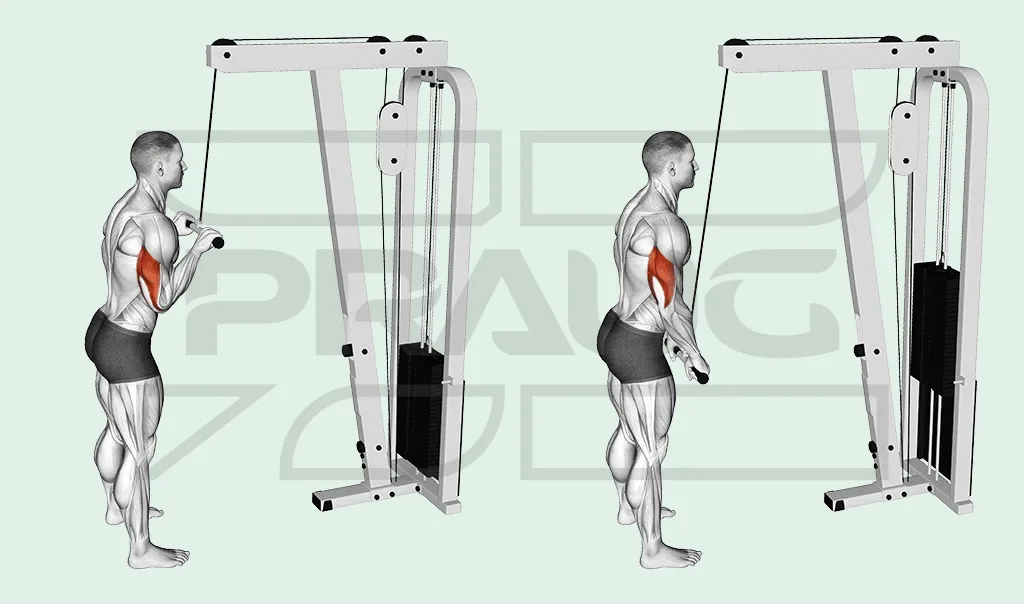
A second purpose-built support beneath the heels changes the lever and loading; it is not compulsory. Do not add a loose plate to the lap or substitute chairs merely because a photo shows a similar shape. A close-grip push-up or an adjustable cable extension offers a different way to train elbow extension if this setup is unsuitable.
What the cited research does and does not show
The thirteen-man acute comparison found more shoulder extension in its bench-dip condition. It did not measure later growth, individual comfort or injury rates, and does not validate a compulsory bench-to-bar progression.
Variations and alternatives
A parallel-bar dip changes the support and shoulder task. A cable pressdown offers adjustable external resistance. Choose by the task and available control, not by a rule that every beginner must start with bench dips.
Sets, progression and tracking
One optional example is 2–3 short sets of a manageable repetition count, using foot support to retain control. More repetitions or elevated heels are not compulsory milestones. Count the work alongside pressing, and record support height, feet, range and effort. If discomfort persists, seek individual advice rather than forcing a deeper position.
Frequently asked questions
Are two household chairs a suitable substitute?
The article does not establish their load rating or stability. Use supports intended for the movement or choose another task.
Are bench dips always easier on the shoulders than bar dips?
No. The acute comparison used different shoulder positions and did not establish an individual comfort or injury-risk ranking.
When should I add demand?
When the chosen task, support and range are repeatable and the next increment is manageable. Record the setup and effort, and account for the rest of the week.
Sources and limitations
Sources support the passages that cite them. Practical suggestions are coaching choices to adapt to your own situation.
- McKenzie and al. · 2022 · Acute comparison of bench, bar and ring dips. ↗
Thirteen men; not a longitudinal progression or injury study.
This general information does not replace individual advice. Zepraug’s limitations.