Training· 4 min read
Cable triceps pressdown: setup, technique and progression
Other names: Triceps pushdown
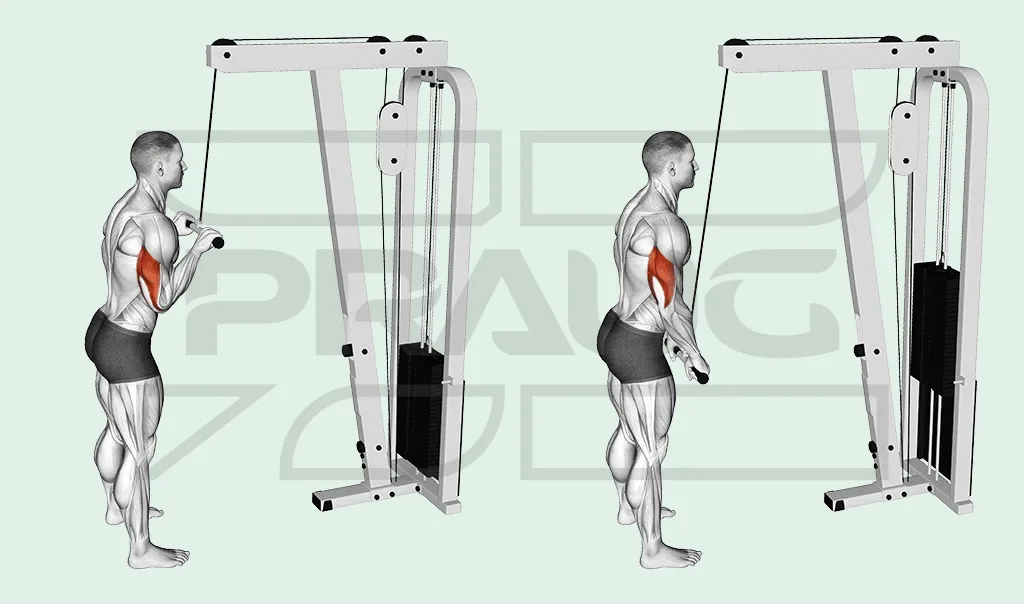
A cable triceps pressdown extends the elbows with the upper arms held near the sides. A bar, rope or single handle can provide a usable grip. Choose a controlled elbow range and steady torso rather than using bodyweight to drive the stack down.

Certified fitness coach · CQP Instructeur Fitness
Published on
The essentials before you start.
- Choose a secure setup and a manageable starting demand.
- Keep the intended support, arm path and range repeatable.
- The cited studies have specific populations and exercise limits.
- Count this work within the whole week rather than adding every variation.
Exercise facts
- Main muscles
- Triceps brachii
- Secondary muscles
- Anconeus, Forearm grip muscles, Abdominals
- Equipment
- High cable pulley, Rope or bar attachment
What the movement trains
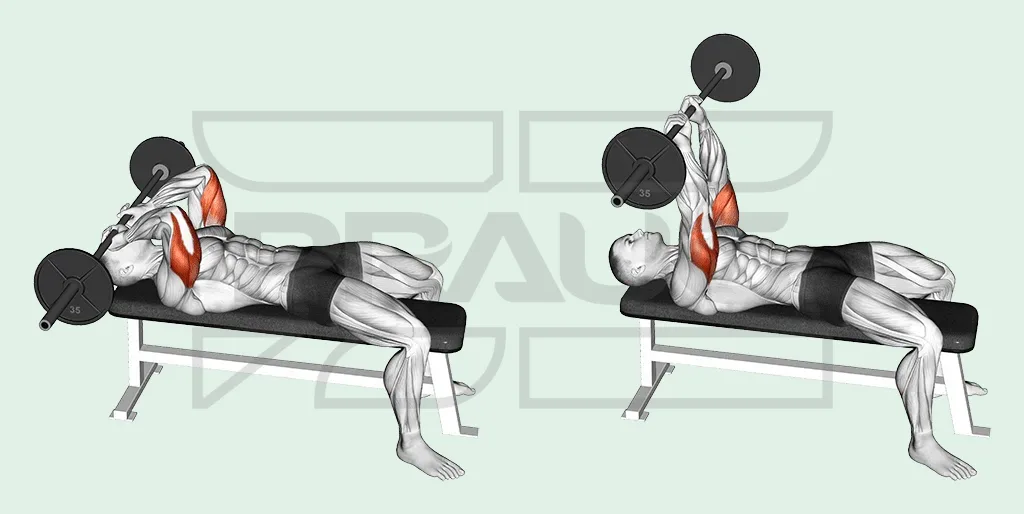
The triceps extend the elbows, with the long head participating alongside the other heads. The shoulder, trunk and grip help hold the setup. A rope or reversed grip does not isolate a particular head simply because it feels different.
Set up and perform the movement
- Check a suitable high pulley and secure attachment. Start with a load that you can bring into position without a heavy torso pull.
- Stand facing the station with stable feet and comfortable knees, using a small steady torso incline if useful.
- Bring the upper arms near the sides, with a comfortable elbow bend and wrists supported by the grip.
- Extend the elbows smoothly to move the attachment down. Keep the upper-arm and torso position reasonably repeatable.
- Return by bending the elbows through the same controlled range; do not let the stack jerk the arms upwards.
- Lower the stack securely before releasing the attachment. End the set if the task becomes a whole-body downward push.
Range, control and common changes
Approximately a right angle at the elbow can be a starting reference, not a universal limit. A rope can allow the hands to separate naturally near the bottom; forcing a large outward turn is unnecessary. Let the elbows straighten under control rather than avoiding all extension or snapping into it.
What the cited research does and does not show
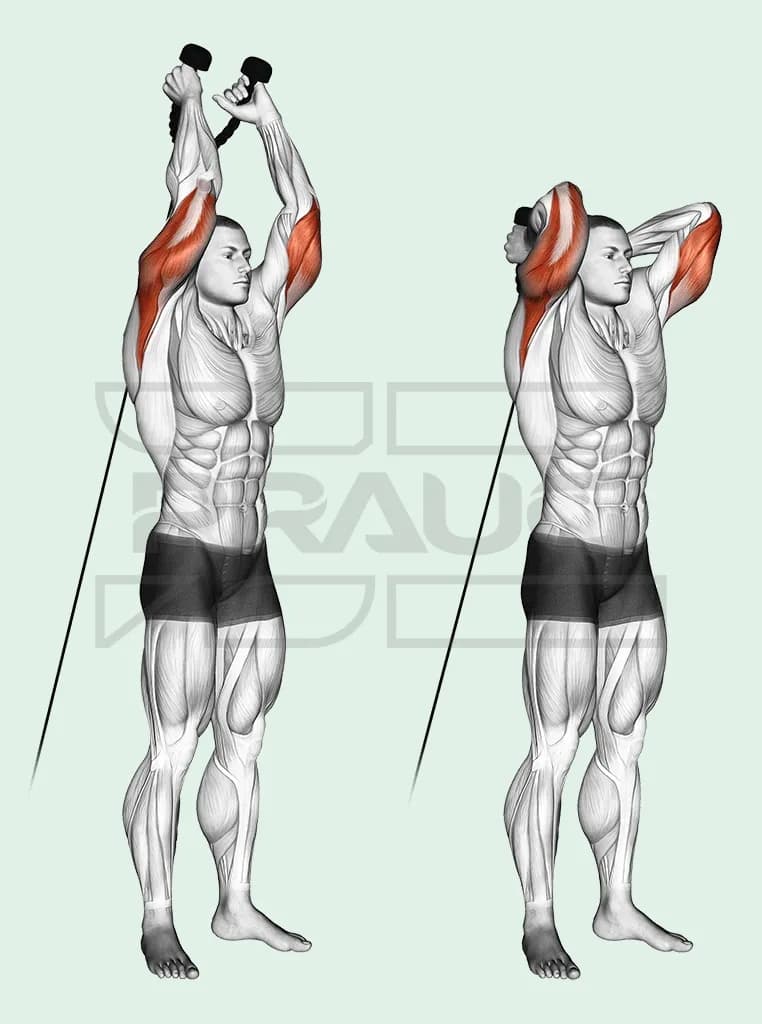
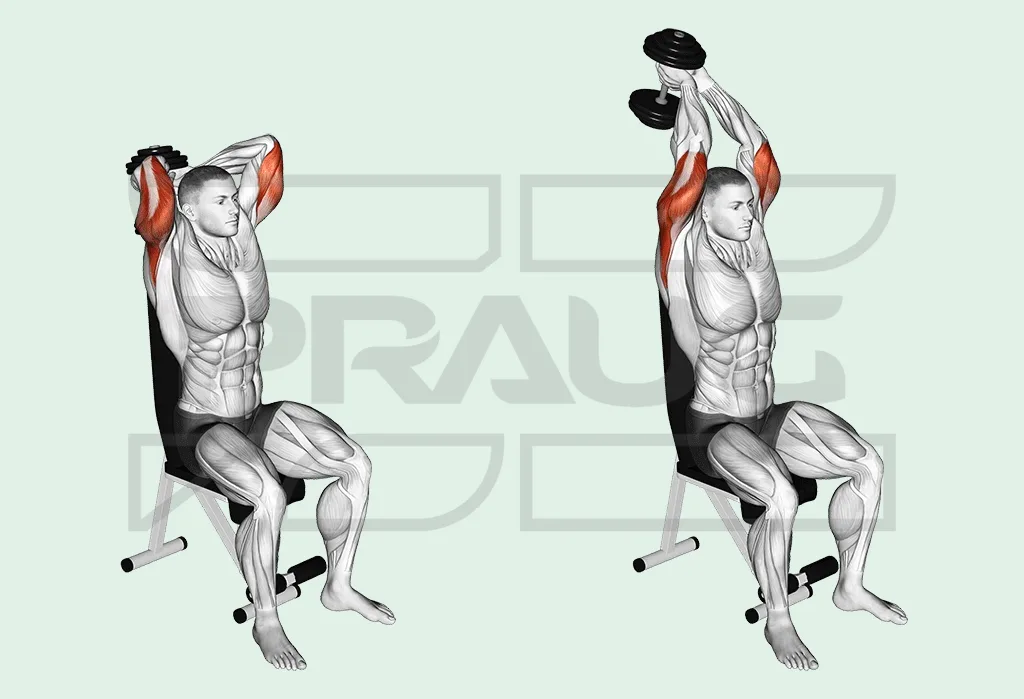
The cable trial found growth with both positions, favouring the overhead condition. It did not establish a best handle or an ideal combined session.
Variations and alternatives
A rope, straight bar, angled bar or one-arm handle changes grip and clearance. An underhand grip needs a manageable load and secure hold, rather than a promise to isolate the medial head. Overhead cable work is a different shoulder position, not a mandatory extra exercise.
Sets, progression and tracking
An adjustable example is 2–4 sets of 10–15 repetitions. Use enough rest to keep the elbow movement repeatable and account for bench pressing, overhead pressing and other extensions. Record station, attachment, stance, range and load. Do not treat a supported machine task as permission for unlimited drop sets.
Frequently asked questions
Does a rope grow the triceps more than a bar?
The cited trial did not compare accessories. Choose a secure grip and a path you can repeat.
Does the long head stop working with the arms at the sides?
No. All heads contribute to elbow extension; the shoulder position changes the long head’s position and demand.
When should I add demand?
When the chosen task, support and range are repeatable and the next increment is manageable. Record the setup and effort, and account for the rest of the week.
Sources and limitations
Sources support the passages that cite them. Practical suggestions are coaching choices to adapt to your own situation.
- Maeo and al. · 2023 · Cable elbow-extension training with two shoulder positions. ↗
Specific one-arm protocol; no accessory or combined-routine comparison.
This general information does not replace individual advice. Zepraug’s limitations.