Training· 4 min read
Overhead cable triceps extension: setup, technique and progression
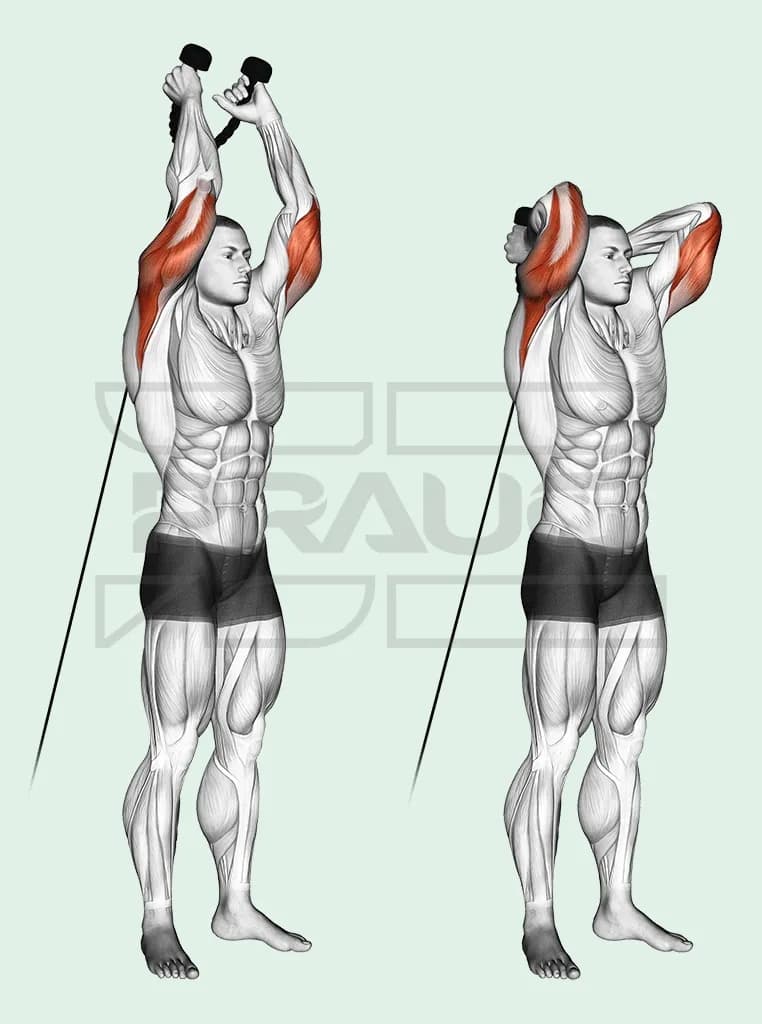
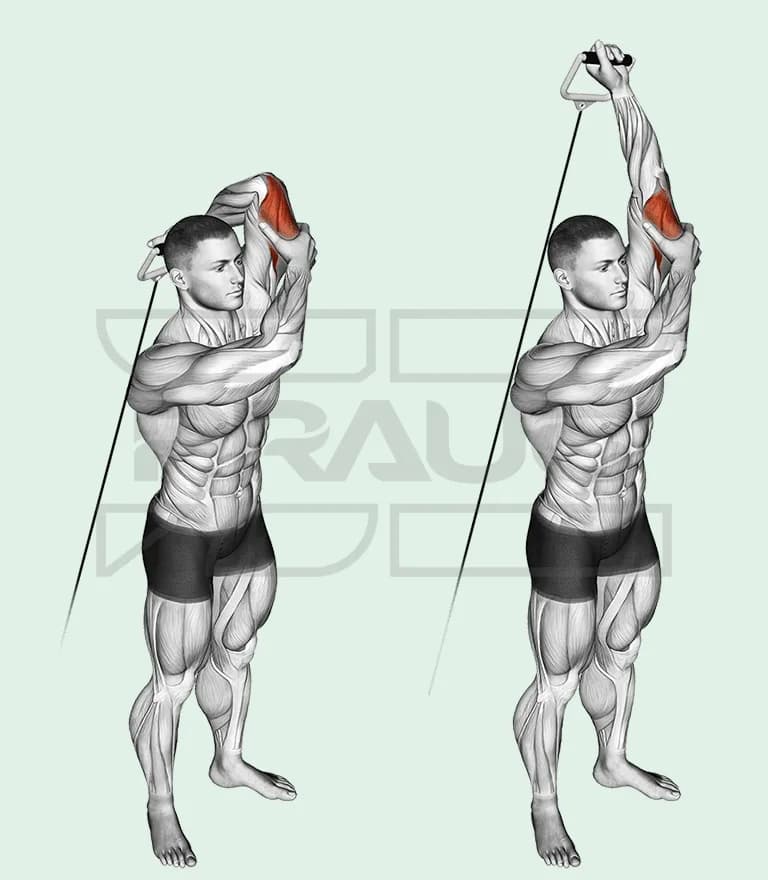
An overhead cable triceps extension bends and straightens the elbows while the upper arms are raised, usually with the body facing away from a low pulley. The cable provides a different line of resistance from a dumbbell. Arrange the attachment, access and return before adding a demanding load.

Certified fitness coach · CQP Instructeur Fitness
Published on
The essentials before you start.
- Choose a secure setup and a manageable starting demand.
- Keep the intended support, arm path and range repeatable.
- The cited studies have specific populations and exercise limits.
- Count this work within the whole week rather than adding every variation.
Exercise facts
- Main muscles
- Triceps brachii, long head
- Secondary muscles
- Lateral and medial triceps heads, Deltoids, Abdominals
- Equipment
- Low cable pulley, Rope attachment
What the movement trains
The triceps extend the elbows and the long head spans both the shoulder and elbow. The raised-arm position changes its length. The shoulders and trunk maintain the setup; a cable does not produce identical joint torque through every angle.
Set up and perform the movement
- Check a suitable low pulley, rope or handle and the attachment lock. Choose a light load and a clear cable path.
- Bring the attachment into position with a controlled method; do not twist against a demanding load to get it behind the head.
- Face away from the station with stable feet or a split stance, keeping the cable clear of the body.
- Raise the upper arms to a range you can control, with elbows bent and the attachment behind the head. Keep the trunk steady.
- Extend the elbows smoothly forwards and upwards along the chosen path without a forceful end-range snap.
- Bend the elbows to return under control. At the end, use the planned handling method to lower the stack before releasing the attachment.
Range, control and common changes
The upper arms can use an individually comfortable angle instead of being squeezed against the ears. A small torso incline changes the cable relationship; uncontrolled repeated arching is a different way of moving the load. Stop or reduce demand when you cannot control the attachment around the head.
What the cited research does and does not show
The twelve-week cable trial favoured overhead training in its conditions. It did not compare attachments, this exact rope setup or individual elbow tolerance.
Variations and alternatives
A one-arm handle offers an independent path; use comparable conditions on each side. A different pulley height or kneeling support changes the task and needs a new setup. A pressdown places the upper arms nearer the sides. The trial did not test combining both as a superior complete programme.
Sets, progression and tracking
One example is 2–4 sets of 10–15 repetitions with a load that preserves the setup and return. Use sufficient rest, often around 60–120 seconds for moderate work, adapting it to the task. Record pulley height, attachment, stance and range rather than comparing stack labels between stations.
Illustrated positions and options
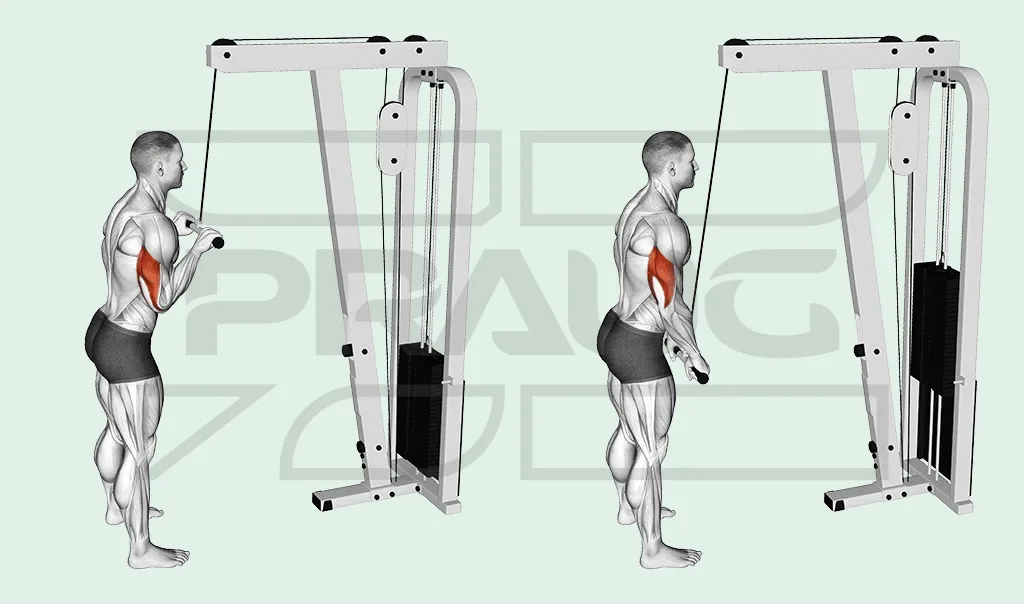
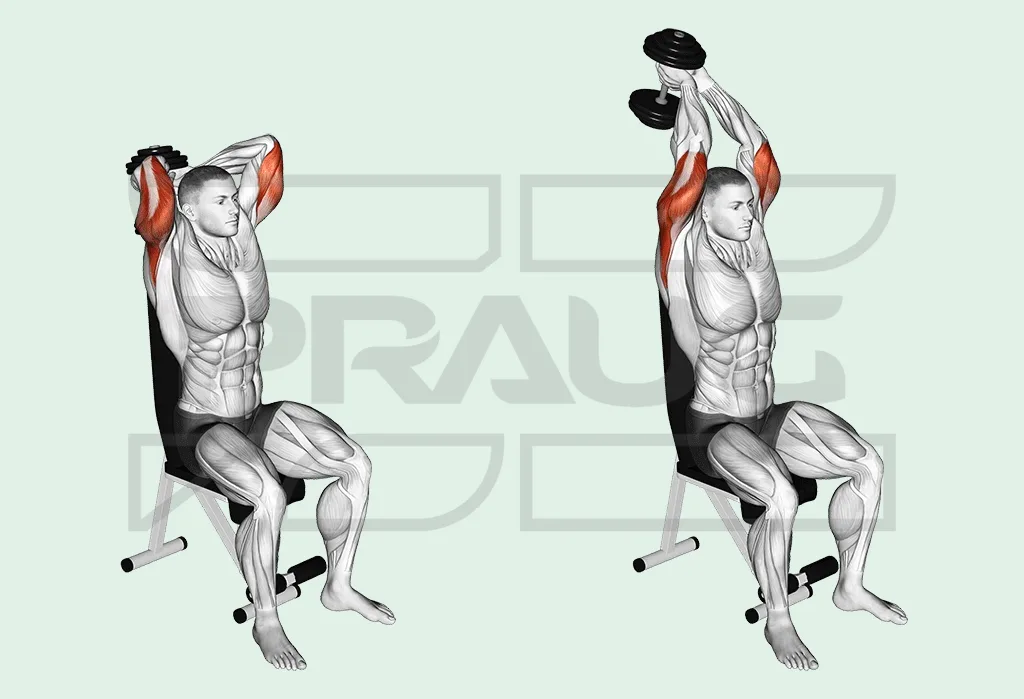
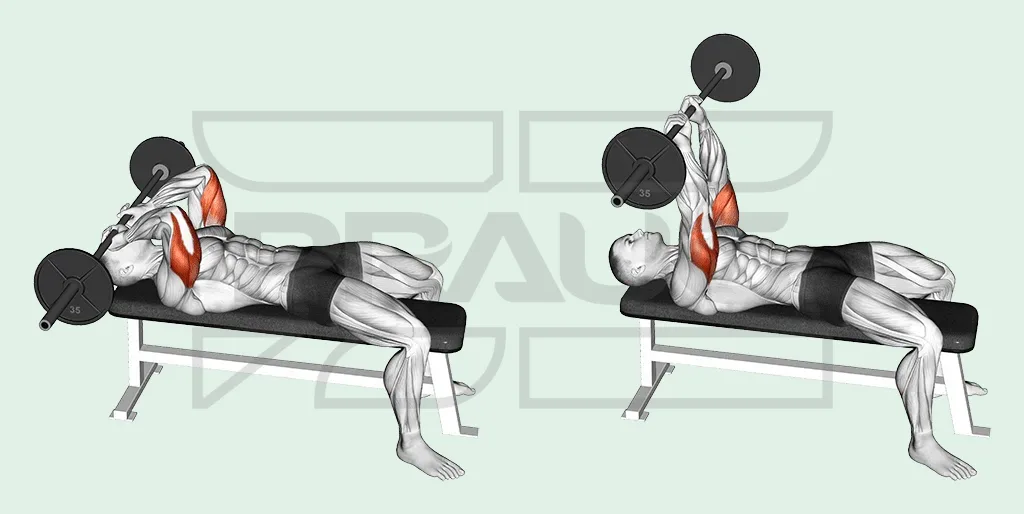
The images show example positions, not an individual range or loading prescription. A pictured household chair does not establish a suitable exercise support. Use equipment intended for the task.
Illustrated option 1
Frequently asked questions
Are a rope and single handle interchangeable loads?
They change the path and grip, and pulley systems differ. Re-establish a manageable load for the actual setup.
Must I combine this with pressdowns?
No. The cited trial compared positions on separate arms; it did not validate a compulsory combination in one session.
When should I add demand?
When the chosen task, support and range are repeatable and the next increment is manageable. Record the setup and effort, and account for the rest of the week.
Sources and limitations
Sources support the passages that cite them. Practical suggestions are coaching choices to adapt to your own situation.
- Maeo and al. · 2023 · Cable elbow-extension training with two shoulder positions. ↗
Specific one-arm protocol; no accessory or combined-routine comparison.
This general information does not replace individual advice. Zepraug’s limitations.