Training· 3 min read
Overhead dumbbell triceps extension: setup, technique and progression
An overhead dumbbell triceps extension bends and straightens the elbows with the upper arms raised. It can use a suitable dumbbell held with both hands or separate one-arm work. Choose a secure grip, manageable overhead range and controlled pickup and return rather than chasing the deepest stretch.

Certified fitness coach · CQP Instructeur Fitness
Published on
The essentials before you start.
- Choose a secure setup and a manageable starting demand.
- Keep the intended support, arm path and range repeatable.
- The cited studies have specific populations and exercise limits.
- Count this work within the whole week rather than adding every variation.
Exercise facts
- Main muscles
- Triceps brachii, long head
- Secondary muscles
- Lateral and medial triceps heads, Deltoids, Abdominals and spinal erectors, Finger flexors
- Equipment
- Suitable dumbbell, Bench with backrest
What the movement trains
The triceps extend the elbows. Raising the upper arms changes the long head’s position because it also crosses the shoulder; the other heads still contribute. Shoulder and trunk muscles help maintain the setup. A different hand position does not selectively turn one head on or off.
Set up and perform the movement
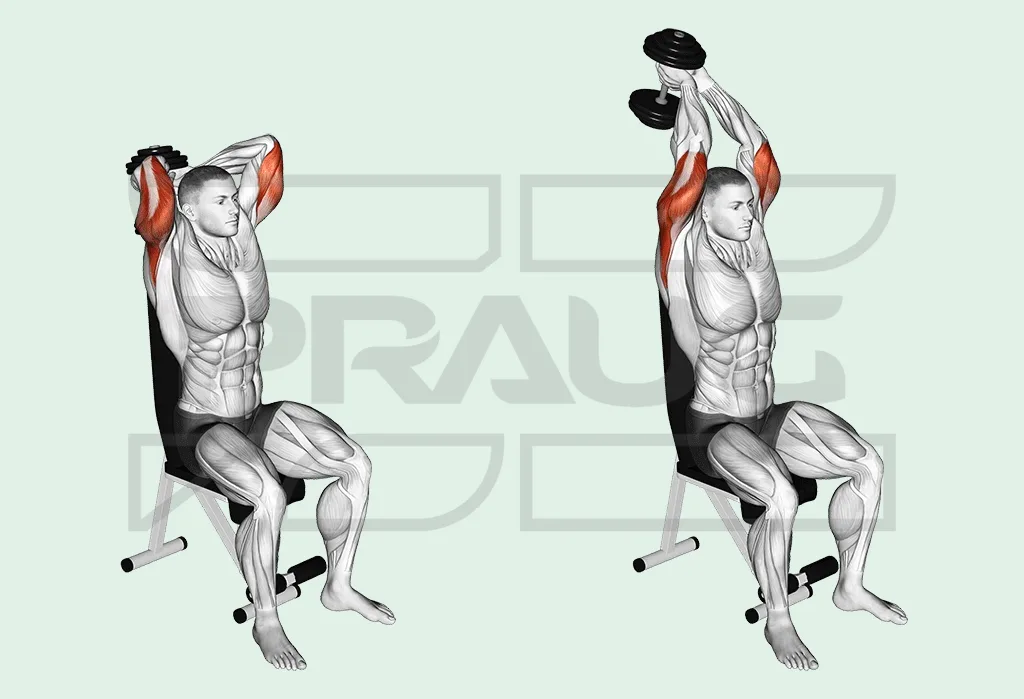
- Check that the dumbbell is suitable for a secure overhead grip and that adjustable parts are fixed. Use a stable seat or standing stance.
- If seated, adjust the backrest and use supported feet. Practise bringing a light weight into position, or use appropriate assistance.
- Hold the weight securely above and slightly behind the head as comfortable, with upper arms raised but not forced against the ears.
- Bend the elbows to lower the dumbbell behind the head through a controlled range. Keep it clear of the head and avoid pulling the shoulders into an extreme position.
- Extend the elbows smoothly without throwing the ribs upwards or snapping the finish. Keep breathing through the set.
- Return the weight with a planned, controlled method before fatigue makes the overhead handling uncertain.
Range, control and common changes
Upper-arm spacing and shoulder range vary. The forearms do not have to reach a universal horizontal depth. A supported seat changes balance demands but does not remove all trunk movement. One-arm work needs its own manageable load, grip and comparison for each side.
What the cited research does and does not show
The growth trial used cables, not dumbbells. The acute dumbbell comparison measured activity rather than later growth or joint tolerance.
Variations and alternatives
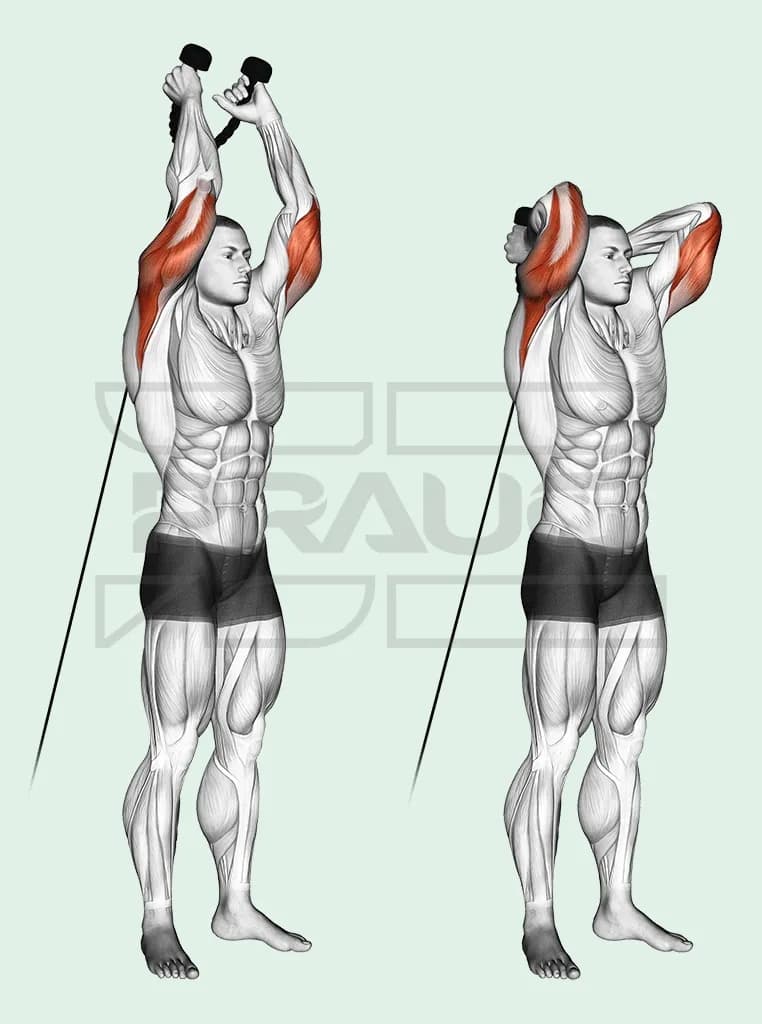
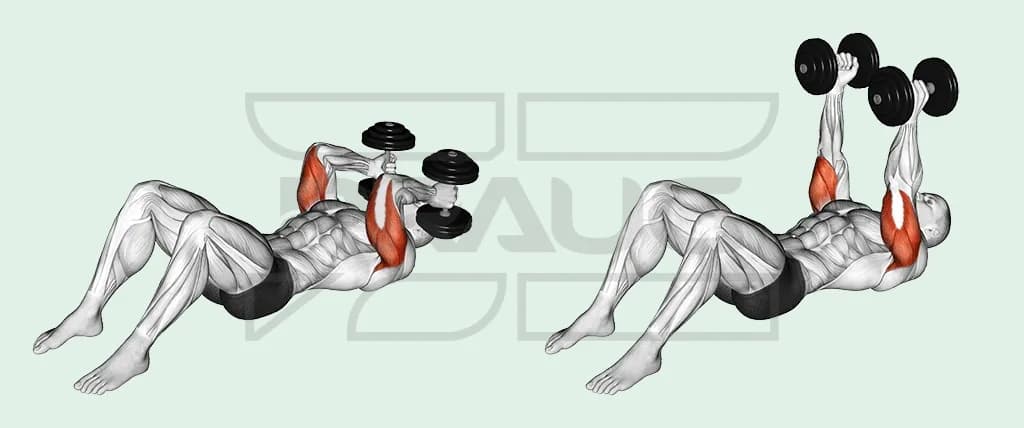
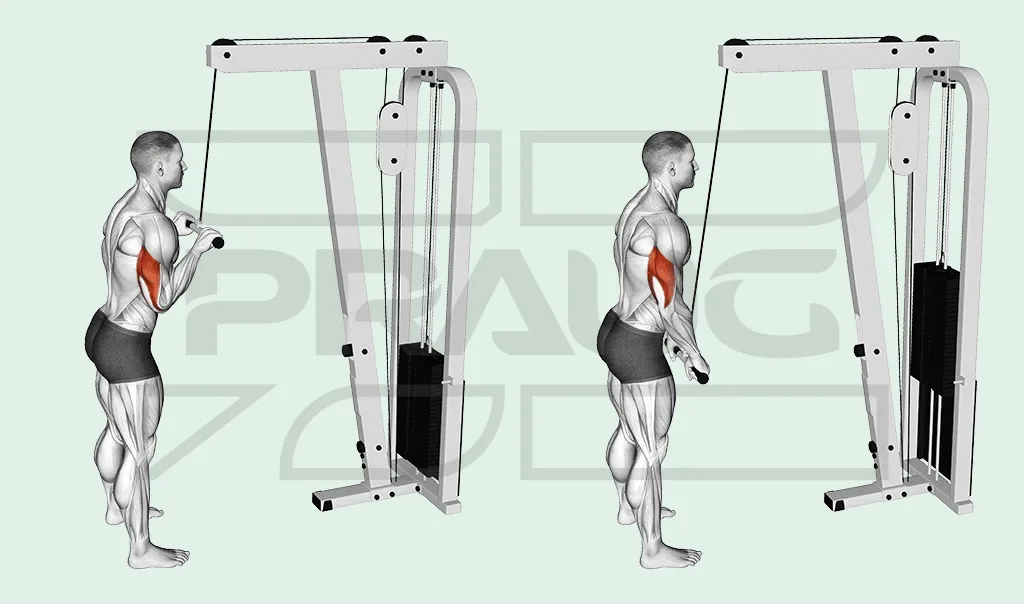
A cable overhead extension changes the resistance line and handling. A lying dumbbell extension changes shoulder position. Standing, seated and one-arm versions are options rather than a compulsory progression.
Sets, progression and tracking
One coaching example is 2–4 sets of 10–15 repetitions. Start with fewer or lighter sets when learning the handling. Count overlapping pressing and extensions across the week; record the implement, support, upper-arm position and range. A set per side is received separately by each arm.
Frequently asked questions
Does overhead work isolate the long head?
No. Shoulder position changes its length, while all three heads contribute to elbow extension.
Must I use the deepest possible lowering position?
No. Choose a controlled range suited to the shoulder position, implement and secure handling.
When should I add demand?
When the chosen task, support and range are repeatable and the next increment is manageable. Record the setup and effort, and account for the rest of the week.
Sources and limitations
Sources support the passages that cite them. Practical suggestions are coaching choices to adapt to your own situation.
- Maeo and al. · 2023 · Cable elbow-extension training with two shoulder positions. ↗
Specific one-arm protocol; no accessory or combined-routine comparison.
- Alves and al. · 2018 · Activity during lying and overhead dumbbell extensions. ↗
Brief acute testing; not growth, barbell work or joint tolerance.
This general information does not replace individual advice. Zepraug’s limitations.