Training· 4 min read
Dumbbell skull crusher: setup, technique and progression
Other names: Lying dumbbell triceps extension
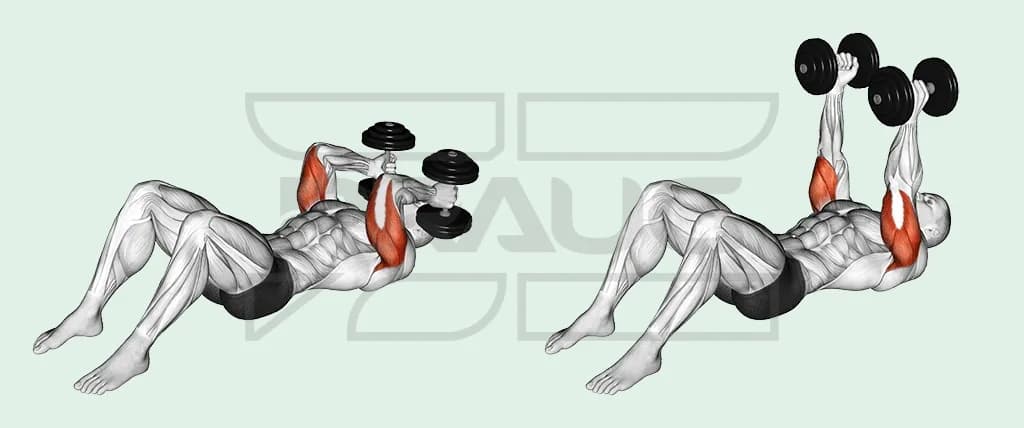
A dumbbell skull crusher is a lying elbow extension with one dumbbell in each hand. A neutral grip and independent paths distinguish it from a barbell extension. Use weights you can bring into position, lower clear of the head and put down securely; independent handles do not guarantee elbow comfort.

Certified fitness coach · CQP Instructeur Fitness
Published on
The essentials before you start.
- Choose a secure setup and a manageable starting demand.
- Keep the intended support, arm path and range repeatable.
- The cited studies have specific populations and exercise limits.
- Count this work within the whole week rather than adding every variation.
Exercise facts
- Main muscles
- Triceps brachii
- Secondary muscles
- Anconeus, Deltoids, Forearm grip muscles
- Equipment
- Dumbbells, Flat bench
What the movement trains
The triceps extend the elbows while the hands and shoulder muscles hold the weights and upper arms. Moving the upper arms further towards the head changes the shoulder position and the resistance geometry. It is not a switch that isolates one triceps head.
Set up and perform the movement
- Choose a stable flat bench and manageable dumbbells. Practise getting into and out of position before choosing a difficult load.
- Lie with supported feet and bring the weights above the upper body, usually with palms facing each other.
- Choose an upper-arm angle you can maintain comfortably. A slight angle towards the head is one option.
- Bend the elbows smoothly so the dumbbells travel beside or towards the sides of the head without approaching an uncontrolled collision.
- Extend the elbows back to the intended start, keeping each weight under control instead of forcing the hands into one rigid shared path.
- Finish before control is lost and return the weights using the planned method; do not drop them from open arms.
Range, control and common changes
A small change in elbow spacing can accommodate your proportions. Avoid forcing the elbows together or letting the whole movement become a shoulder swing. A floor version limits the available range but still needs a controlled return. A JM press combines different shoulder and elbow actions and is not simply the same exercise with more weight.
What the cited research does and does not show
The acute study compared lying and overhead dumbbell extensions at a specific light relative load. Similar activity patterns do not prove identical growth or require excluding their combination from every programme.
Variations and alternatives
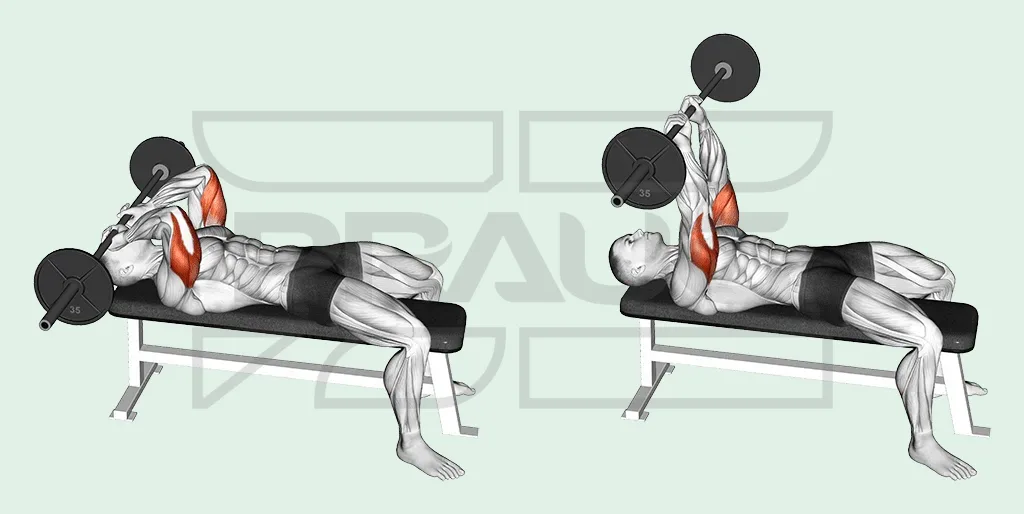
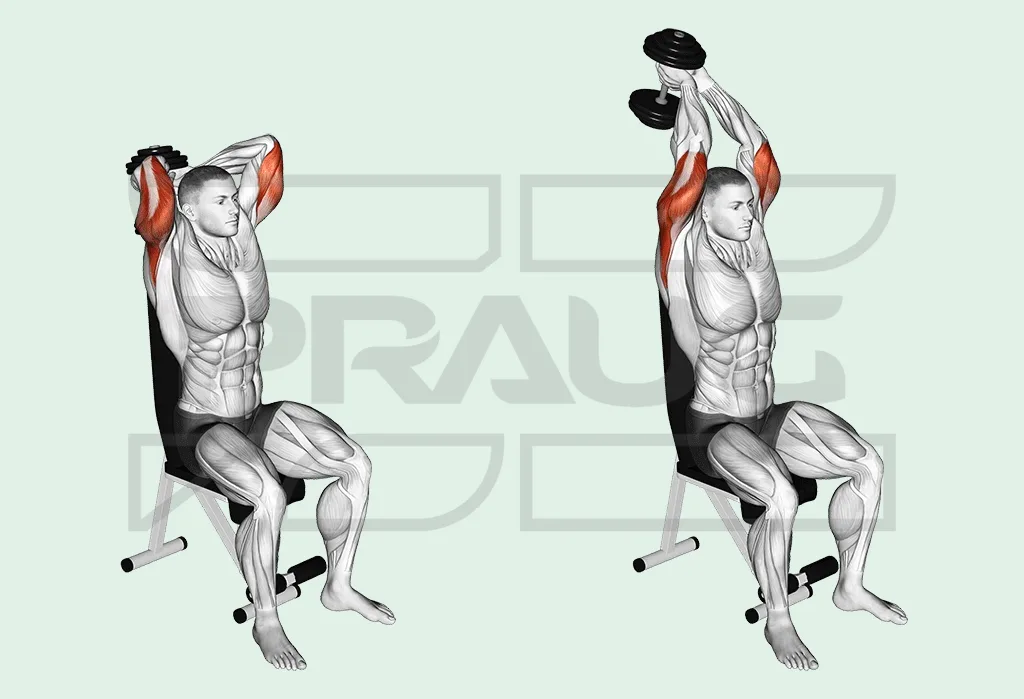
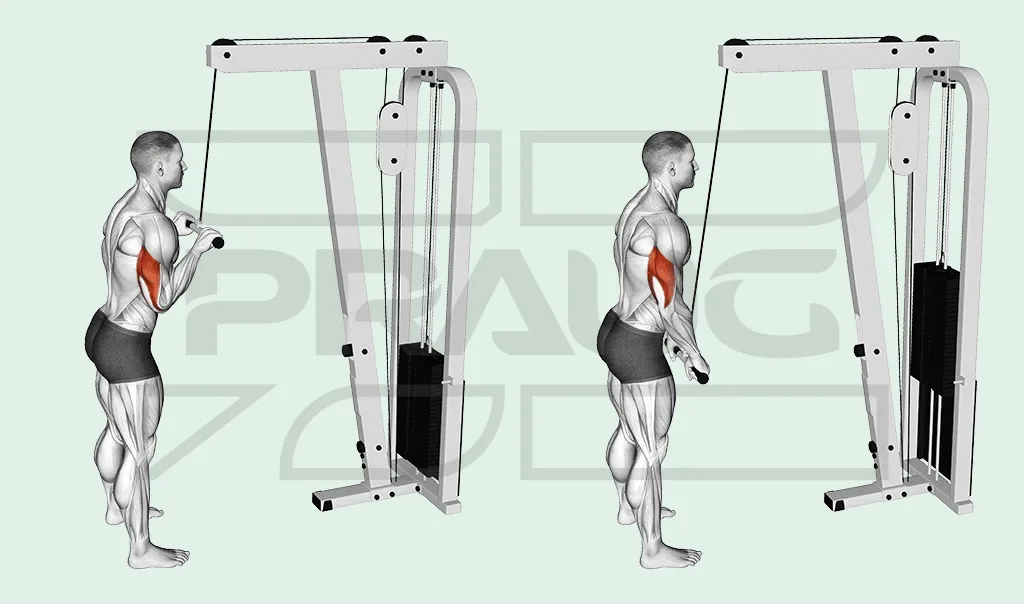
A barbell extension links the hands to one implement. Inclining or declining the bench changes setup and clearance. A low-cable lying version changes resistance direction. An overhead dumbbell extension uses a different upper-arm position.
Sets, progression and tracking
An adjustable example is 2–4 sets of 10–15 repetitions, stopping with control still available. Record the weight per dumbbell, bench and arm angle, range and effort. Count other direct triceps work rather than adding every variation to the same session.
Frequently asked questions
Are dumbbells always easier on the elbows?
No individual advantage was established by the cited experiment. Independent grips change the setup, not the need to adapt it.
Can I let the upper arms move?
Use a reasonably repeatable position for the elbow-extension task. A deliberate shoulder movement creates a different variation and needs its own load and comparison.
When should I add demand?
When the chosen task, support and range are repeatable and the next increment is manageable. Record the setup and effort, and account for the rest of the week.
Sources and limitations
Sources support the passages that cite them. Practical suggestions are coaching choices to adapt to your own situation.
- Alves and al. · 2018 · Activity during lying and overhead dumbbell extensions. ↗
Brief acute testing; not growth, barbell work or joint tolerance.
This general information does not replace individual advice. Zepraug’s limitations.