Training· 4 min read
Decline barbell bench press: setup, technique and progression
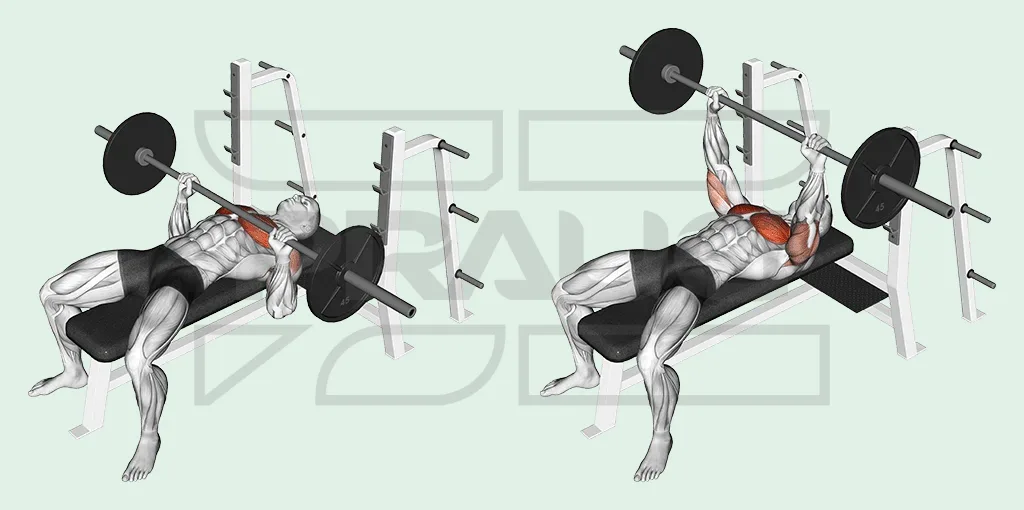
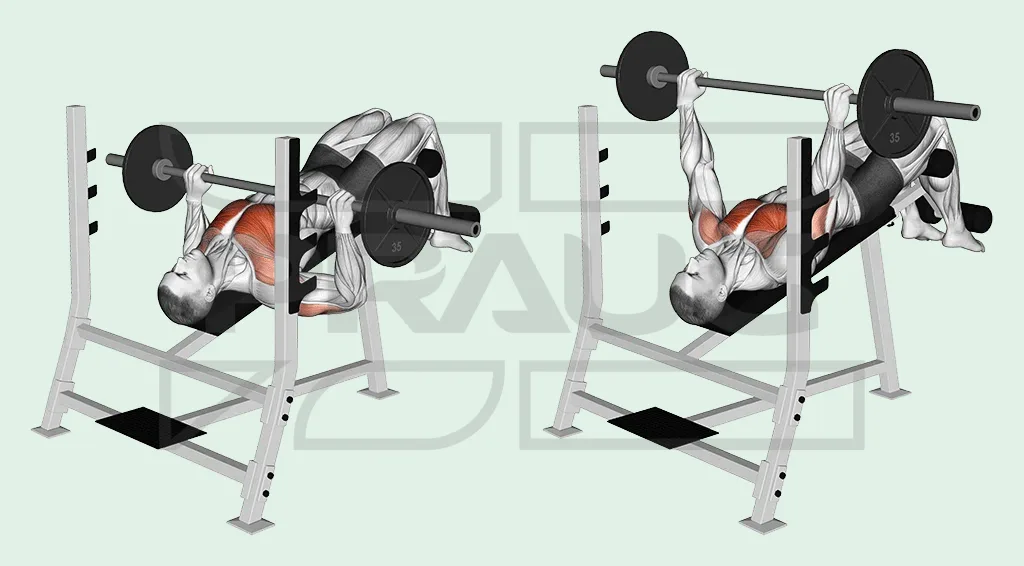
A decline barbell press uses a bench angled downwards with suitable lower-body restraints. It changes the press and the practical demands of access, unracking and re-racking. It is an optional variation rather than a requirement to develop a separately isolated lower chest.

Certified fitness coach · CQP Instructeur Fitness
Published on
The essentials before you start.
- Choose a secure setup and a manageable starting demand.
- Keep the intended support, arm path and range repeatable.
- The cited studies have specific populations and exercise limits.
- Count this work within the whole week rather than adding every variation.
Exercise facts
- Main muscles
- Pectoralis major, sternocostal portion
- Secondary muscles
- Anterior deltoids, Triceps brachii
- Equipment
- Barbell, Decline bench with suitable restraints
What the movement trains
The pectoralis major, anterior deltoids and triceps contribute to pressing, with the forearms and shoulder muscles helping control the implement. Bench angle, grip and elbow path change the task without neatly separating upper and lower chest work.
Set up and perform the movement
- Use a bench and rack intended for this press. Set hooks, safeties and loading securely; arrange appropriate assistance for a demanding set.
- Adjust and lock the decline and lower-body restraints. Learn how to enter and leave the position before loading.
- Establish supported feet or the model’s intended leg restraints, steady bench contact and a full grip. Choose a width that allows controlled forearms and bar travel.
- Unrack with control or an agreed handoff, then settle the bar before beginning. Do not improvise a difficult unrack from the angled position.
- Lower the bar smoothly along a path suited to the bench angle and your proportions. Use a range that can be repeated without bouncing or a forced shoulder position.
- Press back to a controlled finish without a forceful elbow snap or an uncontrolled hip lift. Keep the bar over a stable support base.
- After the last repetition, regain control and guide the bar into both hooks before releasing it. Use the safeties or assistance as planned if the set cannot be completed.
Range, control and common changes
Keep the chosen bench angle, grip and range consistent. A comfortable natural arch is different from repeatedly lifting or sliding the torso to finish. The shoulder blades need a supported position, not a maximal forced downward pinch. Use a sustainable breathing and bracing approach rather than a compulsory prolonged breath hold.
What the cited research does and does not show
The small comparison tested one decline angle of fifteen degrees in competitive bodybuilders. Its chest electrodes covered clavicular and sternocostal portions, without a distinct lower-pectoral measurement. It did not measure later growth or individual joint comfort. It does not validate every fifteen-to-thirty-degree setup.
Variations and alternatives
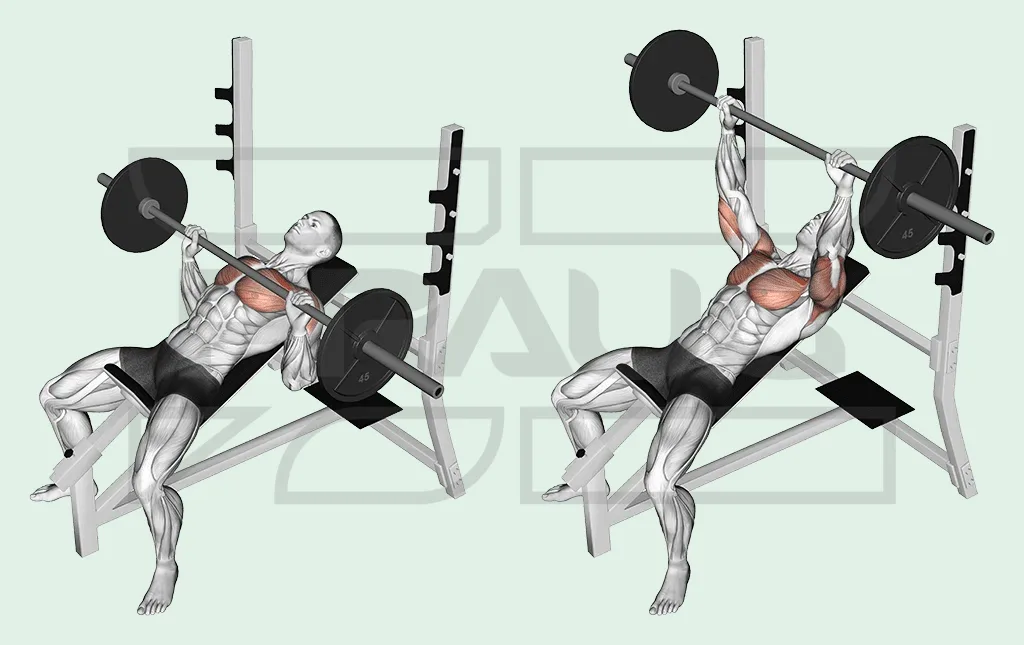
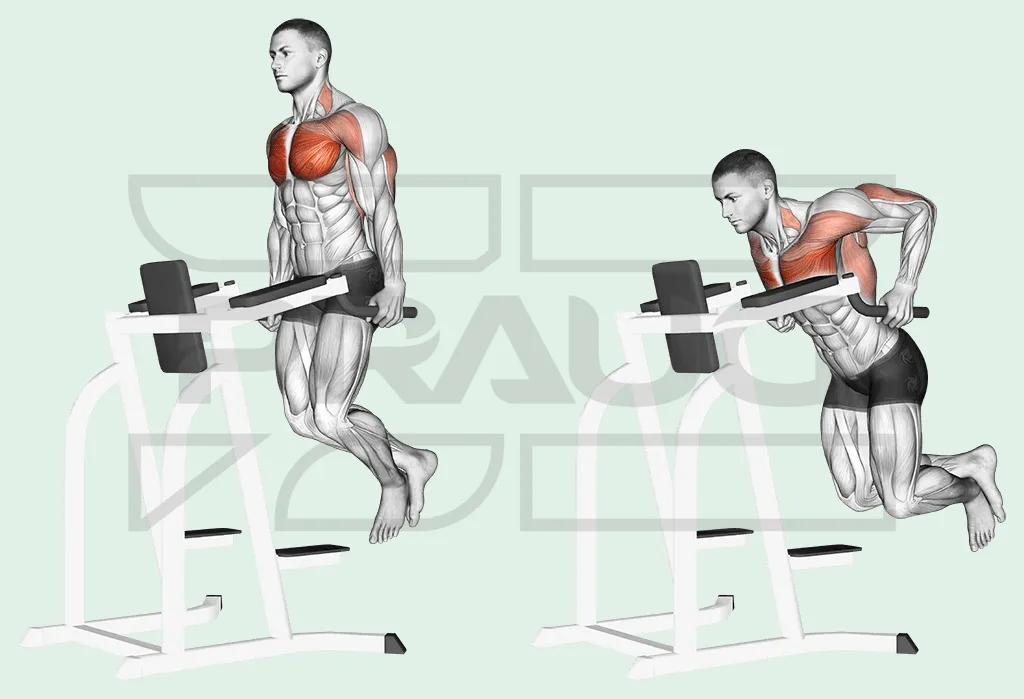
A flat barbell press, machine chest press, flat dumbbell press and incline dumbbell press use different support or hand paths. Choose one for a reason; changing implement needs a new load reference.
Sets, progression and tracking
One coaching example is 3–4 sets of 8–12 repetitions with enough rest to repeat the intended press, often around two minutes or more for demanding work. Use fewer sets while learning. Log the bench angle, implement, range and load; a dumbbell load should specify per hand or the combined total. Account for other pressing before adding direct triceps work.
Frequently asked questions
Does the study prove a special lower-chest growth advantage?
No. It measured acute activity at one decline angle, not regional growth over months.
Can I use a normal flat-bench exit method?
The declined position and restraints change access and re-racking. Learn the intended method and use suitable assistance before choosing a demanding load.
When should I add demand?
When the chosen task, support and range are repeatable and the next increment is manageable. Record the setup and effort, and account for the rest of the week.
Sources and limitations
Sources support the passages that cite them. Practical suggestions are coaching choices to adapt to your own situation.
- Coratella and al. · 2020 · Activity across press angles and a chest-press machine. ↗
Ten bodybuilders; one decline angle, no later regional growth.
This general information does not replace individual advice. Zepraug’s limitations.