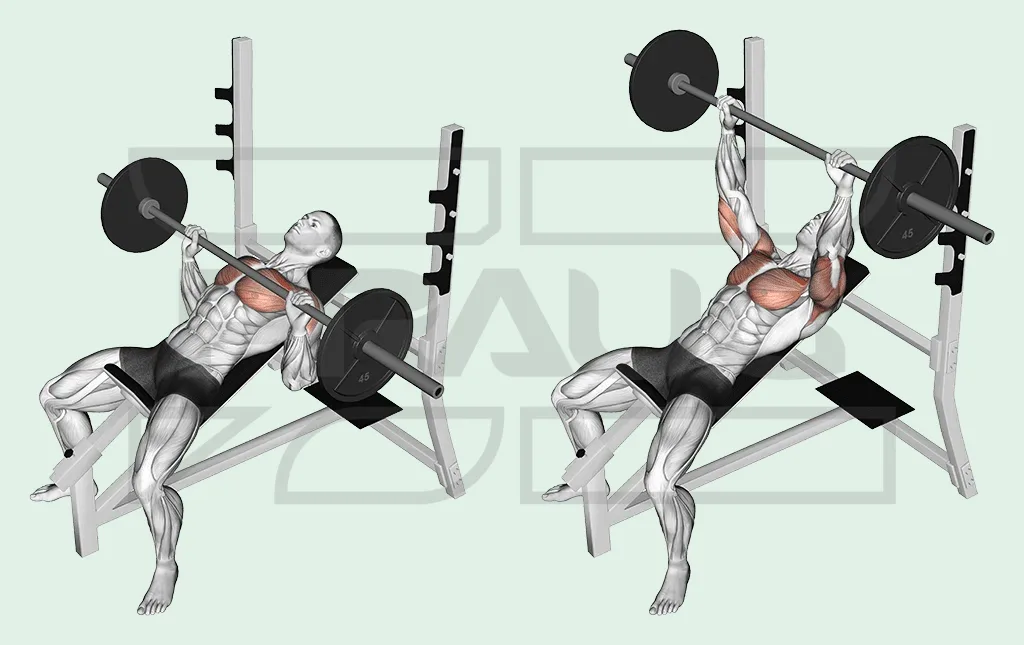
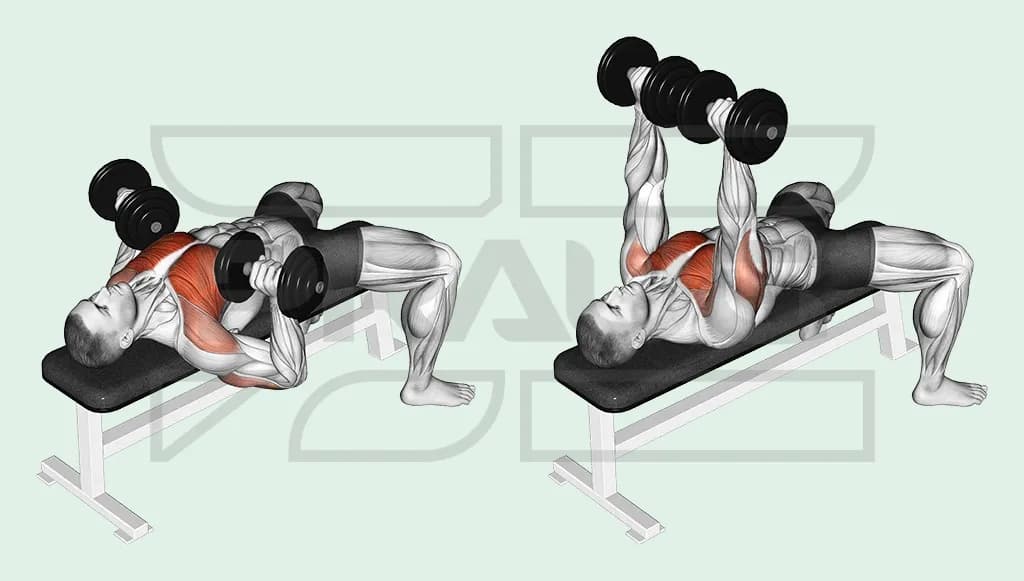
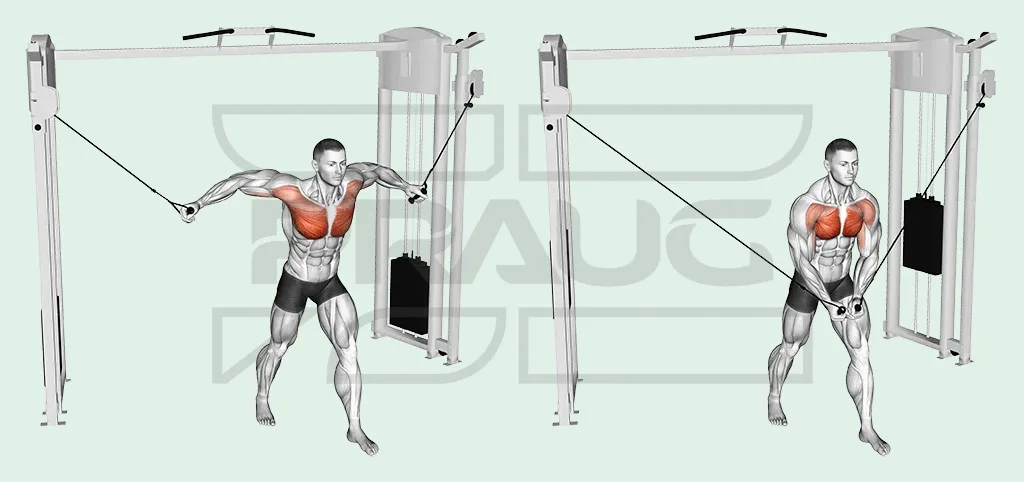
Training· 4 min read
Incline dumbbell bench press: setup, technique and progression
An incline dumbbell press raises the backrest while you press independent weights above the upper body. Around thirty degrees is one starting setup, not a proven growth optimum for everyone. Choose the angle and range for a controlled press and secure handling.

Certified fitness coach · CQP Instructeur Fitness
Published on
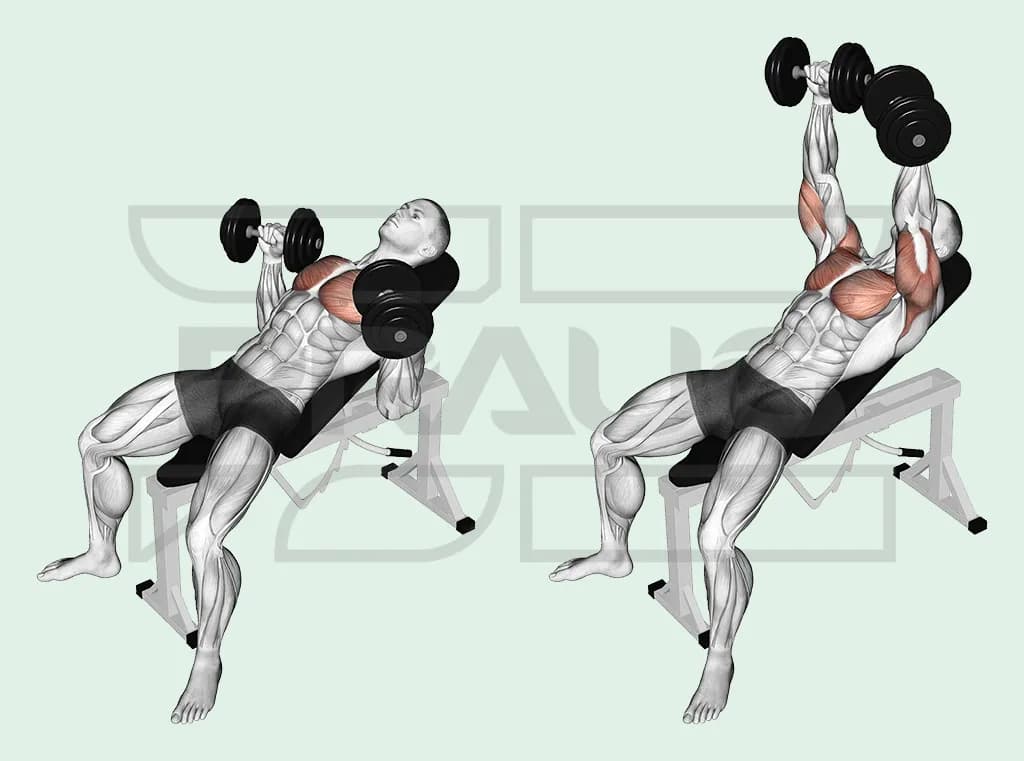
The essentials before you start.
- Choose a secure setup and a manageable starting demand.
- Keep the intended support, arm path and range repeatable.
- The cited studies have specific populations and exercise limits.
- Count this work within the whole week rather than adding every variation.
Exercise facts
- Main muscles
- Pectoralis major
- Secondary muscles
- Anterior deltoids, Triceps, Serratus anterior, Pectoralis minor, Abdominals
- Equipment
- Dumbbells, Adjustable bench
What the movement trains
The pectoralis major, anterior deltoids and triceps contribute to pressing, with the forearms and shoulder muscles helping control the implement. Bench angle, grip and elbow path change the task without neatly separating upper and lower chest work.
Set up and perform the movement
- Check a stable bench and manageable dumbbells, including secure adjustable parts. Practise the pickup and return before a difficult set.
- Lock the backrest at the chosen incline and set the seat to prevent sliding.
- Bring the dumbbells into pressing position with a learned controlled method or suitable assistance. Do not attempt an unfamiliar heavy kick-up.
- Keep the head, trunk and hips comfortably supported. Choose a hand angle and elbow path that allow a controlled lowering phase.
- Lower the dumbbells towards the sides of the chest through a range you can manage. Do not chase an extra stretch simply because the barbell no longer limits depth.
- Press smoothly above the upper body, with each weight controlled independently and no collision between them.
- End the set before handling becomes uncertain. Return the weights using the practised method instead of dropping them from open arms.
Range, control and common changes
Keep the chosen bench angle, grip and range consistent. A comfortable natural arch is different from repeatedly lifting or sliding the torso to finish. The shoulder blades need a supported position, not a maximal forced downward pinch. Use a sustainable breathing and bracing approach rather than a compulsory prolonged breath hold.
What the cited research does and does not show
The cited angle experiments used barbells, not this dumbbell setup. Their electrical-activity differences do not prescribe the best incline for later dumbbell growth, joint comfort or every trainee.
Variations and alternatives
A flat barbell press, machine chest press, flat dumbbell press and incline dumbbell press use different support or hand paths. Choose one for a reason; changing implement needs a new load reference.
Sets, progression and tracking
One coaching example is 3–4 sets of 8–12 repetitions with enough rest to repeat the intended press, often around two minutes or more for demanding work. Use fewer sets while learning. Log the bench angle, implement, range and load; a dumbbell load should specify per hand or the combined total. Account for other pressing before adding direct triceps work.
Frequently asked questions
Is thirty degrees compulsory?
No. It is a useful starting reference, not a universal best angle. Record the angle actually used.
Does an incline isolate the upper chest?
No. The chest portions, front shoulder and triceps contribute together. Angle changes demand rather than isolating one compartment.
When should I add demand?
When the chosen task, support and range are repeatable and the next increment is manageable. Record the setup and effort, and account for the rest of the week.
Sources and limitations
Sources support the passages that cite them. Practical suggestions are coaching choices to adapt to your own situation.
- Rodríguez-Ridao and al. · 2020 · Barbell press activity at five bench angles. ↗
Acute specified loads; not dumbbell training or later growth.
- Trebs and al. · 2010 · Chest-press activity across several bench inclinations. ↗
Fifteen men; no long-term growth or universal best angle.
This general information does not replace individual advice. Zepraug’s limitations.