Training· 4 min read
Archer push-up: setup, technique and progression
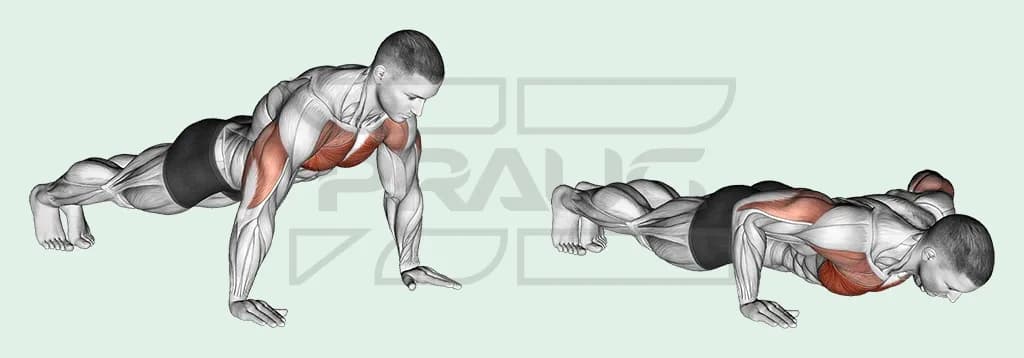
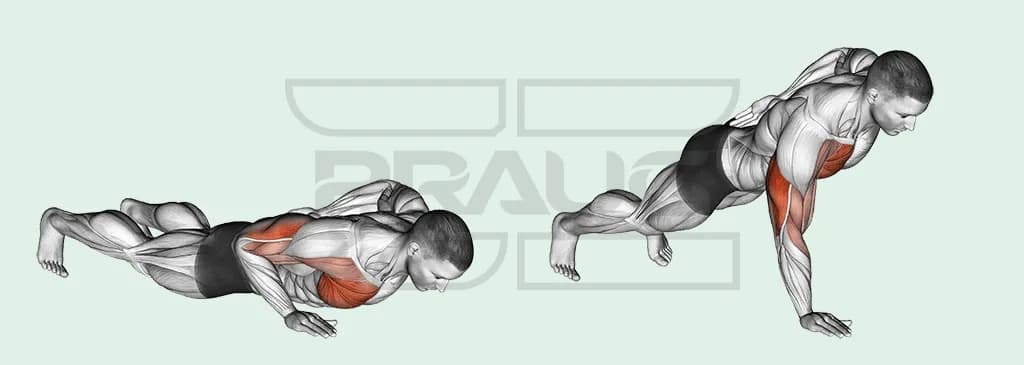
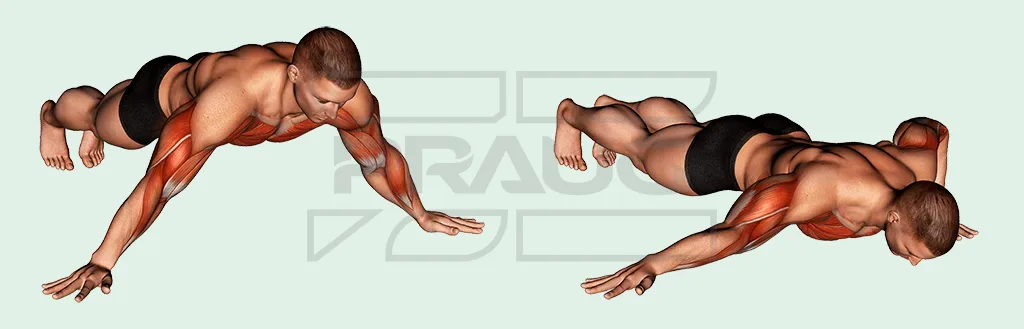
An archer push-up shifts the torso towards one hand while that elbow bends and the other arm remains more extended to the side. Both hand and foot supports still matter. It is an optional asymmetric pressing skill, not a compulsory stage before a one-arm push-up or proof that one side carries all the load.

Certified fitness coach · CQP Instructeur Fitness
Published on
The essentials before you start.
- Choose a secure setup and a manageable starting demand.
- Keep the intended support, arm path and range repeatable.
- The cited studies have specific populations and exercise limits.
- Count this work within the whole week rather than adding every variation.
Exercise facts
- Main muscles
- Pectoralis major, Triceps brachii
- Secondary muscles
- Anterior deltoids, Obliques, Rectus abdominis, Serratus anterior
- Equipment
- Bodyweight
What the movement trains
The chest, triceps and front shoulder contribute to pressing, while the trunk and hips help control rotation. Hand spacing, support height and the amount of assistance from the straighter arm change the demand. A fixed two-shoulder-width hand position does not fit every reader.
Set up and perform the movement
- Choose a clear, non-slip floor or a stable raised exercise support intended for the load. Start with a manageable height or range.
- Place the hands wider than a standard push-up at a spacing you can control, with secure palm contact and a comfortable hand angle.
- Set the feet and trunk to a stable starting position; a wider foot base can change balance demands.
- Lower the torso towards one hand by bending that elbow while the other arm assists from the side. Do not force the assisting elbow into a painful lock or roll the hand onto an unstable edge.
- Press back towards the centre without letting the hips collapse or the torso twist to escape the intended task.
- Repeat on the other side or complete a planned number per side under comparable conditions. Lower to secure support when the set ends.
Range, control and common changes
Use a shorter controlled range or suitable elevation before adding demand. The chest does not need to scrape the floor, and the assisting arm does not have to become completely straight. Record the hand and foot positions and assistance rather than counting every change in geometry as strength gain.
What the cited research does and does not show
The acute push-up comparison did not test archer push-ups. The four-week progression trial found strength improvements but no detectable thickness change; neither validates this exact skill ladder or long-term growth equivalence.
Variations and alternatives
A standard push-up, elevated asymmetric press and one-arm push-up are separate options. Reduce assistance only when it serves the goal and the current motion is repeatable; an archer variation need not lead to one-arm work.
Sets, progression and tracking
One example is 2–4 sets of 3–8 repetitions per side, adjusted for support height and current control. For example, three sets per side gives each side three sets. Within each set, record the repetitions performed by each side separately. Allow enough rest to retain the trunk and arm path and account for other pressing.
Illustrated positions and options
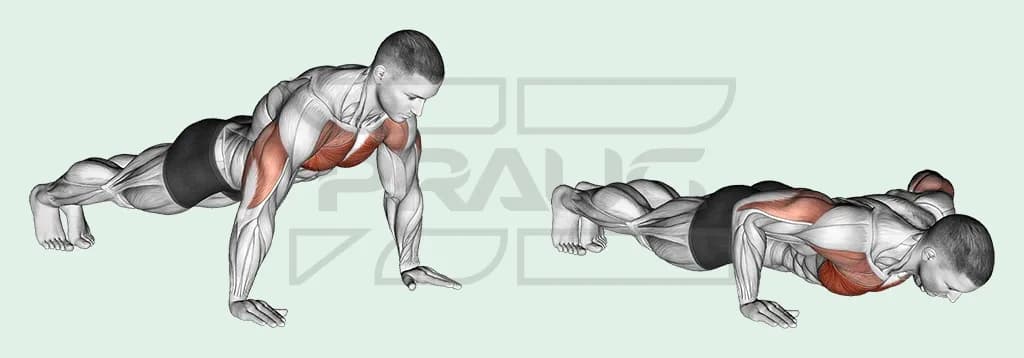
The images show example positions, not an individual range or loading prescription. A pictured household chair does not establish a suitable exercise support. Use equipment intended for the task.
Illustrated option 1
Illustrated option 2
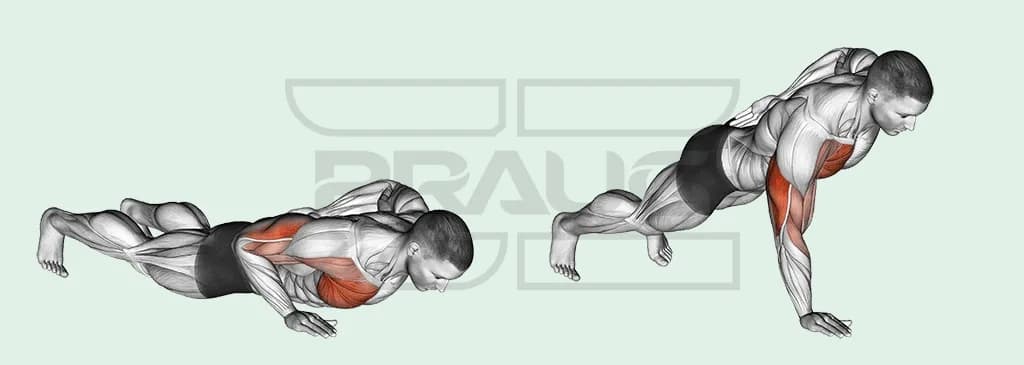
Frequently asked questions
Must the assisting arm be locked straight?
No. Use an arm position and assistance you can control without forcing an uncomfortable elbow or hand position.
Is the archer variation proven to build the same muscle as a bench press?
The cited short trial did not establish this exact variation’s growth equivalence, and did not detect thickness changes over four weeks.
When should I add demand?
When the chosen task, support and range are repeatable and the next increment is manageable. Record the setup and effort, and account for the rest of the week.
Sources and limitations
Sources support the passages that cite them. Practical suggestions are coaching choices to adapt to your own situation.
- Freeman and al. · 2006 · Push-up activity and modelled lumbar loading. ↗
Ten participants; no archer-specific training or injury-rate comparison.
- Kotarsky and al. · 2018 · Four-week progressive push-up and bench-press training trial. ↗
Strength improved; no detected thickness change or exact archer equivalence.
This general information does not replace individual advice. Zepraug’s limitations.