Training· 5 min read
Kettlebell back exercises: rows, hinges and workload choices
Choose a row, a hip hinge or a deliberate combination rather than treating every kettlebell movement as the same back exercise. Support, grip and overhead handling can limit the task before the pulling muscles do.

Certified fitness coach · CQP Instructeur Fitness
Published on
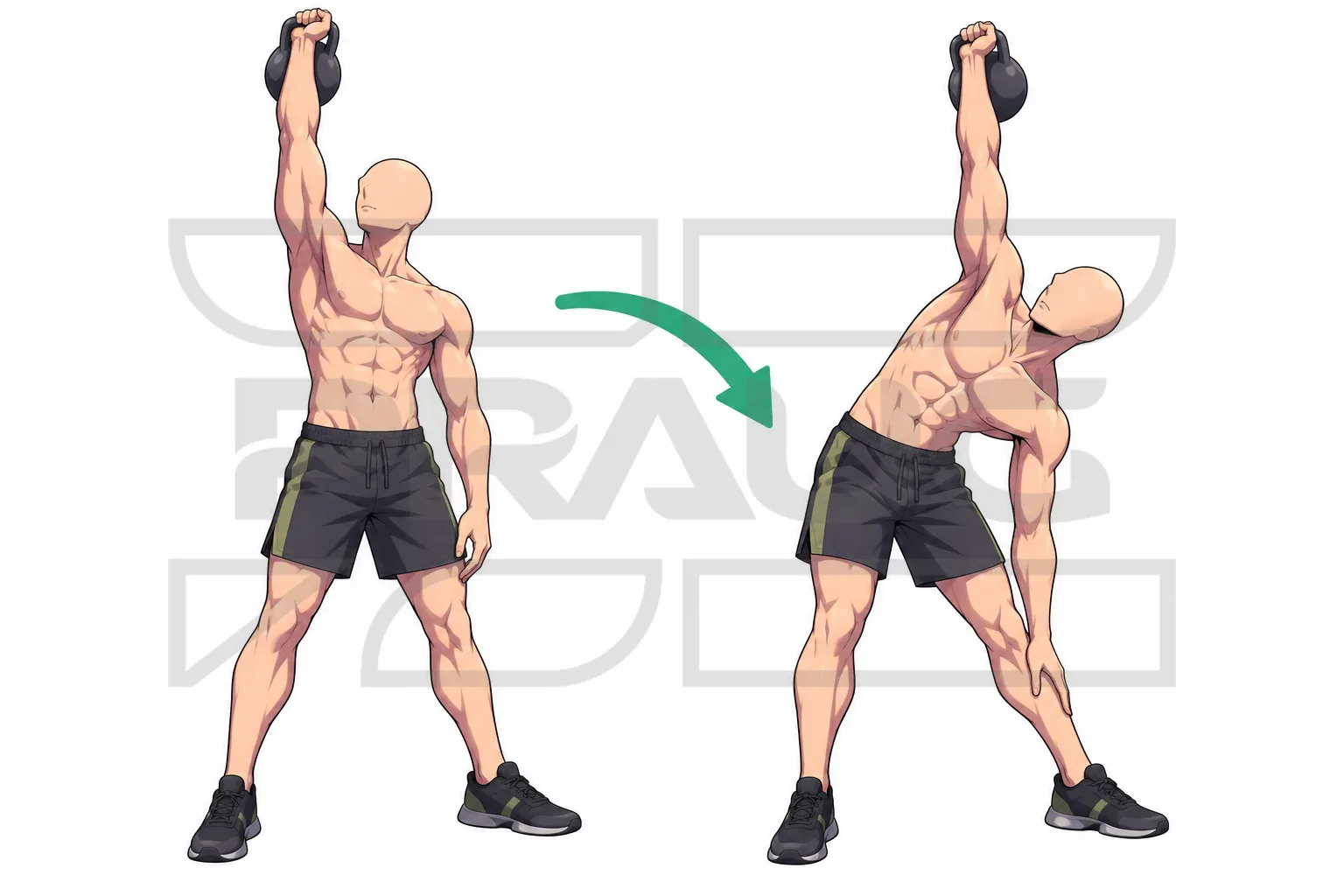
The essentials before you start.
- Separate pulling, hip hinging and overhead handling.
- Choose secure support for rows and plank-based work.
- Use the complete task and return to choose load.
- The example session is adjustable and does not require supersets.
Choose the task before the implement
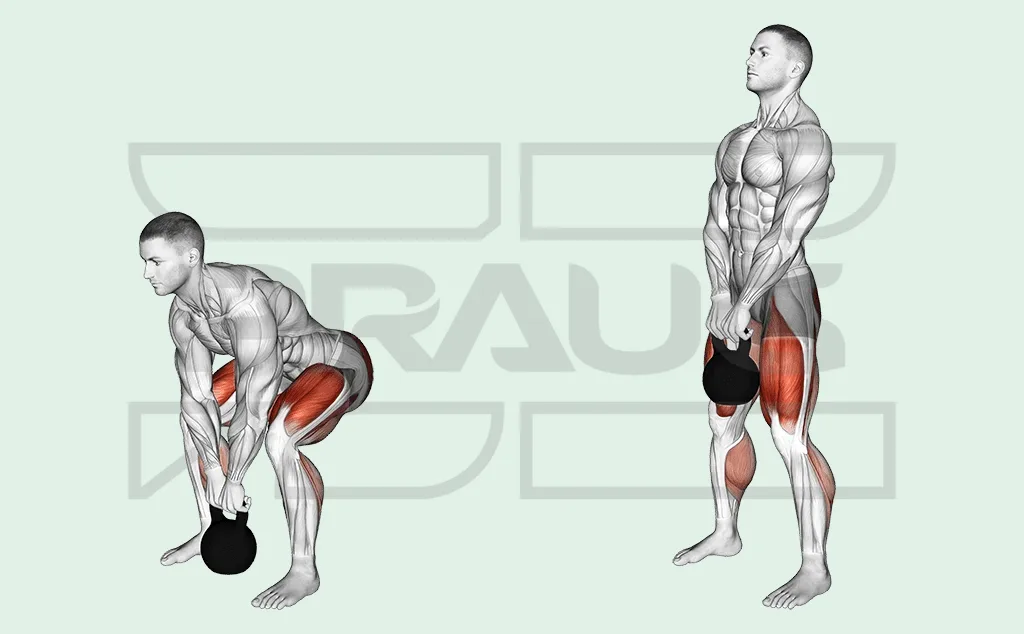
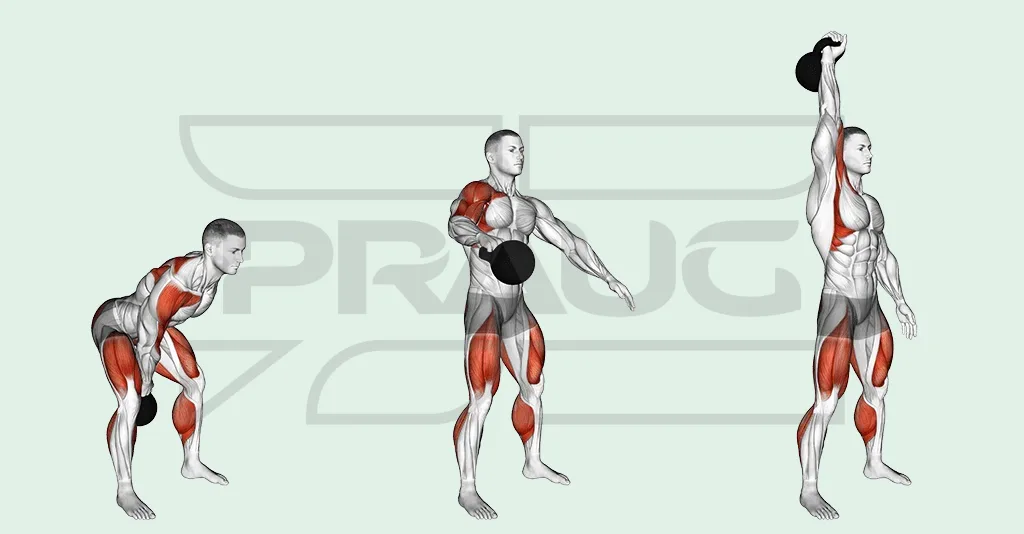
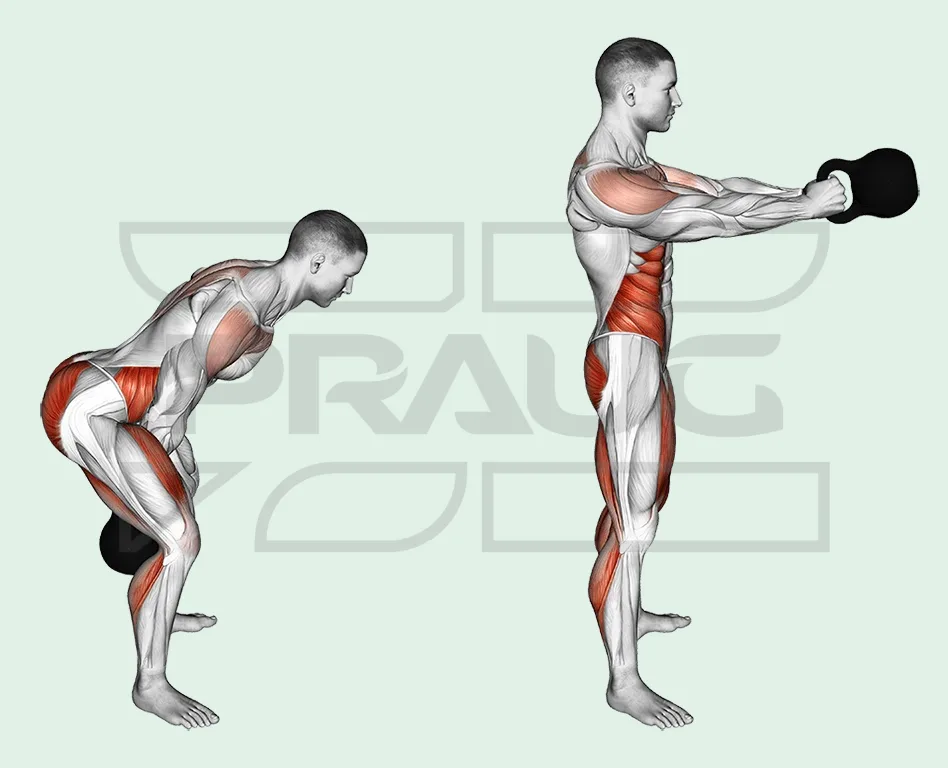
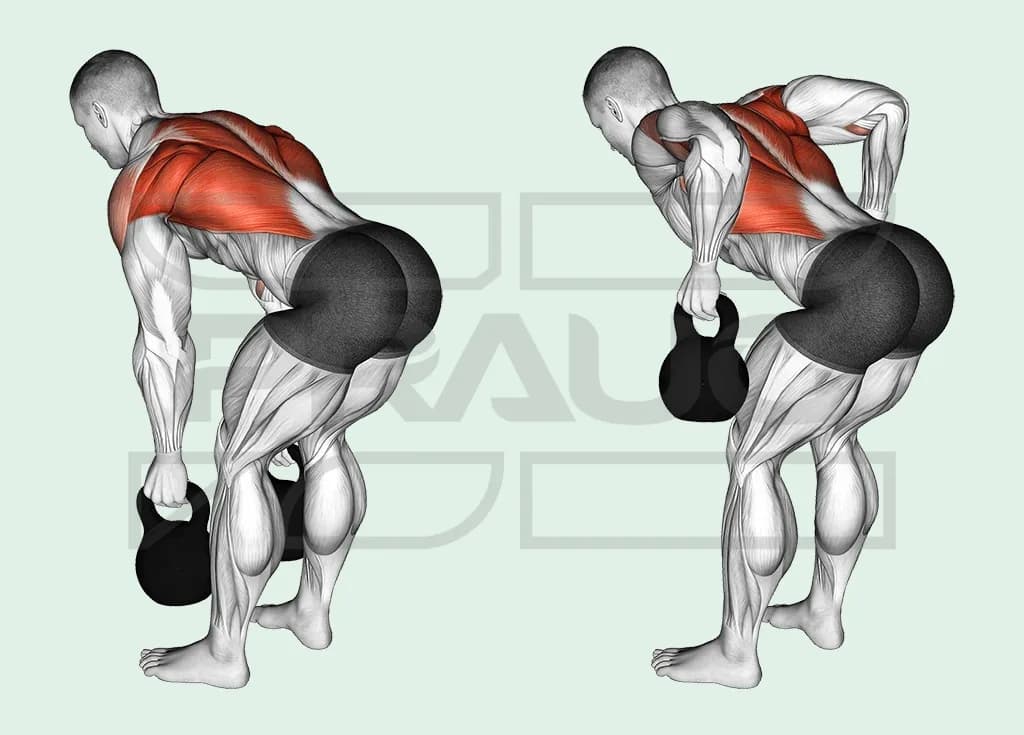
A row trains a horizontal pulling action. A deadlift uses hip and knee extension with trunk support. A swing adds acceleration and deceleration; it is not an isolated lumbar exercise.
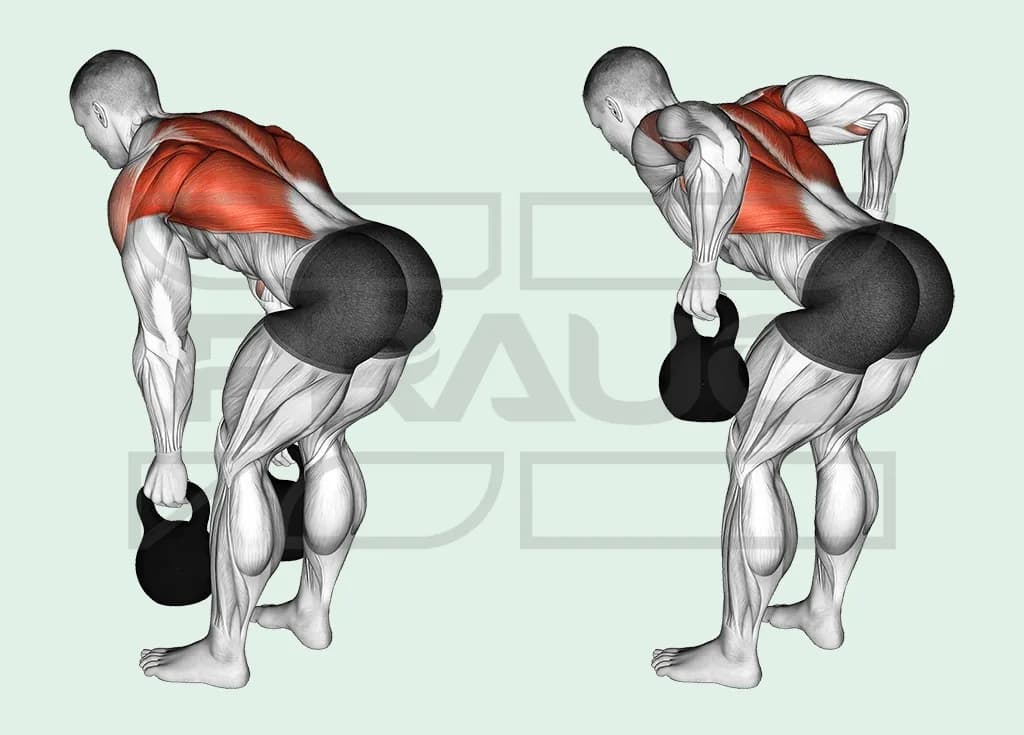
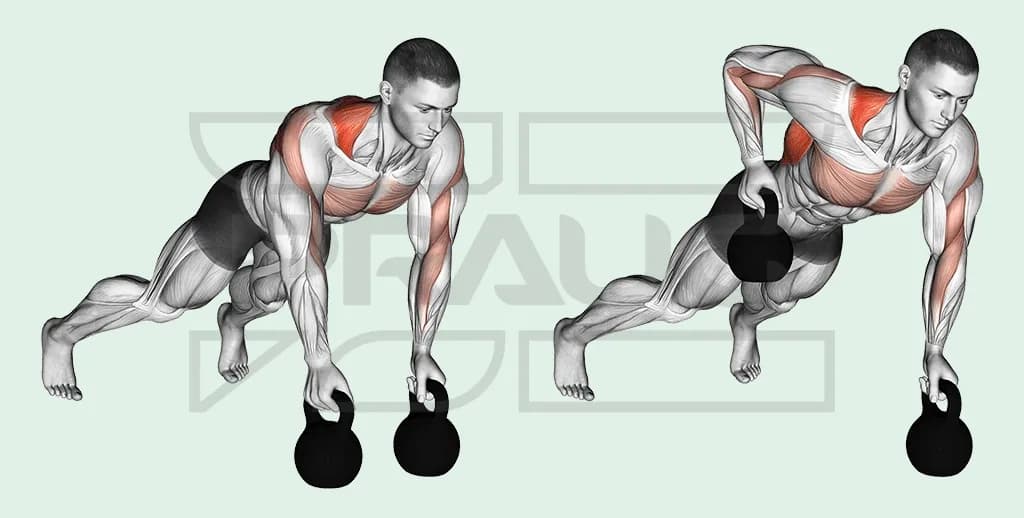
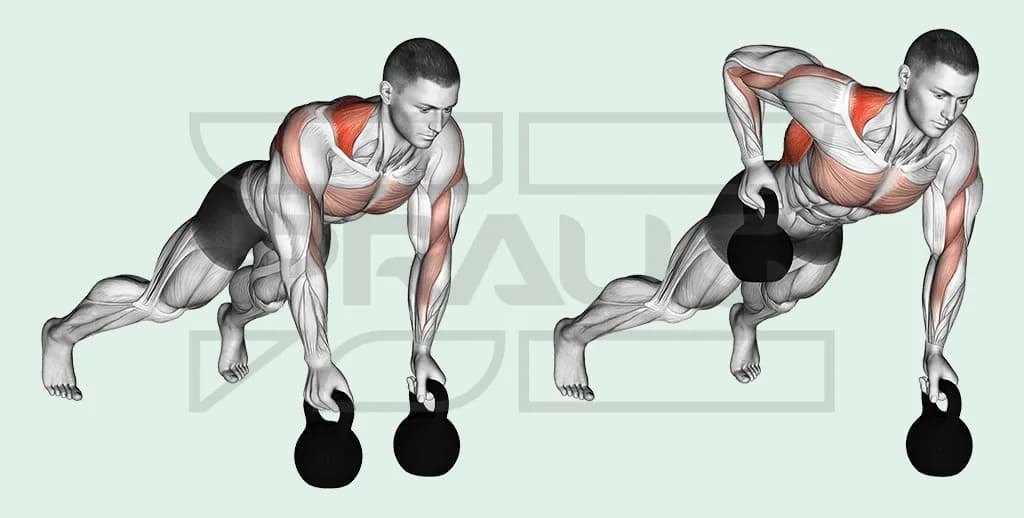
The renegade row adds a plank-support demand. Use only equipment intended and stable for bodyweight support; a flat kettlebell base alone is insufficient. A supported row can be chosen separately.
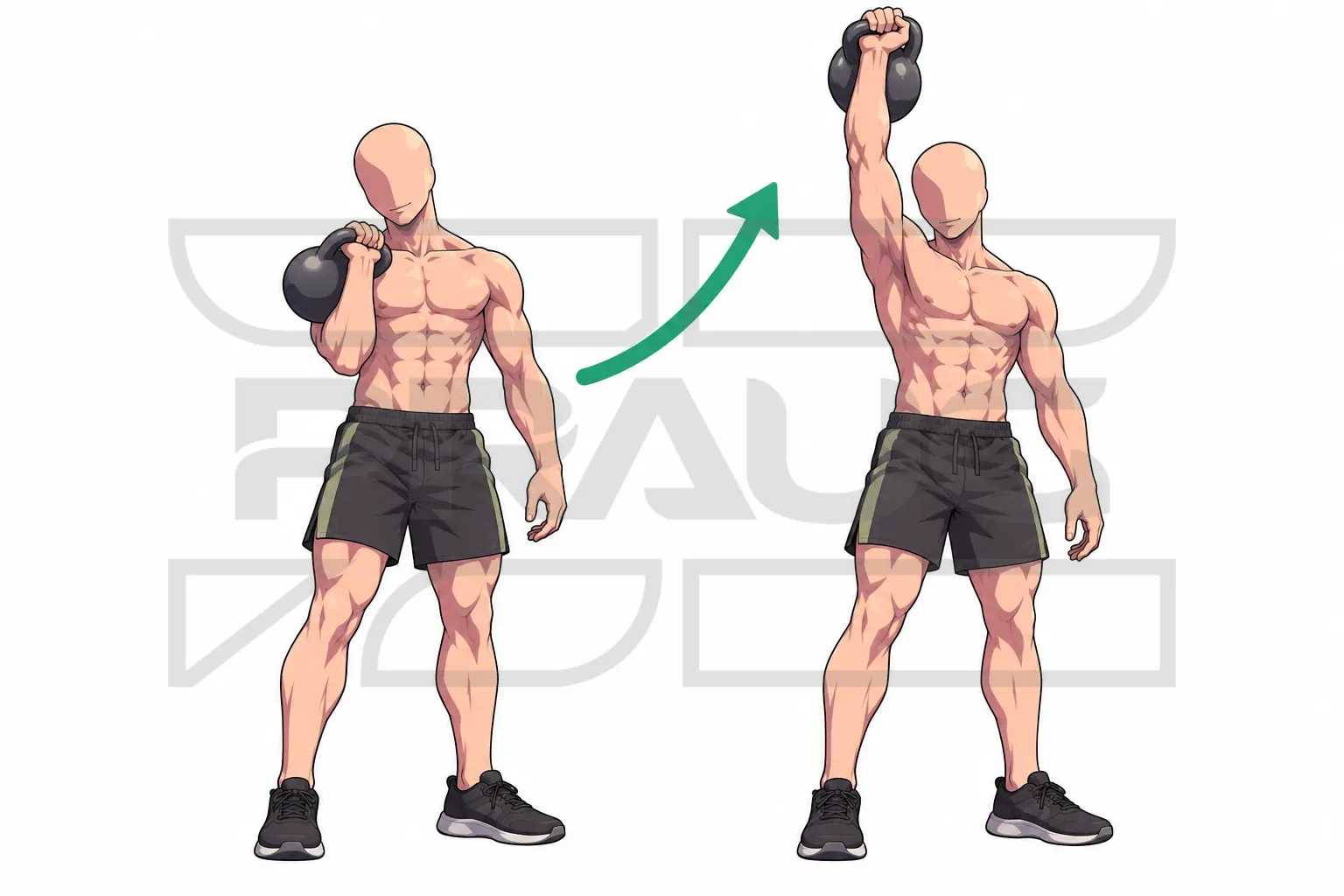
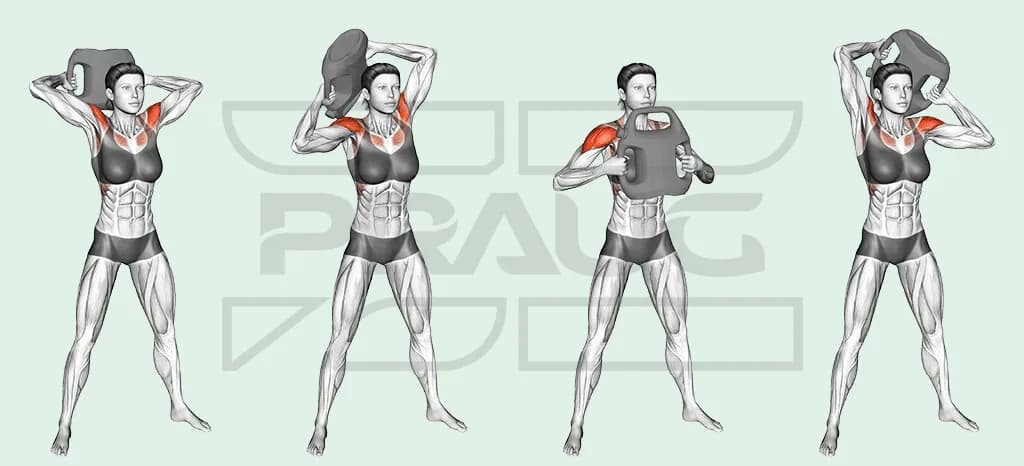
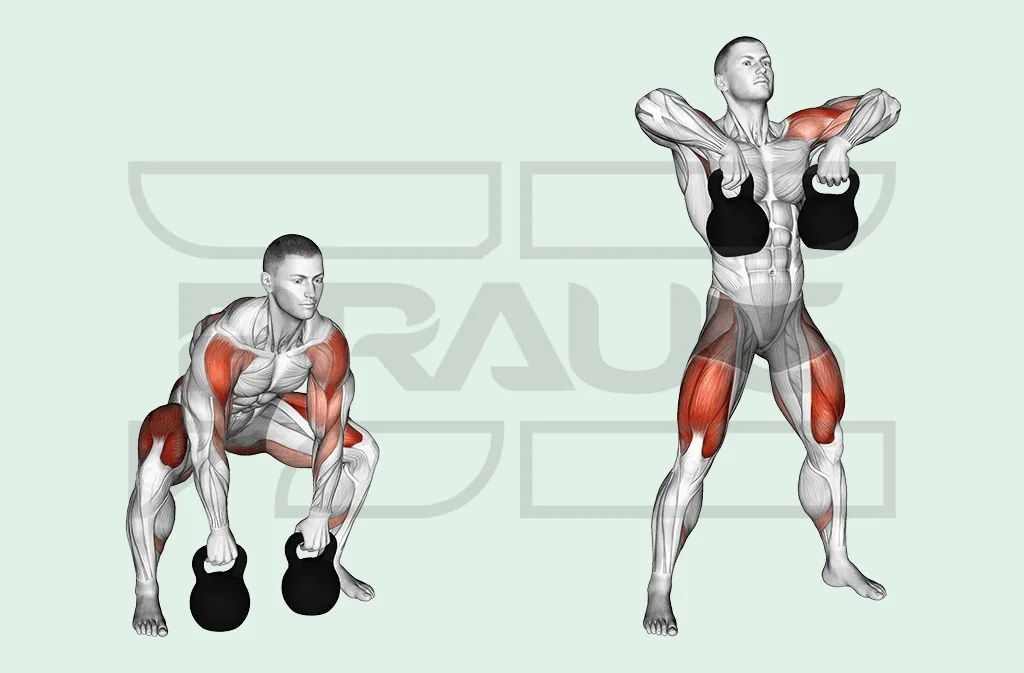
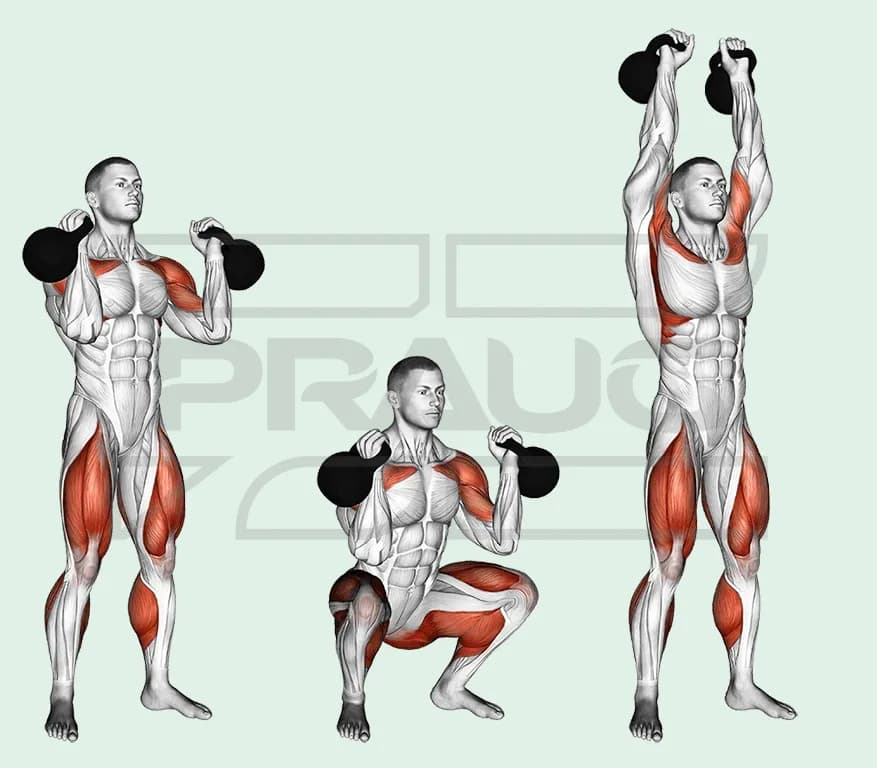
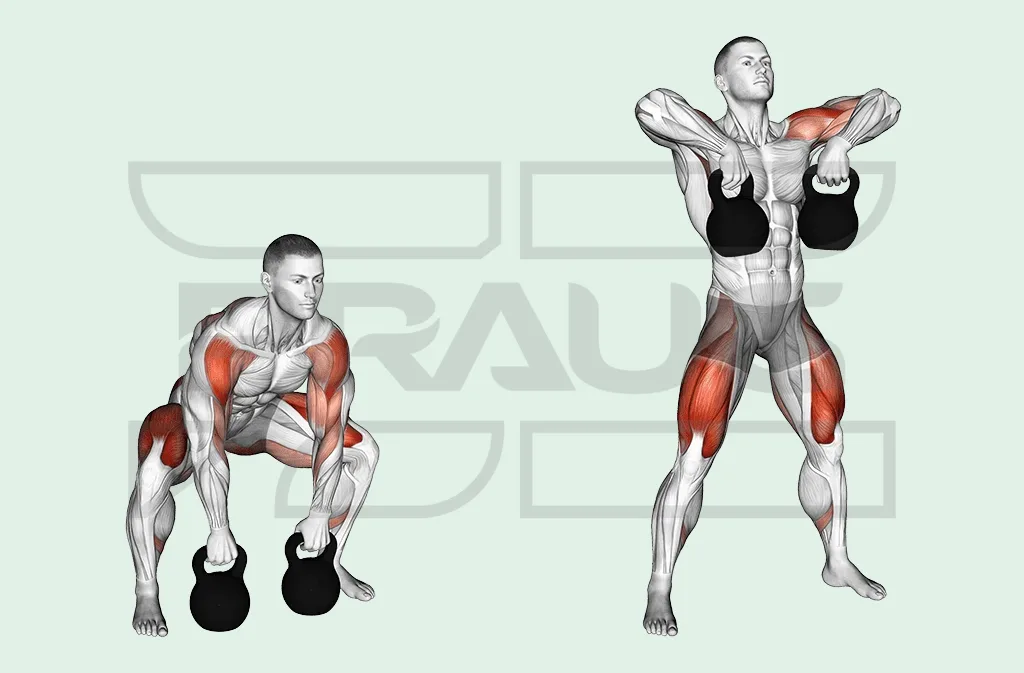
The high pull and clean and press require their own guiding, rack or overhead skills. They do not replace every row or establish a complete back programme by themselves.
Read the study limits
The ten-week training study did not show a significant back-extension endurance interaction. It does not establish back-muscle growth or a universal two-session plan.
The row experiment used other setups, and the one-arm activity comparison did not test a high pull or overhead press. Their findings cannot validate this whole session.
Support, pickup and return
For rows, record hand support, torso incline and elbow path. A bench changes support rather than removing every spinal force. For hinges, choose a reachable start height and a secure return.
For ballistic work, practise a light pickup, path and park before repeated sets. For overhead work, practise the rack and descent as well as the lift. Do not use a timer to continue after grip or path control is lost.
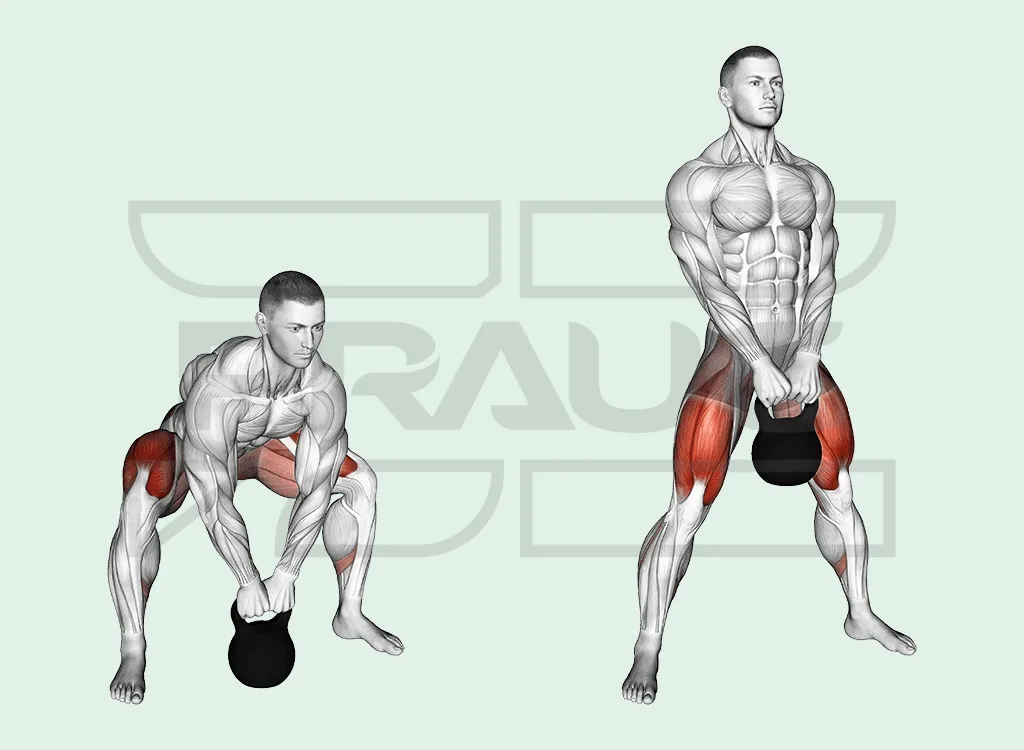
A wider deadlift stance is an option rather than a rule for taller people. The sumo squat has its own movement definition and is not simply another name for every wide-stance deadlift.
Prepare for the actual session
Use progressive movement and lighter practice sets of the selected tasks. The warm-up guide offers an adjustable framework. A halo is optional and does not replace task-specific practice.
Allow recovery according to the total week and current capacity. A fixed forty-eight-hour interval or one particular cool-down cannot guarantee readiness.
An adjustable session example
Choose some or all of the rows deliberately; fewer sets or exercises are valid. Straight sets with adequate rest are an option. Pairing exercises does not require removing all rest between them.
If all four rows are used as written, there are ten working sets: three row sets, two renegade-row sets, three swing sets and two high-pull sets. Per-side work does not double the sets received by each side. The two ballistic rows overlap and one may be omitted.
| Task | Example amount | Rest and counting |
|---|---|---|
| Supported row | 3 × 8–10 per arm | Rest as needed between sides and sets |
| Suitable supported renegade row | 2 × 4–6 pulls per arm | Eight to twelve individual pulls per set; secure support required |
| Two-hand swing | 3 × 8–10 | 24–30 swings across three sets; rest to retain the park |
| Floor-reset high pull, optional | 2 × 4–6 | Eight to twelve repetitions across two sets; reset each time |
Choose load for the complete task
There is no single kettlebell weight for a beginner, an experienced person or a sex category. Select a load you can pick up, move and return with the chosen support and amount. Row, swing and overhead loads need not match.
| Task | Useful selection check | What to record |
|---|---|---|
| Supported pulling | No thrown torso movement; secure return | Bell load, support, range and effort |
| Floor lifting | Reachable start and controlled pickup | Start height, stance and load |
| Ballistic work | Repeatable path, grip and park | Bell load, repetitions and rest |
| Overhead work | Controlled reception, support and descent | Load per bell, rack and return method |
Fit the choice into the week
The back programme and full-body programme offer planning examples. A kettlebell substitution changes support and loading; it does not guarantee an identical dose.
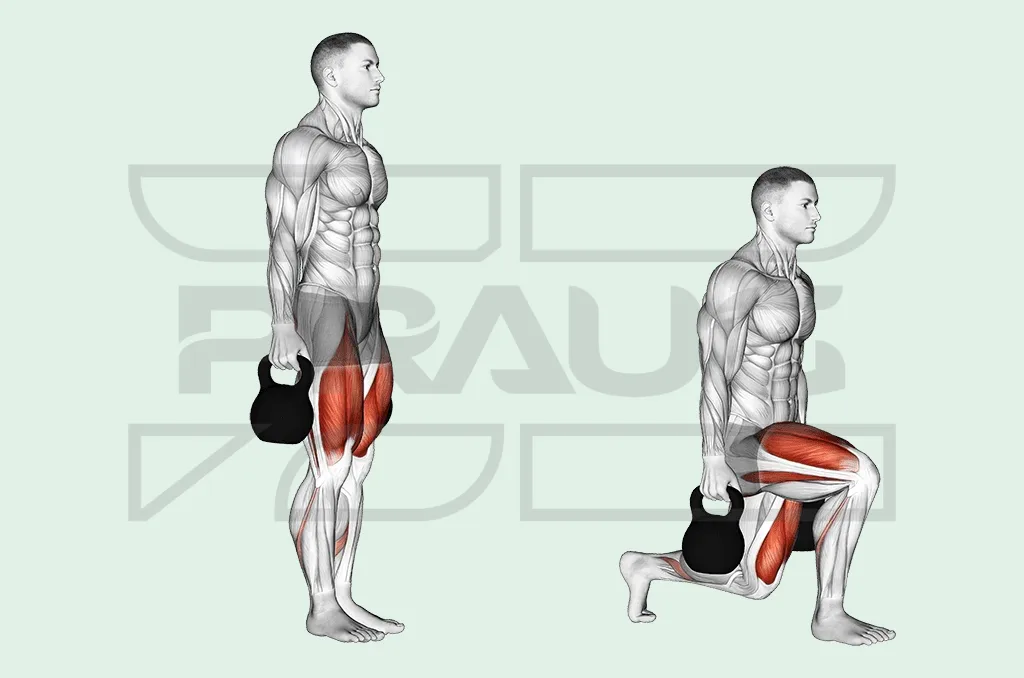
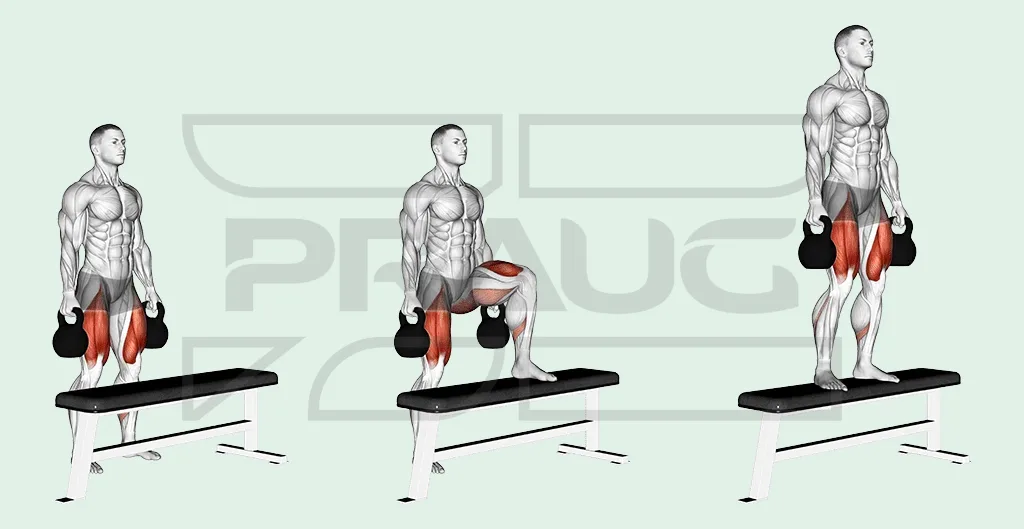
For leg choices, compare lunges and step-ups. The windmill and snatch have distinct support and handling demands. Stop for sharp pain and seek individual advice for persistent symptoms.
Illustrated positions and options
These illustrations show particular versions. Match the setup, grip, support and return to the version being practised rather than copying a load or depth.
Illustrated option 1
Illustrated option 2
Illustrated option 3
Illustrated option 4
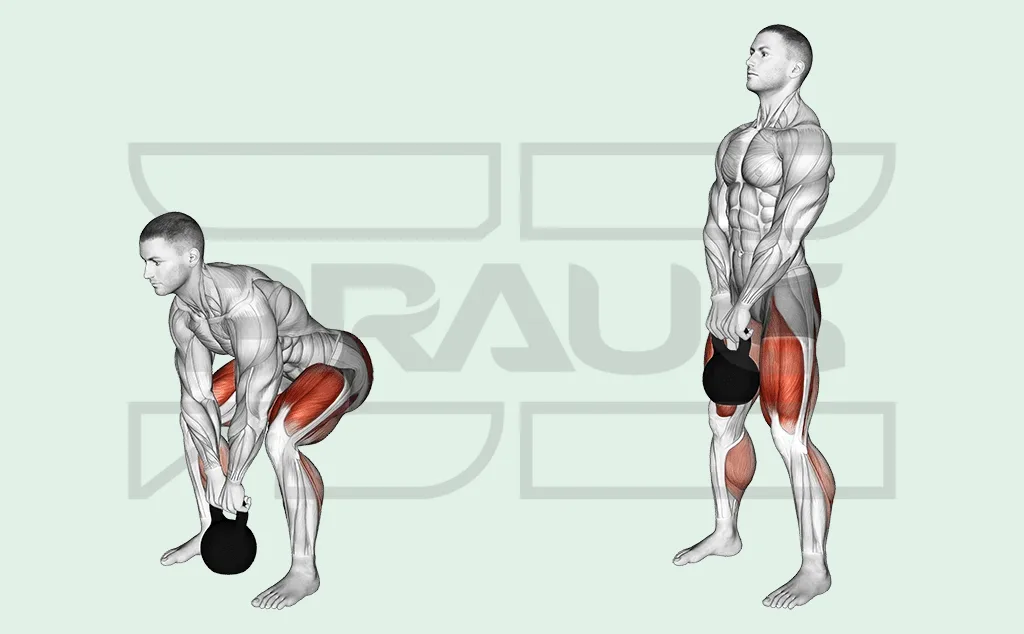
Illustrated option 5
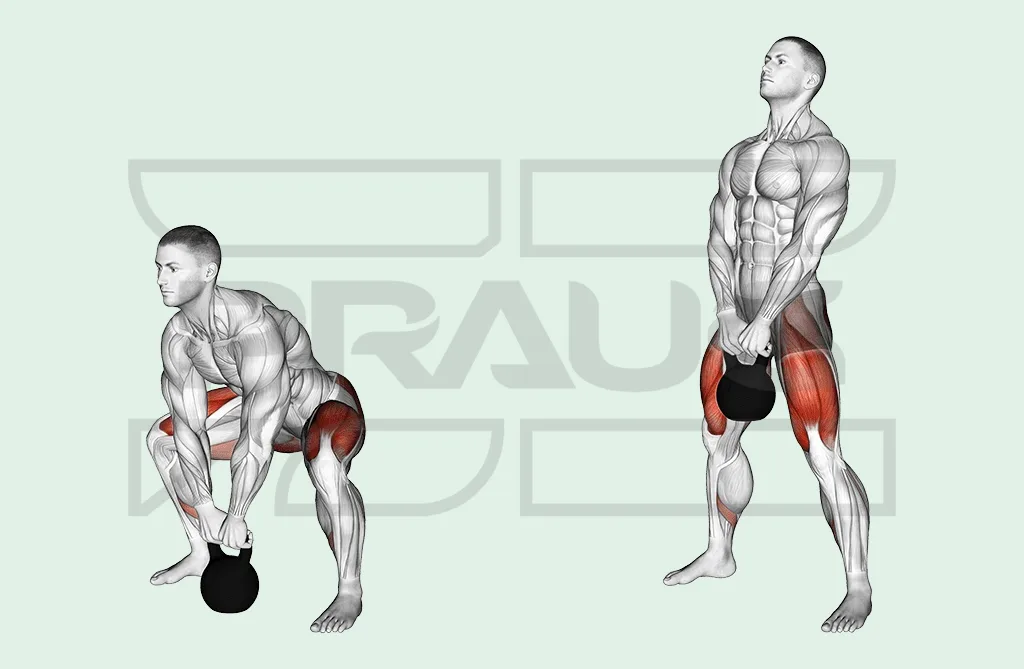
Illustrated option 6
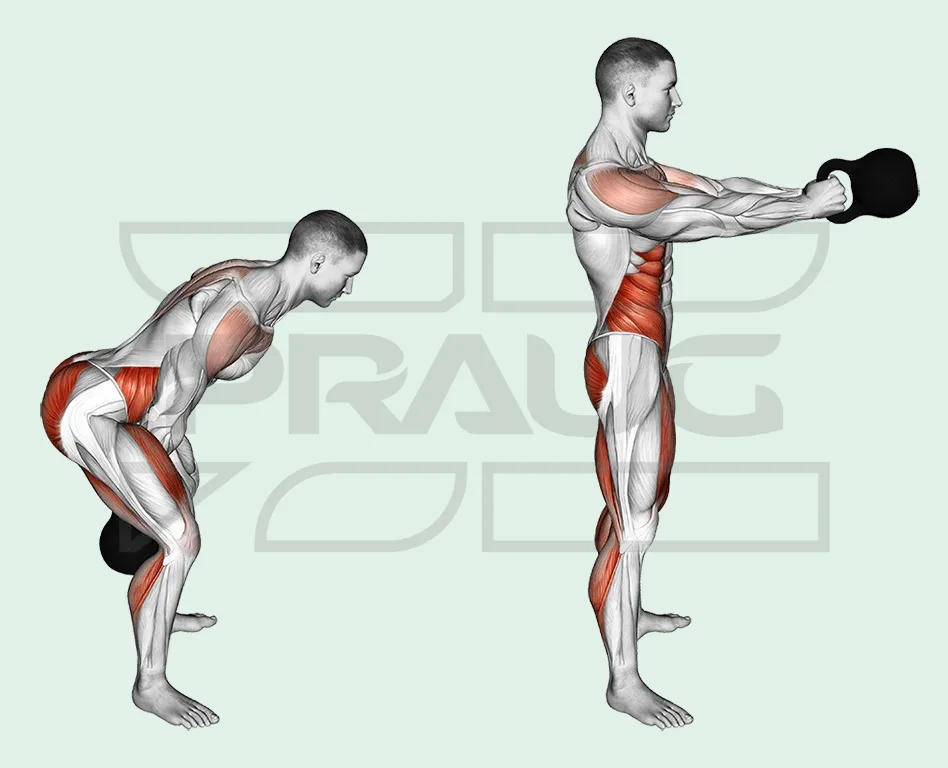
Illustrated option 7
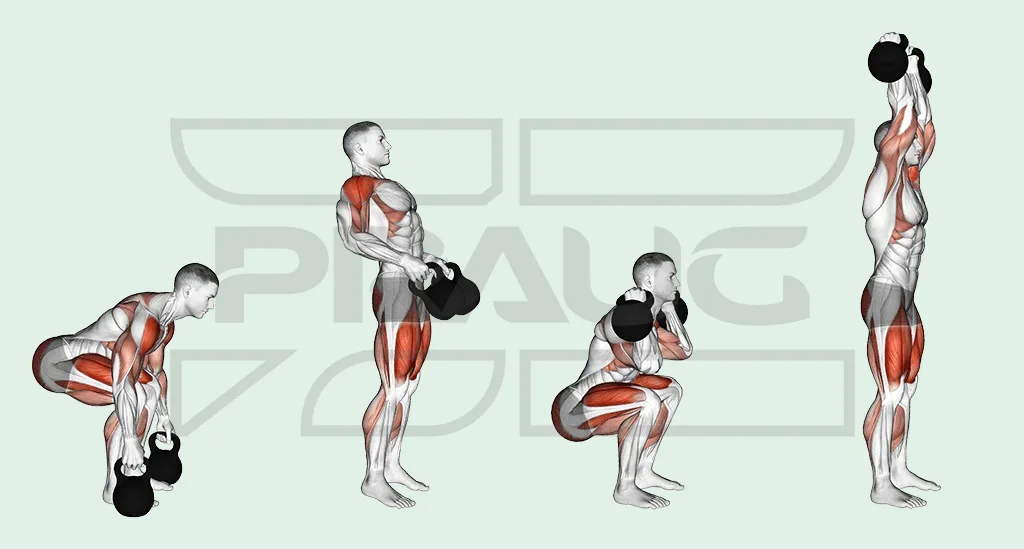
Frequently asked questions
Must I use all four rows as supersets?
No. The table is an adjustable example. Omit overlapping tasks, reduce the amount or use straight sets with rest when appropriate.
Does kettlebell training guarantee stronger back extensors?
The cited trial did not show a statistically significant back-extension endurance interaction. It does not guarantee an individual outcome.
Can one bell serve every exercise?
Possibly for some choices, but load should fit each complete task and return. An unsuitable overhead bell does not become appropriate because it can be deadlifted.
Sources and limitations
Sources support the passages that cite them. Practical suggestions are coaching choices to adapt to your own situation.
- Manocchia et al. · 2013 · Transfer after ten weeks of kettlebell training ↗
Thirty-seven adults in training and control groups; back-extension endurance interaction was not significant. No back-growth or universal two-session prescription.
- Fenwick et al. · 2009 · Activity and estimated loading across three rows ↗
Seven men performed inverted, bent-over and one-arm cable rows; not a direct kettlebell or renegade-row trial, nor long-term growth.
- Lyons et al. · 2017 · Activity during one-arm swings, snatches and cleans ↗
Fourteen participants performed one-arm tasks at self-selected loads; acute EMG, with no high pull or overhead press tested.
This general information does not replace individual advice. Zepraug’s limitations.