Training· 3 min read
Kettlebell thruster: setup, technique and progression
Other names: KB thruster
A kettlebell thruster joins the ascent of a squat to a leg-assisted overhead press. One bell, two bells and a two-handed hold each need suitable pickup, rack and return skills. They are not interchangeable loads.

Certified fitness coach · CQP Instructeur Fitness
Published on
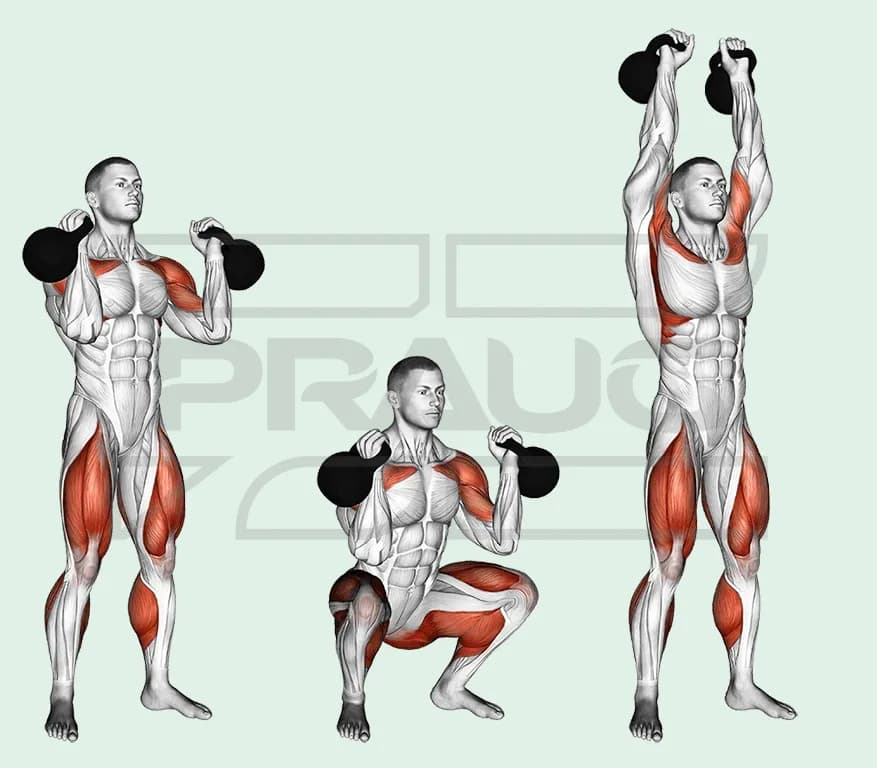
The essentials before you start.
- Check overhead clearance and rehearse a light squat, rack, press and return separately.
- Practise the chosen movement and return before adding load, speed or repetitions.
- One example is 2–3 sets of 4–8 repetitions with sufficient rest, often two minutes or more if needed.
- Research on a related task does not establish the same outcomes for every version.
Exercise facts
- Main muscles
- Quadriceps, Gluteus maximus, Deltoids
- Secondary muscles
- Triceps, Trapezius, Adductors, Abdominals and obliques, Spinal erectors
- Equipment
- Kettlebell with a suitable secure handle
What the movement trains
The legs and hips drive the squat ascent, and the shoulders and elbow extensors complete the press. The trunk and grip support the transition. A full thruster differs from a shallow-dip push press.
Set up and perform the movement
- Check overhead clearance and rehearse a light squat, rack, press and return separately.
- Bring a manageable bell to the rack with a pickup you have practised; a ballistic clean is not compulsory for every setup.
- Choose stable feet and a squat range that preserves support and a comfortable rack.
- Stand from the squat and transfer the leg drive into the press without jumping or throwing the ribs upwards.
- Finish in a comfortable overhead support position, then lower smoothly to the rack.
- Reset before another squat when needed. Finish by bringing the bell down through the practised rack and pickup path and parking it securely.
Range, grip and control
The shoulder is not necessarily the limiting factor for every person. Two bells change total load and support without proving twice the muscle demand. Do not add long sets, snatches or swings automatically to an already demanding sequence.
What the cited research supports
The references concern barbell push-press mechanics and shoulder activity in other tasks. Neither directly measured the complete kettlebell thruster or its long-term growth effects.
Variations and alternatives
A goblet squat and a separate press permit a pause between tasks. The clean and press uses a different leg and pressing sequence.
Practice, workload and tracking
One example is 2–3 sets of 4–8 repetitions with sufficient rest, often two minutes or more if needed. Record load per bell and total external load. One squat plus one press is one complete repetition here.
Illustrated positions and options
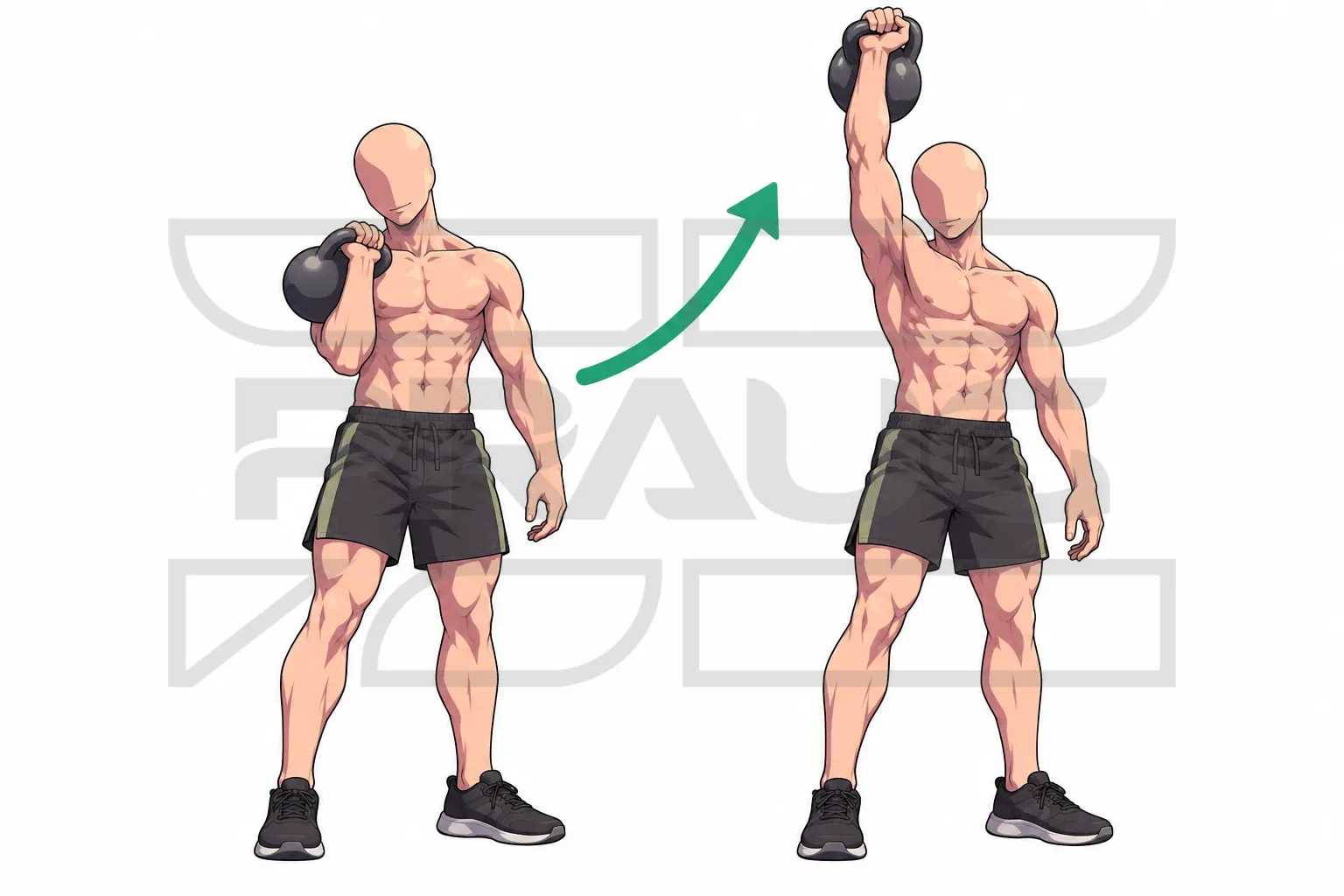
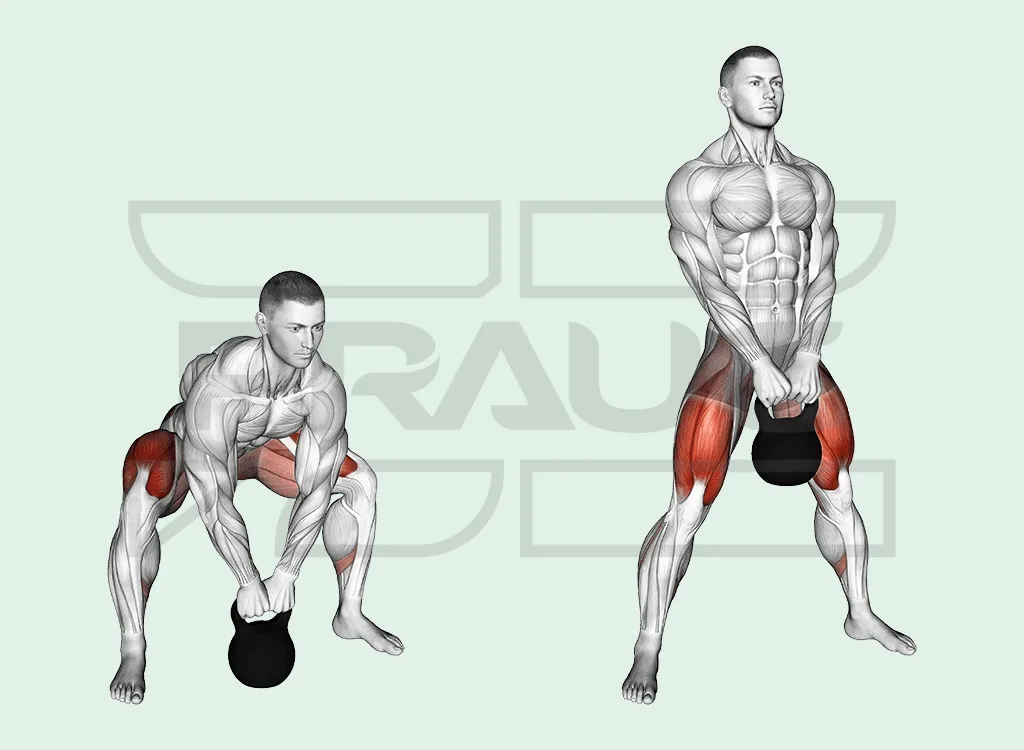
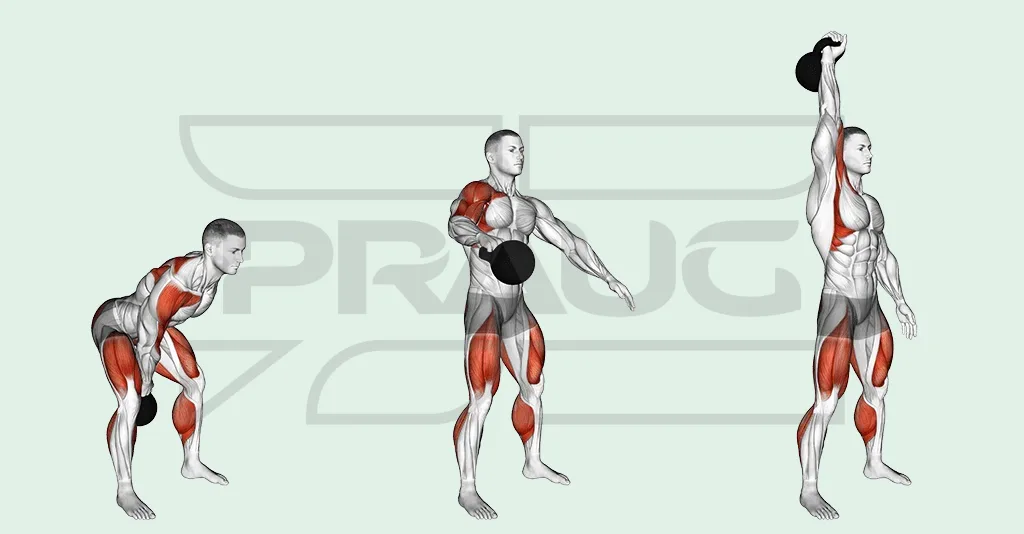
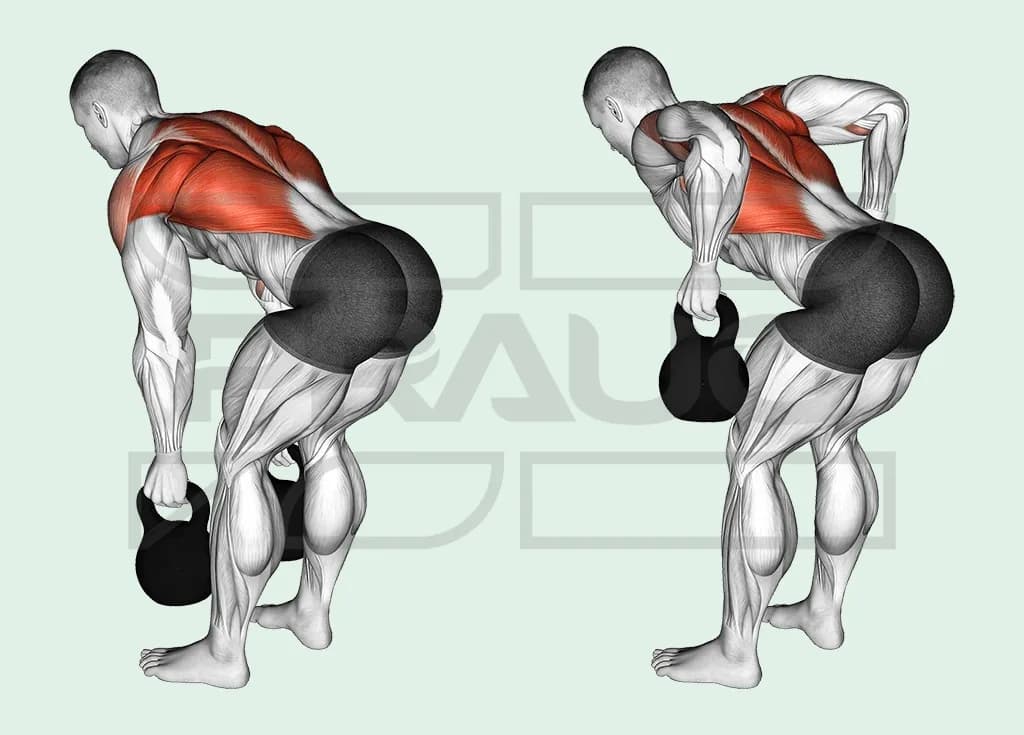
These illustrations show particular versions. Match the setup, grip, support and return to the version being practised rather than copying a load or depth.
Illustrated option 1
Frequently asked questions
Must I move directly into the next squat?
No. A reset at the rack can preserve support. If the transition cannot be controlled, practise the squat and press separately with less demand.
When should I add demand?
When the chosen setup, path, grip and return are repeatable and the next change is manageable. More load, speed, range and repetitions need not increase together.
Sources and limitations
Sources support the passages that cite them. Practical suggestions are coaching choices to adapt to your own situation.
- Lake et al. · 2014 · Push-press load, power and impulse ↗
Seventeen trained men performed barbell push presses; eight also performed jump squats. Force-platform mechanics, not a kettlebell-thruster trial.
- Işiklar et al. · 2026 · Shoulder activity across resistance implements ↗
Twenty young men performed pressing, rowing and swinging tasks; modest acute EMG differences, not a thruster or muscle-growth trial.
This general information does not replace individual advice. Zepraug’s limitations.