Training· 3 min read
Kettlebell clean and press: setup, technique and progression
Other names: KB clean and press
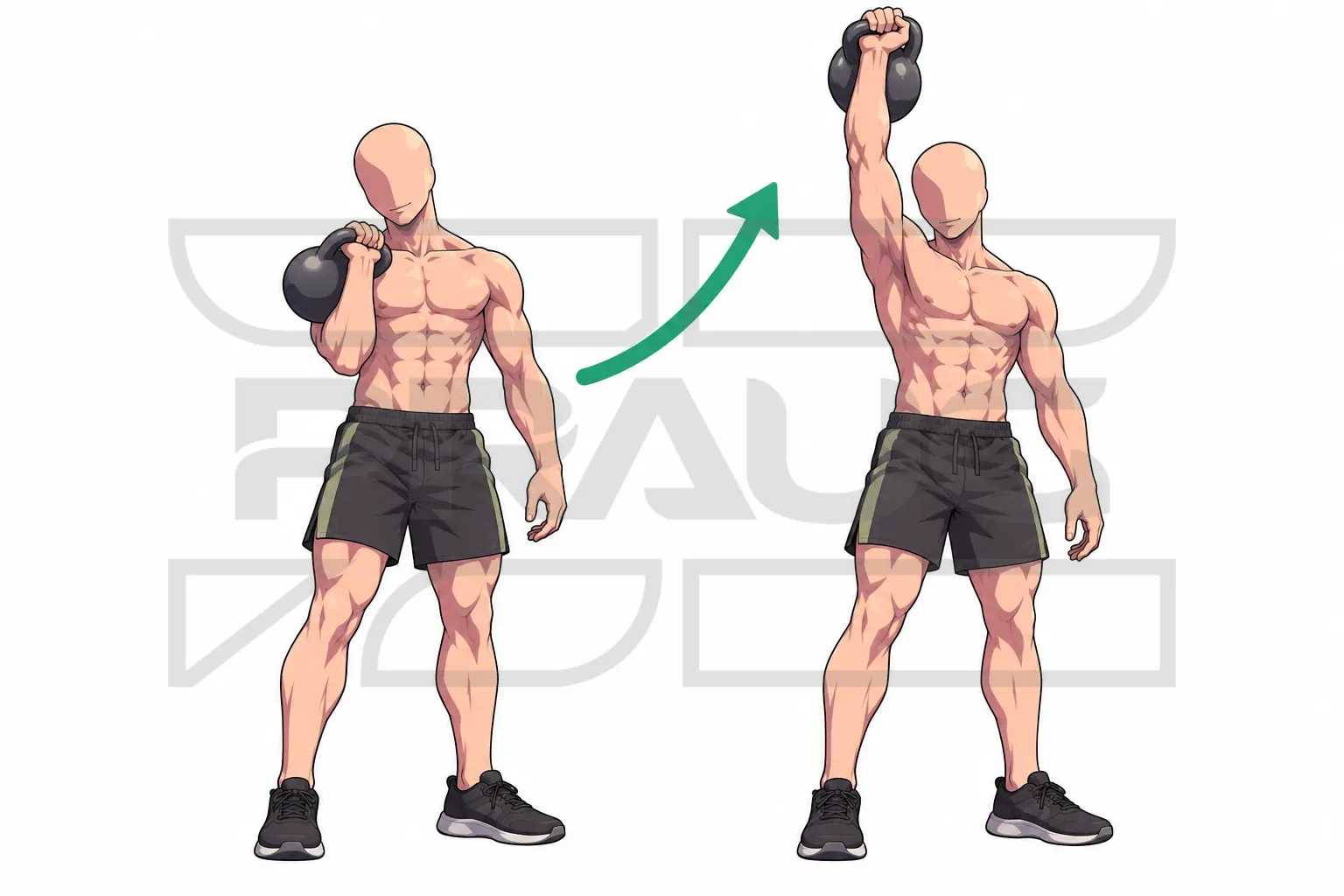
The clean brings a kettlebell to a supported rack position near the shoulder; the press then moves it overhead. Practise both phases and the return with a manageable bell before joining them into repeated work.

Certified fitness coach · CQP Instructeur Fitness
Published on
The essentials before you start.
- Clear the overhead space and floor, and rehearse a secure rack, press and return with light demand.
- Practise the chosen movement and return before adding load, speed or repetitions.
- A practice example is 1–3 short sets of 3–5 repetitions per side, or fewer, with enough rest for a controlled rack and return.
- Research on a related task does not establish the same outcomes for every version.
Exercise facts
- Main muscles
- Deltoids, Gluteus maximus, Hamstrings
- Secondary muscles
- Triceps, Trapezius, Quadriceps, Abdominals and obliques, Spinal erectors, Forearms
- Equipment
- Kettlebell with a suitable secure handle
What the movement trains
The clean combines hip and knee extension with guiding the bell; the strict press uses the shoulder and elbow extensors. The trunk and grip support both phases. A leg-driven push press is a different pressing version.
Set up and perform the movement
- Clear the overhead space and floor, and rehearse a secure rack, press and return with light demand.
- Take a secure one-hand grip, set stable feet and hinge to a controlled start.
- Extend the hips to guide the bell close, bending the elbow without swinging a wide arc towards the face.
- Insert the hand through the handle as the bell turns around it, settling gently into the rack rather than striking the forearm.
- Pause with stable support, then press without a new leg drive in this strict-press version. Use a comfortable overhead position without forcing a back arch.
- Lower to the rack under control. Use the practised close return and hip hinge to park the bell securely; reset rather than rushing a side change.
Range, grip and control
A painful forearm impact is a reason to stop and reduce demand, not something to toughen through. Learn the handling with appropriate coaching if the rack or return is uncertain. Two bells, a bottoms-up hold and a push press each require their own setup.
What the cited research supports
The cited activity experiment compared one-arm swings, snatches and cleans. It did not test the overhead press or the complete clean-and-press sequence.
Variations and alternatives
The deadlift allows a slower pickup. The thruster joins a squat and leg-driven press; it is not the same strict press.
Practice, workload and tracking
A practice example is 1–3 short sets of 3–5 repetitions per side, or fewer, with enough rest for a controlled rack and return. One clean followed by one press counts as one complete repetition here. Log the bell load and pressing version.
Illustrated positions and options
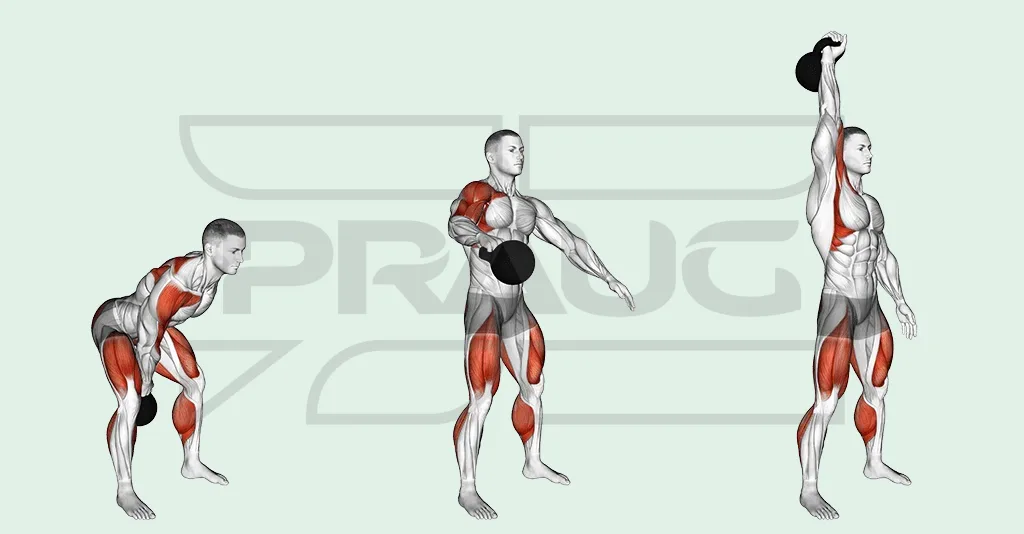
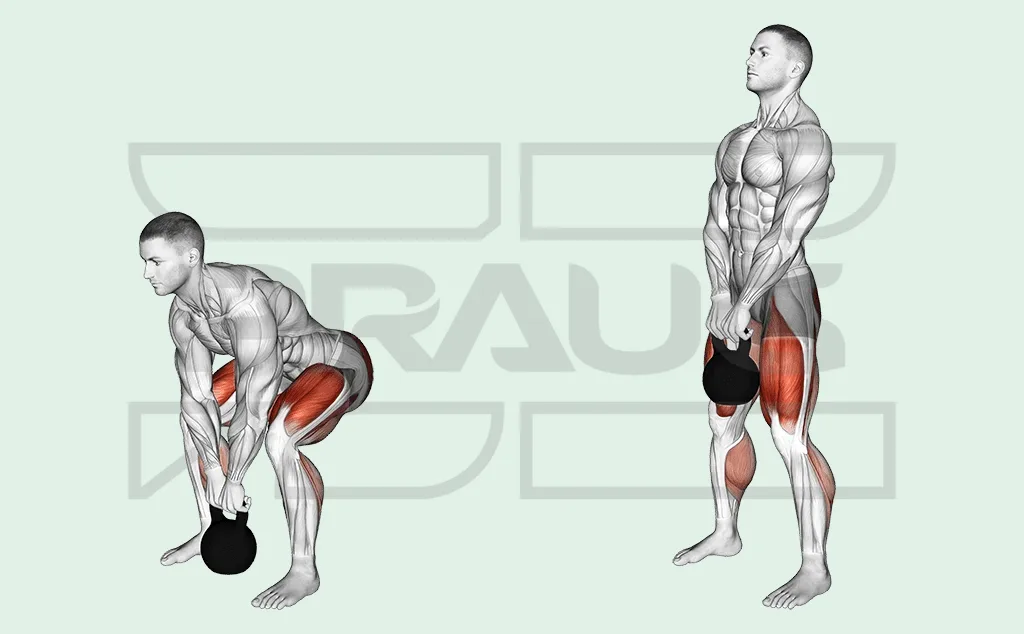
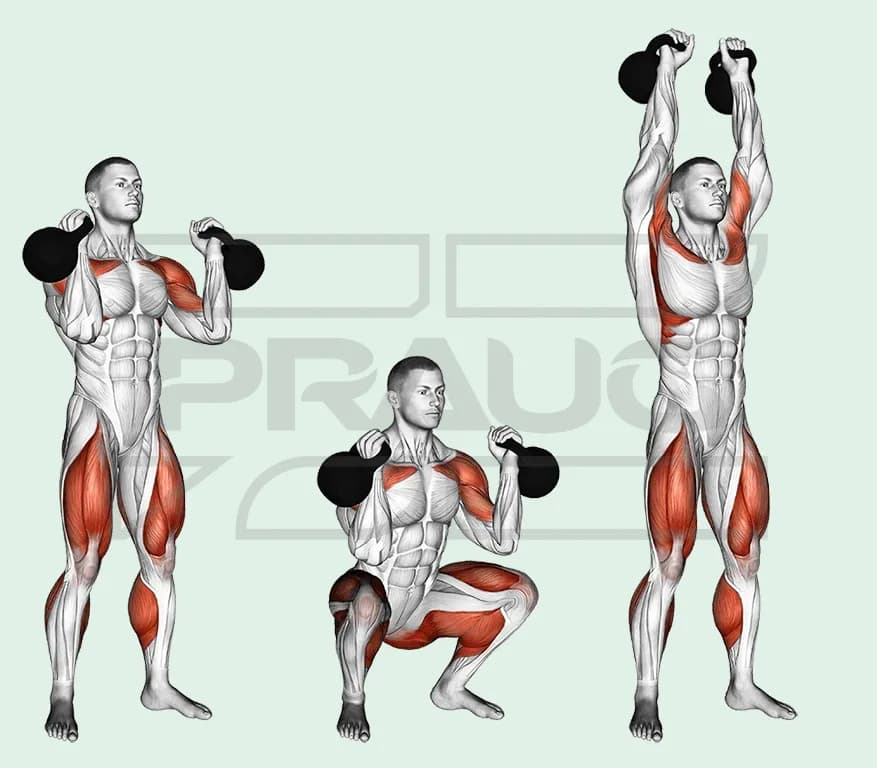
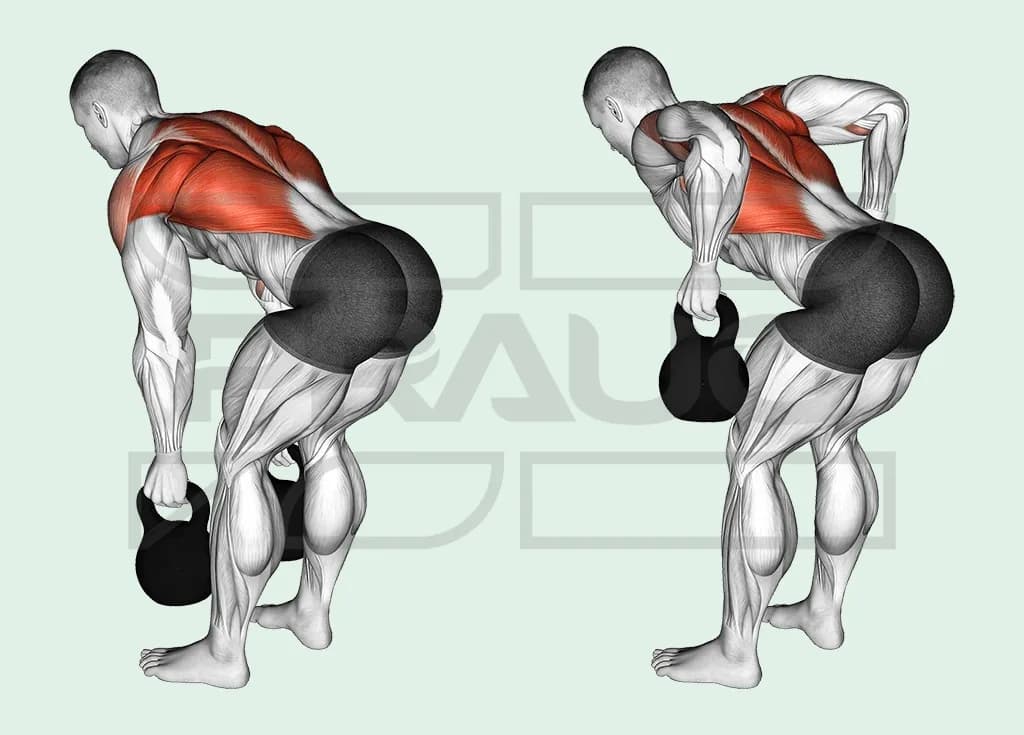
These illustrations show particular versions. Match the setup, grip, support and return to the version being practised rather than copying a load or depth.
Illustrated option 1
Frequently asked questions
Does the cited study prove a superior overhead press?
No. Its clean condition did not include an overhead press, and acute activity does not establish later strength or muscle growth.
When should I add demand?
When the chosen setup, path, grip and return are repeatable and the next change is manageable. More load, speed, range and repetitions need not increase together.
Sources and limitations
Sources support the passages that cite them. Practical suggestions are coaching choices to adapt to your own situation.
- Lyons et al. · 2017 · Activity during one-arm swings, snatches and cleans ↗
Fourteen participants performed one-arm tasks at self-selected loads; acute EMG, with no high pull or overhead press tested.
This general information does not replace individual advice. Zepraug’s limitations.