Training· 3 min read
Kettlebell deadlift: setup, technique and progression
Other names: KB deadlift
A kettlebell deadlift lifts a bell from between the feet by extending the hips and knees, then returns it under control. Handle height and body proportions affect the start. A floor start is an option rather than a universal requirement.

Certified fitness coach · CQP Instructeur Fitness
Published on
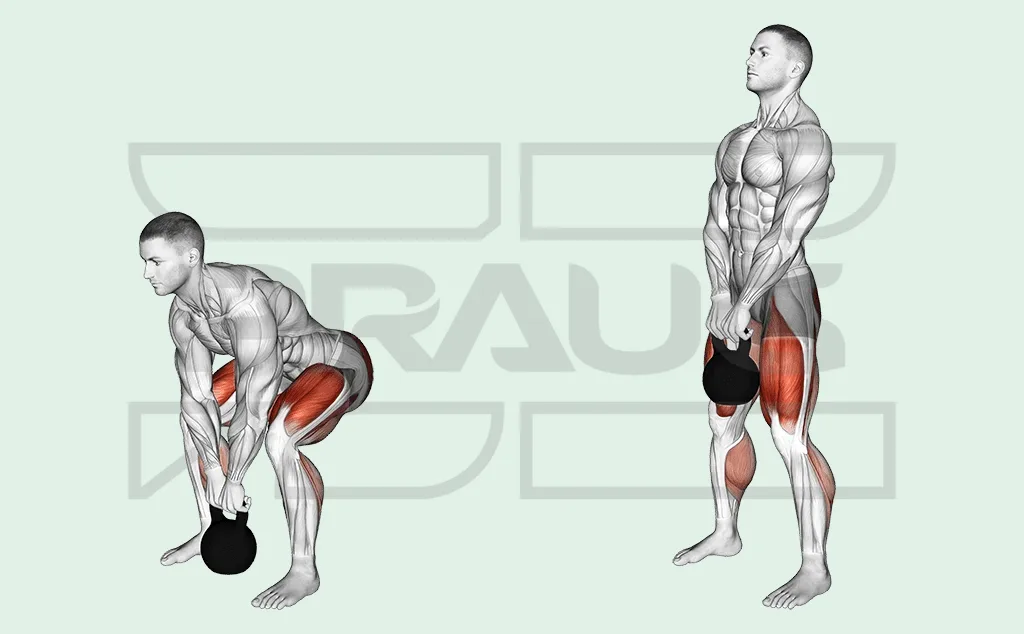
The essentials before you start.
- Set the bell on a stable surface with a clear pickup and return area. A secure raised start can reduce reach if needed.
- Practise the chosen movement and return before adding load, speed or repetitions.
- An adjustable example is 2–4 sets of 6–12 repetitions with sufficient rest.
- Research on a related task does not establish the same outcomes for every version.
Exercise facts
- Main muscles
- Gluteus maximus, Hamstrings
- Secondary muscles
- Spinal erectors, Quadriceps, Abdominals, Trapezius, Forearms
- Equipment
- Kettlebell with a suitable secure handle
What the movement trains
The gluteals and hamstrings contribute to hip extension, the quadriceps to knee extension, and the trunk and grip support the load. It is not an isolated lower-back exercise.
Set up and perform the movement
- Set the bell on a stable surface with a clear pickup and return area. A secure raised start can reduce reach if needed.
- Choose foot width and bell position that allow the hands to reach without the bell obstructing the legs.
- Bend the hips and knees, take a secure two-hand grip and establish a manageable torso position.
- Build tension smoothly and stand by extending the hips and knees, keeping the bell close.
- Finish standing without leaning backwards or forcing the shoulders down. Breathe in a way that preserves control.
- Lower through coordinated hip and knee bending and settle the bell before releasing it.
Range, grip and control
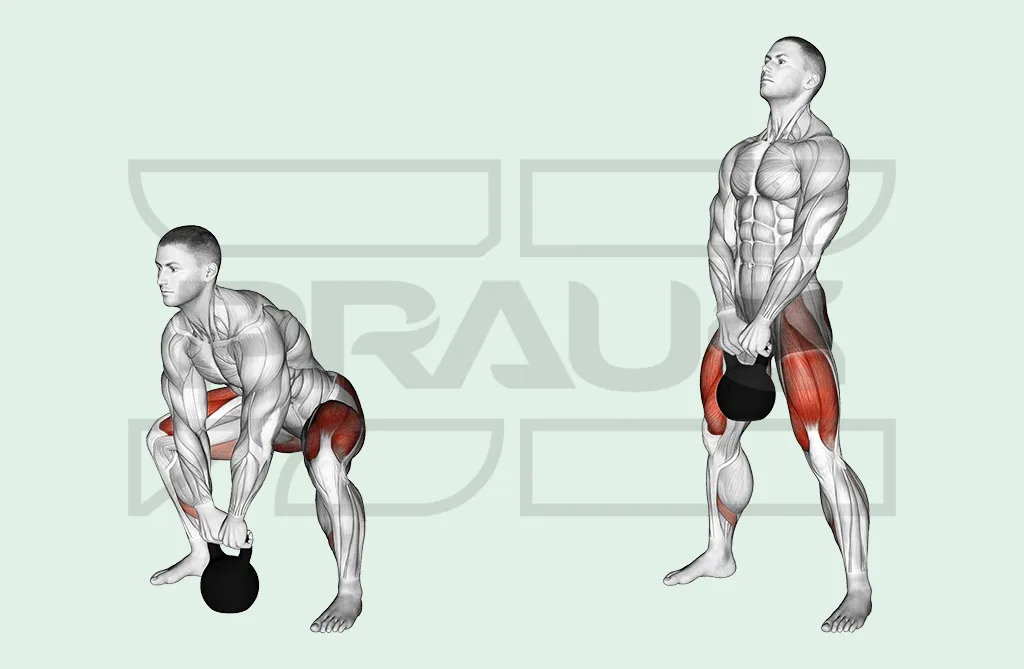
A wide-stance deadlift changes the start and need not suit every taller person. Two bells, a single-leg stance and a raised start have different balance and handling demands. No sex-based starting weight is required.
What the cited research supports
The deadlift review mainly concerns other implements; the second experiment included swings and Romanian deadlifts. Neither directly establishes kettlebell-deadlift growth or injury prevention.
Variations and alternatives
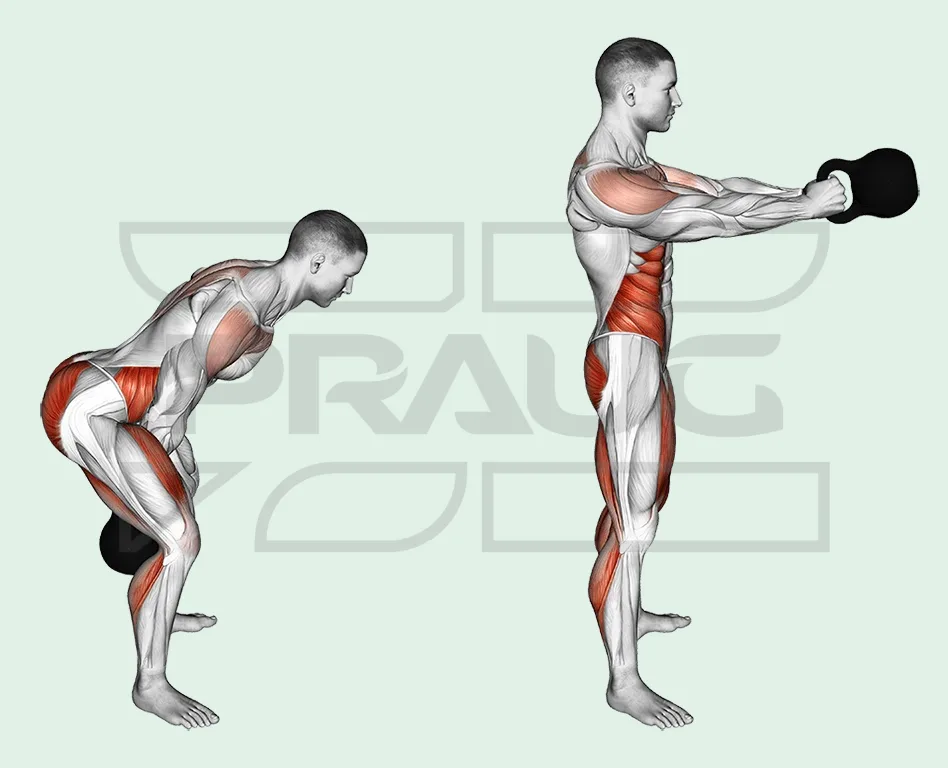
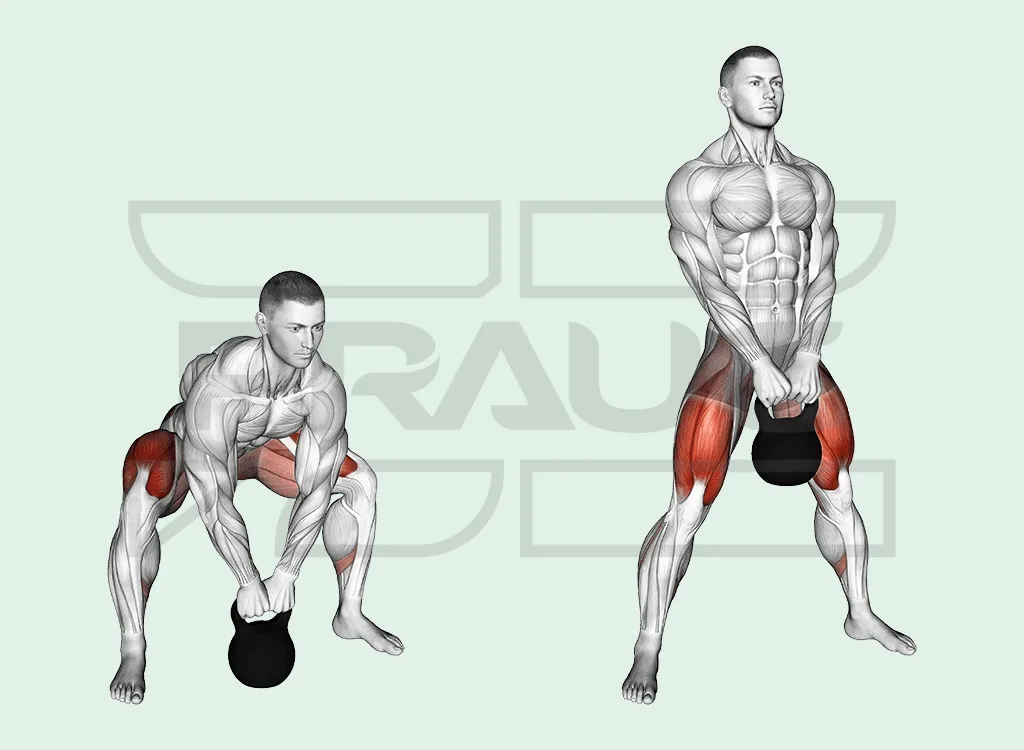
A swing adds a ballistic path. The sumo squat changes the repeated hip-and-knee task. Neither is a compulsory next step.
Practice, workload and tracking
An adjustable example is 2–4 sets of 6–12 repetitions with sufficient rest. Record bell load, handle or start height, stance, range and effort. Change one demand deliberately rather than requiring ten repetitions at a fixed weight.
Illustrated positions and options
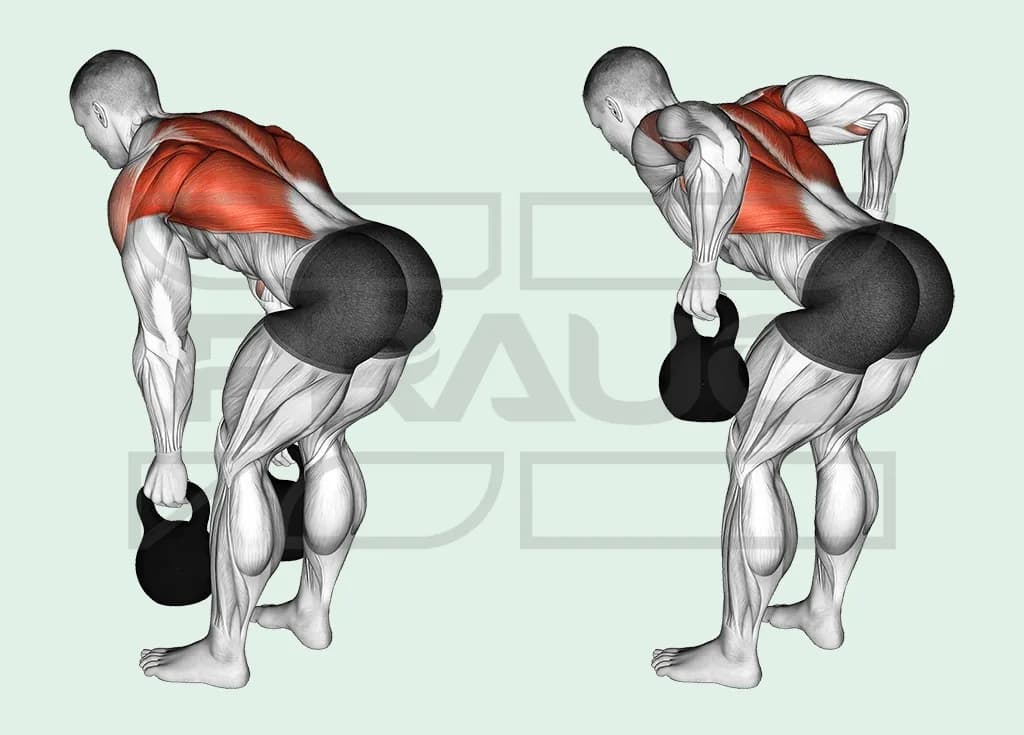
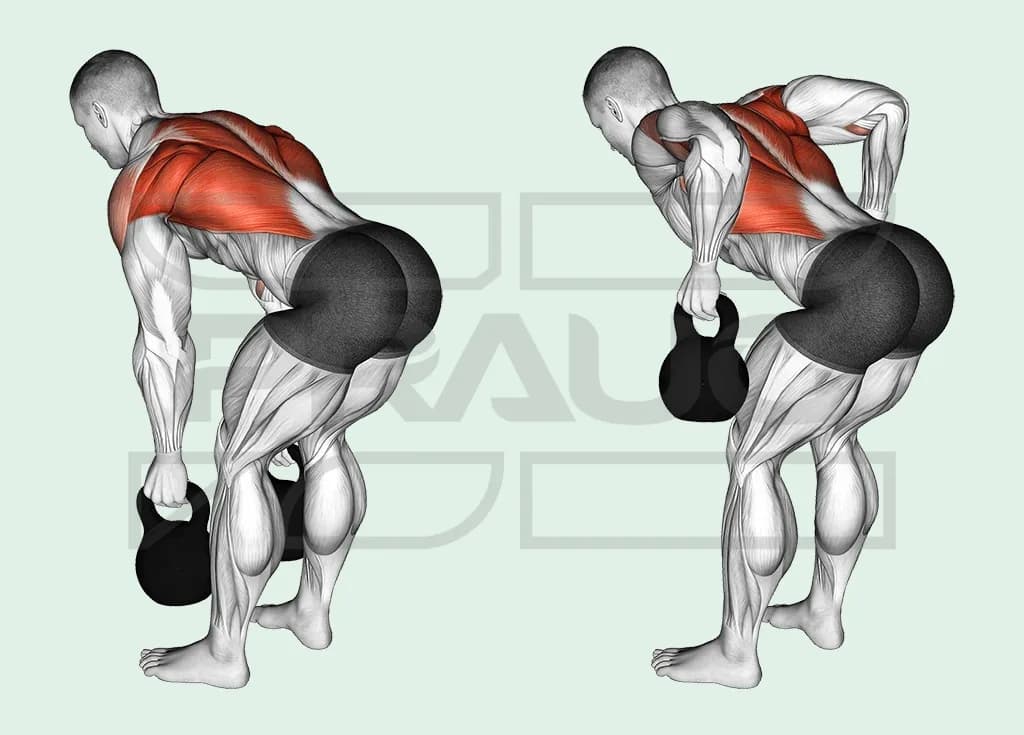
These illustrations show particular versions. Match the setup, grip, support and return to the version being practised rather than copying a load or depth.
Illustrated option 1
Illustrated option 2
Frequently asked questions
Must I touch the floor on every repetition?
Only if that is the chosen start and return that you can control. A secure raised surface changes range and can be recorded as such.
When should I add demand?
When the chosen setup, path, grip and return are repeatable and the next change is manageable. More load, speed, range and repetitions need not increase together.
Sources and limitations
Sources support the passages that cite them. Practical suggestions are coaching choices to adapt to your own situation.
- Martín-Fuentes et al. · 2020 · Muscle activity across deadlift variations ↗
Systematic review of heterogeneous deadlift EMG protocols, mainly with other implements; no direct kettlebell-deadlift growth comparison.
- Zebis et al. · 2013 · Hamstring activity in selected training exercises ↗
Sixteen female athletes performed multiple tasks including swings and Romanian deadlifts; acute EMG, not kettlebell-deadlift growth or injury outcomes.
This general information does not replace individual advice. Zepraug’s limitations.