Training· 3 min read
Kettlebell row: setup, technique and progression
Other names: KB row
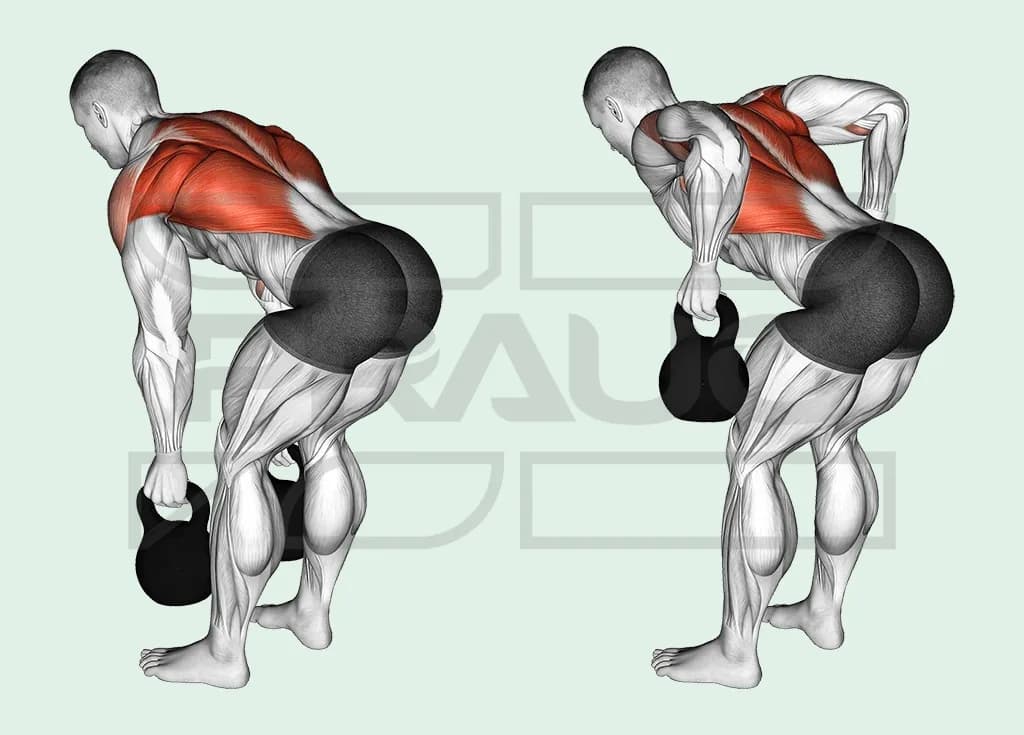
A kettlebell row draws the bell towards the lower ribs or hip while the torso stays supported in the chosen position. A supported one-arm row and an unsupported two-bell row have different balance and trunk demands.

Certified fitness coach · CQP Instructeur Fitness
Published on
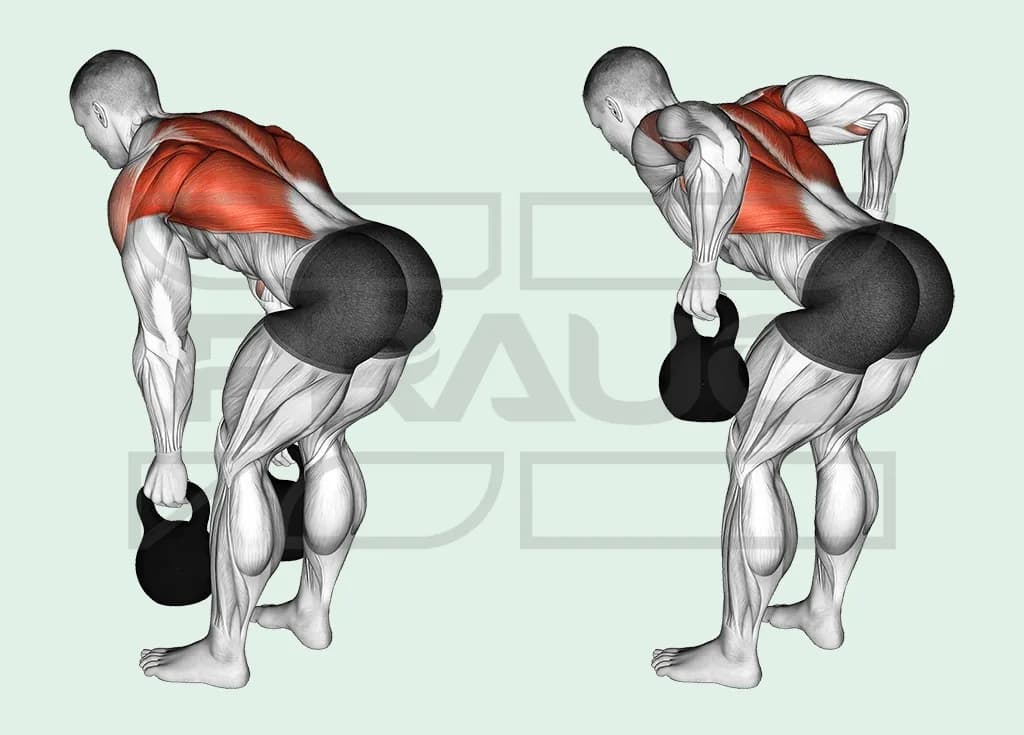
The essentials before you start.
- Place the bell within reach on a clear stable surface, then choose a comfortable split stance and torso incline.
- Practise the chosen movement and return before adding load, speed or repetitions.
- An example is 2–4 sets of 8–12 repetitions per arm with adequate rest.
- Research on a related task does not establish the same outcomes for every version.
Exercise facts
- Main muscles
- Latissimus dorsi, Rhomboids, Middle trapezius
- Secondary muscles
- Biceps, Rear deltoids, Spinal erectors, Abdominals and obliques
- Equipment
- Kettlebell with a suitable secure handle
What the movement trains
The latissimus dorsi, scapular retractors, rear deltoid and elbow flexors contribute. The trunk and hips retain support rather than becoming inactive because a hand is braced.
Set up and perform the movement
- Place the bell within reach on a clear stable surface, then choose a comfortable split stance and torso incline.
- Brace the free hand on a stable bench designed for support, or place the free forearm securely on the front thigh.
- Take the handle without twisting to reach and let the working arm hang in a comfortable position.
- Draw the bell towards the lower ribs or hip as the elbow and shoulder blade move together.
- Lower smoothly through a manageable shoulder reach without throwing the torso around.
- Return the bell securely, regain support and then change sides.
Range, grip and control
No fixed forty-five-degree torso angle, forced scapular pinch or mandatory pause suits every row. Two bells change external load and support; they do not guarantee exactly twice the muscle demand.
What the cited research supports
One study tested other rowing setups; the later study compared shoulder activity across implements. These acute results do not establish superior kettlebell growth.
Variations and alternatives
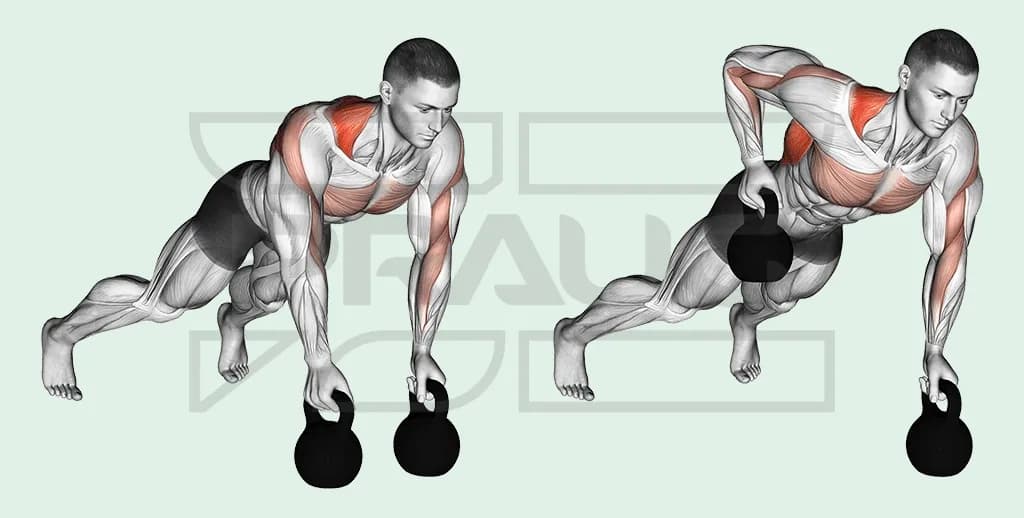
A dumbbell row changes the implement. A renegade row adds a plank support task.
Practice, workload and tracking
An example is 2–4 sets of 8–12 repetitions per arm with adequate rest. Three sets per arm gives each arm three sets. Log support, torso incline, elbow path, range, bell load and effort.
Illustrated positions and options
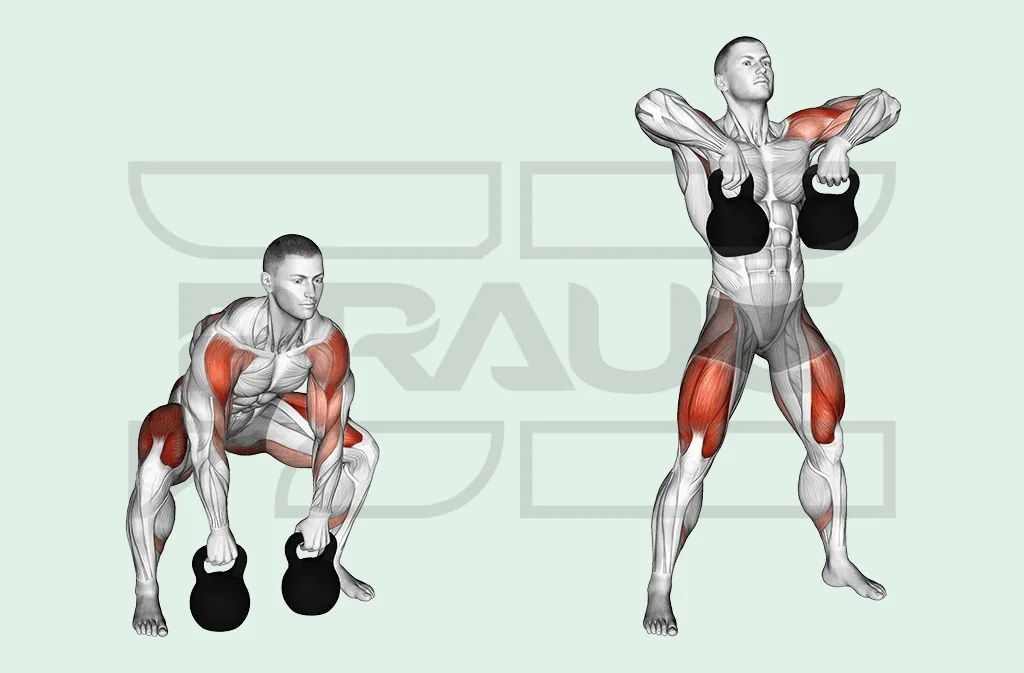
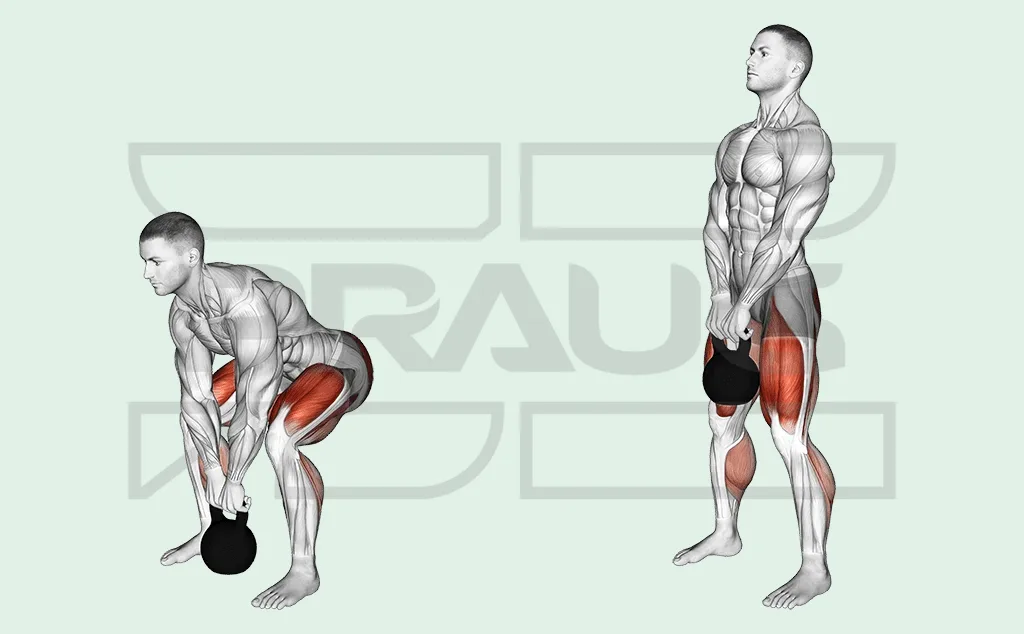
These illustrations show particular versions. Match the setup, grip, support and return to the version being practised rather than copying a load or depth.
Illustrated option 1
Frequently asked questions
Must I move the shoulder blade before bending the elbow?
No compulsory two-stage sequence is needed. Coordinate the movement through a comfortable range without using trunk rotation to throw the bell.
When should I add demand?
When the chosen setup, path, grip and return are repeatable and the next change is manageable. More load, speed, range and repetitions need not increase together.
Sources and limitations
Sources support the passages that cite them. Practical suggestions are coaching choices to adapt to your own situation.
- Fenwick et al. · 2009 · Activity and estimated loading across three rows ↗
Seven men performed inverted, bent-over and one-arm cable rows; not a direct kettlebell or renegade-row trial, nor long-term growth.
- Işiklar et al. · 2026 · Shoulder activity across resistance implements ↗
Twenty young men performed pressing, rowing and swinging tasks; modest acute EMG differences, not a thruster or muscle-growth trial.
This general information does not replace individual advice. Zepraug’s limitations.