Training· 4 min read
Kettlebell swing: setup, technique and progression
Other names: KB swing
A two-hand kettlebell swing uses a hip-driven backswing and rise, usually below overhead height. The arms retain and guide the bell rather than releasing it. Learn a manageable hinge, start and park before adding speed or repeated work.

Certified fitness coach · CQP Instructeur Fitness
Published on
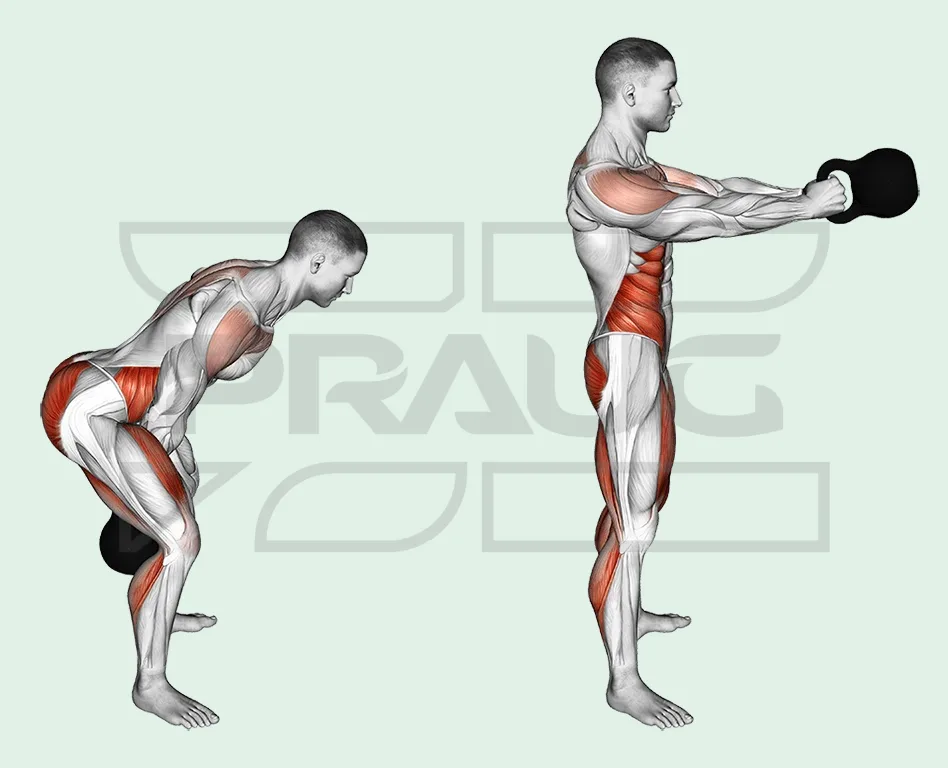
The essentials before you start.
- Clear the space in front, behind and above, and choose a bell with a secure two-hand grip. Rehearse a light start and park.
- Practise the chosen movement and return before adding load, speed or repetitions.
- A practice example is 2–4 short sets of 5–10 repetitions with enough rest to keep the same path and park.
- Research on a related task does not establish the same outcomes for every version.
Exercise facts
- Main muscles
- Gluteus maximus, Hamstrings
- Secondary muscles
- Spinal erectors, Abdominals and obliques, Forearms, Deltoids
- Equipment
- Kettlebell with a suitable secure handle
What the movement trains
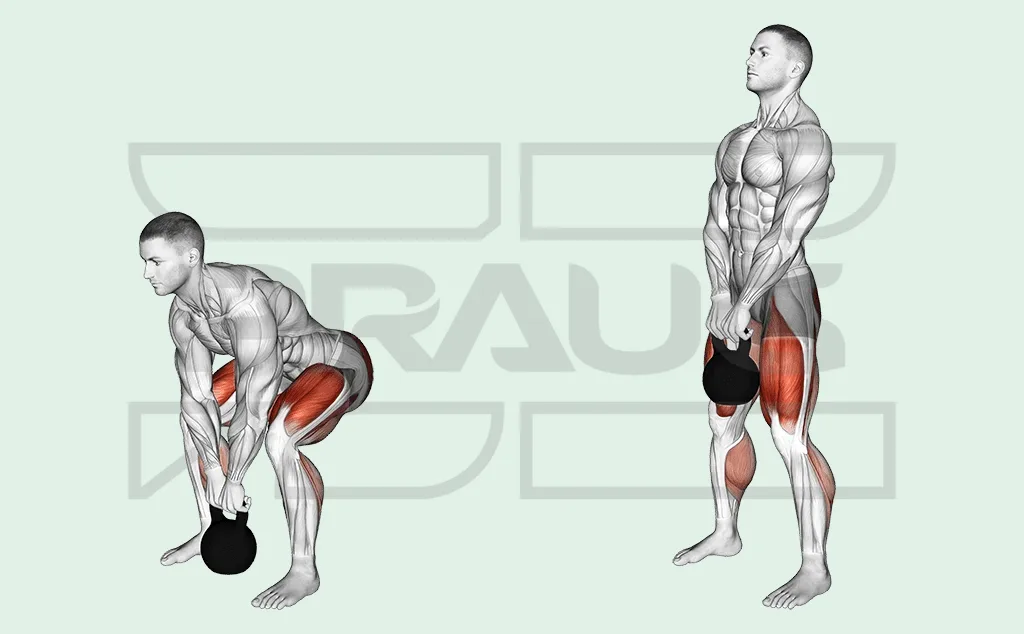
The gluteals and hamstrings contribute to hip extension while the trunk, shoulder and grip control the moving bell. A hip-hinge swing and a squat-style swing are different versions, not evidence that every knee bend is an error.
Set up and perform the movement
- Clear the space in front, behind and above, and choose a bell with a secure two-hand grip. Rehearse a light start and park.
- Set the bell a reachable distance ahead, hinge with a comfortable knee bend and take the handle without reaching excessively.
- Tilt and guide the bell back between the thighs with a controlled trunk and the bell clear of the knees.
- Extend the hips to accelerate the bell, keeping the grip secure and the arms connected to the movement.
- Let the bell rise to a manageable height without pulling it overhead or leaning backwards to finish.
- Guide the return into another hinge. End with a practised backswing and controlled park in front; settle the bell before releasing it.
Range, grip and control
Chest height is a reference, not a target to force with the arms. An overhead swing, one-hand swing and hand transfer add different handling demands. A lighter bell does not automatically cause poor technique, and shoulder fatigue does not prove absent hip drive.
What the cited research supports
The cited experiments compared acute activity across swing styles, hand conditions and other tasks. They did not measure later growth or establish a universal 16 kg starting load.
Variations and alternatives
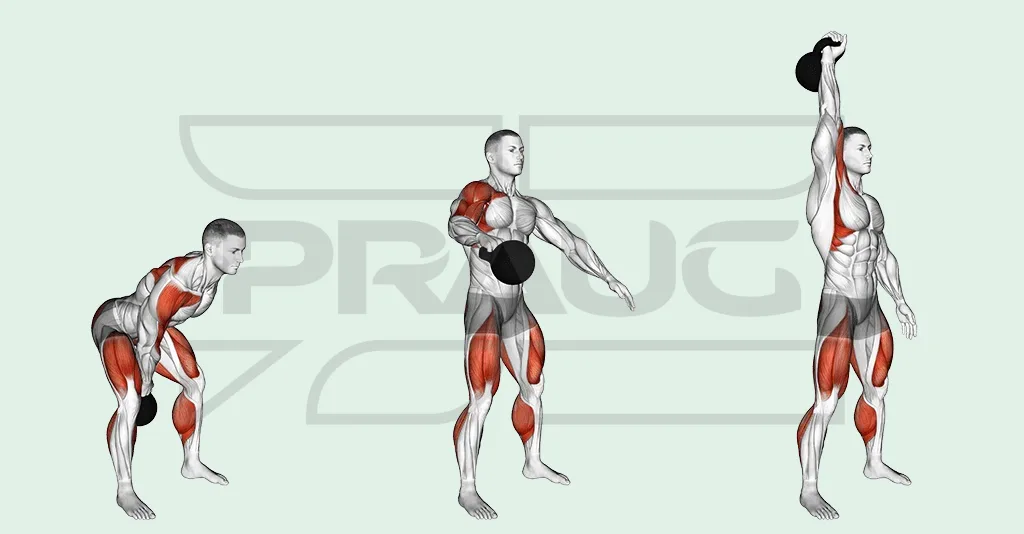
A deadlift offers a slower reset. The snatch adds a distinct overhead reception and return; it is not a required next step.
Practice, workload and tracking
A practice example is 2–4 short sets of 5–10 repetitions with enough rest to keep the same path and park. Five sets of fifteen would be 75 swings, so do not treat a larger circuit example as a minimum. Count repetitions rather than letting a timer override control.
| Practice choice | What to check | Change deliberately |
|---|---|---|
| Short two-hand sets | Grip, hinge, rise and secure park | Bell load or repetition count |
| One-hand version if appropriate | Side-specific path, grip and return | Hand choice and amount per side |
| Timed work if deliberately selected | Control remains adequate before the timer ends | Work duration and rest separately |
Illustrated positions and options
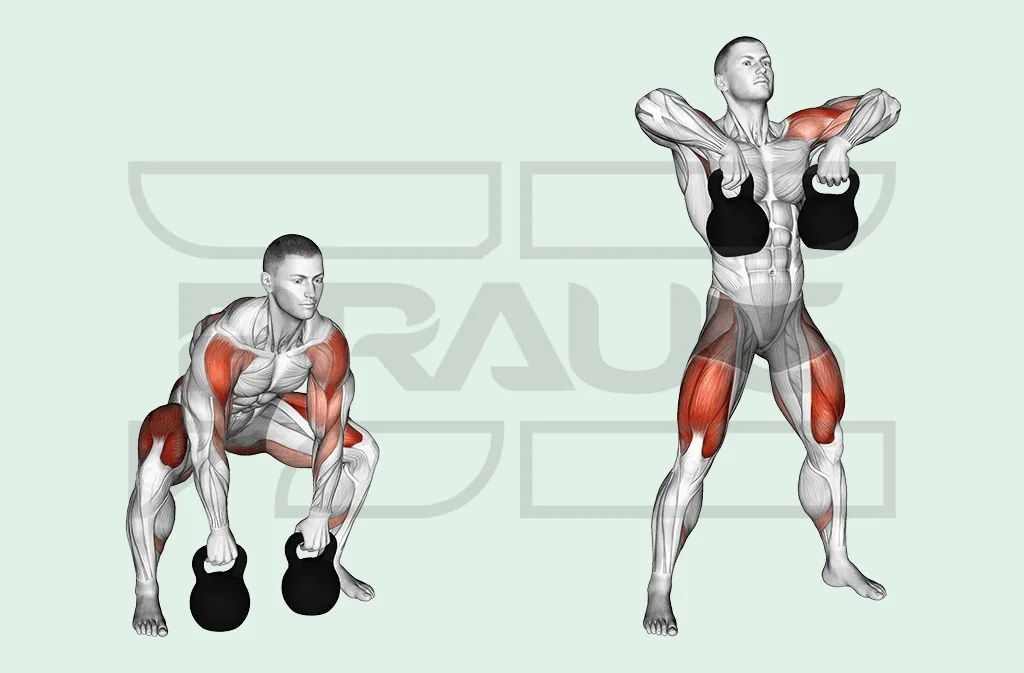
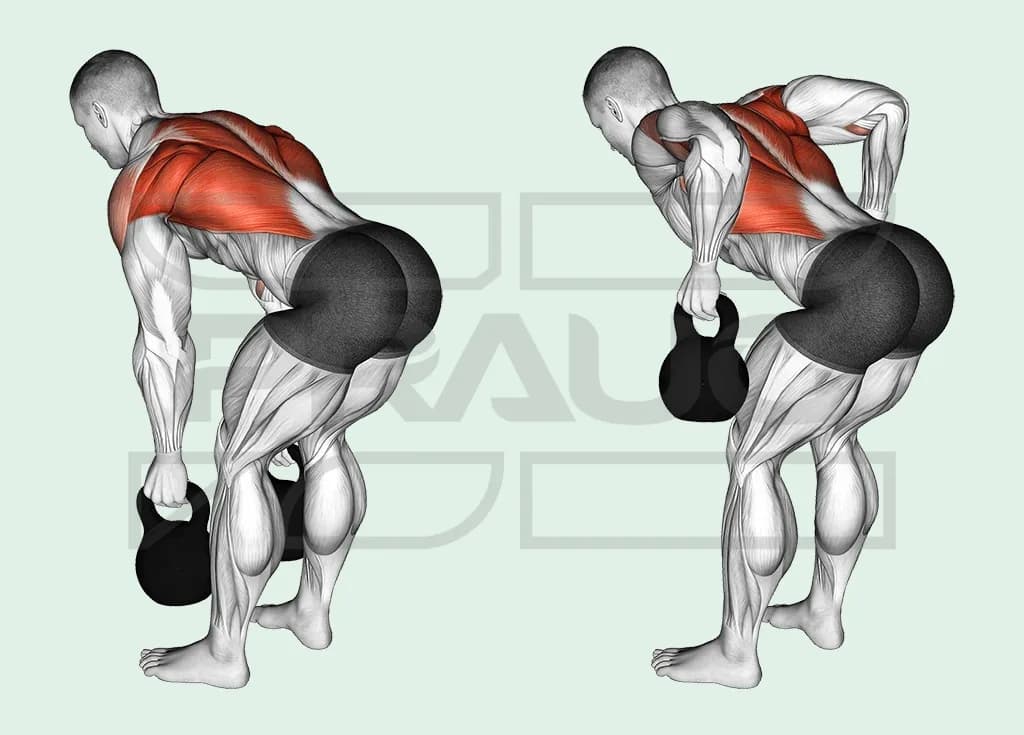
These illustrations show particular versions. Match the setup, grip, support and return to the version being practised rather than copying a load or depth.
Illustrated option 1
Illustrated option 2
 Goblet squat
 Sumo squat
 Snatch
 Clean and press
Frequently asked questions
Should I keep swinging until the interval ends?
Only while the chosen movement and return remain controlled. End the set earlier when needed; a timer does not establish readiness for more repetitions.
When should I add demand?
When the chosen setup, path, grip and return are repeatable and the next change is manageable. More load, speed, range and repetitions need not increase together.
Sources and limitations
Sources support the passages that cite them. Practical suggestions are coaching choices to adapt to your own situation.
- Del Monte et al. · 2020 · Hamstring activity across three swing styles ↗
Fourteen people performed hip-hinge, squat and double-knee-extension swings; acute hamstring EMG, not later growth or injury reduction.
- Andersen et al. · 2016 · Trunk activity during one- and two-arm swings ↗
Sixteen men used 16 kg bells; side-specific acute activity, not a universal starting load or proof that every trunk muscle increases.
- Zebis et al. · 2013 · Hamstring activity in selected training exercises ↗
Sixteen female athletes performed multiple tasks including swings and Romanian deadlifts; acute EMG, not kettlebell-deadlift growth or injury outcomes.
This general information does not replace individual advice. Zepraug’s limitations.