Training· 3 min read
Kettlebell snatch: setup, technique and progression
Other names: KB snatch
A kettlebell snatch accelerates a bell from a backswing to an overhead support position in one movement. The hand insertion, overhead control and return need practice with light demand. A forearm impact is not a required part of learning.

Certified fitness coach · CQP Instructeur Fitness
Published on
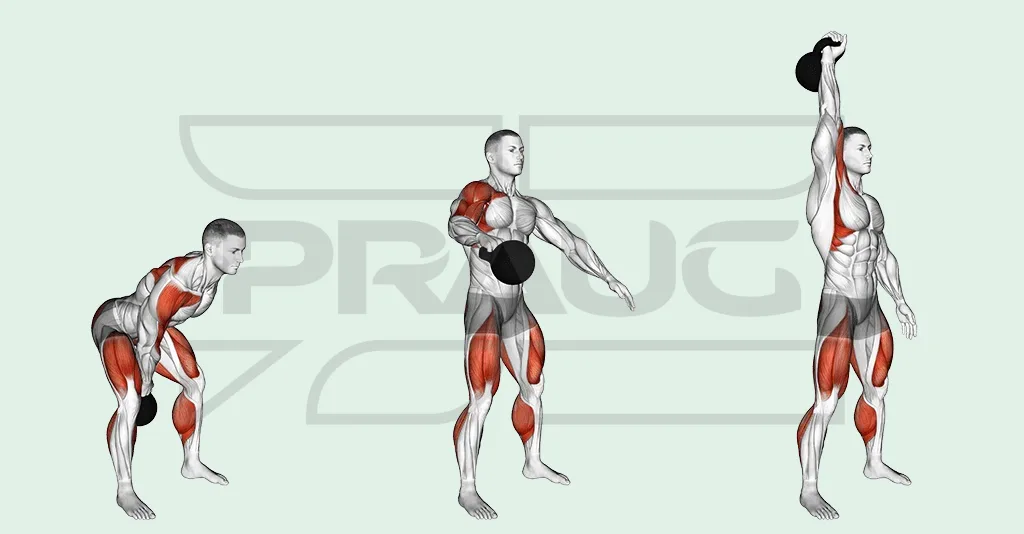
The essentials before you start.
- Clear the overhead space, floor and surrounding area. Practise a light overhead hold, close descent and park before repeated snatches.
- Practise the chosen movement and return before adding load, speed or repetitions.
- A learning example is 1–3 short sets of 2–5 repetitions per side, or fewer, with enough rest to retain a gentle reception and secure return.
- Research on a related task does not establish the same outcomes for every version.
Exercise facts
- Main muscles
- Gluteus maximus, Hamstrings, Deltoids
- Secondary muscles
- Spinal erectors, Trapezius, Quadriceps, Abdominals and obliques, Forearms
- Equipment
- Kettlebell with a suitable secure handle
What the movement trains
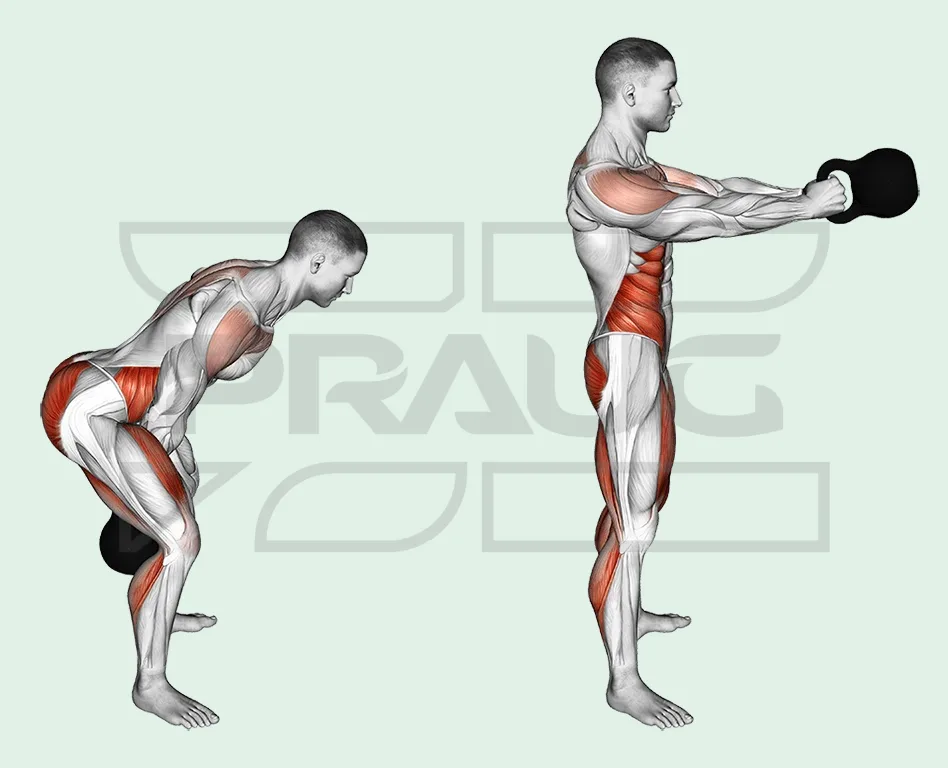
Hip extension starts the acceleration while the arm guides the bell into overhead support. The trunk, shoulder and grip control a moving load. Mechanical similarity to a swing does not make the handling identical.
Set up and perform the movement
- Clear the overhead space, floor and surrounding area. Practise a light overhead hold, close descent and park before repeated snatches.
- Take a secure one-hand grip and a stance that permits a controlled backswing with the bell clear of the knees.
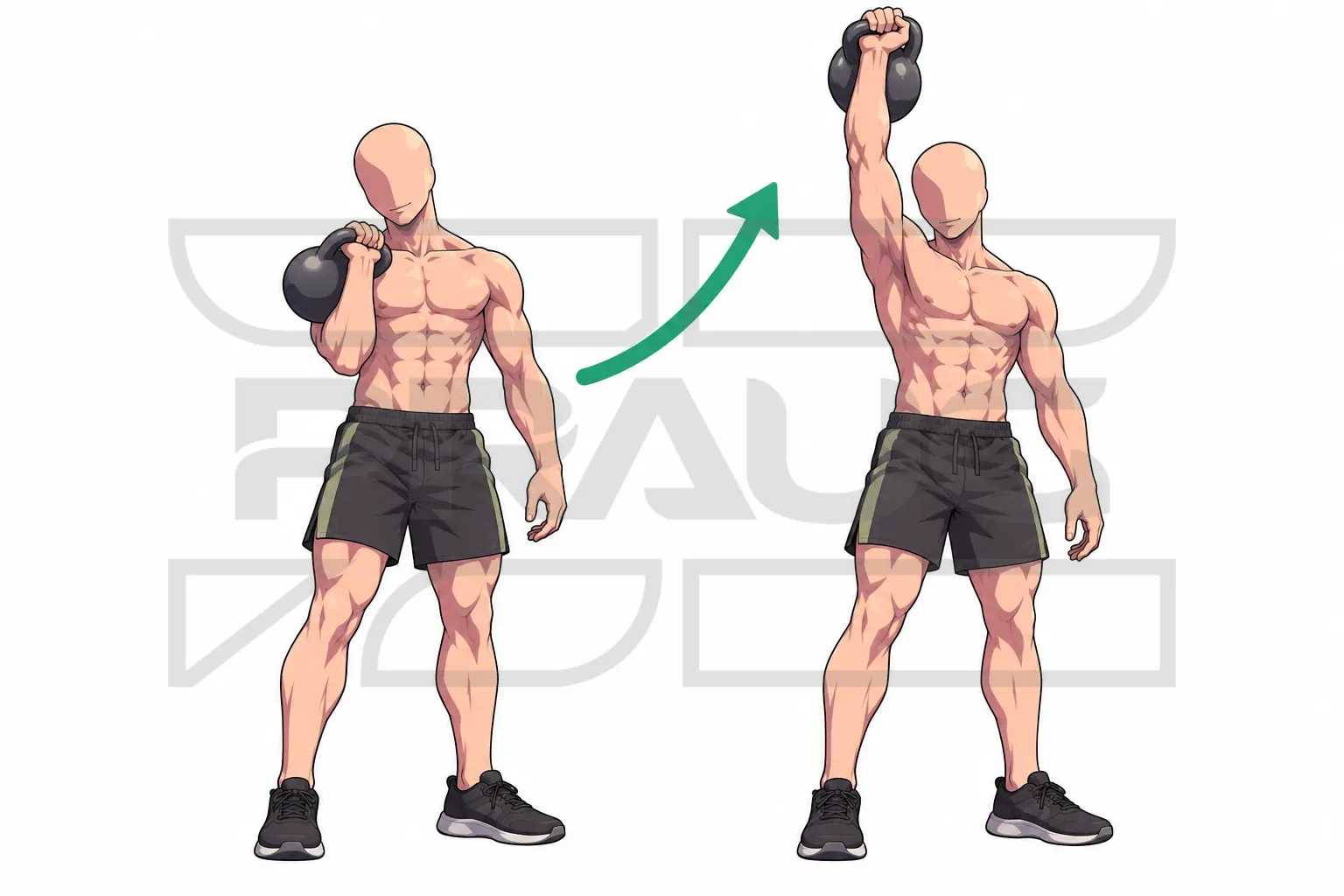
- Hinge and guide the bell back, then extend the hips to accelerate it close to the body.
- As it rises, guide the elbow and insert the hand through the handle so the bell turns around the hand instead of flipping onto the forearm.
- Settle into a comfortable supported overhead position without forcing the ribs upwards or snapping the elbow.
- Use the practised close descent, or a controlled return through the rack, before the hinge and park. Reset and seek coaching if the return or grip is uncertain.
Range, grip and control
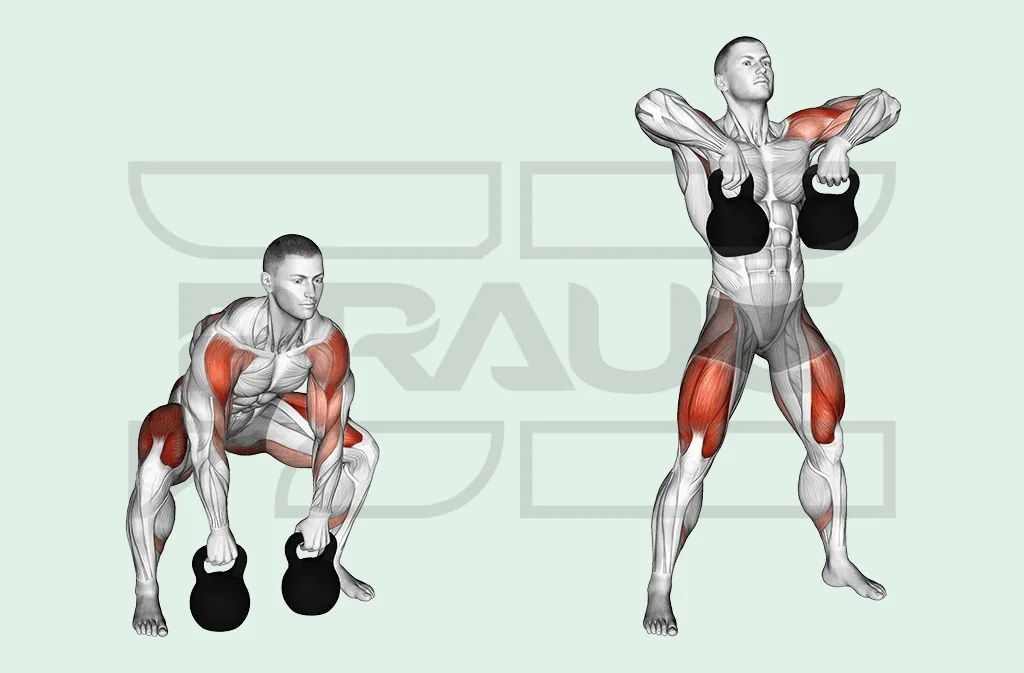
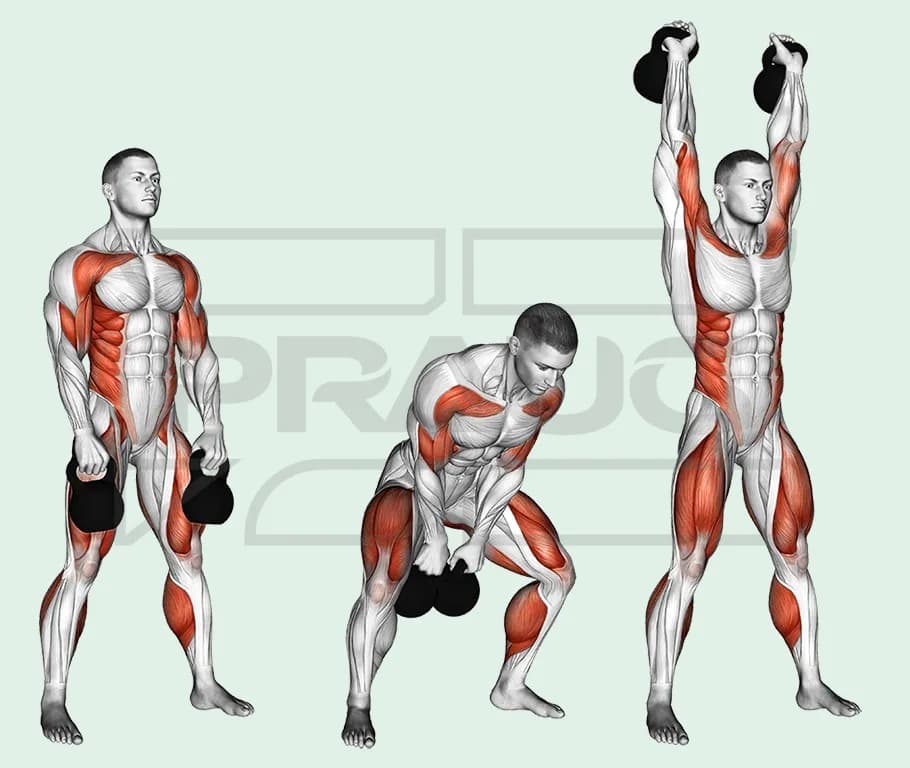
Do not add hand-to-hand transfers, a second bell or long timed sets before their handling is controlled. The double-snatch illustration shows a separate task; it is not an exact doubling of demand or a required progression.
What the cited research supports
The study compared force-platform mechanics of snatches and two-hand swings in men using 24 kg. It did not establish a universal starting load or later training outcomes.
Variations and alternatives
The swing avoids overhead reception. The clean and press separates rack reception and pressing.
Practice, workload and tracking
A learning example is 1–3 short sets of 2–5 repetitions per side, or fewer, with enough rest to retain a gentle reception and secure return. Count each overhead reception as one repetition and log load per bell.
Illustrated positions and options
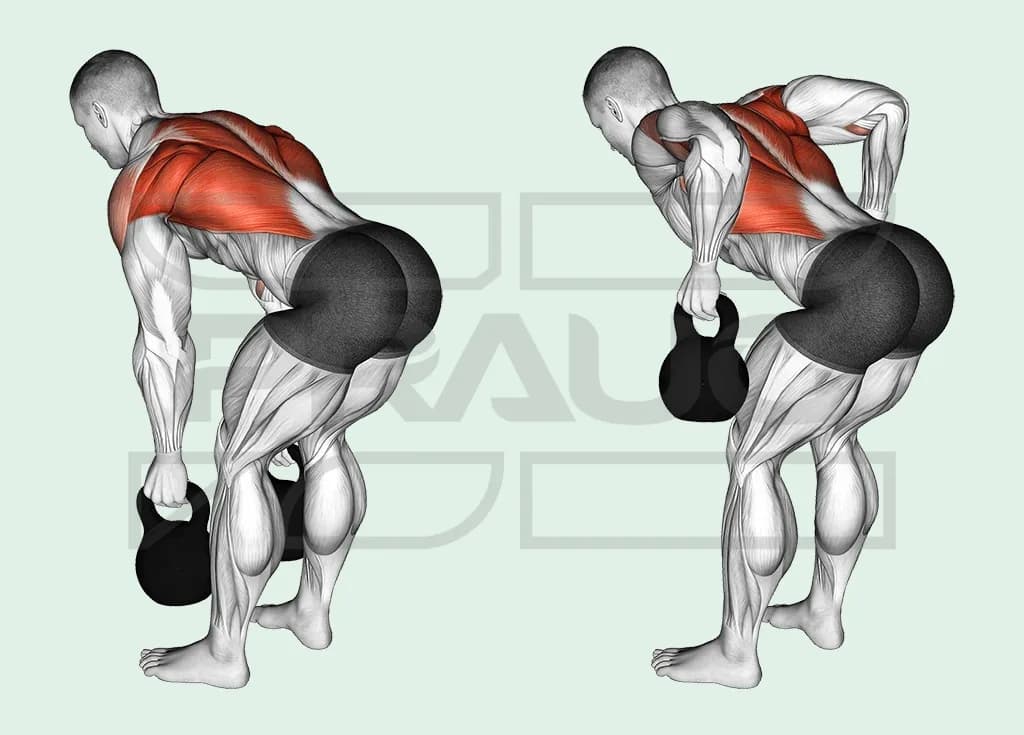
These illustrations show particular versions. Match the setup, grip, support and return to the version being practised rather than copying a load or depth.
Illustrated option 1
Illustrated option 2
Frequently asked questions
Does the study mean I should begin with 24 kg?
No. That was the study load for its participants, not a starting prescription. Choose a bell and amount appropriate to the complete movement and return.
When should I add demand?
When the chosen setup, path, grip and return are repeatable and the next change is manageable. More load, speed, range and repetitions need not increase together.
Sources and limitations
Sources support the passages that cite them. Practical suggestions are coaching choices to adapt to your own situation.
- Lake et al. · 2014 · Snatch and two-hand swing mechanical output ↗
Twenty-two men used a 24 kg bell on a force platform; movement mechanics, not acute muscle activity or long-term training outcomes.
This general information does not replace individual advice. Zepraug’s limitations.