Training· 3 min read
Kettlebell lunge: setup, technique and progression
Other names: Kettlebell reverse lunge
A kettlebell lunge combines a step with hip and knee bending. This guide uses a reverse lunge with one bell held at the side. A front rack or two-handed hold changes the task rather than defining a higher level.

Certified fitness coach · CQP Instructeur Fitness
Published on
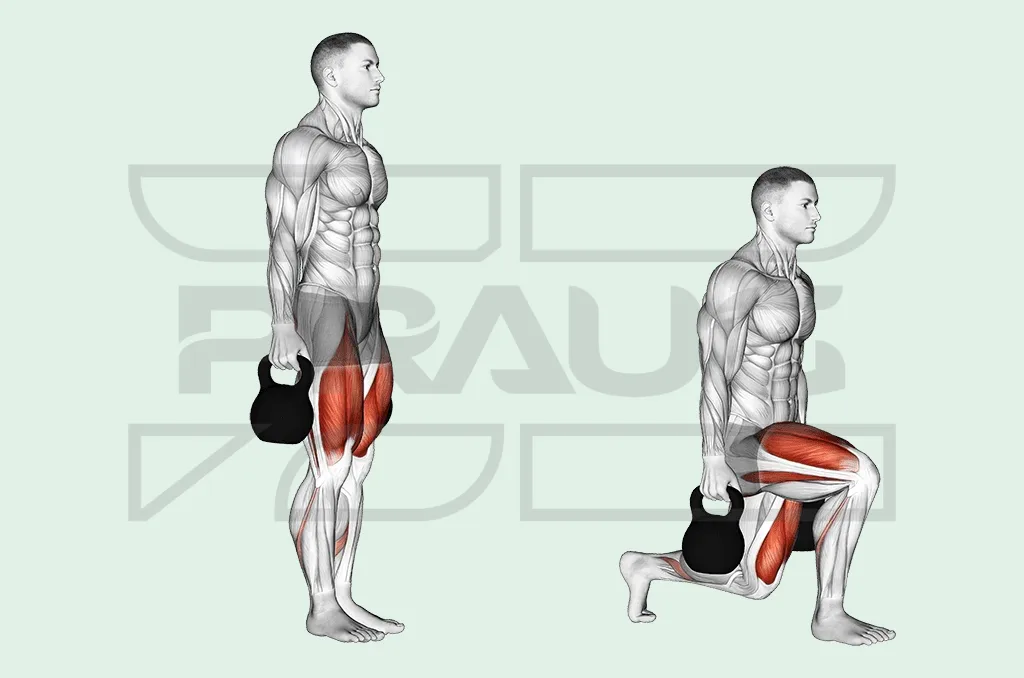
The essentials before you start.
- Pick up a manageable bell in a clear area, then stand with secure foot contact and the bell clear of the leg.
- Practise the chosen movement and return before adding load, speed or repetitions.
- One adjustable example is 2–3 sets of 6–10 repetitions per leg, resting enough to regain balance.
- Research on a related task does not establish the same outcomes for every version.
Exercise facts
- Main muscles
- Quadriceps, Gluteus maximus
- Secondary muscles
- Gluteus medius, Hamstrings, Adductors, Obliques, Spinal erectors
- Equipment
- Kettlebell with a suitable secure handle
What the movement trains
The quadriceps and gluteals contribute to the leg movement while the trunk and stance hip support balance. Holding one bell on the same or opposite side changes demand without guaranteeing better stability.
Set up and perform the movement
- Pick up a manageable bell in a clear area, then stand with secure foot contact and the bell clear of the leg.
- Choose a comfortable stance and keep the trunk supported without holding a prolonged forced breath.
- Step one foot backwards to a distance that permits a controlled descent.
- Bend both knees through a manageable range; the rear knee need not touch the floor.
- Push through the front foot and return without throwing the trunk forwards.
- Regain balance before another repetition, switching hand or leg, and set the bell down securely.
Range, grip and control
A slight torso incline is an option, not proof of greater glute growth. Forward, reverse and walking lunges have different stepping and balance demands. Choose hand support or less load where useful.
What the cited research supports
The cited studies measured acute activity in particular lunge and dumbbell-holding conditions. They did not establish kettlebell-specific growth or prove reverse lunges superior.
Variations and alternatives
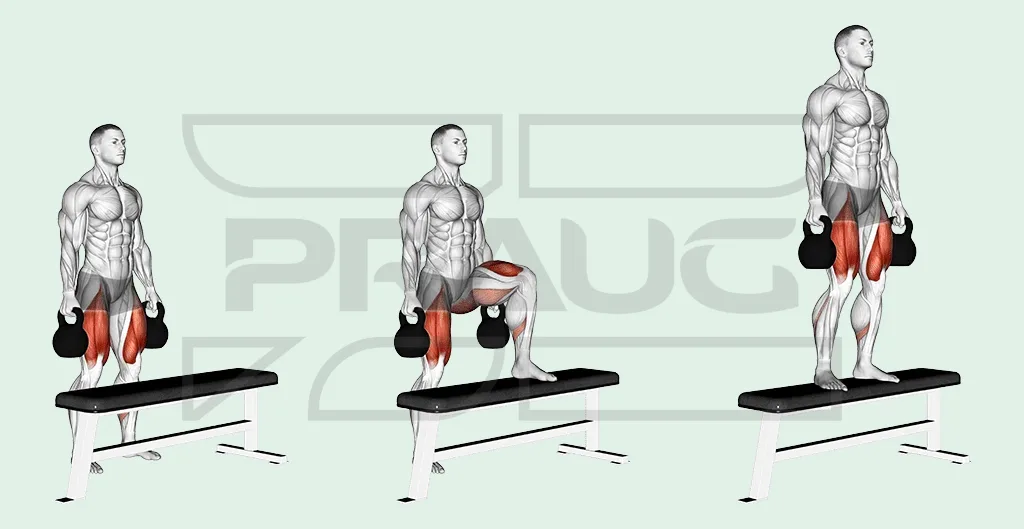
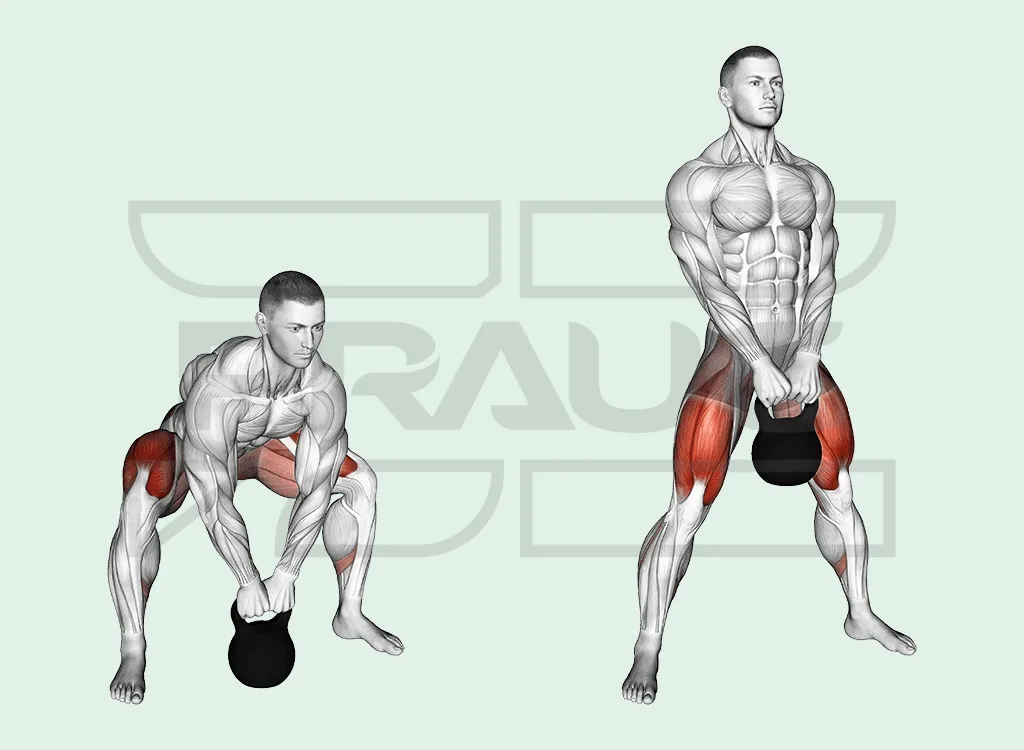
Compare step-ups and sumo squats. A bodyweight lunge changes external loading.
Practice, workload and tracking
One adjustable example is 2–3 sets of 6–10 repetitions per leg, resting enough to regain balance. Three sets per leg gives each leg three sets. Record the working leg and bell side separately.
Illustrated positions and options
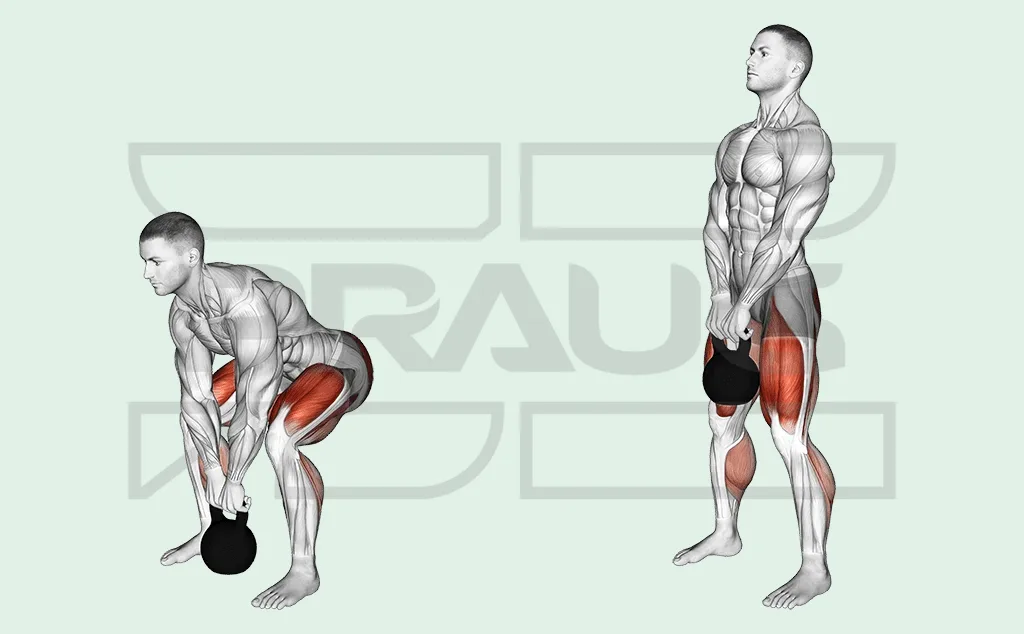
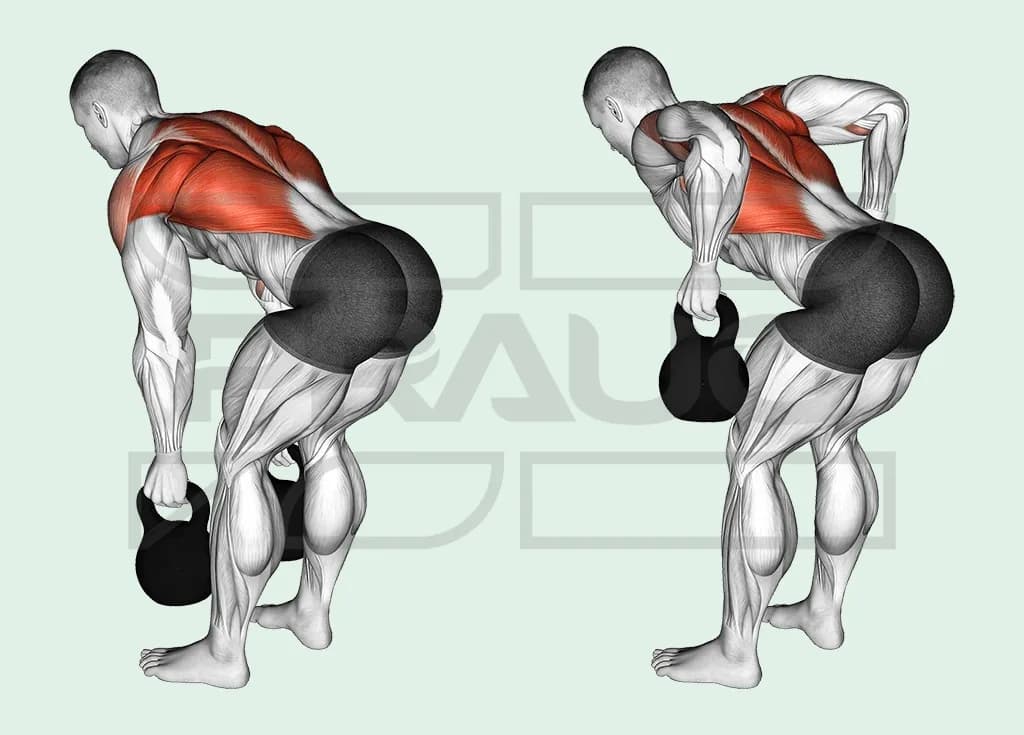
These illustrations show particular versions. Match the setup, grip, support and return to the version being practised rather than copying a load or depth.
Illustrated option 1
Frequently asked questions
Must the bell be opposite the front leg?
No. Record the side chosen and use a manageable stance. Neither holding side guarantees comfort or makes the exercise a different muscle-isolation task.
When should I add demand?
When the chosen setup, path, grip and return are repeatable and the next change is manageable. More load, speed, range and repetitions need not increase together.
Sources and limitations
Sources support the passages that cite them. Practical suggestions are coaching choices to adapt to your own situation.
- Bezerra et al. · 2021 · Trunk position and lunge-variant muscle activity ↗
Acute EMG in twelve trained women doing static, forward and walking lunges; not kettlebell-specific growth or reverse-lunge outcomes.
- López-de-Celis et al. · 2023 · Lunge load position and trunk muscle activity ↗
Forty-two amateur athletes used dumbbells in different holding positions; trunk activity, not kettlebell leg-muscle growth or guaranteed stability.
This general information does not replace individual advice. Zepraug’s limitations.