Training· 3 min read
Kettlebell step-up: setup, technique and progression
Other names: Step-up, Loaded step-up
A step-up raises the body onto a secure platform through the leading leg, then lowers it under control. Practise the step and descent before adding a bell. Height should fit the actual support and range rather than a universal knee angle.

Certified fitness coach · CQP Instructeur Fitness
Published on
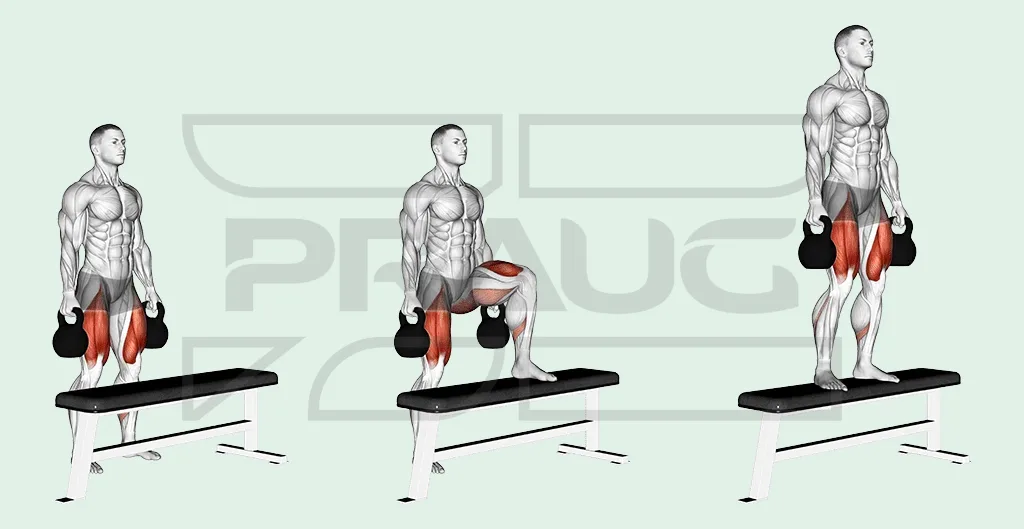
The essentials before you start.
- Use a fixed step or purpose-built platform rated for the combined load, with enough room for the whole foot. Avoid unsecured chairs or stacked objects.
- Practise the chosen movement and return before adding load, speed or repetitions.
- An example is 2–3 sets of 6–10 repetitions per leg, with rest between sides if needed.
- Research on a related task does not establish the same outcomes for every version.
Exercise facts
- Main muscles
- Quadriceps, Gluteus maximus
- Secondary muscles
- Hamstrings, Gluteus medius, Calves, Abdominals and obliques
- Equipment
- Kettlebell, if external load is selected, Fixed step or purpose-built platform rated for the intended load
What the movement trains
The quadriceps and gluteals contribute to hip and knee extension, with the stance hip, calf and trunk supporting balance. The trailing leg can contribute; record assistance rather than assuming it is mechanically absent.
Set up and perform the movement
- Use a fixed step or purpose-built platform rated for the combined load, with enough room for the whole foot. Avoid unsecured chairs or stacked objects.
- Rehearse the step and descent without load; arrange secure hand support if needed.
- Pick up a manageable bell securely, then place the leading foot fully on the platform.
- Push through the leading foot to rise without jumping or throwing the torso upwards.
- Use the planned top support, then lower the trailing foot smoothly to the floor while controlling the leading leg.
- Regain floor support before changing leg or load position, and park the bell securely.
Range, grip and control
Reduce height or add assistance when the ascent or descent is not controlled. A higher step is not always better for the gluteals. One or two bells, a goblet hold and lateral steps change balance and handling.
What the cited research supports
The studies measured activity during loaded step-up variants and modelled leg forces across loads. They did not establish a universal platform height or kettlebell-specific growth.
Variations and alternatives
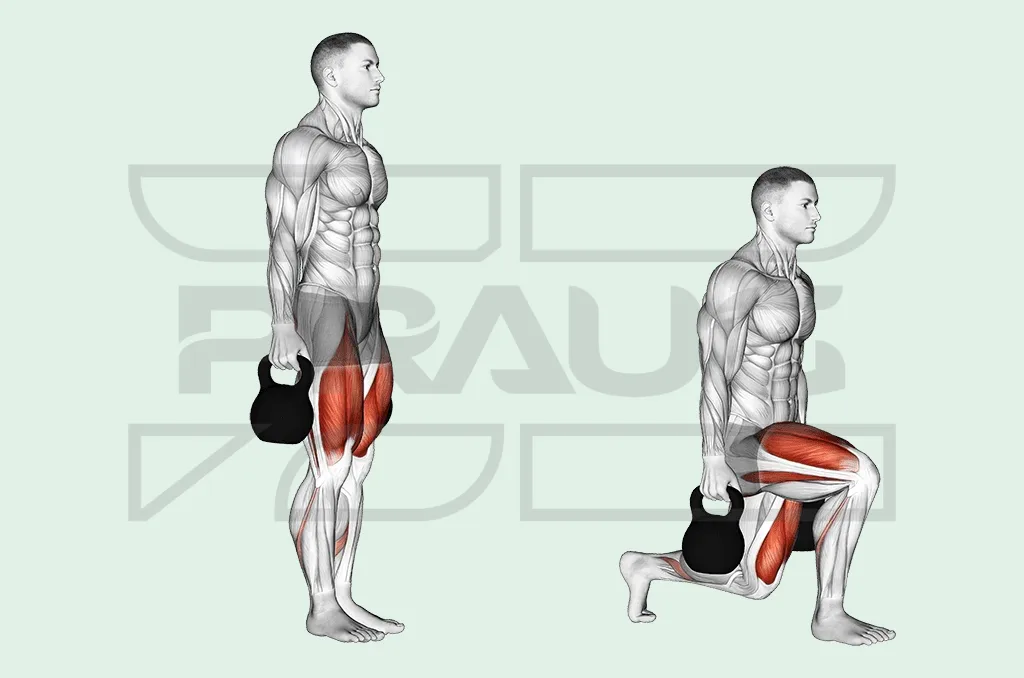
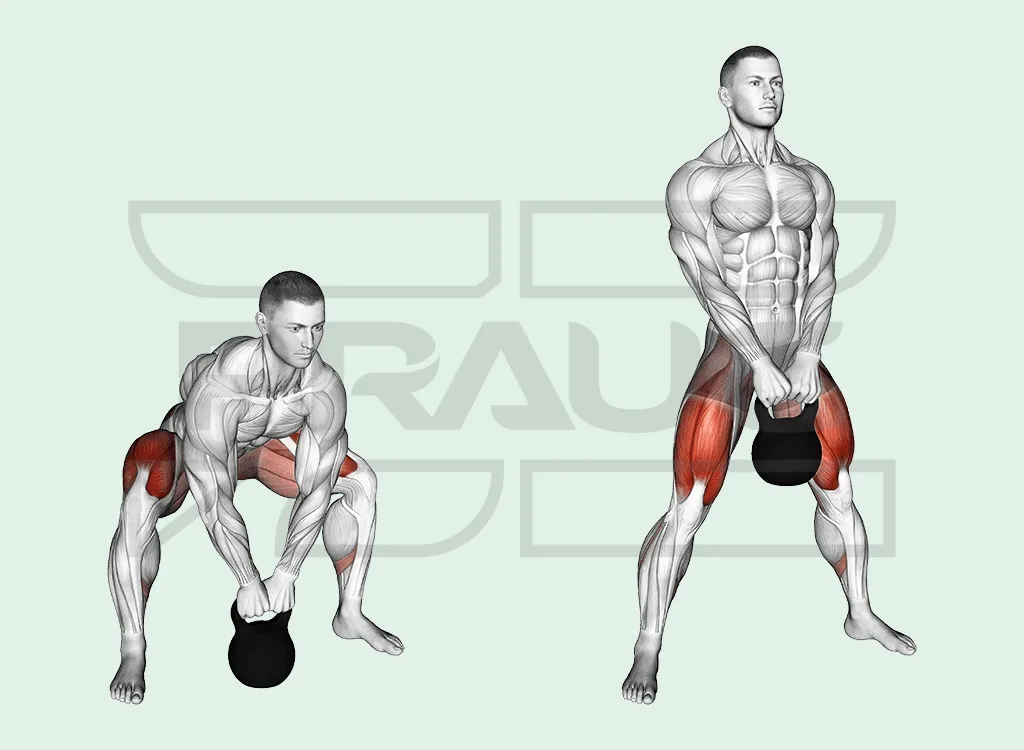
A reverse lunge changes the stepping task. A sumo squat uses two-foot floor support.
Practice, workload and tracking
An example is 2–3 sets of 6–10 repetitions per leg, with rest between sides if needed. Three sets per leg gives each leg three sets. Record platform height, trailing-leg help, hand support, bell position and descent.
Illustrated positions and options
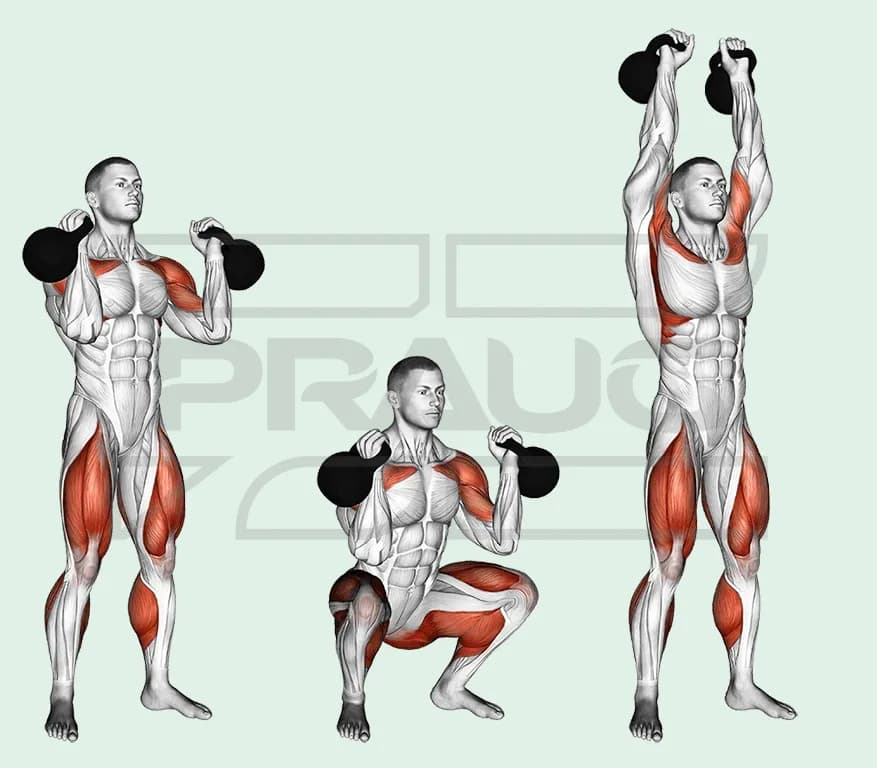
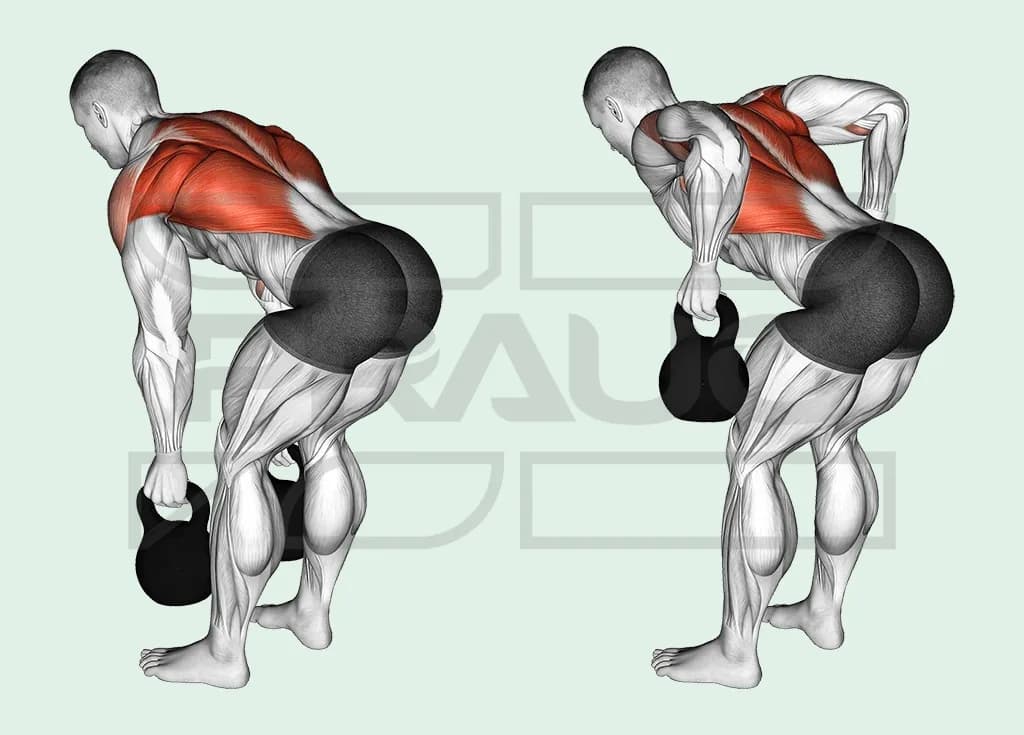
These illustrations show particular versions. Match the setup, grip, support and return to the version being practised rather than copying a load or depth.
Illustrated option 1
Frequently asked questions
Must I use the study’s approximately 46 cm box?
No. Its participants and loading conditions do not establish the right height for another person. Use a height and support that permit a controlled descent.
When should I add demand?
When the chosen setup, path, grip and return are repeatable and the next change is manageable. More load, speed, range and repetitions need not increase together.
Sources and limitations
Sources support the passages that cite them. Practical suggestions are coaching choices to adapt to your own situation.
- Simenz et al. · 2012 · Muscle activity during four loaded step-up variants ↗
Fifteen trained women used six-repetition-maximum loads and an approximately 46 cm box; acute EMG, not a universal height prescription.
- Kipp et al. · 2022 · Modelled leg forces across exercises and loads ↗
Nine men performed squats, split squats and step-ups at different external loads; estimated muscle forces, not measured long-term growth.
This general information does not replace individual advice. Zepraug’s limitations.