Training· 3 min read
Kettlebell windmill: setup, technique and progression
Other names: KB windmill
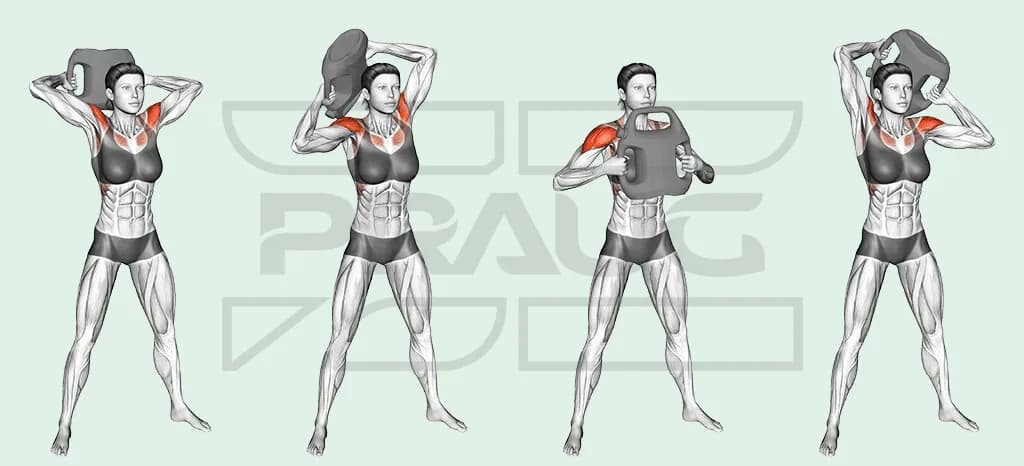
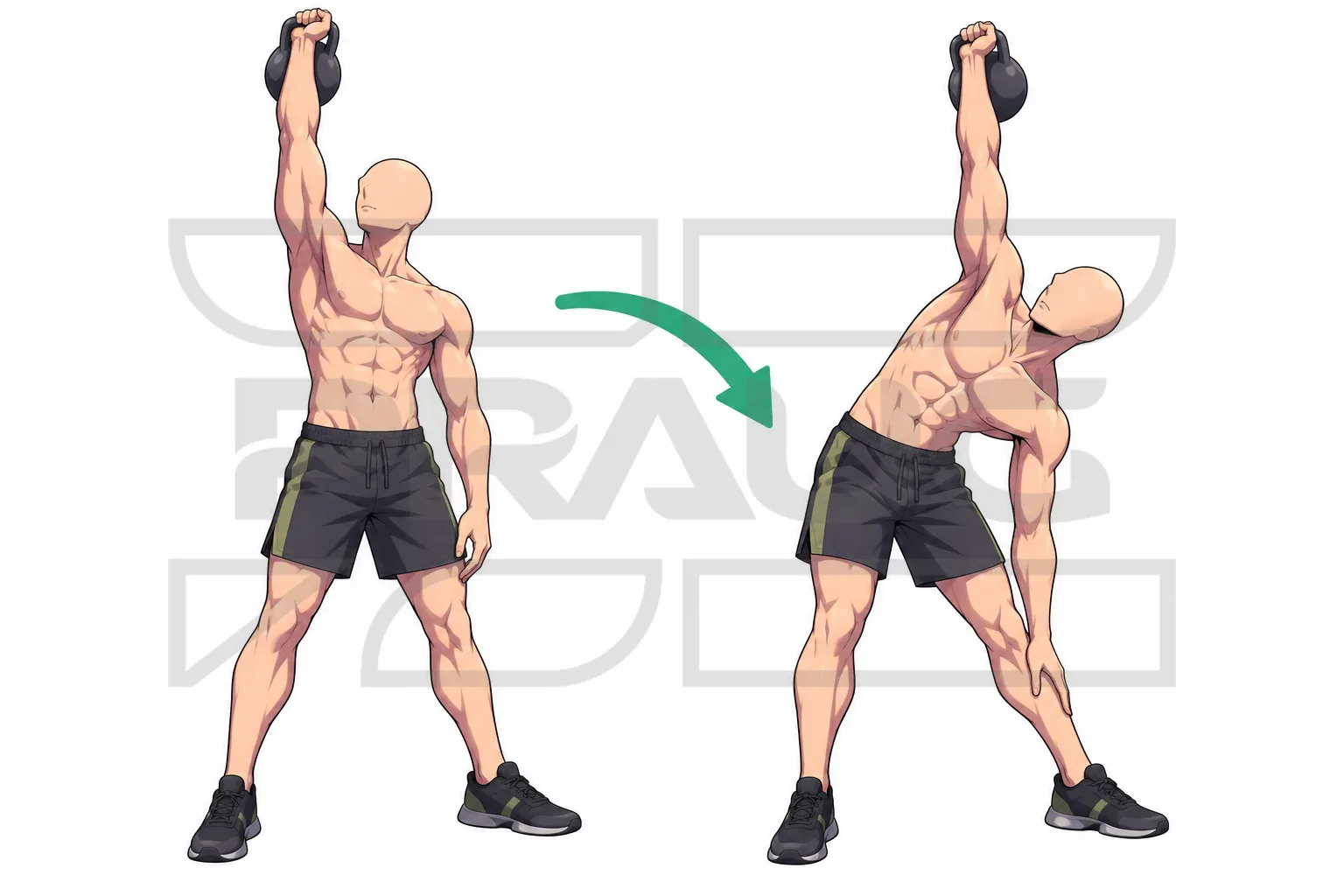
A windmill combines a hip shift and controlled torso movement, often with one arm overhead. An unloaded version or a bell held in the lower hand changes the support demands. Reaching the floor is optional.

Certified fitness coach · CQP Instructeur Fitness
Published on
The essentials before you start.
- Practise a short unloaded movement first, choosing comfortable feet and an available hip-and-torso range.
- Practise the chosen movement and return before adding load, speed or repetitions.
- A light practice example is 1–3 sets of 3–5 repetitions per side, or fewer, with sufficient rest.
- Research on a related task does not establish the same outcomes for every version.
Exercise facts
- Main muscles
- Obliques, Quadratus lumborum
- Secondary muscles
- Gluteus maximus and medius, Hamstrings, Deltoids, Rotator cuff, Spinal erectors
- Equipment
- Kettlebell or dumbbell, if external load is selected
What the movement trains
The trunk and hip muscles control the movement while an overhead version also requires shoulder and grip support. It is not a diagnostic test of asymmetry or a proven treatment for the back or shoulder.
Set up and perform the movement
- Practise a short unloaded movement first, choosing comfortable feet and an available hip-and-torso range.
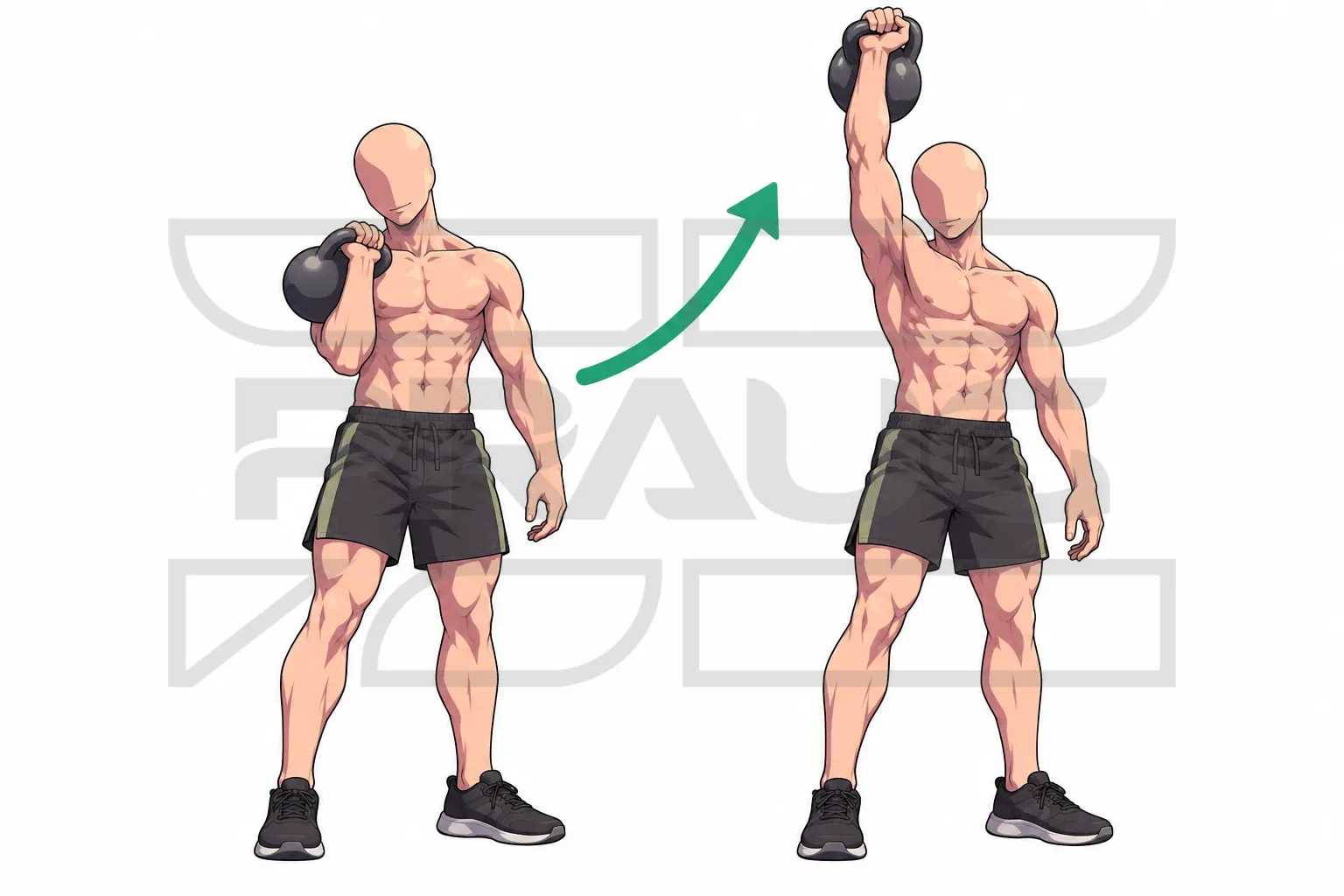
- For an overhead version, use a very manageable bell and a practised secure lift to overhead and return to the rack. Clear the space around it.
- With stable feet, shift the hip towards the loaded side and back while the free hand travels down the other leg.
- Lower only while the overhead support and trunk movement remain controlled; the free hand need not reach the foot or floor.
- Return smoothly to standing without chasing extra rotation or a forced stretch.
- Bring the bell to the rack through the practised path and lower it securely before changing sides.
Range, grip and control
Foot angle, knee bend and depth depend on the chosen version and available control. Look towards the bell only if the neck position is comfortable; do not force neck rotation. A lower-hand bell removes the overhead bell, not every shoulder demand.
What the cited research supports
The 2019 scoping review found limited, low-confidence kettlebell evidence. It does not establish windmill-specific benefits or prove that no later study exists.
Variations and alternatives
An unloaded or lower-hand version can be used deliberately. A dumbbell or two bells changes handling; a bent press is a distinct skill rather than a mandatory windmill progression.
Practice, workload and tracking
A light practice example is 1–3 sets of 3–5 repetitions per side, or fewer, with sufficient rest. Record foot angle, range, bell position and load. No fixed months of practice or sex-based starting load establishes overhead readiness.
Frequently asked questions
Must my free hand touch the floor?
No. Use the range you can control while preserving the chosen support. Greater depth alone is not evidence of better mobility or safer technique.
When should I add demand?
When the chosen setup, path, grip and return are repeatable and the next change is manageable. More load, speed, range and repetitions need not increase together.
Sources and limitations
Sources support the passages that cite them. Practical suggestions are coaching choices to adapt to your own situation.
- Meigh et al. · 2019 · Extent and quality of kettlebell training evidence ↗
Scoping review searched through February 2019 and included ninety-nine publications; low confidence and no windmill-specific efficacy established by this review.
This general information does not replace individual advice. Zepraug’s limitations.