Training· 3 min read
Kettlebell halo: setup, technique and progression
Other names: KB halo
A kettlebell halo moves a light bell slowly around the head with two hands while the torso remains controlled. It can be a movement-preparation choice, but it is not a proven shoulder treatment or a required warm-up.

Certified fitness coach · CQP Instructeur Fitness
Published on
The essentials before you start.
- Choose a very manageable bell with a handle that permits a secure two-hand grip, and clear the space around the head.
- Practise the chosen movement and return before adding load, speed or repetitions.
- A light practice example is 1–2 sets of 3–5 circles in each direction with rest as needed.
- Research on a related task does not establish the same outcomes for every version.
Exercise facts
- Main muscles
- Deltoids, Rotator cuff
- Secondary muscles
- Trapezius, Triceps, Biceps and forearms, Abdominals and obliques, Lower-back muscles
- Equipment
- Kettlebell with a suitable secure handle
What the movement trains
The shoulder and arm muscles guide the bell while the trunk supports the position. A circle around the head is a combined movement, not an isolated rotator-cuff exercise.
Set up and perform the movement
- Choose a very manageable bell with a handle that permits a secure two-hand grip, and clear the space around the head.
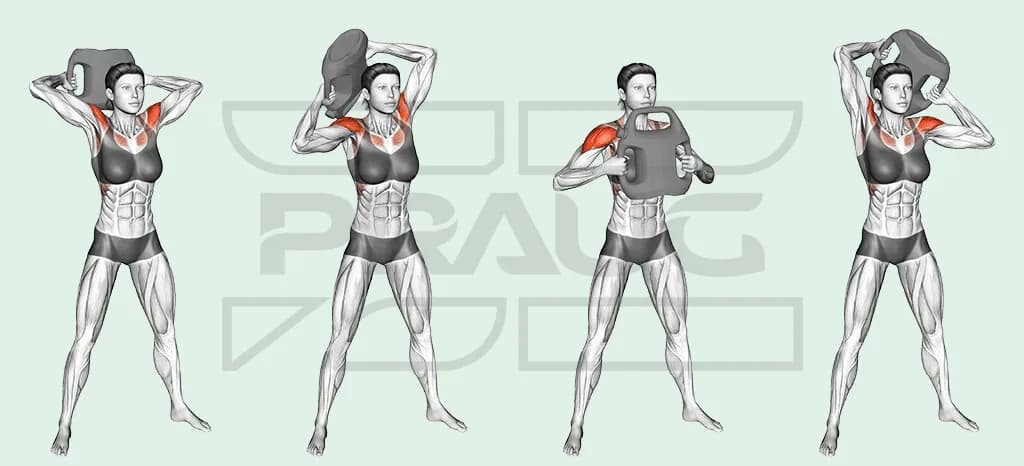
- Pick it up securely and establish a comfortable front hold by the horns; use an orientation you can control without slipping.
- Move slowly to one side of the head with bent elbows, keeping the bell clear of the face.
- Continue behind the head only through a comfortable path without forcing the neck forwards or the ribs upwards.
- Return to the front to complete one circle, pause if needed and repeat in the other direction.
- Bring the bell to a secure front position and lower it before releasing the grip.
Range, grip and control
Do not chase the tightest possible circle, a mandatory upside-down grip or a large stretch. Standing, kneeling and different bell orientations change balance and clearance. Stop the movement if the grip or path becomes uncertain.
What the cited research supports
The meta-analysis concerns resistance training and range of motion generally. It does not establish a halo-specific mobility, recovery or injury-prevention effect.
Variations and alternatives
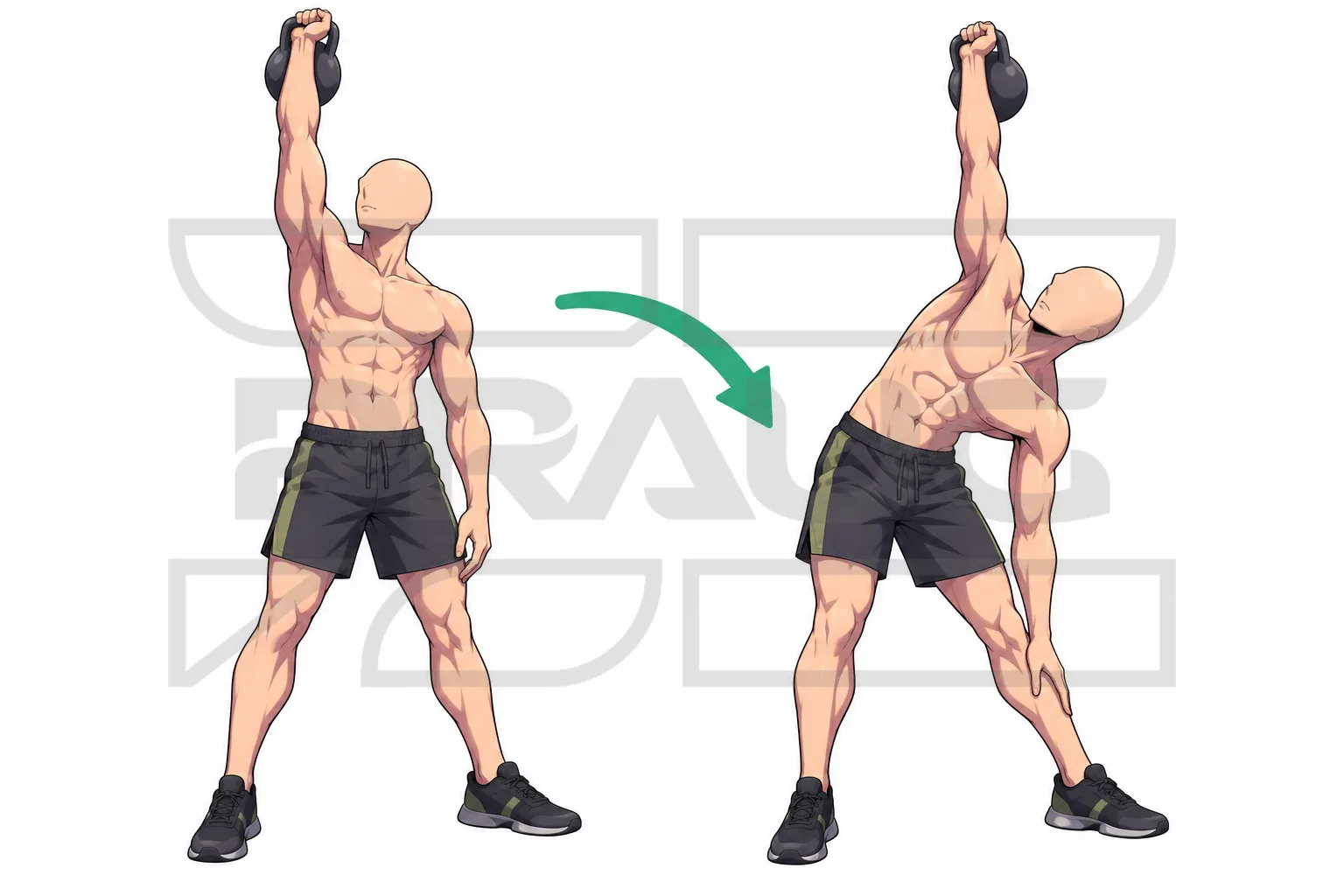
Unloaded shoulder movements are an alternative. The windmill uses a different hip-and-trunk action and optional overhead support, rather than being the next halo level.
Practice, workload and tracking
A light practice example is 1–2 sets of 3–5 circles in each direction with rest as needed. Five each way is ten circles in total. Keep the amount low enough that it does not impair subsequent work.
Frequently asked questions
Does the halo replace every warm-up?
No. Preparation should match the following task. General range-of-motion research does not prove that everyone needs halos before pressing.
When should I add demand?
When the chosen setup, path, grip and return are repeatable and the next change is manageable. More load, speed, range and repetitions need not increase together.
Sources and limitations
Sources support the passages that cite them. Practical suggestions are coaching choices to adapt to your own situation.
- Alizadeh et al. · 2023 · Resistance training and joint range of motion ↗
Meta-analysis of fifty-five studies in healthy participants; general training and range outcomes, not a halo-specific treatment or warm-up trial.
This general information does not replace individual advice. Zepraug’s limitations.