
Training· 5 min read
Lower-abdominal exercises: pelvic control and leg raises
Lower abs is a common description, not a separate abdominal muscle. The rectus abdominis spans the front of the trunk. These eight tasks can practise pelvic movement or control while the limbs move; a pelvic curl is not the only moment when the abdominal wall works.

Certified fitness coach · CQP Instructeur Fitness
Published on
The essentials before you start.
- Distinguish hip movement, pelvic movement and trunk support.
- Choose a limb lever and range that remain repeatable.
- Floor, bench, supported and hanging tasks are options, not a compulsory ladder.
- Examples are adjustable and do not promise local fat loss.
What lower abs describes
The small cited study did not find a clear upper-versus-lower rectus activity difference during its controlled isometric tasks. That does not prove every region responds identically to every possible programme, and it did not measure regional muscle growth.
The hip flexors raise the thighs. The abdominal wall can help hold the pelvis, curl it towards the ribs or move the torso. These actions overlap; avoiding all hip-flexor work is not a requirement for an abdominal exercise.
How to practise the reverse crunch
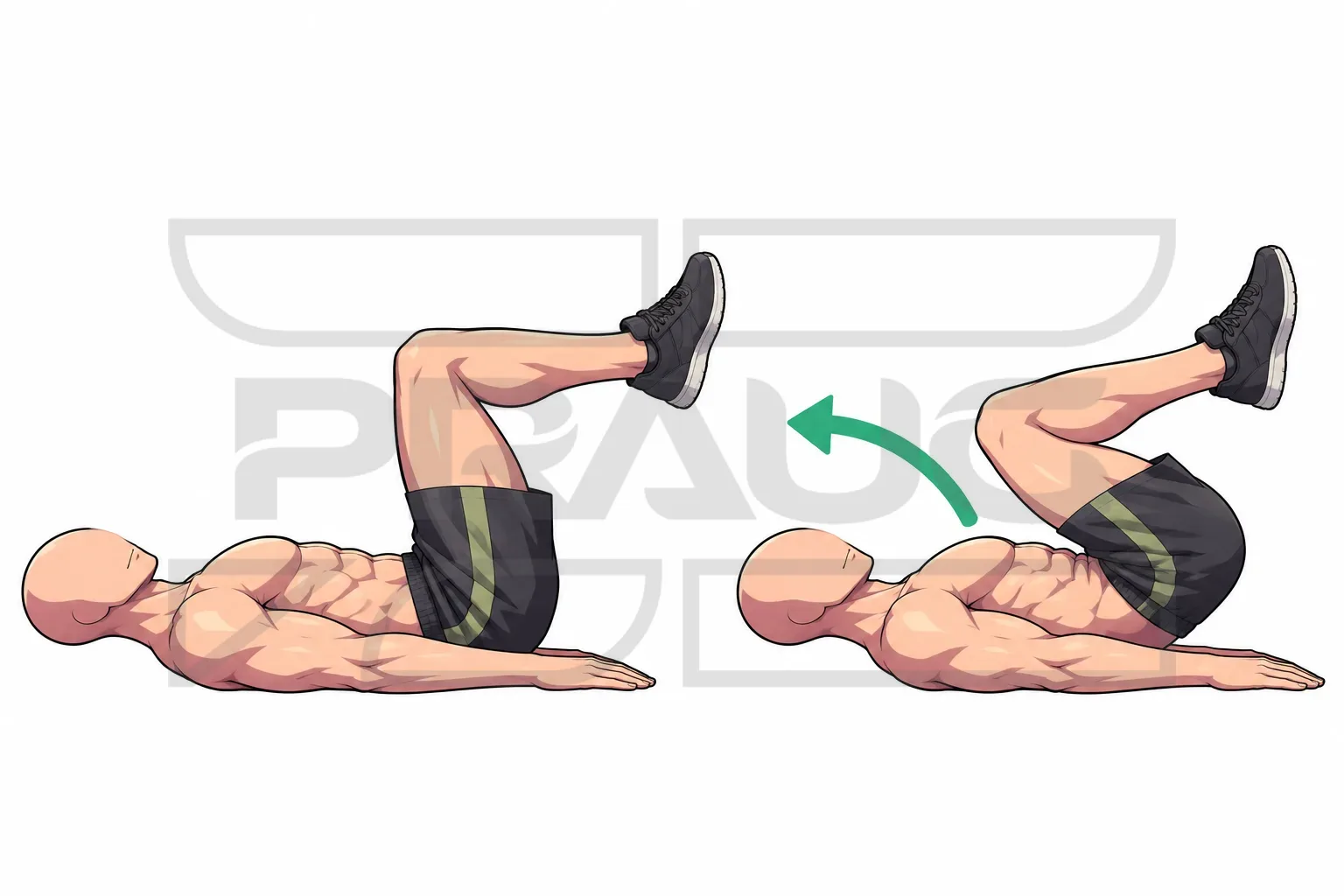
Lie on a mat with the knees bent above the hips and arms resting beside the body. Breathe normally, then make a small controlled pelvic curl towards the ribs so the hips lift slightly. Lower smoothly without swinging the legs or throwing the feet overhead. Return the feet to support before the intended position changes.
The other seven linked guides explain their own setup and handling. A comfortable light contact with the mat can help describe a pelvic position; forcefully flattening every natural back curve is not required.
Choose by task rather than a fixed ladder
Floor, bench and hanging versions are options rather than a compulsory sequence. Fifteen reverse crunches, thirty seconds of a full hollow hold or twelve straight-leg hanging repetitions are not validated readiness gates. Changing support can add balance, grip and access demands even if the repetition count falls.
| Possible choice | Equipment | Useful comparison |
|---|---|---|
| Reverse crunch | Mat or comfortable surface | Repeat a small pelvic curl without leg momentum |
| Dead bug | Mat or comfortable surface | Record repetitions per side and the reach retained |
| Hollow hold | Mat or comfortable surface | Record limb positions as well as time |
| Floor leg raise | Mat or comfortable surface | Record knee bend and lowering range |
| Seated knee raise | Suitable exercise bench | Record lean, hand support and a secure return |
| Captain’s chair raise | Forearm-supported leg-raise station | Retain support and a controlled dismount |
| Hanging leg raise | Secure exercise bar and access support | Retain grip, shoulder support and a controlled exit |
One extended workload example
This example totals twelve task sets per occurrence and may be more than needed. Choose fewer tasks or sets, or split the selected amount. Repeating it twice gives twenty-four task sets; it is not a minimum to add after an existing programme.
For the dead bug, one set can include the planned work on both sides; two such sets gives each side two sets. Allow enough rest, often around 60–120 seconds or more, to keep the chosen task controlled.
| Possible task | Example amount | What to record |
|---|---|---|
| One suitable leg-raise version | 4 × 10–12, or fewer controlled repetitions | Support, knee bend, range and effort |
| Bent-knee reverse crunch | 3 × 15, or fewer controlled repetitions | Small pelvic curl without throwing the legs |
| Hollow hold | 3 × up to 30 s, shortened as needed | Arm and leg lever, breathing and time |
| Dead bug | 2 × 10 per side, or fewer controlled reaches | Each side receives two sets; record reach |
Progress without chasing a shape promise
Choose a manageable starting task, practise lighter or shorter work, and compare the same support, range and effort before adding demand. A burning sensation, a lower foot height or a longer hold is not a direct measurement of muscle growth.
This collection does not promise local fat loss or a change in lower-abdominal appearance from one exercise. The linked exercise guides distinguish the measured outcomes of their sources. The abdominal programme provides a broader structure, and the abdominal collection includes flexion, anti-extension, side-support and rotation tasks.
Stop for sharp pain and seek appropriate individual advice for persistent symptoms. These tasks do not diagnose a pelvic or spinal condition.
Frequently asked questions
Can I isolate a separate lower-ab muscle?
That is not a separate muscle in the rectus abdominis. The cited acute study also did not establish a regional-growth prescription.
Do my hip flexors have to stop working?
No. They move the thighs in leg-raise tasks, while the abdominal wall can control and move the pelvis.
Must I reach the hanging version?
No. Choose by goals, available support and repeatable control. The cited study did not validate a fixed floor-to-bar ladder.
Does a pelvic curl switch the abdominals on?
They can already be active while controlling the pelvis. The curl adds deliberate movement rather than switching activity on from zero.
Sources and limitations
Sources support the passages that cite them. Practical suggestions are coaching choices to adapt to your own situation.
- Lehman and McGill · 2001 · Regional rectus-abdominis activity during controlled isometric tasks in eleven selected participants. ↗
No clear upper-versus-lower activity difference in those tasks; no dynamic-variation ranking or regional-growth measurement.
This general information does not replace individual advice. Zepraug’s limitations.