Training· 3 min read
Hanging leg raise: setup, technique and progression
Other names: Hanging knee raise
A hanging leg raise lifts the knees or straighter legs while hanging from a suitable bar, with optional deliberate pelvic curling. It adds grip, shoulder-support and access demands. A toes-to-bar repetition is not a required goal.

Certified fitness coach · CQP Instructeur Fitness
Published on
The essentials before you start.
- Choose secure support and a manageable starting demand.
- Describe the intended trunk, hip and pelvic movement.
- Record lever, range and counting method consistently.
- Research measurements do not establish every variation or a local-fat-loss promise.
Exercise facts
- Main muscles
- Rectus abdominis, Iliopsoas
- Secondary muscles
- Rectus femoris, Obliques, Latissimus dorsi, Finger flexors
- Equipment
- Secure exercise bar and access support
What the movement trains
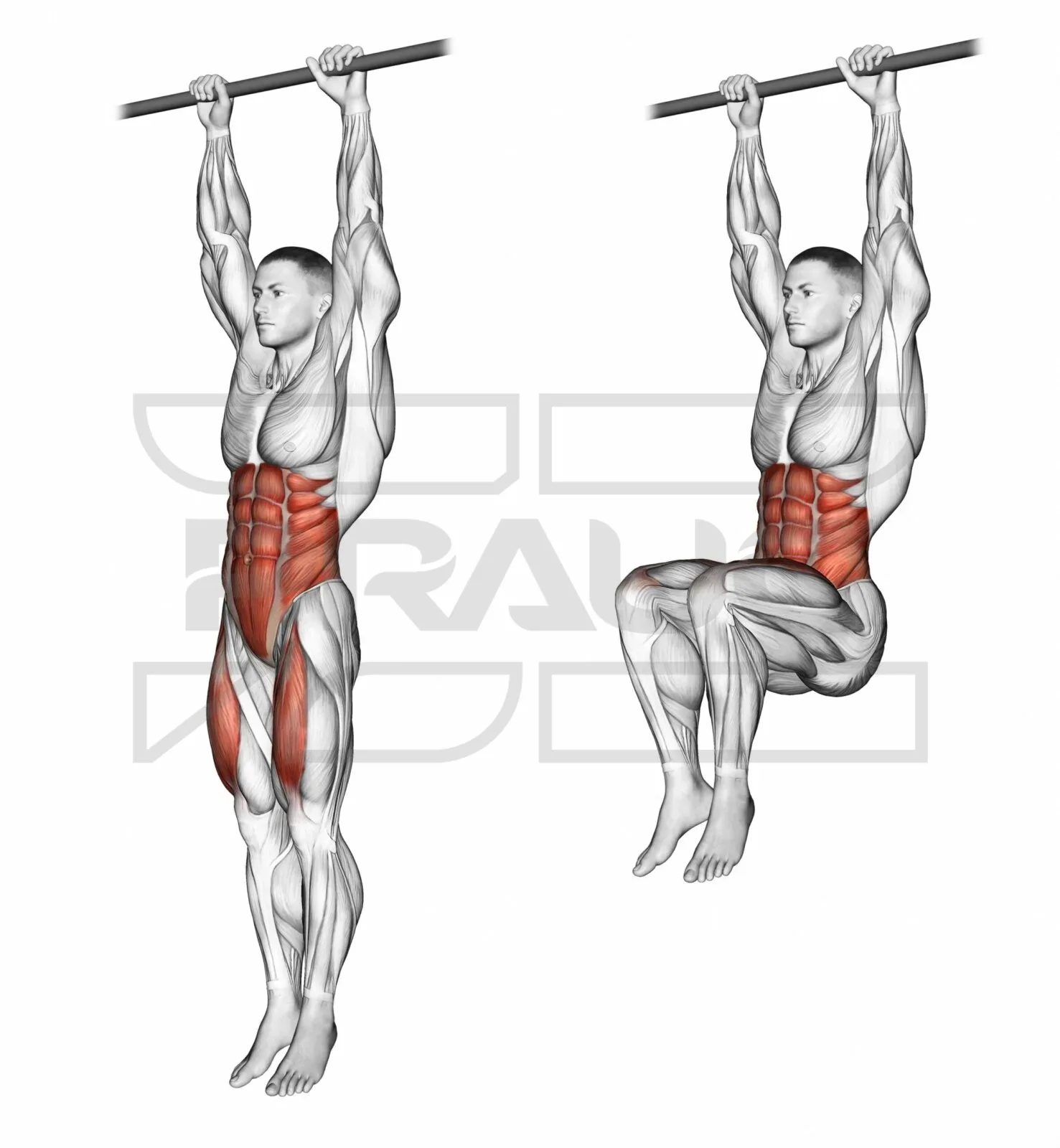
The hip flexors lift the thighs while the abdominal wall controls the trunk and can curl the pelvis. The grip and shoulder muscles maintain the hang. Bent-knee and straight-leg versions are separate levers, rather than universal levels of readiness.
Set up and perform the movement
- Use a secure exercise bar, checking clearance and a stable access step and dismount.
- Take a full grip and establish a manageable shoulder position before removing foot support.
- Let the body settle rather than starting from a swing.
- Raise bent knees or straighter legs through a controllable range, adding a small pelvic curl if intended.
- Lower smoothly and let the legs settle before another repetition. Stop before grip or shoulder support fails.
- Return the feet to secure support before releasing the bar.
Range, support and control
A fixed hand width or forced shoulder-blade depression is not required for everyone. Straps change handling and need a practised release. Kipping, external loads and toes-to-bar are optional separate tasks, not automatic next steps.
What the cited research supports
The fourteen-man experiment recorded high activity and modelled spine compression in a particular hanging straight-leg raise. A modelled load is not an individual injury prediction or proof that this is the best growth exercise. The other acute studies do not establish selective lower-abdominal growth or every progression threshold.
Variations and alternatives
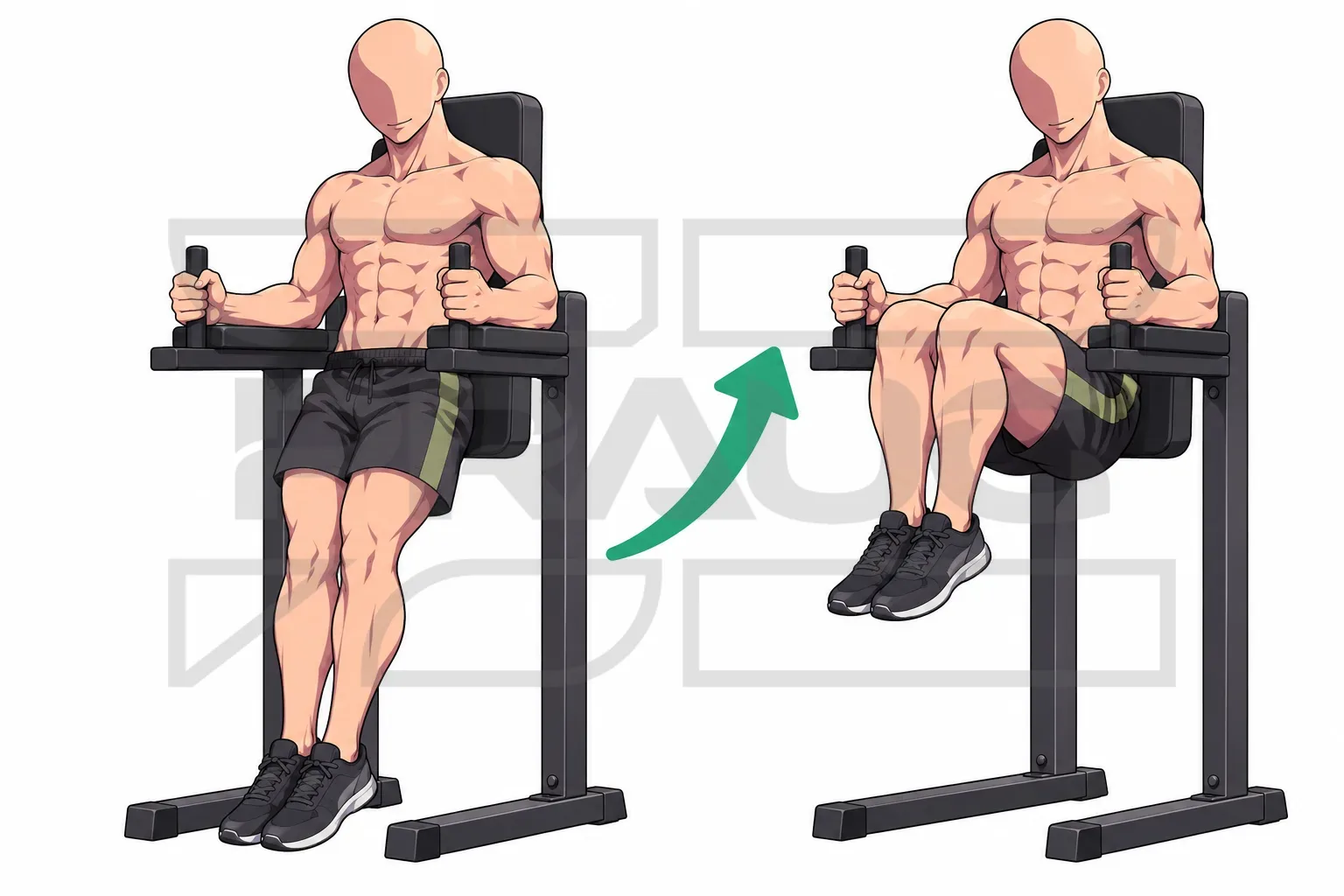
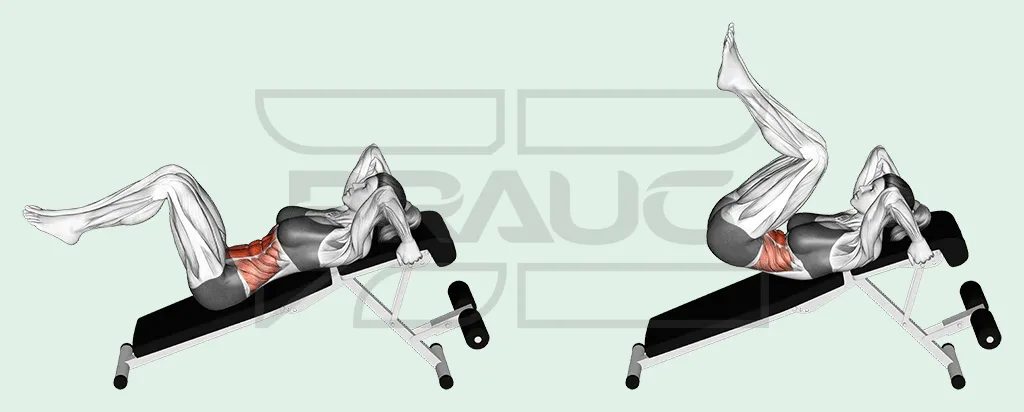
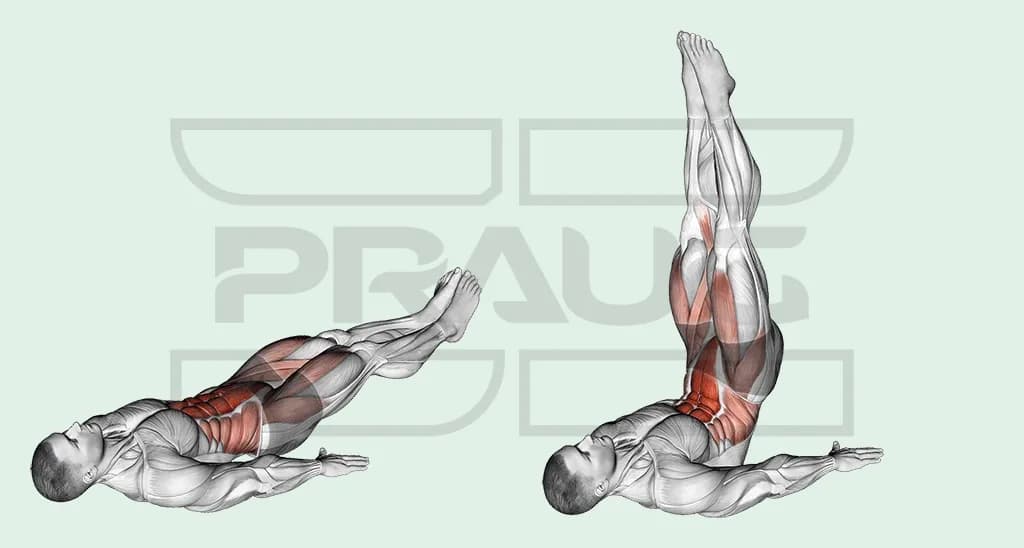
A captain’s chair raise changes support, while a floor leg raise removes the hang. Choose a task with a secure return.
Sets, progression and tracking
An optional example is 2–3 short sets of 4–10 controlled repetitions. Keep enough reserve for support and dismount. Record grip, knee bend, swing, range and effort rather than comparing different levers by repetitions alone.
Movement video
The demonstration shows one setup, rather than an individual range or loading prescription.
Hanging leg raise movement demonstration
Frequently asked questions
Does high modelled spinal loading prove the exercise causes injury?
No. A short mechanical estimate does not measure injury rates or determine an individual’s tolerance. It also does not establish universal safety.
When should I add demand?
When the intended support, range and effort remain repeatable and the next change is manageable. Record changes rather than comparing different levers as if they were identical.
Sources and limitations
Sources support the passages that cite them. Practical suggestions are coaching choices to adapt to your own situation.
- McGill et al. · 2015 · Activity and modelled spinal loading during three whole-body trunk tasks in fourteen men. ↗
Included a particular hanging straight-leg raise; modelled compression is not an injury-rate or individual tolerance prediction.
- Escamilla et al. · 2006 · Acute activity comparison of traditional and device-based abdominal tasks in twenty-one adults. ↗
Specific Power Wheel, strapped knee-up, inclined reverse-crunch and floor tasks; not every commercial device, later growth or injury outcomes.
- Lehman and McGill · 2001 · Regional rectus-abdominis activity during controlled isometric tasks in eleven selected participants. ↗
No clear upper-versus-lower activity difference in those tasks; no dynamic-variation ranking or regional-growth measurement.
This general information does not replace individual advice. Zepraug’s limitations.