Training· 3 min read
Floor leg raise: setup, technique and progression
Other names: Lying leg raise
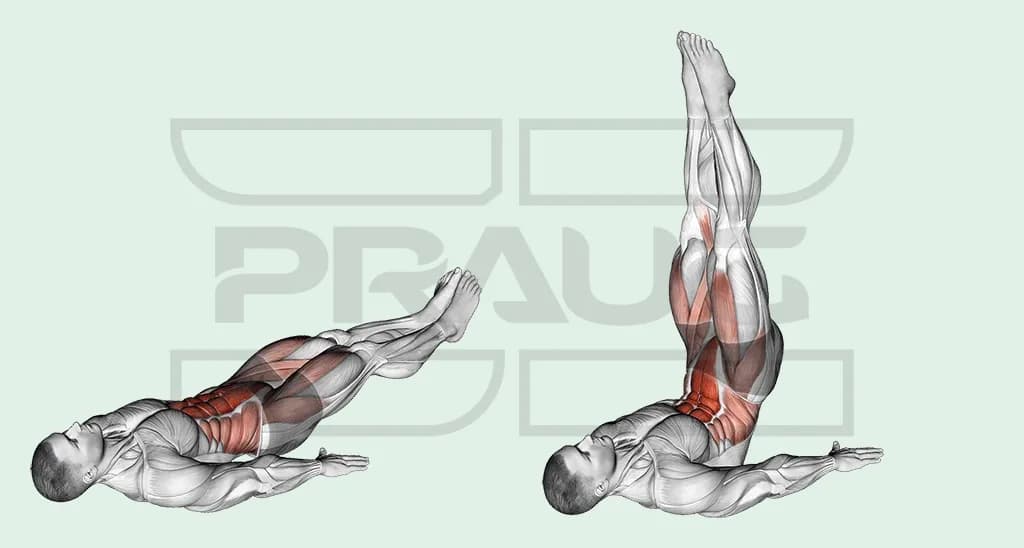
A floor leg raise lifts and lowers the legs while lying on the back. The hips move the thighs while the abdominal wall controls the pelvis; a small pelvic curl can be included deliberately. The heels do not have to reach the floor.

Certified fitness coach · CQP Instructeur Fitness
Published on
The essentials before you start.
- Choose secure support and a manageable starting demand.
- Describe the intended trunk, hip and pelvic movement.
- Record lever, range and counting method consistently.
- Research measurements do not establish every variation or a local-fat-loss promise.
Exercise facts
- Main muscles
- Rectus abdominis, Iliopsoas
- Secondary muscles
- Rectus femoris, Obliques, Transversus abdominis
- Equipment
- Bodyweight, Exercise mat
What the movement trains
The hip flexors lift the legs and the abdominal wall helps manage the trunk. Both isometric control and active pelvic movement can involve the abdominals. They do not switch on only at the final pelvic curl.
Set up and perform the movement
- Lie on a comfortable mat with the head supported and arms beside the body.
- Start with the knees bent and legs raised if that gives more control than lifting from near the floor.
- Choose a gentle pelvic position without forcing the low back hard into the mat.
- Raise or lower the legs smoothly through a range that retains the intended torso position.
- If adding a pelvic curl, make it small and controlled rather than throwing the feet overhead.
- Bend the knees and return the feet to support before the position changes.
Range, support and control
Straight legs lengthen the lever; they are an option rather than a requirement. A shorter lowering range or one-leg variation changes demand. Ankle weights add another load and are not needed simply because bodyweight repetitions feel easier.
What the cited research supports
The pelvis-position study used static leg holds in sixteen men, not repeated dynamic raises. The regional study did not find a clear upper-versus-lower rectus activity distinction in its controlled tasks. Neither establishes regional growth or a universal lowest foot position.
Variations and alternatives
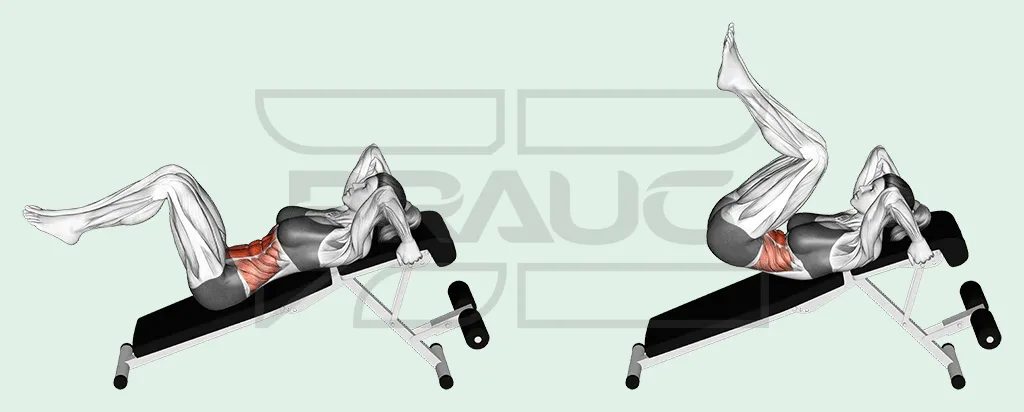
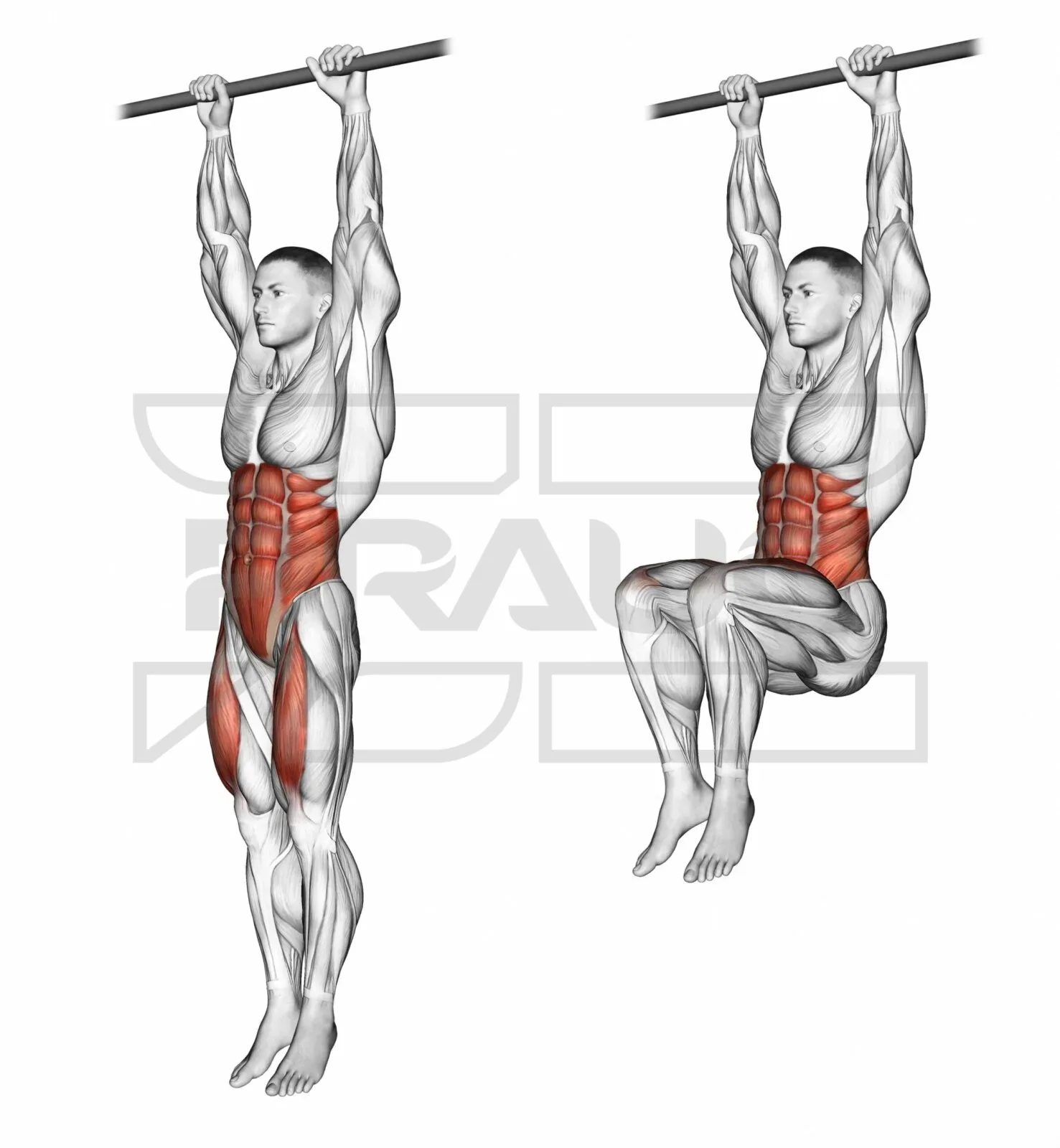
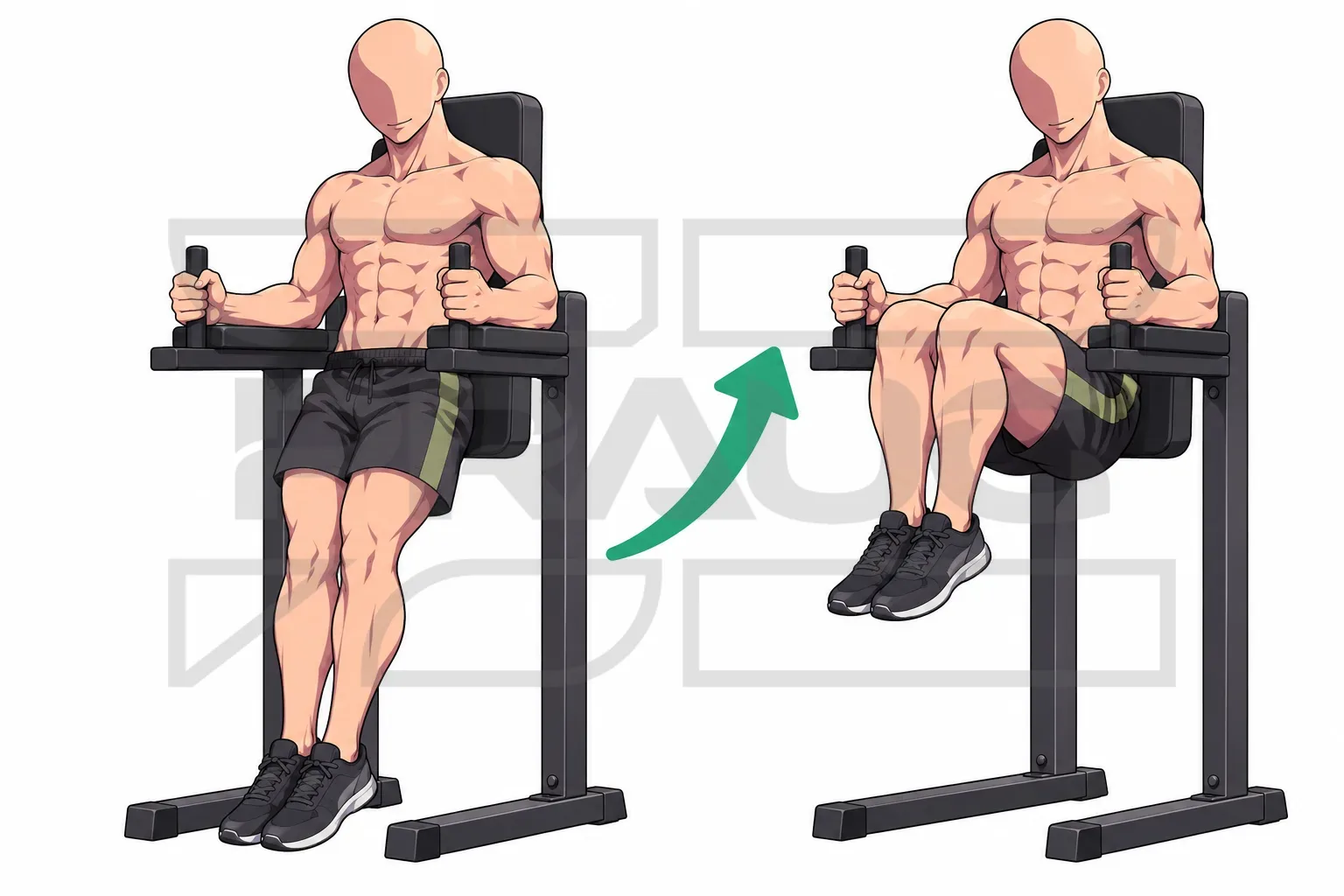
A dead bug alternates limbs, while a seated raise changes support and balance. Use a comparable lever when tracking sessions.
Sets, progression and tracking
An example is 2–3 sets of 6–15 controlled repetitions. Record knee bend, lowering range, pelvic movement and effort. Reduce the lever or range when the intended torso position no longer holds.
Frequently asked questions
Do the abdominals work only when my hips lift off the floor?
No. They can also help control the pelvis while the legs move. A pelvic curl adds a deliberate movement rather than switching abdominal activity on from zero.
When should I add demand?
When the intended support, range and effort remain repeatable and the next change is manageable. Record changes rather than comparing different levers as if they were identical.
Sources and limitations
Sources support the passages that cite them. Practical suggestions are coaching choices to adapt to your own situation.
- Workman et al. · 2008 · Pelvic-position and Janda sit-up activity comparison in sixteen men. ↗
Static leg holds and particular positions; not repeated dynamic leg raises or later growth.
- Lehman and McGill · 2001 · Regional rectus-abdominis activity during controlled isometric tasks in eleven selected participants. ↗
No clear upper-versus-lower activity difference in those tasks; no dynamic-variation ranking or regional-growth measurement.
This general information does not replace individual advice. Zepraug’s limitations.