Training· 3 min read
Seated bench knee raise: setup, technique and progression
A seated bench knee raise brings the knees towards the torso while sitting with suitable hand support. The hips move the legs and the pelvis can curl deliberately. Sitting does not make the task balance-free.

Certified fitness coach · CQP Instructeur Fitness
Published on
The essentials before you start.
- Choose secure support and a manageable starting demand.
- Describe the intended trunk, hip and pelvic movement.
- Record lever, range and counting method consistently.
- Research measurements do not establish every variation or a local-fat-loss promise.
Exercise facts
- Main muscles
- Rectus abdominis, Iliopsoas
- Secondary muscles
- Rectus femoris, Obliques, Transversus abdominis
- Equipment
- Stable exercise bench
What the movement trains
The hip flexors move the thighs while the abdominal wall controls the trunk and pelvis. Keeping the torso steady and deliberately curling it are different variations; record which is intended.
Set up and perform the movement
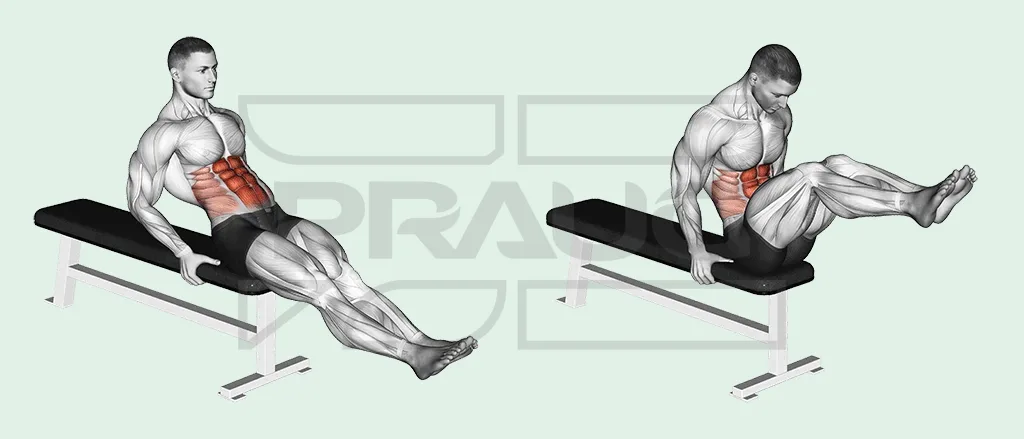
- Use a stable exercise bench with space for the feet and a secure way to sit and stand.
- Sit far enough onto the pad to retain support, with the hands gripping suitable edges or handles.
- Lean back only as far as the support and trunk remain controllable. Begin with bent knees.
- Bring the knees towards the body, adding a small controlled pelvic curl if that is the intended task.
- Extend the legs forwards through a manageable range without sliding off the bench or swinging the torso.
- Place the feet securely before releasing the hand support or standing.
Range, support and control
Straight legs and a larger torso lean change the lever. The feet can return to support between repetitions if needed. Household chairs, a loose bench edge or a large backward rocking motion are not automatic equivalents.
What the cited research supports
The eleven-person regional-activity study used controlled isometric contractions. It did not directly test every seated bench version or establish selective lower-abdominal growth, a best repetition count or individual comfort.
Variations and alternatives
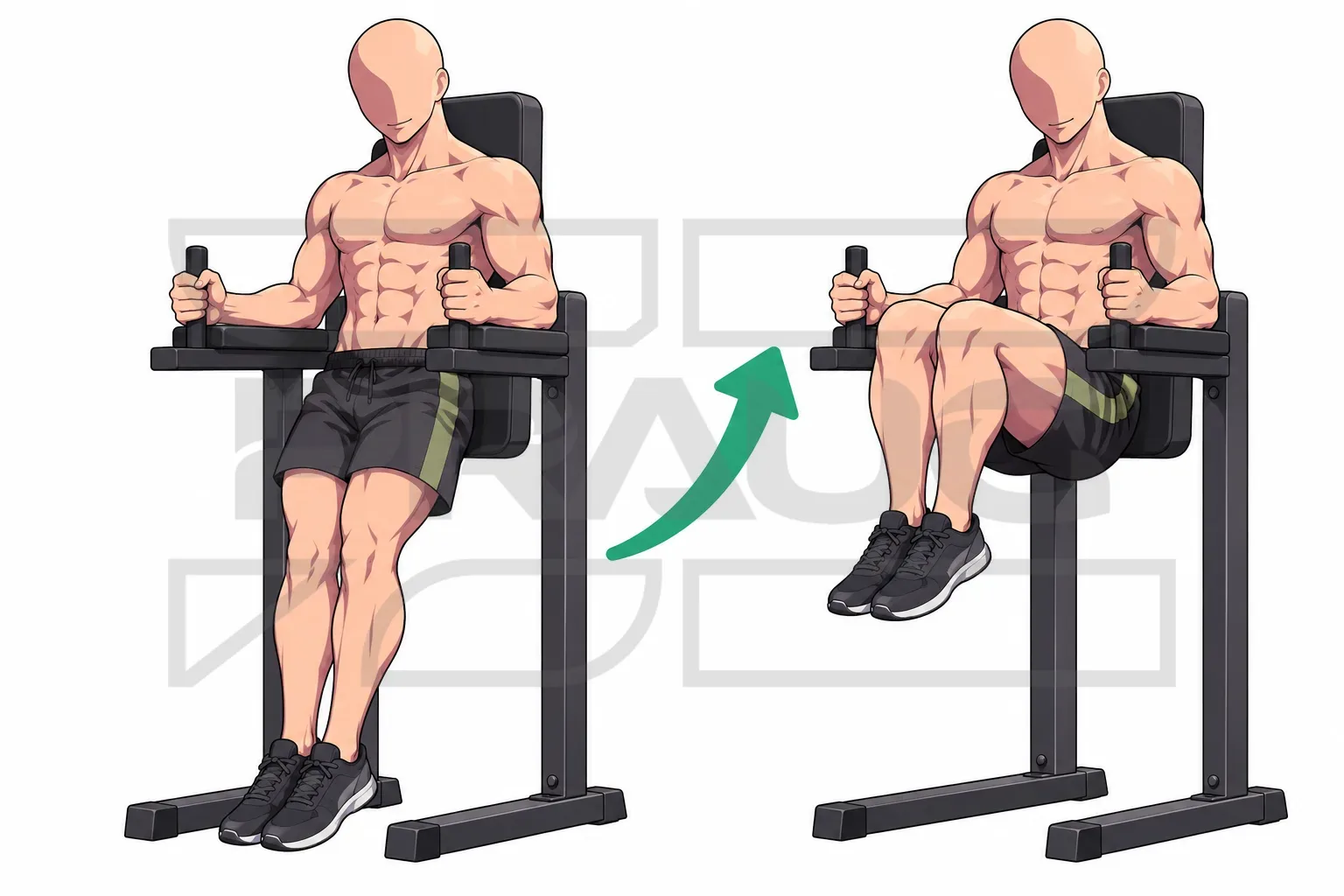
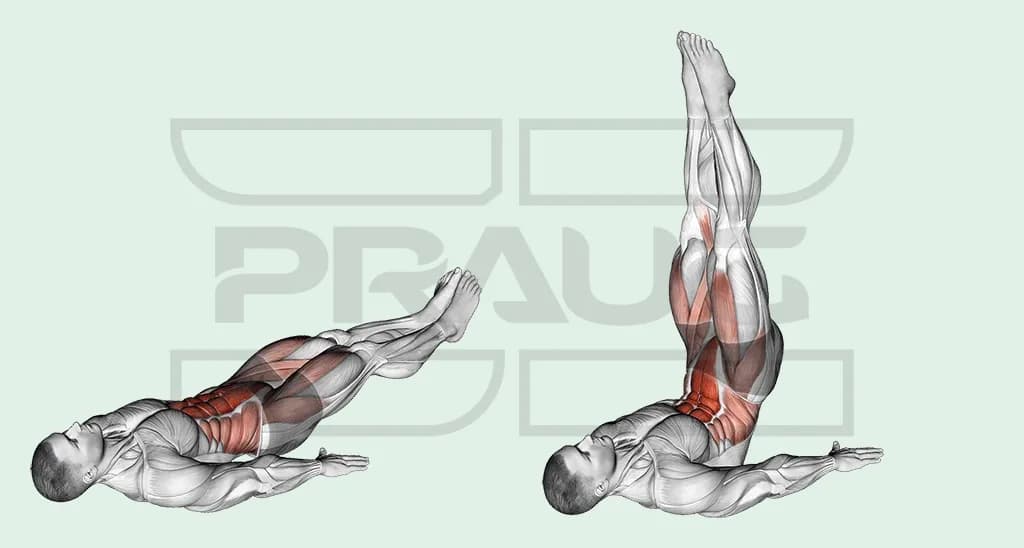
A floor leg raise changes trunk support. A captain’s chair raise uses forearm support rather than sitting.
Sets, progression and tracking
An example is 2–3 sets of 8–15 controlled repetitions. Record torso lean, knee bend, hand support, range and effort. Stop when balance or a secure return changes.
Frequently asked questions
Must my feet remain in the air throughout?
No. Returning the feet to support can be an intentional adaptation. Log that choice rather than treating every version as the same task.
When should I add demand?
When the intended support, range and effort remain repeatable and the next change is manageable. Record changes rather than comparing different levers as if they were identical.
Sources and limitations
Sources support the passages that cite them. Practical suggestions are coaching choices to adapt to your own situation.
- Lehman and McGill · 2001 · Regional rectus-abdominis activity during controlled isometric tasks in eleven selected participants. ↗
No clear upper-versus-lower activity difference in those tasks; no dynamic-variation ranking or regional-growth measurement.
This general information does not replace individual advice. Zepraug’s limitations.