Training· 3 min read
Scissor kicks: setup, technique and progression
Other names: Scissor exercise
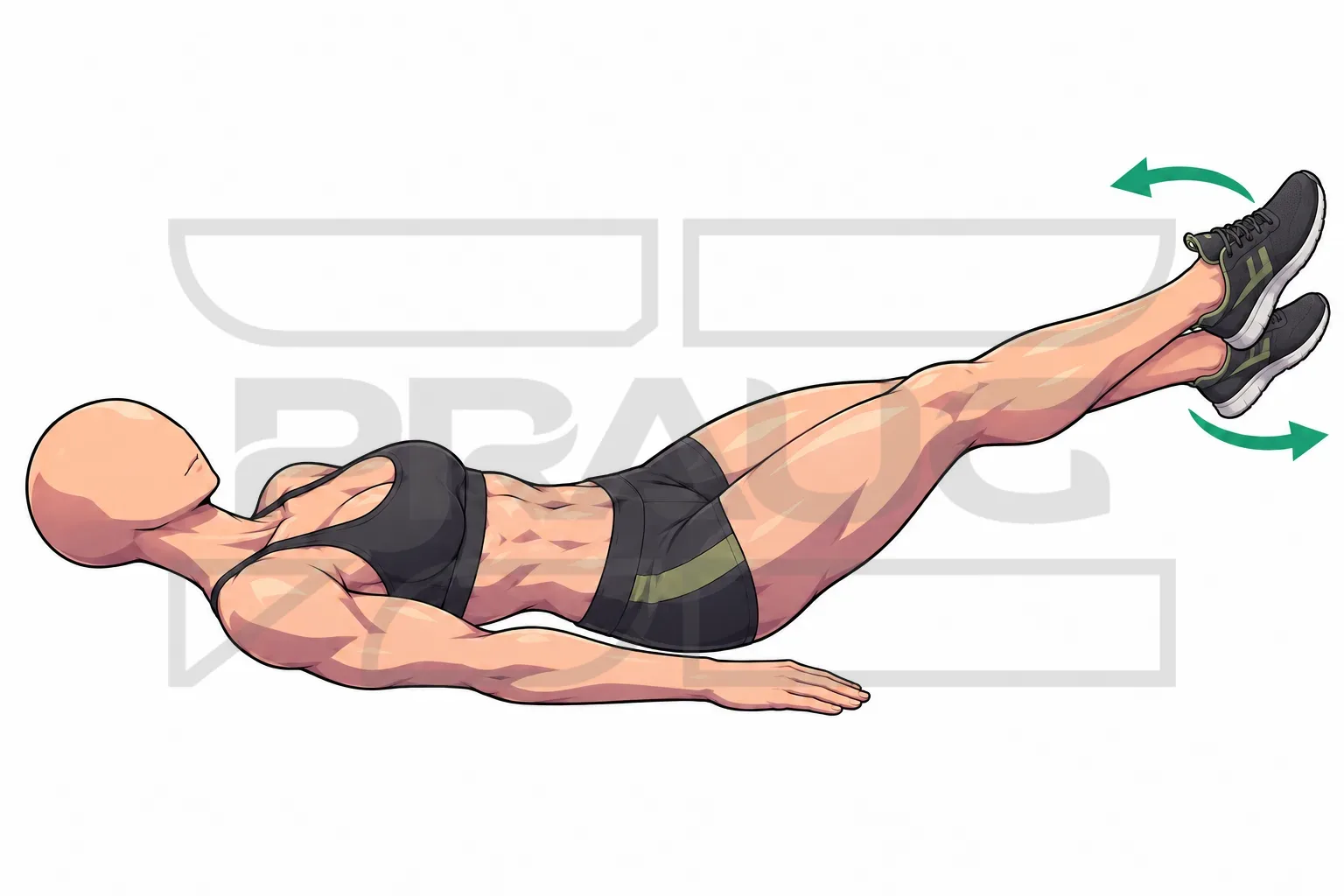
Scissor kicks cross the legs alternately while lying on the back. The hip muscles move and support the legs while the abdominal wall helps control the pelvis. A very low foot position is not compulsory.

Certified fitness coach · CQP Instructeur Fitness
Published on
The essentials before you start.
- Choose secure support and a manageable starting demand.
- Describe the intended trunk, hip and pelvic movement.
- Record lever, range and counting method consistently.
- Research measurements do not establish every variation or a local-fat-loss promise.
Exercise facts
- Main muscles
- Rectus abdominis, Iliopsoas
- Secondary muscles
- Obliques, Transversus abdominis, Rectus femoris
- Equipment
- Bodyweight, Exercise mat
What the movement trains
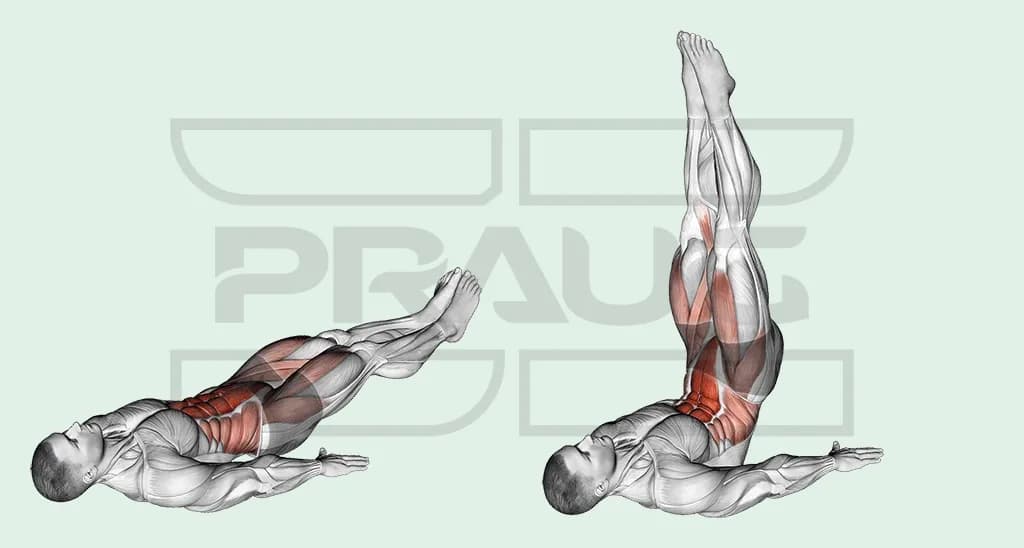
The hip flexors hold the legs above the floor. The rectus abdominis and other trunk muscles help manage pelvic position. Crossing the legs does not isolate a separate lower-abdominal muscle.
Set up and perform the movement
- Lie on a comfortable mat with the head supported and arms beside the body.
- Choose a gentle pelvic position you can retain; do not force the lower back hard into the floor.
- Raise the legs to a manageable height, bending the knees if a straight-leg lever is too demanding.
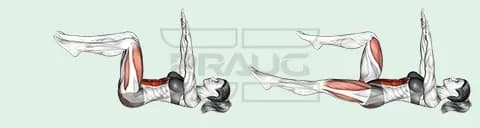
- Cross one leg above the other, then reverse, using small controlled movements.
- Keep breathing and retain the intended trunk position rather than lowering the feet as far as possible.
- Bend the knees and return the feet to support before control changes.
Range, support and control
Putting the hands beneath the pelvis changes support and is not a cure for symptoms. Vertical flutter kicks, a raised torso, ankle weights and hanging versions are separate tasks; none is a compulsory next step.
What the cited research supports
The cited studies used a curl, double straight-leg lowering, static leg holds and controlled isometric tasks. Scissor kicks themselves were not tested. Their electrical measurements do not establish later growth, a fat-loss effect or a universal pelvis position.
Variations and alternatives
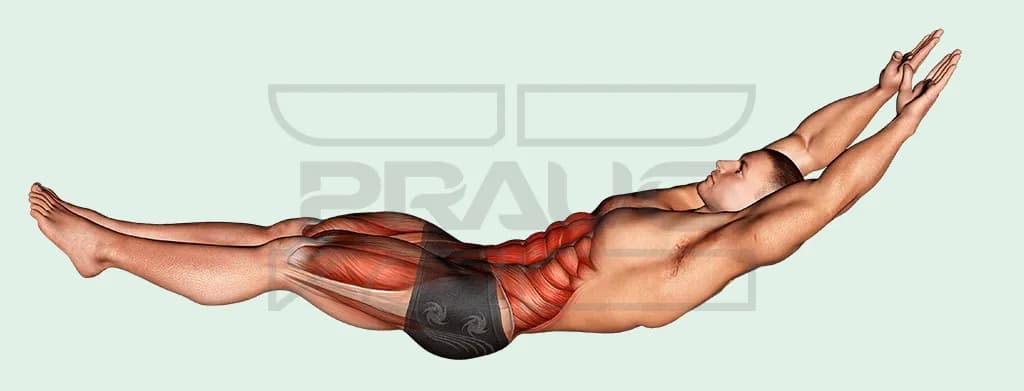
A dead bug, hollow hold or floor leg raise changes the lever and movement. Choose one you can repeat.
Sets, progression and tracking
An example is 2–3 bouts of 10–30 seconds, ending sooner if needed. Record leg height, knee bend and duration. If counting repetitions, define one left-and-right crossing cycle and use the same definition each time.
Movement video
The demonstration shows one setup, rather than an individual range or loading prescription.
Scissor kicks movement demonstration
Frequently asked questions
Must my heels stay only centimetres from the floor?
No. A higher leg position or bent knees can make the task more manageable. Preserve the intended support and breathing rather than a fixed height.
When should I add demand?
When the intended support, range and effort remain repeatable and the next change is manageable. Record changes rather than comparing different levers as if they were identical.
Sources and limitations
Sources support the passages that cite them. Practical suggestions are coaching choices to adapt to your own situation.
- Shields et al. · 1997 · Curl and double straight-leg lowering comparison with controlled pelvic position in fifteen men. ↗
Acute activity, not scissor kicks, later growth or individual spinal tolerance.
- Workman et al. · 2008 · Pelvic-position and Janda sit-up activity comparison in sixteen men. ↗
Static leg holds and particular positions; not repeated dynamic leg raises or later growth.
- Lehman and McGill · 2001 · Regional rectus-abdominis activity during controlled isometric tasks in eleven selected participants. ↗
No clear upper-versus-lower activity difference in those tasks; no dynamic-variation ranking or regional-growth measurement.
This general information does not replace individual advice. Zepraug’s limitations.