
Training· 6 min read
Shoulder workout programme: press, raise and rear work
This plan combines an overhead press, direct abduction work and a rear-shoulder task. Choose one table and account for chest pressing and pulling elsewhere in the week. Front, side and rear deltoid labels describe overlapping contributions rather than isolated compartments.

Certified fitness coach · CQP Instructeur Fitness
Published on
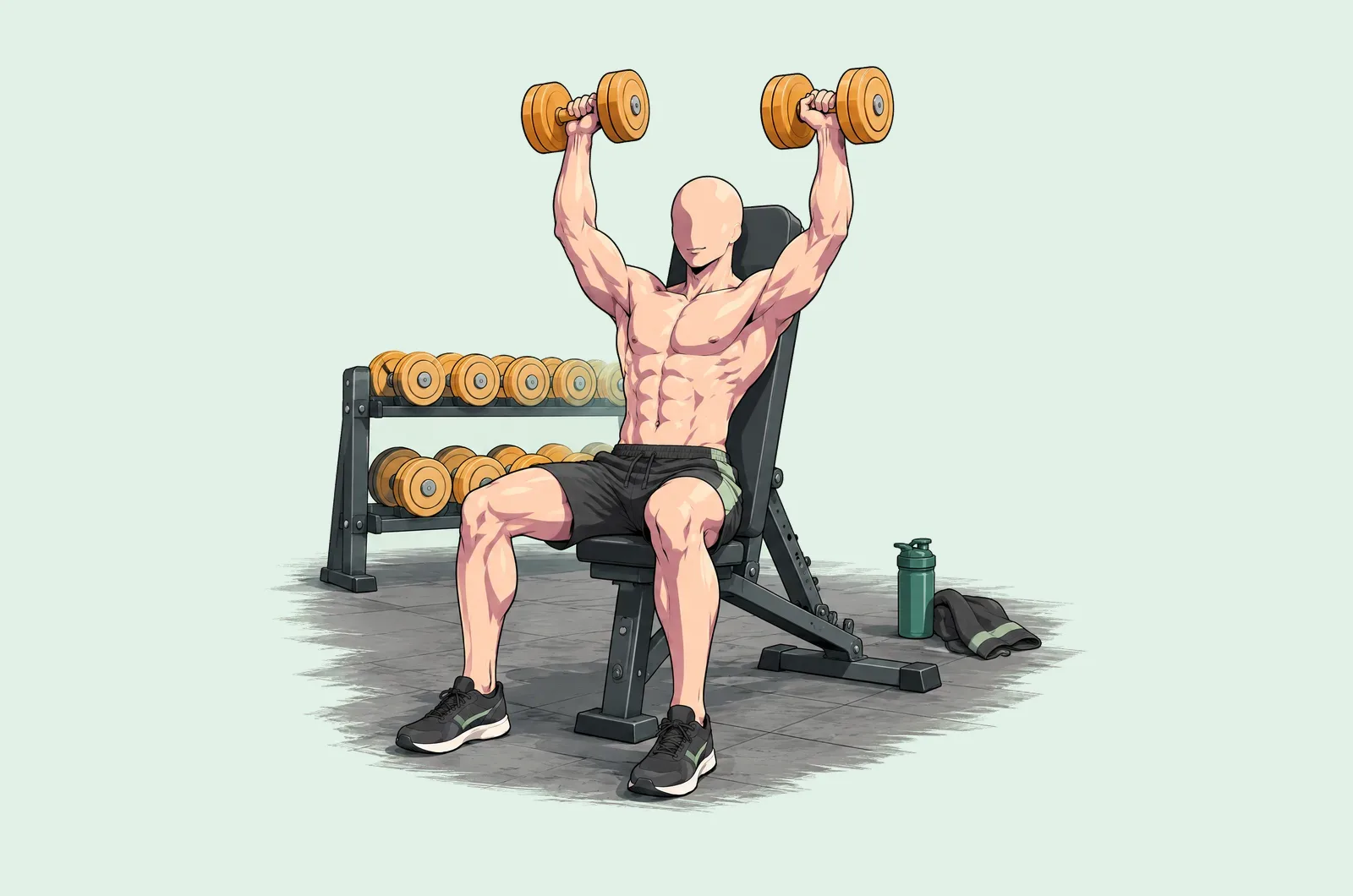
The essentials before you start.
- Choose one workload and count repetitions of it across the week.
- Tables give coaching examples; the cited studies do not validate the exact whole plan.
- Record setup, range and effort alongside sets, repetitions and load.
- Optional advanced methods are not compulsory or automatically suitable.
Choose the workload and fit it into the week
The three workout tables contain 10, 12 and 14 direct exercise sets per occurrence. The distribution table is an example budget, not permission to repeat the full workout twice and still count it as 10–14 sets. Divide that budget across sessions if useful. Higher-demand clusters and back-off sets are optional methods, not prerequisites to progress.
Practical movement and setup cues
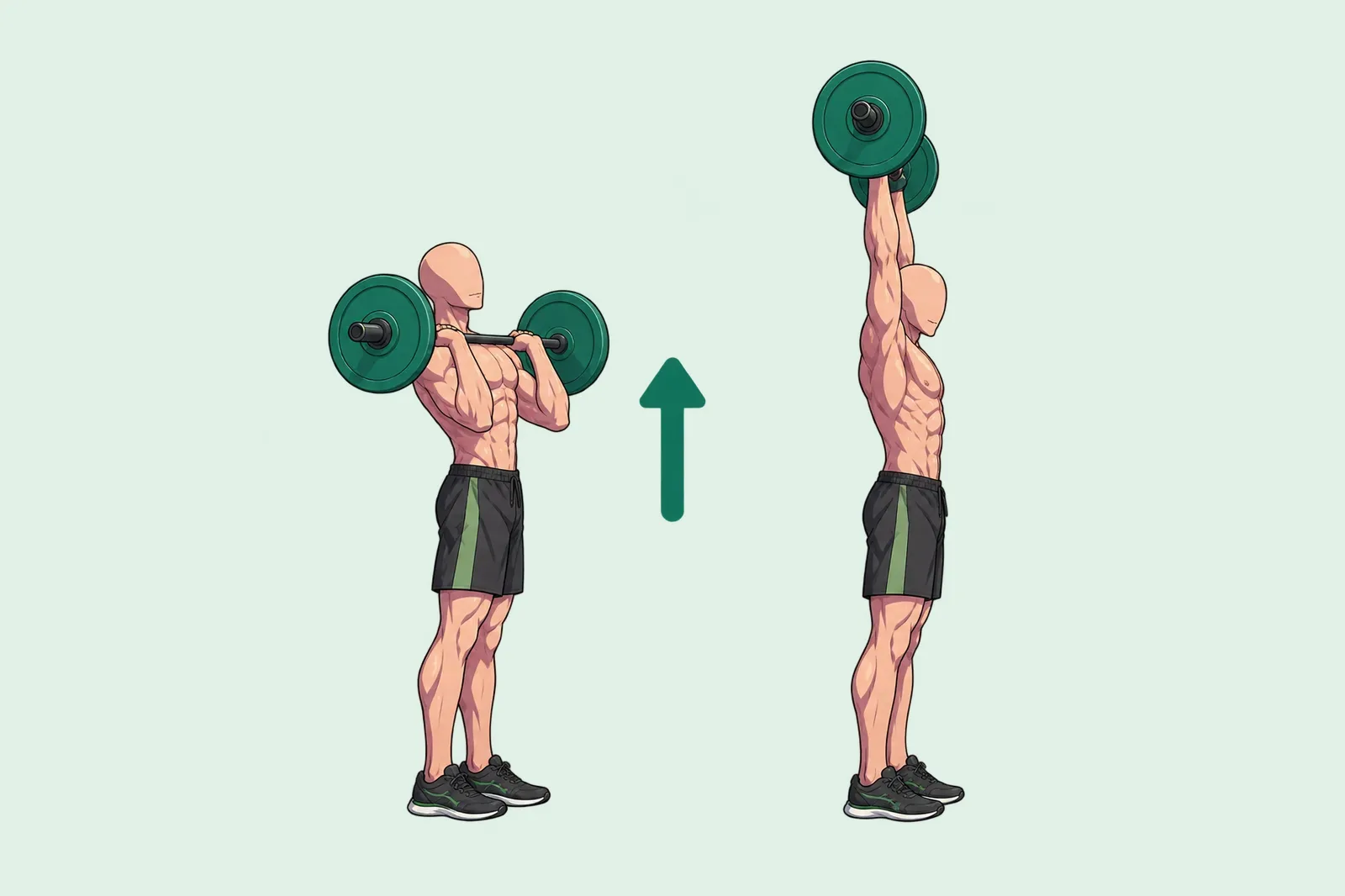
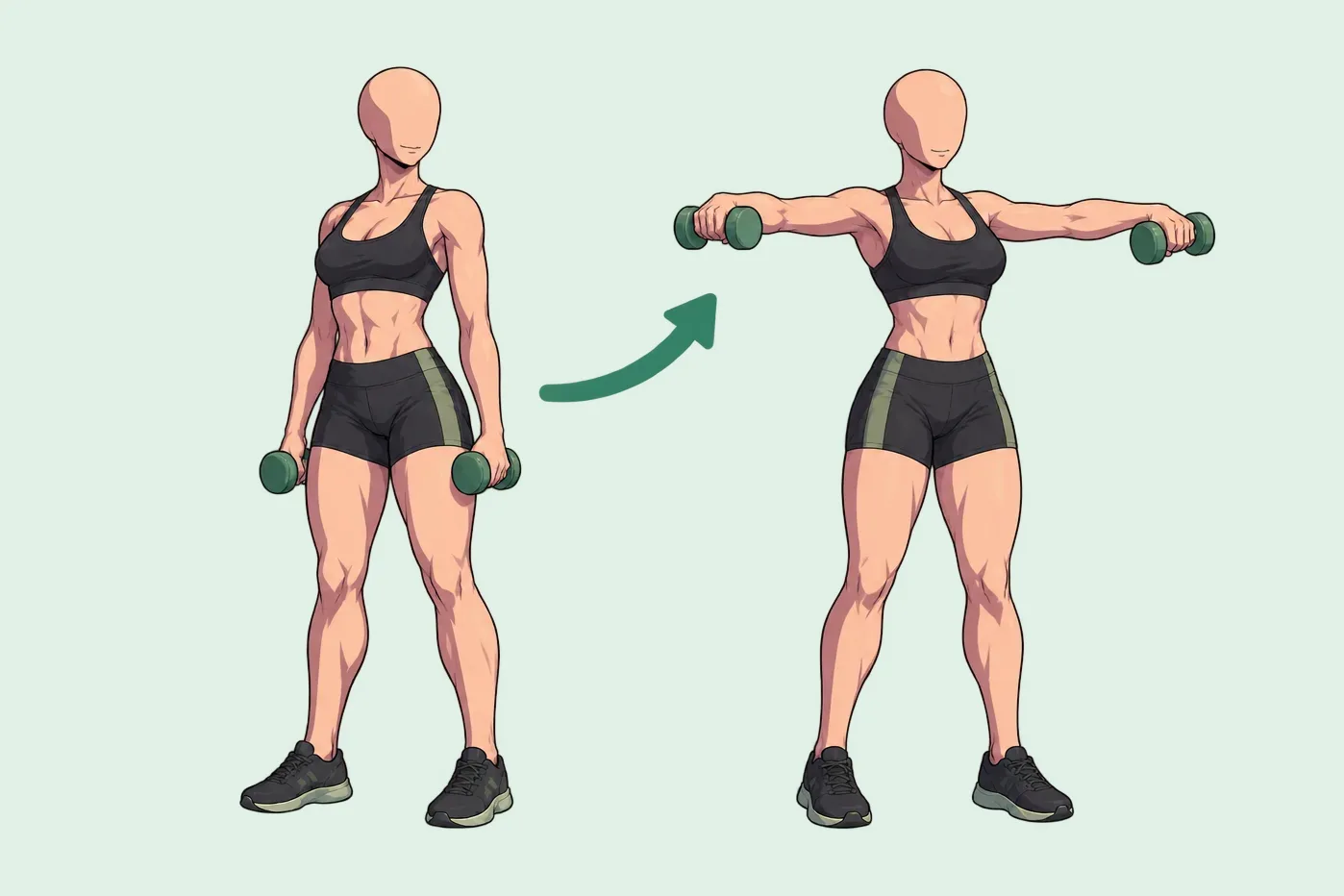
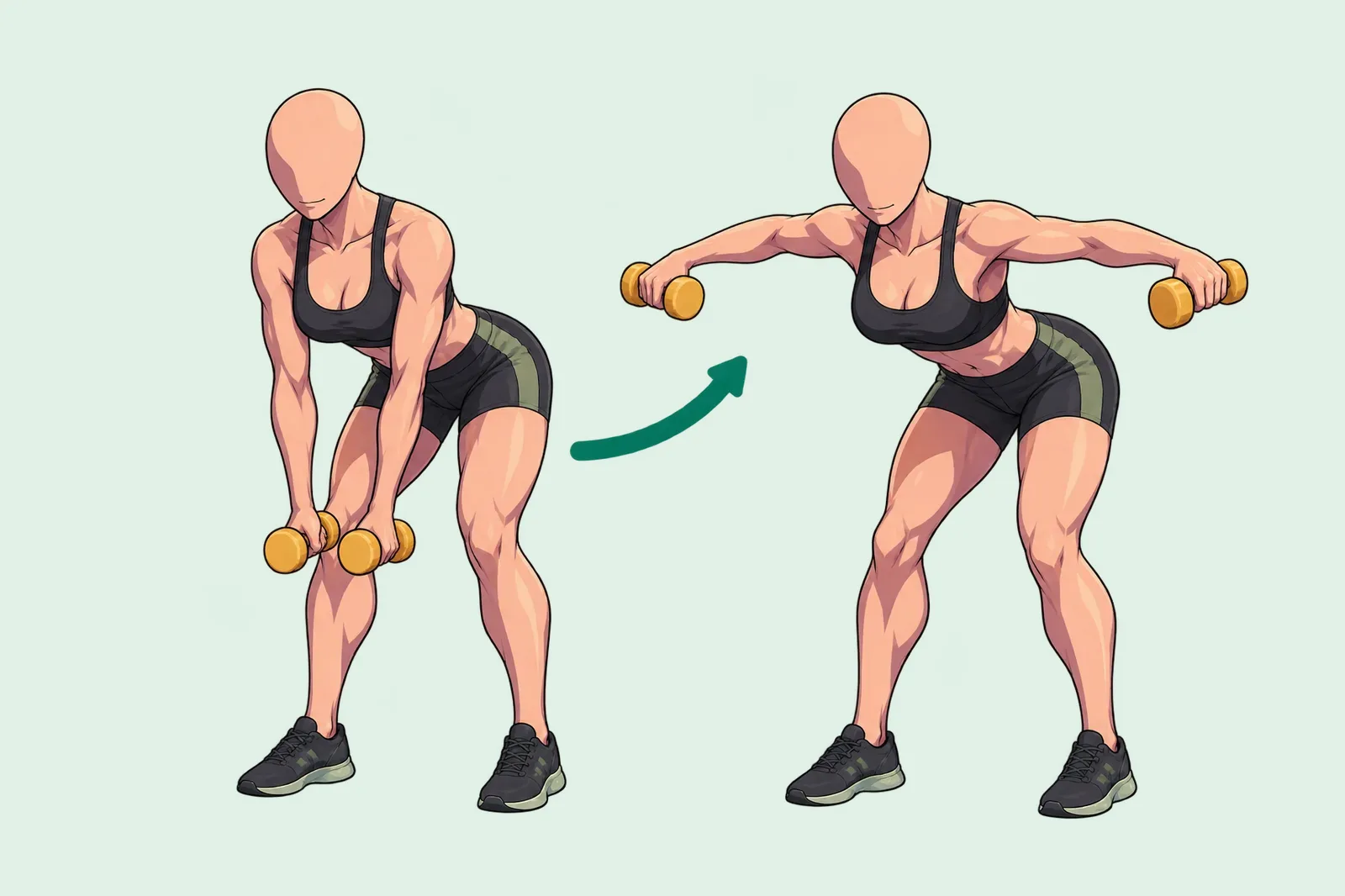
Choose a supported dumbbell press or an overhead barbell setup you can control. Keep lateral-raise range and elbow bend repeatable. A face pull includes a deliberate external-rotation component in this version; a bent-over fly is a different task. Neither is prescribed as a cure for posture or a painful shoulder.
What the cited evidence does and does not establish
The lateral-raise training study compared matched cable and dumbbell conditions for a short period. It does not validate the complete shoulder plan or a universal weekly volume. The broader syntheses do not establish a number of sets based only on years of training.
Direct-set distribution example
Quantities are per occurrence of this table unless the heading explicitly describes a weekly distribution. Choose the appropriate example; do not combine every option.
| Option | Direct sets in the example | Possible distribution |
|---|---|---|
| Lower-demand example | 10 | One block, or divide across two shorter blocks |
| Moderate-demand example | 12 | Two shorter blocks of 6 sets |
| Higher-demand example | 14 | Divide the listed work across suitable sessions |
Lower-demand example workout
Quantities are per occurrence of this table unless the heading explicitly describes a weekly distribution. Choose the appropriate example; do not combine every option.
| Exercise | Sets | Repetitions | Effort | Rest |
|---|---|---|---|---|
| Barbell overhead press, or Seated dumbbell shoulder press | 4 | 8 | RPE 8 | 2 min |
| Dumbbell lateral raise, or Cable lateral raise | 3 | 15 | RPE 9 | 1 min 30 |
| Face pull | 3 | 15 – 20 | RPE 9 | 1 min 30 |
Moderate-demand example workout
Quantities are per occurrence of this table unless the heading explicitly describes a weekly distribution. Choose the appropriate example; do not combine every option.
| Exercise | Sets | Repetitions | Effort | Rest |
|---|---|---|---|---|
| Barbell overhead press, or Seated dumbbell shoulder press | 4 | 6 – 8 | RPE 8 | 2 min 30 |
| Dumbbell lateral raise, or Cable lateral raise | 4 | 12 – 15 | RPE 9 | 1 min 30 |
| Face pull | 2 | 15 – 20 | RPE 9 | 1 min 30 |
| Bent-over rear-delt fly, or Reverse pec deck | 2 | 12 – 15 | RPE 9 | 1 min 30 |
Higher-demand example workout
Quantities are per occurrence of this table unless the heading explicitly describes a weekly distribution. Choose the appropriate example; do not combine every option.
| Exercise | Sets | Repetitions | Effort | Rest |
|---|---|---|---|---|
| Barbell overhead press : one heavier set, then three lighter sets | 1 + 3 | 4 – 6, then 8 | RPE 9, then RPE 8 | 3 min, then 2 min |
| Dumbbell lateral raise in optional clusters | 4 | 10 + 10, 20 s rest between the two blocks | RPE 9 – 10 | 1 min 30 |
| Bent-over rear-delt fly in optional clusters | 4 | 10 + 10, 20 s rest between the two blocks | RPE 9 – 10 | 1 min 30 |
| Face pull | 2 | 15 – 20 | RPE 9 | 1 min 30 |
Illustrative progression: adapt the pace
The weeks illustrate a possible sequence, not a required pace or guaranteed outcome. A weight increment must be manageable for the equipment and exercise.
| Week | Overhead press | Lateral raise |
|---|---|---|
| 1 | 4 × 6 – starting load | 4 × 12 – starting load |
| 2 | 4 × 7, same load | 4 × 13 or 14, same load |
| 3 | 4 × 8, same load | 4 × 15, same load |
| 4 | 4 × 6 with 2.5 kg more | 4 × 12 with 1 kg more |
Effort, rest and optional methods
For the RIR-based strength scale, RPE 8 means roughly two further valid repetitions seemed possible. RPE for a timed hold is only a broad effort description, not a precise repetition conversion. Use the RPE guide to keep the scales distinct.
Warm up with relevant lighter practice, as described in the warm-up guide. Rest enough to repeat the intended movement; the listed intervals are examples, not universal biological limits.
A back-off set follows a heavier set with a manageable reduction in load. A cluster divides a set into mini-blocks separated by a short rest. Rest-pause or drop sets add work beyond the first block. These are optional higher-demand methods and need a suitable setup and finish; they are not required to progress.
Progress while keeping the task comparable
Record the exercise, support or machine settings, range, load, repetitions and effort. Build within a chosen repetition range, then consider a manageable increment when the existing work is repeatable. A change of exercise or tempo needs a new comparison.
If recovery or performance worsens across several sessions, review total work, rest and the rest of the week before adding more sets. Stop for sharp pain and seek individual advice for persistent symptoms rather than using a programme table as rehabilitation.
Use one programme structure as the main plan, rather than adding every linked muscle-specific page on top. Browse the programme collection to compare schedules and the exercise collection for available movement guides.
Illustrated movement examples
The original illustrations are retained. Furniture shown in an image is not proof of a suitable load-bearing support; choose purpose-built equipment and the controlled setup described above.
Movement example 1
Movement example 2
Movement example 3
Movement example 4
Frequently asked questions
Should I do every table on this page?
No. Select the relevant workload or schedule. Alternatives and higher-demand methods are options, not additions to every workout.
Are the sets per session or per week?
Workout rows are per occurrence. Repeating a full workout multiplies its exercise-set total; a weekly distribution must be stated separately.
When should I add load?
When the current task and chosen range are repeatable and the next increment is manageable. The example weeks do not impose a deadline.
Do the cited studies prove this exact programme works best?
No. They provide context for particular variables or exercises, not validation of every combination and individual prescription.
Sources and limitations
Sources support the passages that cite them. Practical suggestions are coaching choices to adapt to your own situation.
- Larsen et al. · 2025 · Short matched-range cable and dumbbell lateral-raise trial. ↗
Not a whole-shoulder programme trial or universal equipment ranking.
- Schoenfeld et al. · 2017 · Weekly volume and muscle-size synthesis. ↗
No individual set ceiling or validation of these tables.
- Schoenfeld et al. · 2016 · Training-frequency synthesis. ↗
Short heterogeneous evidence; not validation of this exact schedule.
This general information does not replace individual advice. Zepraug’s limitations.