Training· 3 min read
Hack squat: setup, technique and progression
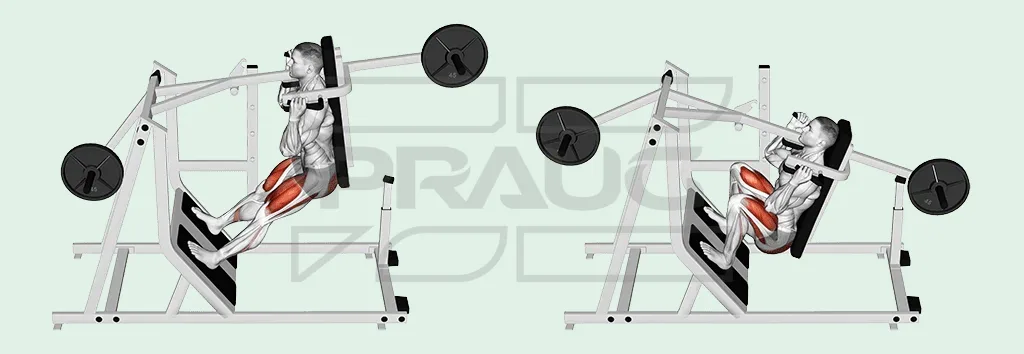
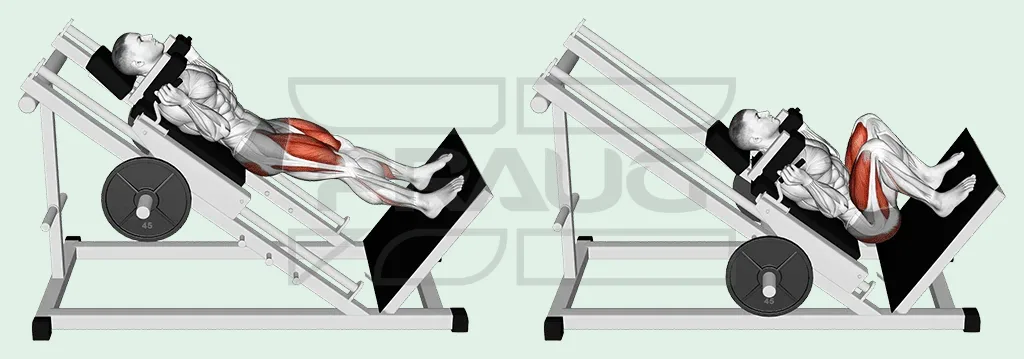
A hack squat uses a guided carriage with back and shoulder support while the hips and knees bend. Machine geometry and foot position change the task. Support does not eliminate trunk work or make any depth and load suitable.

Certified fitness coach · CQP Instructeur Fitness
Published on
The essentials before you start.
- Practise the setup, support and return before adding demand.
- Keep the intended range and movement repeatable.
- The cited outcomes apply to particular tasks and populations.
- Choose the workload within the whole week.
Exercise facts
- Main muscles
- Quadriceps
- Secondary muscles
- Gluteus maximus, Hip adductors, Hamstrings
- Equipment
- Hack squat machine
What the movement trains
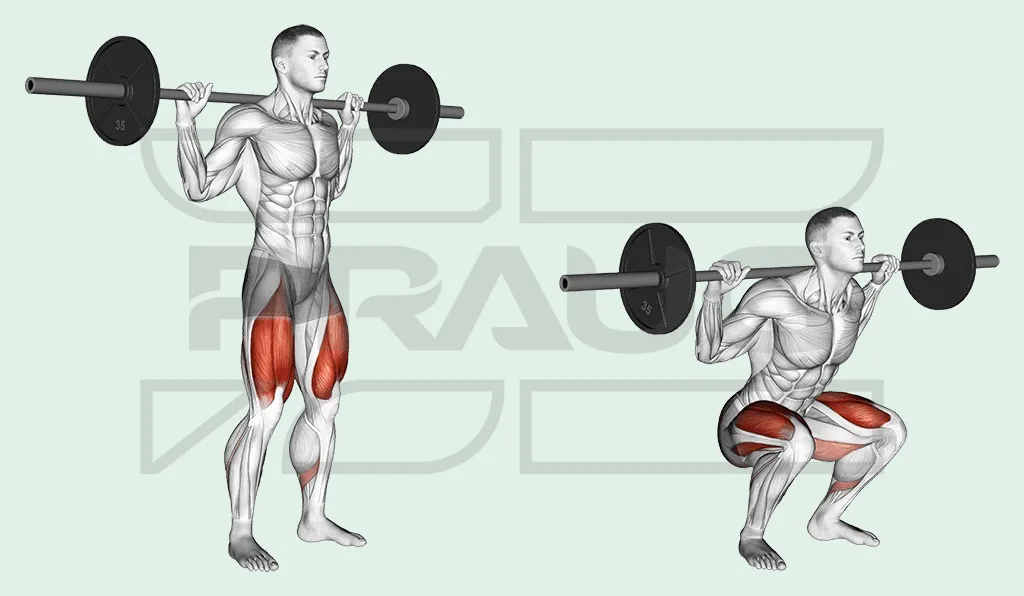
The quadriceps, gluteals and adductors contribute, with the trunk maintaining contact and position. Foot placement can change joint moments, but does not selectively turn muscle groups on and off.
Set up and perform the movement
- Check the carriage, safety stops, handles and manufacturer’s starting and return procedure.
- Choose a light load and set stops to a range you can control.
- Place the back and shoulders on their supports and feet securely on the platform.
- Release the carriage as intended and bend the hips and knees without losing foot or pelvic support.
- Press smoothly back through the chosen range without snapping the knees.
- Engage and verify the supports before leaving the machine.
Range, support and control
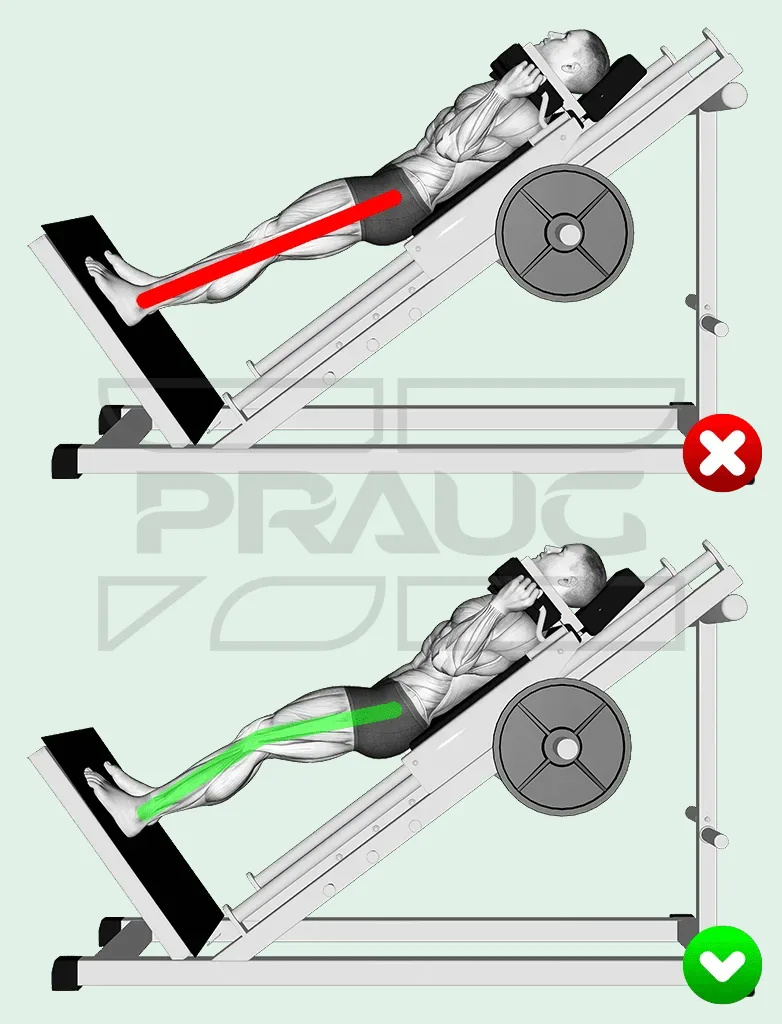
Low or high foot positions need a manageable ankle and hip range rather than a universal placement rule. Do not force the torso against the pad to reach an arbitrary depth. The illustration warns against forceful end-range locking; it is not evidence that every controlled knee extension is harmful.
What the cited research supports
The ten-man comparison measured trunk activity and loads in back and hack squats, not thigh growth. The foot-position paper used a biomechanical model of a linear-path device. Neither validates every hack design, a low-foot quadriceps-growth promise or a universal load ratio.
Variations and alternatives
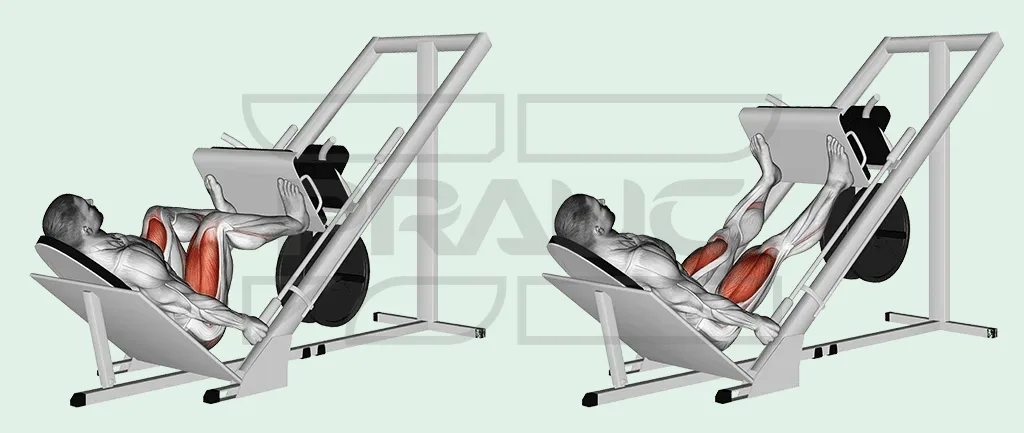
A pendulum squat follows an arc, while a belt squat applies resistance at the hips. A leg press uses a different seat and path.
Sets, progression and tracking
One example is 2–4 sets of 8–15 controlled repetitions with adequate rest. Record machine, stops, feet, depth and effort. Plate totals are not interchangeable with a barbell squat.
Illustrated positions and options
The images show example positions rather than individual depth, load or exercise-order prescriptions. Choose suitable support and a controlled finish.
Illustrated option 1
Frequently asked questions
Does a back pad mean no trunk loading?
No. Support changes the task and activity can differ, but it does not establish zero force or an individual comfort guarantee.
When should I add demand?
When the setup, range and effort are repeatable and the next change is manageable. Log changed support or assistance rather than comparing different tasks as if they were identical.
Sources and limitations
Sources support the passages that cite them. Practical suggestions are coaching choices to adapt to your own situation.
- Clark et al. · 2019 · Back versus hack squat loading and trunk activity in ten men. ↗
No thigh-muscle growth measurement or validation of every machine and plate-load ratio.
- Abelbeck · 2002 · Biomechanical model of a linear-path squat device with varied foot positions. ↗
Calculated joint moments, not observed muscle growth or validation of every hack-squat geometry.
This general information does not replace individual advice. Zepraug’s limitations.