Training· 4 min read
Isometric training: holds, force and transfer to movement
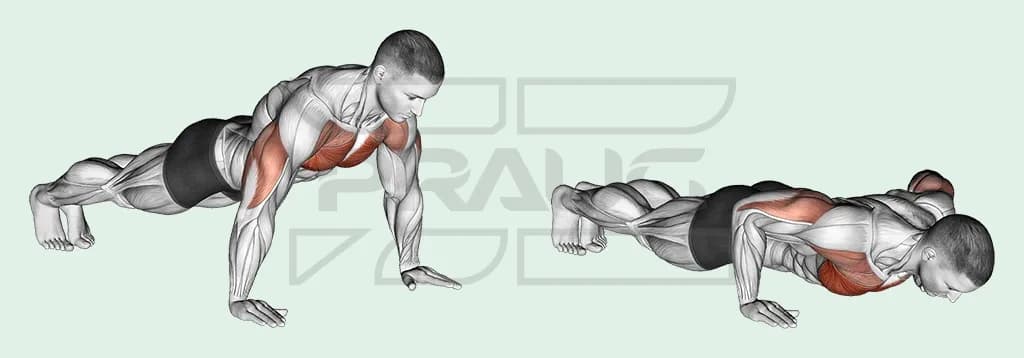
Isometric exercise produces force while holding a position with little or no visible joint movement. Internal muscle and tendon behaviour can still change. A hold, a pause inside a repetition and a maximal push against an immovable support are different tasks.

Certified fitness coach · CQP Instructeur Fitness
Published on
The essentials before you start.
- A still joint does not imply that every internal structure remains exactly unchanged.
- Joint position, support, effort and hold duration define the task.
- Maximum isometric force and a dynamic one-repetition maximum use different measures.
- Use a controlled release as well as a controlled hold.
What is held still?
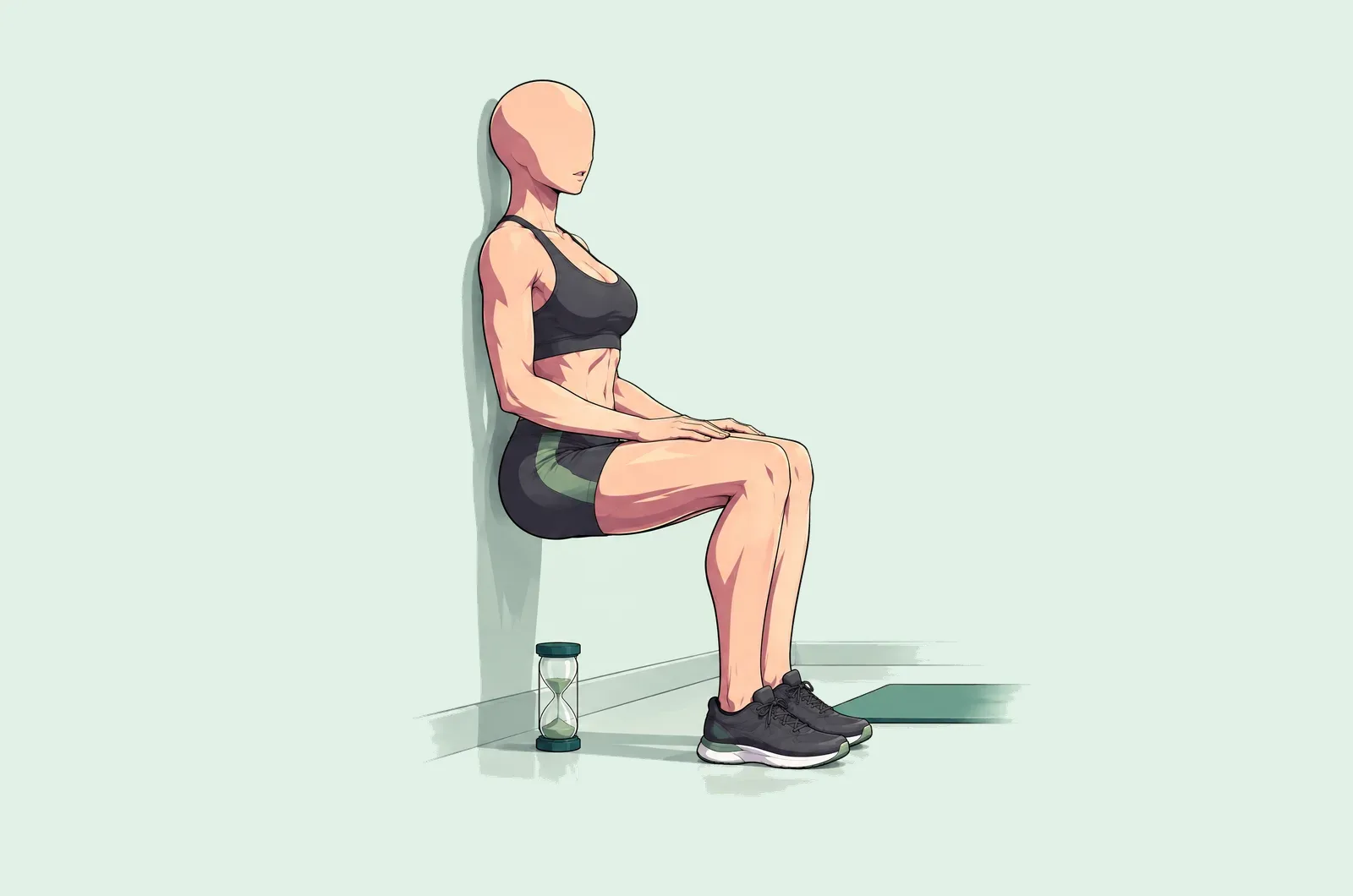
A front plank, wall sit or pause within a squat can include isometric work. A muscle can produce force without an obvious external movement, while the muscle–tendon system still permits internal length changes.
Concentric and eccentric actions describe shortening and lengthening during force production. A real exercise often combines contraction roles across different muscles; calling a plank isometric does not mean every muscle behaves identically.
Separate the different tasks
In a yielding hold, the person supports a load in a position. In an overcoming task, the person pushes or pulls against an intended immovable restraint. A paused dynamic repetition includes lowering and rising as well as the pause.
The apparatus must be designed for the direction and magnitude of force. Do not improvise an immovable restraint from unsecured furniture or a bar that can leave its supports.
What the cited research supports
The isometric review describes how position, intensity and intent can affect adaptations. The later lower-body analysis shows that changes in dynamic and isometric test performance do not map neatly onto one another.
These findings support recording the actual task. They do not validate a specific dip pause, front-lever progression, tendon-treatment dose or promise that a hold removes joint loading.
Do not transfer percentages between tests
A percentage of maximum isometric force at a measured joint position is not the same quantity as a percentage of a dynamic 1RM. The review’s discussion of high-force tendon loading cannot be turned into a rule to pause at the bottom of a dip using at least 70% of a dynamic maximum.
A longer muscle position and rapid force intent are variables studied under particular conditions. They are not instructions to force the deepest position or jerk against an unsecured support. Neither long holds nor high effort suit every purpose.
Choose a manageable hold
- Choose a familiar position with suitable support and a clear release.
- Begin with light demand and a short hold that allows breathing and control.
- Use a range that can be entered and left smoothly.
- Release the force gradually rather than collapsing out of the position.
- Rest and adjust the amount before another attempt.
Illustrative choices, not equivalent doses
For a supported practice hold, one or two sets of around five to ten seconds can be a starting example, or less where needed. A brief pause of around one to two seconds in a light familiar repetition is another choice. They are different tasks, not equal doses.
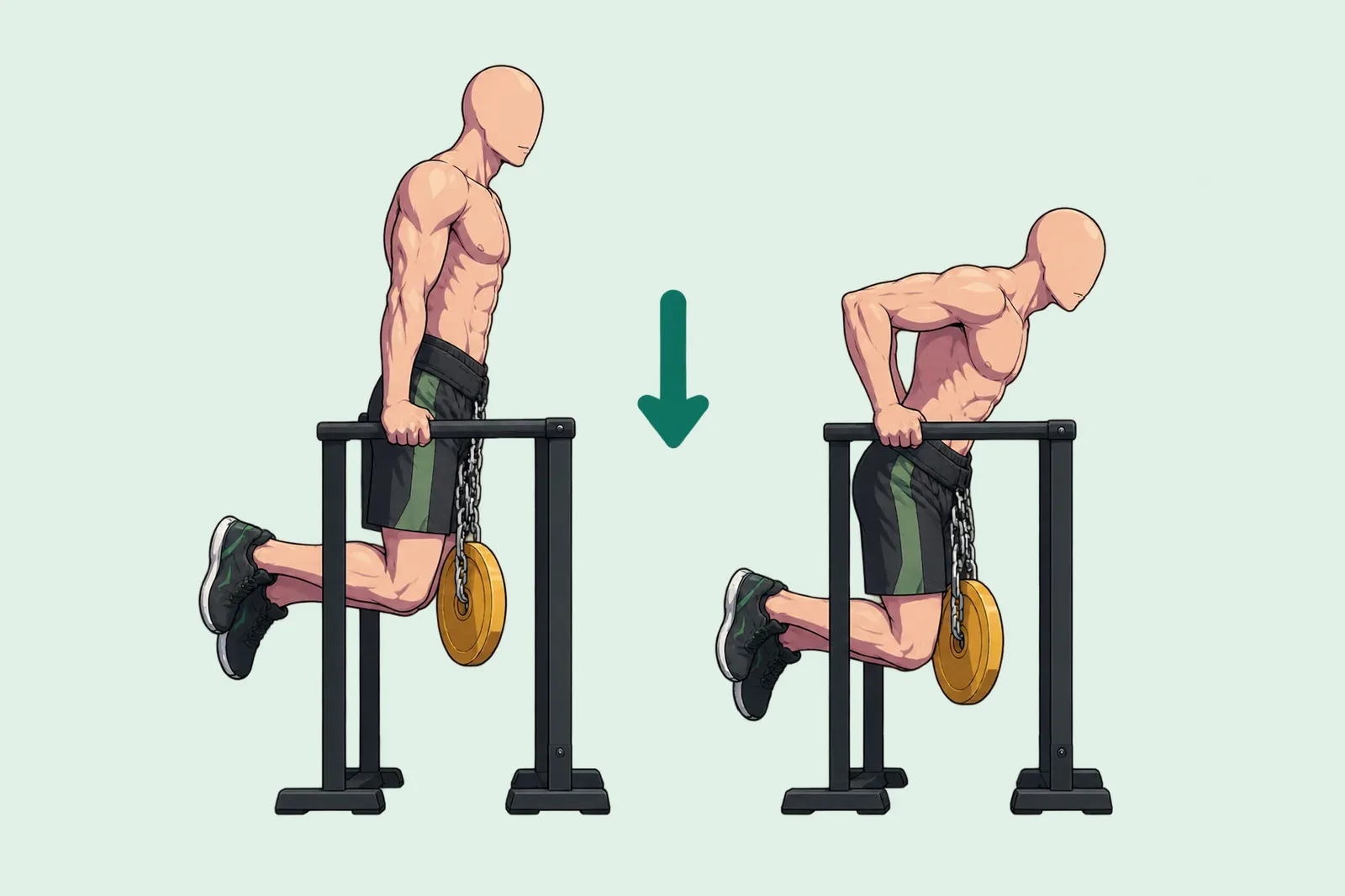
A paused squat needs a secure rack and return. A weighted dip adds demanding entry and exit handling; do not copy a heavy bottom pause simply because it appears in an illustration.
Stop for sharp pain, dizziness or loss of support. Seek appropriate individual advice for persistent symptoms or when choosing exercise around a condition.
Track more than seconds
Record position or joint-angle reference, support, external load, hold duration, effort, rest and any following movement. A longer hold achieved by changing position is a different comparison.
The RPE guide, warm-up guide and exercise collection provide related choices. Dynamic work can remain in the programme; a static goal also needs practice appropriate to that goal.
Illustrated position 1
The pictured positions are examples; use the support, range and load appropriate to the chosen task.
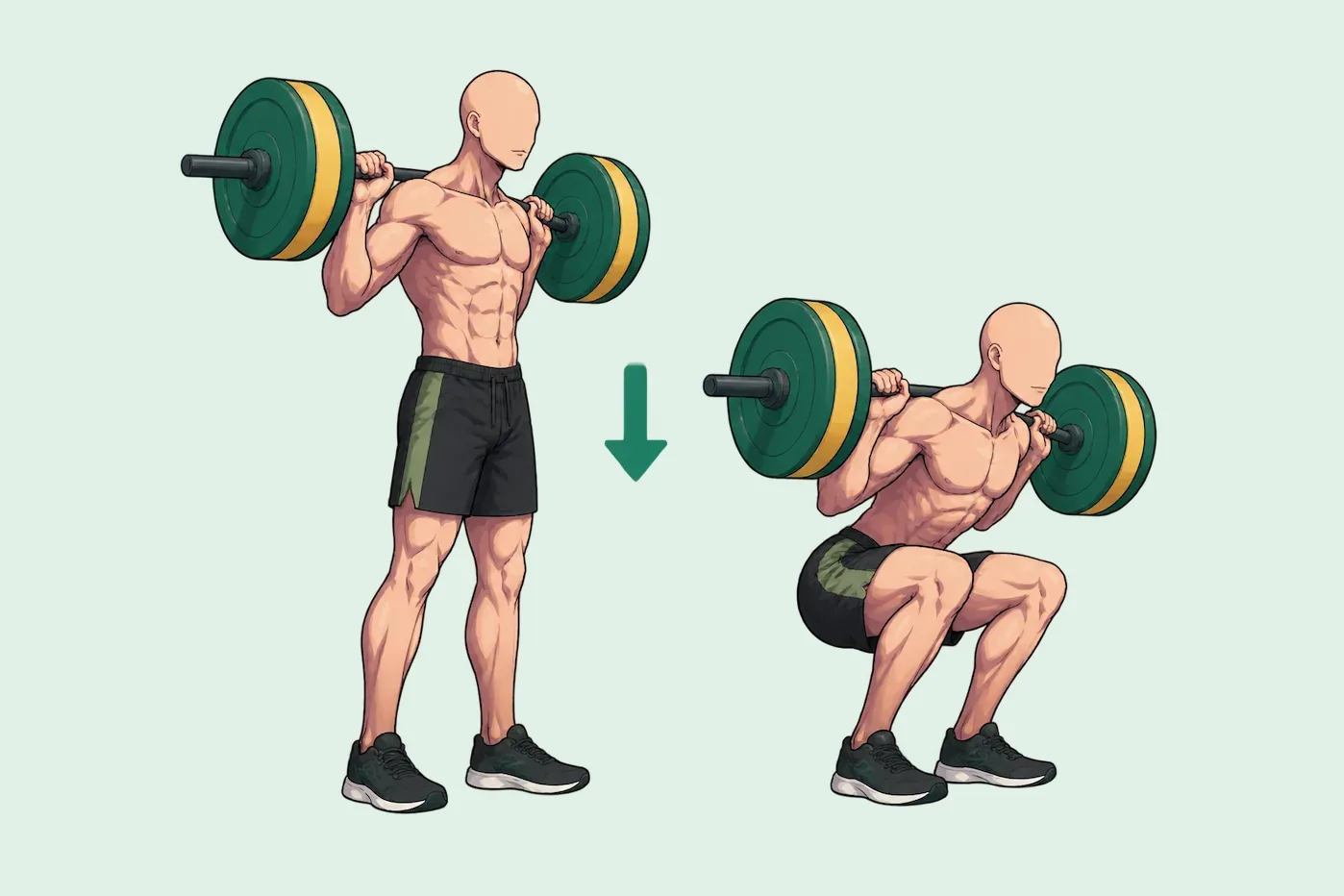
Illustrated position 2
The pictured positions are examples; use the support, range and load appropriate to the chosen task.
Frequently asked questions
Does isometric mean that nothing inside the muscle changes?
No. The visible position can stay still while internal muscle and tendon behaviour changes. It is a useful task description rather than a claim that every structure has a fixed length.
Is 70% of a squat 1RM the same as 70% maximum isometric force?
No. They are different measurements. A percentage from one test does not automatically prescribe the load for another task.
Can isometric training build strength or muscle?
The cited research reports adaptations under particular protocols. Position, amount and testing method matter, and no single hold guarantees the same result for everyone.
Sources and limitations
Sources support the passages that cite them. Practical suggestions are coaching choices to adapt to your own situation.
- Oranchuk et al. · 2019 · Adaptations to isometric training ↗
Twenty-six research outputs considered length, intensity and intent. Isometric force percentages are not interchangeable with percentages of a dynamic lift maximum.
- James et al. · 2024 · Changes in dynamic and isometric strength tests ↗
Eleven studies compared lower-body strength changes; limited proportionality between tests. Not a trial of paused dips or handstand progression.
This general information does not replace individual advice. Zepraug’s limitations.