Training· 4 min read
A history of strength training: physical culture and progressive resistance
Strength training has no single inventor. Historical lifting traditions, physical culture, physique competitions and clinical resistance exercise developed in different settings. A useful history distinguishes documented records from legends and later coaching interpretations.

Certified fitness coach · CQP Instructeur Fitness
Published on
The essentials before you start.
- Ancient jumping weights are documented objects, not proof of a modern bodybuilding programme.
- Physical culture and judging physiques developed alongside tests of lifting strength.
- DeLorme’s rehabilitation work began in 1945 and its three-set protocol was refined by 1948.
- Progressive training does not require adding weight every session.
Ancient objects and later legends
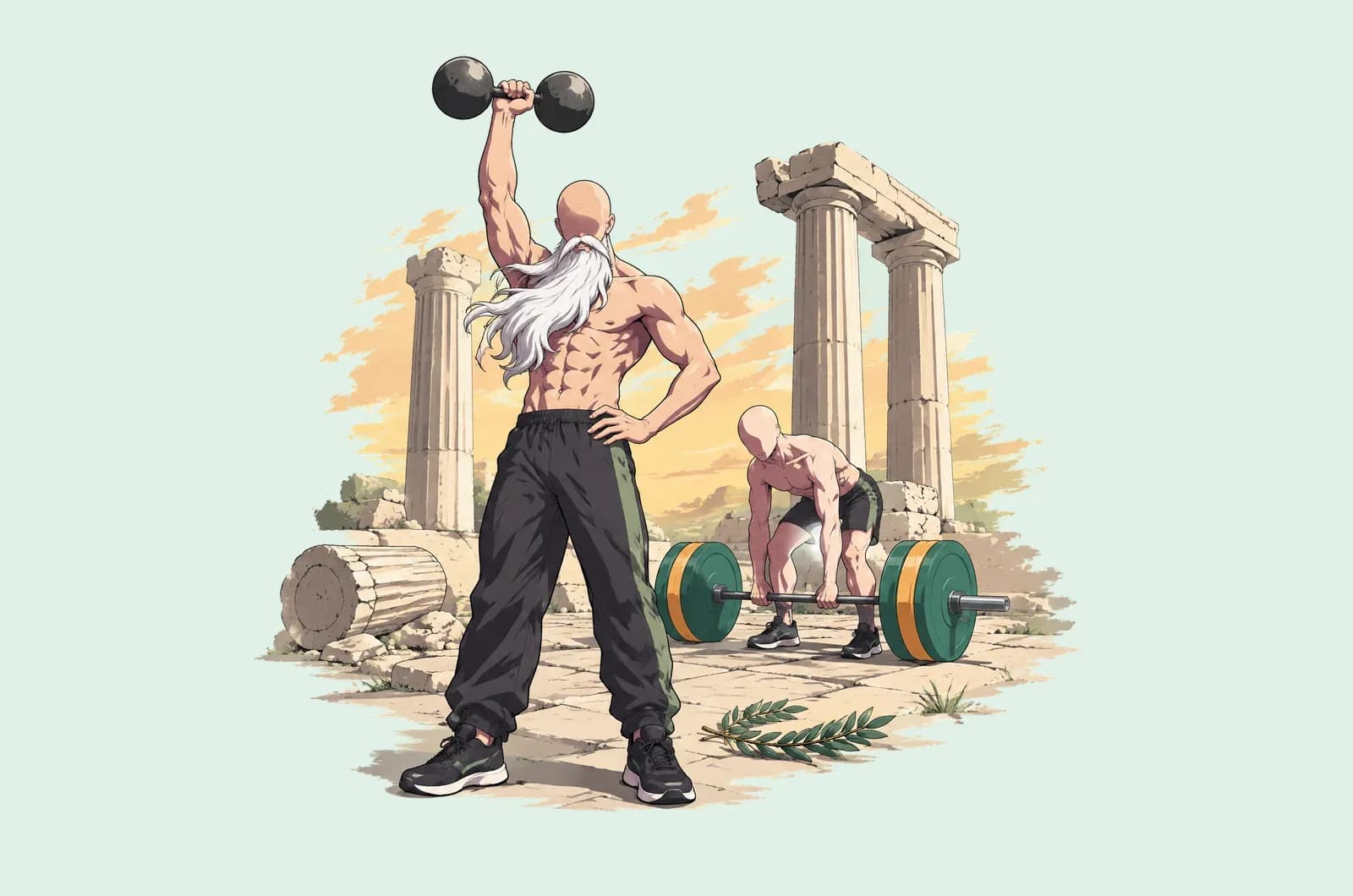
Greek halteres were handheld jumping weights. The Greek Ministry of Culture describes an inscribed surviving example associated with the long jump. Such objects document a practice; they do not make ancient sport identical to a modern gym routine.
The familiar story of Milo carrying a growing calf is a legend used to illustrate increasing demand. It should not be presented as a verified training log or evidence that one person invented progressive resistance. Nor does the survival of Greek records establish that strength practice began in only one culture.
Exercise as a subject of study
Renaissance writers revisited earlier accounts of bodily exercise. The US National Library of Medicine catalogue records the first edition of Girolamo Mercuriale’s gymnastics work in 1569 and a later illustrated edition.
These historical texts belong to their own medical and social setting. Describing them does not endorse their health advice or make modern exercise research a direct continuation of every older claim.
Gymnastics, strongmen and judging physiques
Gymnastics, commercial physical culture and strongman performance helped make organised strength practice visible in the nineteenth century. Different events tested different abilities, and physical appearance became a separate focus of promotion and judging.
Weightlifting appeared at Athens in 1896, as documented in the International Weightlifting Federation’s historical account. Its early equipment and judging differed from today’s sport.
Eugen Sandow’s 1901 Great Competition in London is an important physique-contest landmark. It is one documented event in a wider physical-culture history, rather than proof that exercise or body shaping began that year. The Royal Albert Hall archive records the event.
DeLorme and clinical progressive resistance
The cited historical paper describes Thomas DeLorme’s work with injured servicemen beginning in 1945. By 1948, he had refined a protocol of three increasingly heavy sets of ten; a 1951 book helped disseminate the approach.
There are two related but different ideas here: using progressively heavier sets within a session, and changing training demand over time. DeLorme contributed to formalising and legitimising resistance exercise in rehabilitation; he did not invent every earlier form of lifting.
The original hospital setting also matters. Its protocol is historical context, not a rehabilitation prescription for a reader with an injury.
Different goals and more ways to train
Bodybuilding developed physique judging, while weightlifting, powerlifting and other strength sports developed their own movement standards. The Olympia organisation describes its title as dating from 1965. Equipment, magazines, coaching and film all helped shape how muscular bodies were presented.
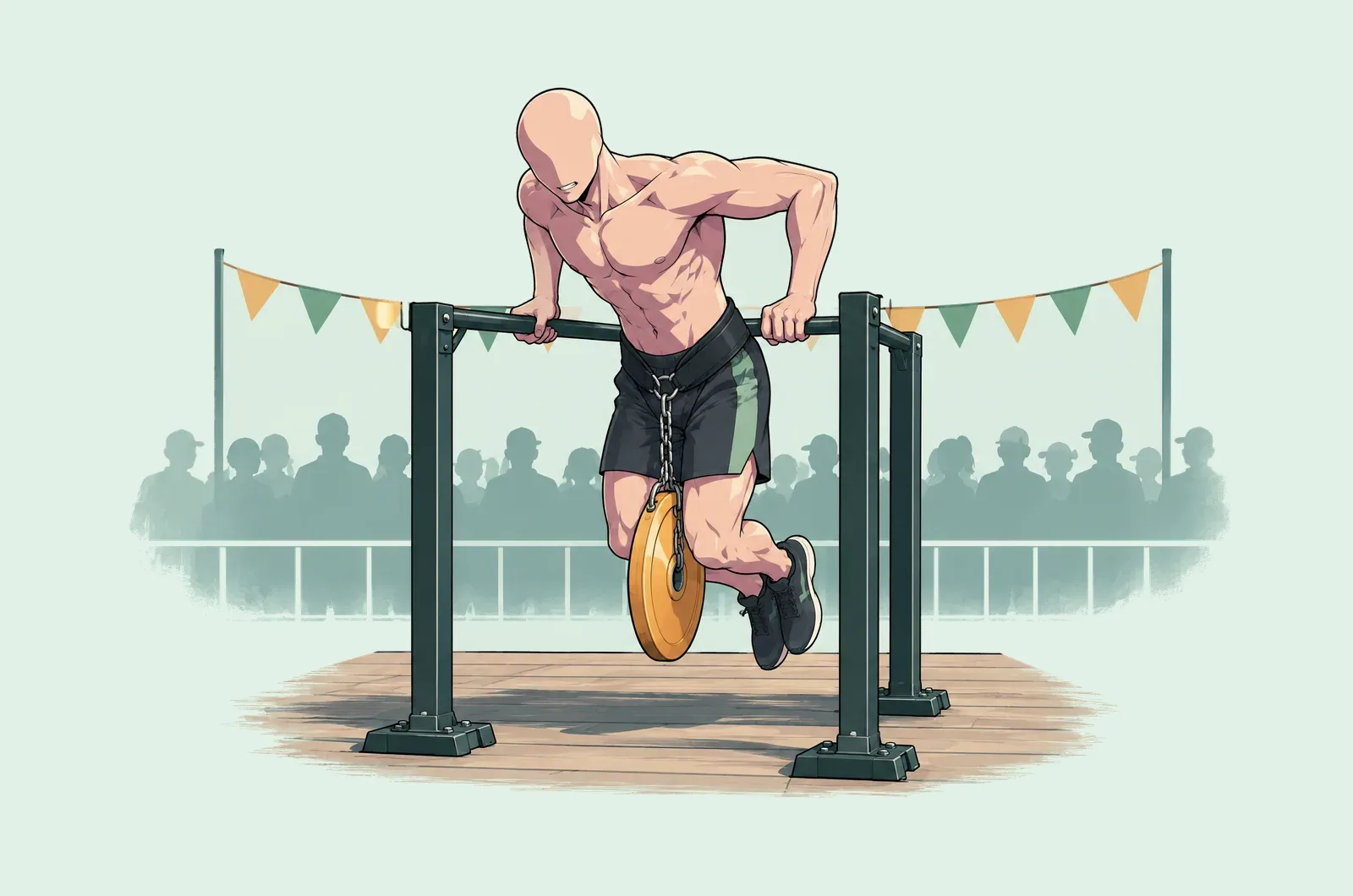
Modern resistance exercise includes machines, free weights, bodyweight work and kettlebells. The streetlifting guide shows how weighted calisthenics can use different competition formats. The isometric guide explains another way to define the task.
Current WHO physical-activity guidance places strengthening within a broader health context. A health guideline, a competitive total and a physique contest are different goals.
What the history can usefully teach
Historical variety is a reason to define the goal and task clearly. The exercise collection and training programmes organise present-day choices without requiring a heroic story or one supposedly original method.
Progress can involve more repeatable repetitions, a changed range, altered support or a manageable load increase. It does not require forcing a weight increase every session. Recording the actual setup makes a comparison more useful than copying a historical routine.
This is a selective overview. The linked records support specific milestones; they are not an exhaustive history of every country, community, woman or man who trained for strength.
Frequently asked questions
Who invented strength training?
There is no single documented inventor. DeLorme’s contribution concerns a particular clinical development, not the origin of every lifting tradition.
Were ancient halteres modern dumbbells?
They were handheld weights notably associated with jumping. A surviving object does not establish an equivalent modern exercise programme.
Was DeLorme’s three-set protocol already fixed in 1945?
The cited account distinguishes work beginning in 1945 from the three-set refinement by 1948.
Must progressive overload mean adding weight every week?
No. Define the task and make changes that can be controlled and repeated. A calendar alone does not establish readiness.
Sources and limitations
Sources support the passages that cite them. Practical suggestions are coaching choices to adapt to your own situation.
- Todd et al. · 2012 · Thomas DeLorme and progressive resistance exercise ↗
Historical account of rehabilitation work beginning in 1945, a refined three-set protocol by 1948 and a 1951 book; not a history of every culture.
- Greek Ministry of Culture · collection record · An inscribed ancient jumping weight ↗
A surviving halter and its long-jump context; not evidence of a modern bodybuilding routine.
- US National Library of Medicine · catalogue · Mercuriale gymnastics editions ↗
Catalogue records first publication in 1569 and a later illustrated edition; not an endorsement of historical medical advice.
- International Weightlifting Federation · 2025 · Weightlifting at Athens in 1896 ↗
Federation historical account of early Olympic events; distinct from the sport’s present rules.
- Royal Albert Hall · performance archive · Sandow’s 1901 competition ↗
Archive record for a specific physique-contest milestone; not proof that all strength practice began there.
- Olympia · historical context · The title’s history from 1965 ↗
Organiser account of the title’s starting year; no claim about current winners or event dates.
- World Health Organization · physical activity · Strengthening within broader activity guidance ↗
Public-health context, not a competitive or individual rehabilitation prescription.
This general information does not replace individual advice. Zepraug’s limitations.