Training· 3 min read
Leg-press calf raise: setup, technique and progression
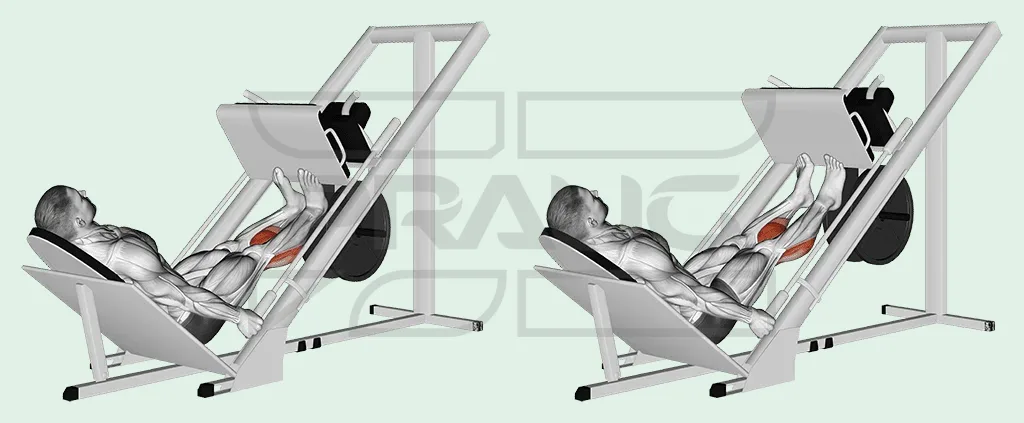
A leg-press calf raise moves the load mainly through ankle movement while the back and pelvis are supported. Use only a machine and foot arrangement intended for calf work. Secure forefoot contact and a controlled return matter more than a large stack.

Certified fitness coach · CQP Instructeur Fitness
Published on
The essentials before you start.
- Practise the setup, support and return before adding demand.
- Keep the intended range and movement repeatable.
- The cited outcomes apply to particular tasks and populations.
- Choose the workload within the whole week.
Exercise facts
- Main muscles
- Gastrocnemius
- Secondary muscles
- Soleus, Tibialis posterior, Toe flexors
- Equipment
- Leg press expressly suitable for calf raises
What the movement trains
The gastrocnemius and soleus contribute to plantarflexion. Knee position changes the task, while the thighs and trunk maintain support. A backrest does not establish zero spinal force.
Set up and perform the movement
- Check that the machine permits calf raises and learn the safety-stop and return sequence with a light load.
- Adjust the seat so the back and pelvis remain supported through the chosen range.
- Place enough of the forefoot securely on the designated surface; do not balance on the toe tips or an unsuitable edge.
- Use the intended start and safety release, keeping knee position reasonably repeatable.
- Lower the heels only through a controlled ankle range, then raise smoothly without bouncing or pushing with the knees.
- Return and secure the load before moving the feet or leaving the machine.
Range, support and control
Full range means the chosen controllable range, not the deepest possible heel drop. Foot angles should not be forced against knee alignment. A single-leg version needs a separately manageable load and safe return.
What the cited research supports
The eight-week trial in forty-two women used a horizontal leg press. Longer-length partials produced greater medial gastrocnemius thickening than full range; the lateral comparison with full range was not clearly different. The foot-orientation trial was also on a horizontal leg press. Neither ranks every press machine or requires abandoning full range.
Variations and alternatives
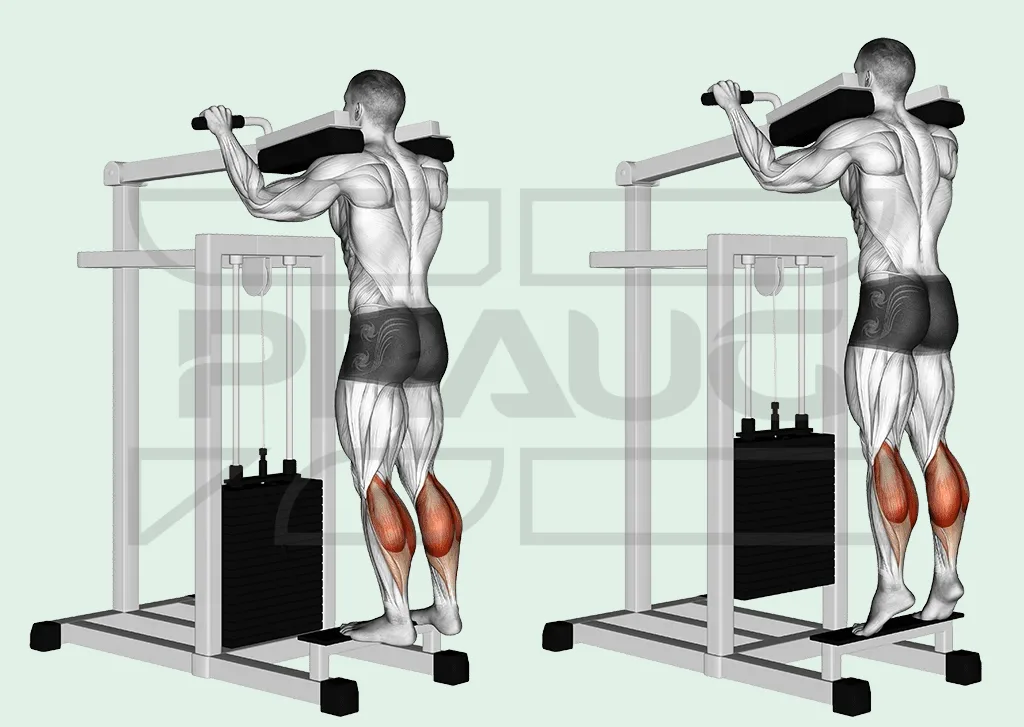
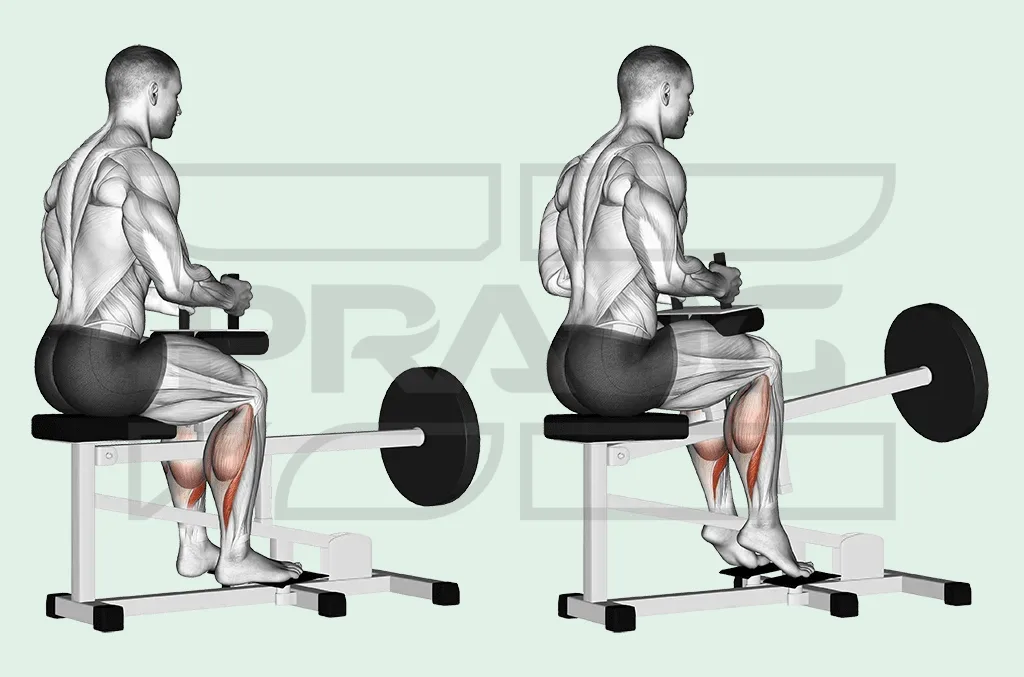
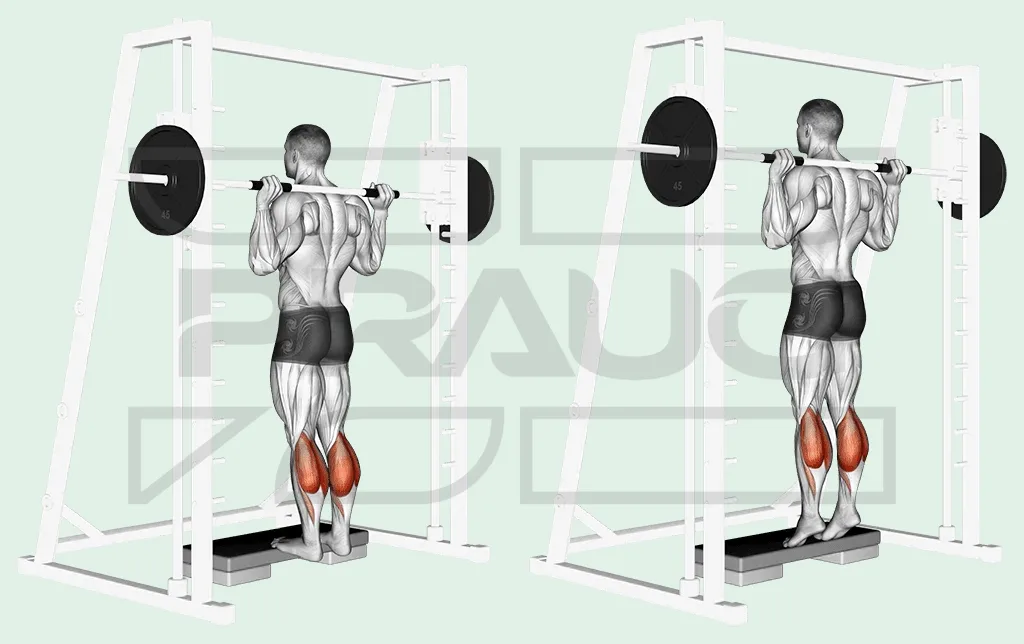
A standing machine raise, seated raise or supported step raise changes support and loading.
Sets, progression and tracking
An example is 2–4 sets of 10–20 controlled repetitions. Rest enough to retain foot contact and the same ankle range. Record press type, knee position, range, foot support, load and effort.
Frequently asked questions
Should I place only my toes on the edge?
No. Use sufficient secure forefoot support in a setup the machine permits. A small contact area is not a target, and safety stops do not prevent every foot slip.
When should I add demand?
When the setup, range and effort are repeatable and the next change is manageable. Log changed support or assistance rather than comparing different tasks as if they were identical.
Sources and limitations
Sources support the passages that cite them. Practical suggestions are coaching choices to adapt to your own situation.
- Kassiano et al. · 2023 · Eight-week horizontal leg-press calf-range trial in forty-two young women. ↗
Longer-length partials favoured medial growth over full range; lateral change was not clearly different from full range. Not every machine or bodyweight variant.
- Nunes et al. · 2020 · Nine-week foot-orientation calf trial in twenty-two young men on a horizontal leg press. ↗
Muscle-head thickness differences in a specific setup; not a universal Smith, step or forced-foot-angle prescription.
This general information does not replace individual advice. Zepraug’s limitations.