Training· 3 min read
Smith machine calf raise: setup, technique and progression
A Smith machine calf raise uses a guided bar on the upper back while the ankles raise and lower the body. Rail angle and locking mechanisms differ between machines. Guidance does not remove the need for balance, suitable foot support and a practised rerack.

Certified fitness coach · CQP Instructeur Fitness
Published on
The essentials before you start.
- Practise the setup, support and return before adding demand.
- Keep the intended range and movement repeatable.
- The cited outcomes apply to particular tasks and populations.
- Choose the workload within the whole week.
Exercise facts
- Main muscles
- Gastrocnemius
- Secondary muscles
- Soleus, Tibialis posterior, Toe flexors
- Equipment
- Smith machine with suitable hooks and stops, Secured load-rated exercise platform
What the movement trains
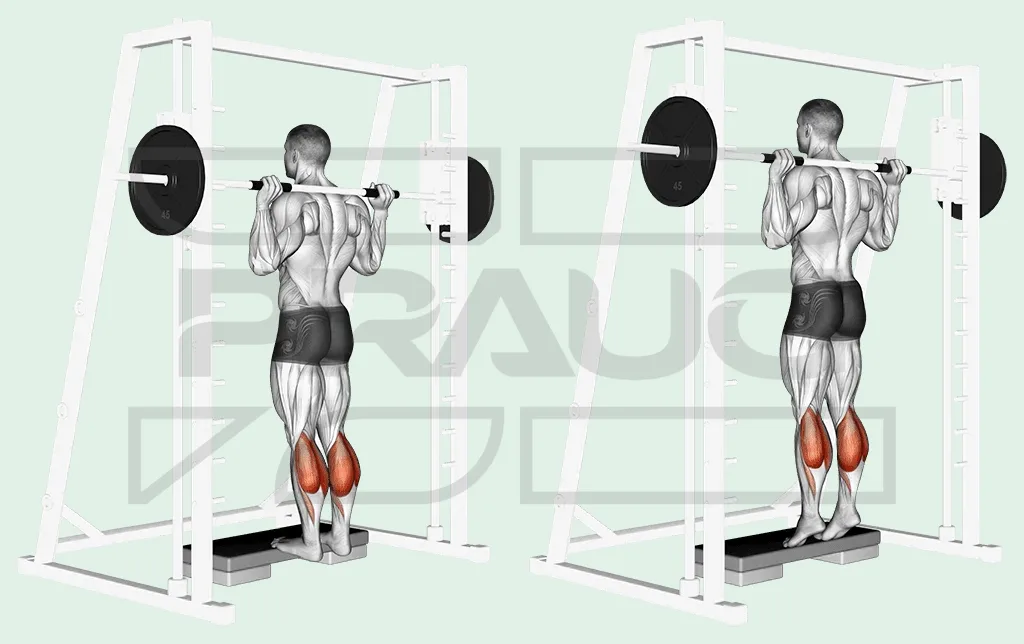
The gastrocnemius and soleus contribute to ankle plantarflexion while the knees and trunk support the bar. The bar is still an external load; this is not a no-spinal-load exercise.
Set up and perform the movement
- Check the rails, hooks and safety stops. Practise the release and rerack with a light bar first.
- If using heel clearance, choose a stable platform designed for the load and secured against sliding; do not use loose plates or books.
- Set the bar on the upper back, clear of the neck, and choose a stance compatible with the actual rail path.
- Keep secure forefoot contact and a controlled knee position before releasing the hooks.
- Lower and raise through a manageable ankle range without bouncing or driving with the knees.
- Rerack securely and verify engagement before stepping off the platform.
Range, support and control
Not every Smith machine moves vertically. More heel drop, a single-leg stance or drop sets are optional changes with separate handling needs. Do not train to a point where a secure rerack becomes uncertain.
What the cited research supports
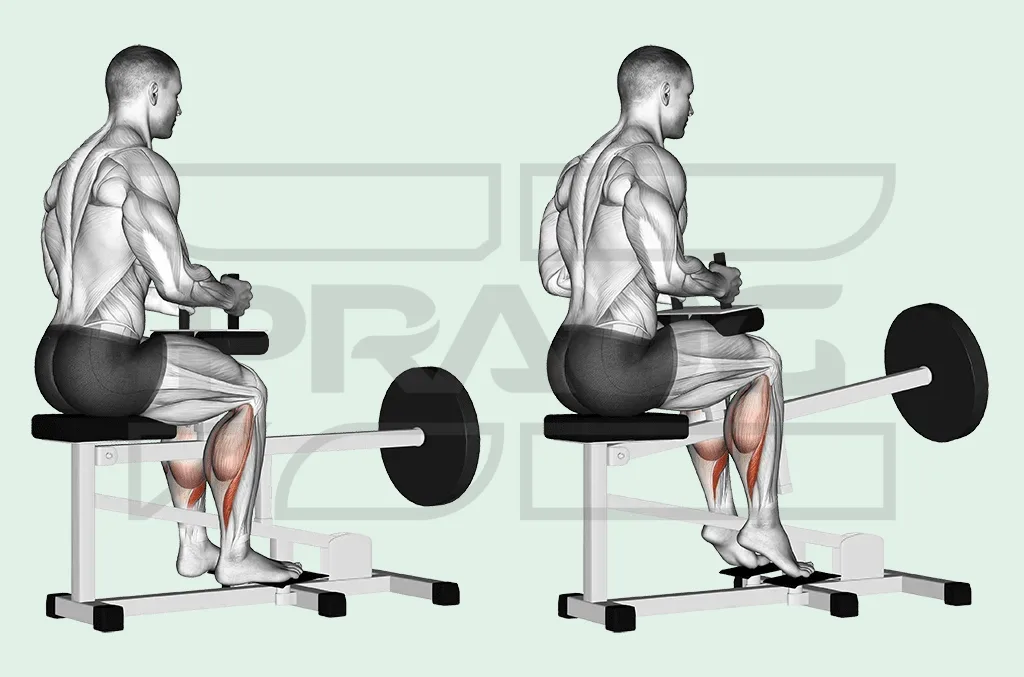
The standing-versus-seated growth trial did not directly compare this Smith setup. The foot-angle trial used a horizontal leg press. Their results do not prove an ideal Smith stance, universal safety under heavy load or a need to twist the toes.
Variations and alternatives
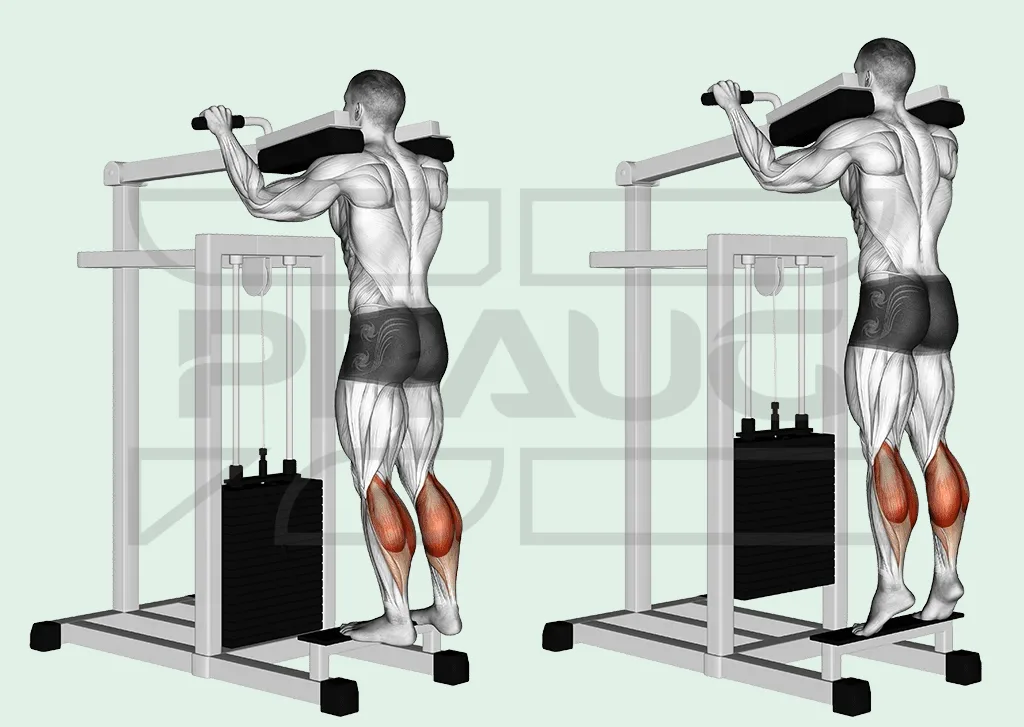
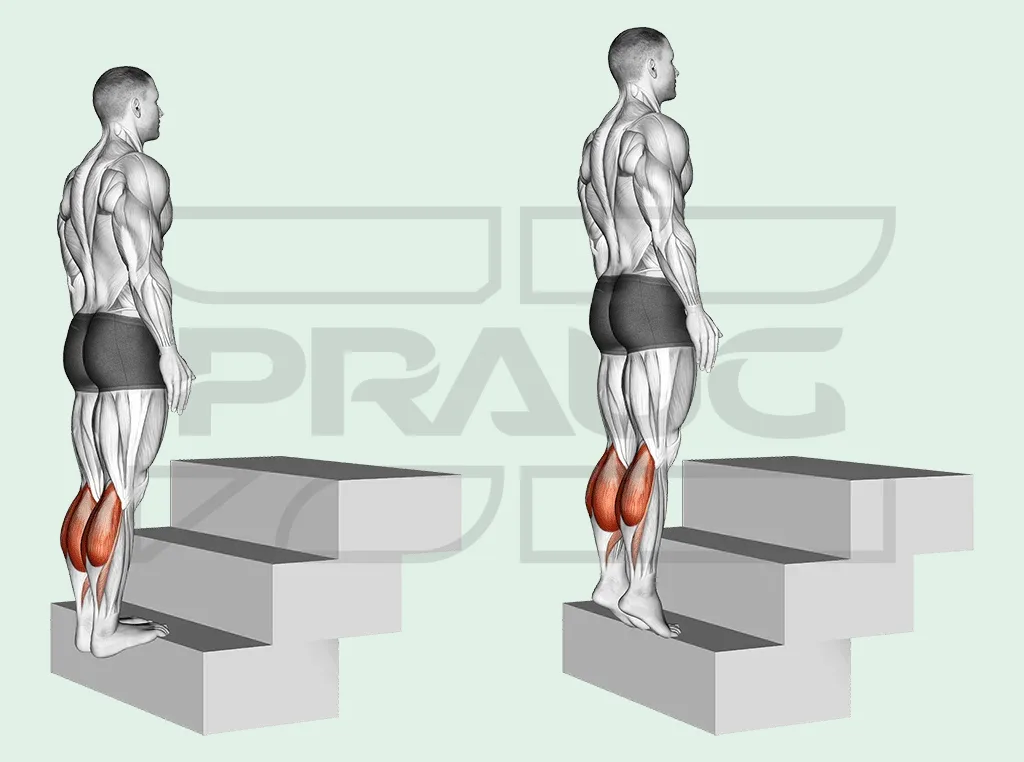
A standing calf machine provides different supports. A step raise can use less external load but still needs secure balance.
Sets, progression and tracking
One adjustable example is 2–4 sets of 10–15 repetitions with adequate rest and reserve for reracking. Record machine, rail angle, foot support, knee position, range and load.
Frequently asked questions
Are the rails always vertical?
No. Machine designs differ. Set up for the actual path and practise the locking method rather than copying a fixed foot position.
When should I add demand?
When the setup, range and effort are repeatable and the next change is manageable. Log changed support or assistance rather than comparing different tasks as if they were identical.
Sources and limitations
Sources support the passages that cite them. Practical suggestions are coaching choices to adapt to your own situation.
- Kinoshita et al. · 2023 · Twelve-week standing versus seated calf-raise trial in fourteen untrained adults, measured by MRI. ↗
Standing favoured gastrocnemius and total growth; soleus changes were similar. No required combined routine or universal dose tested.
- Nunes et al. · 2020 · Nine-week foot-orientation calf trial in twenty-two young men on a horizontal leg press. ↗
Muscle-head thickness differences in a specific setup; not a universal Smith, step or forced-foot-angle prescription.
This general information does not replace individual advice. Zepraug’s limitations.