Training· 3 min read
Supported step calf raise: setup, technique and progression
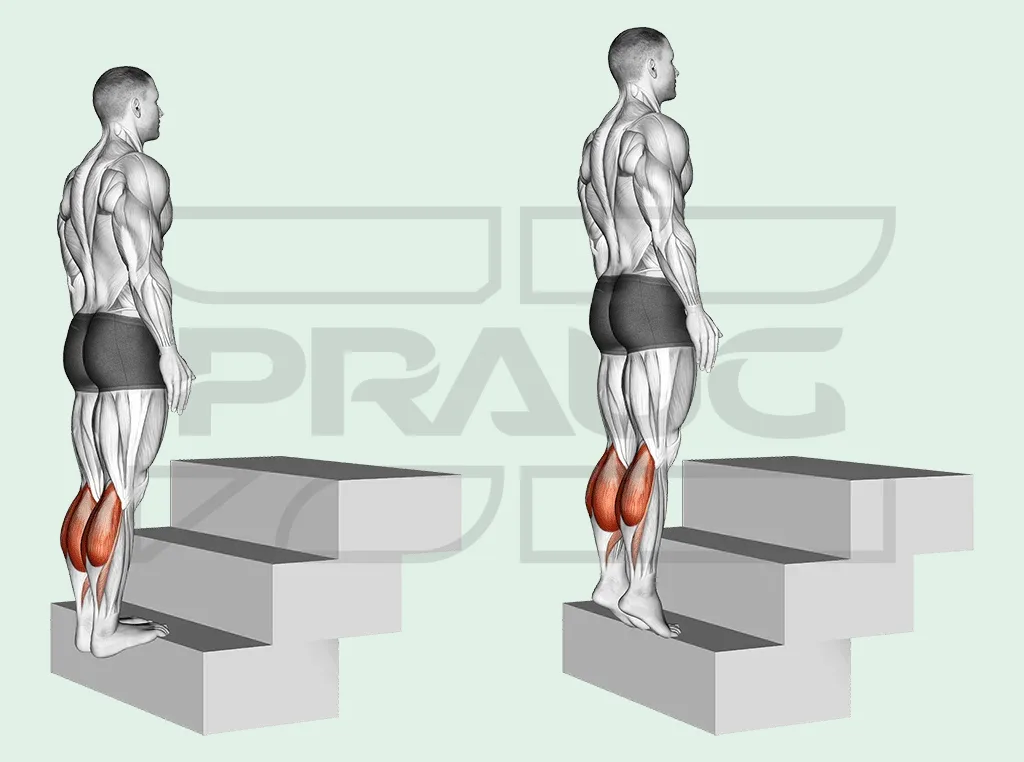
A supported step calf raise raises and lowers the heels with the forefeet on a suitable step. A floor version can use less heel drop. Neither a single-leg version nor added weight is a required progression.

Certified fitness coach · CQP Instructeur Fitness
Published on
The essentials before you start.
- Practise the setup, support and return before adding demand.
- Keep the intended range and movement repeatable.
- The cited outcomes apply to particular tasks and populations.
- Choose the workload within the whole week.
Exercise facts
- Main muscles
- Gastrocnemius
- Secondary muscles
- Soleus, Tibialis posterior, Toe flexors
- Equipment
- Bodyweight, Fixed non-slip step and secure hand support
What the movement trains
The calf muscles plantarflex the ankle while the hands, trunk and legs help maintain support. Moving from two legs to one changes the task, but does not guarantee an exact doubling of muscle load.
Set up and perform the movement
- Use a fixed non-slip step or exercise platform with secure hand support and a clear exit. Avoid loose books or unstable edges.
- Place sufficient forefoot contact on the support, with the heels free only if appropriate.
- Keep a manageable knee and torso position, using hand assistance as needed and recording it.
- Lower through a controlled ankle range rather than chasing the deepest stretch.
- Raise smoothly without bouncing or losing foot contact.
- Return to secure foot support before releasing the handhold.
Range, support and control
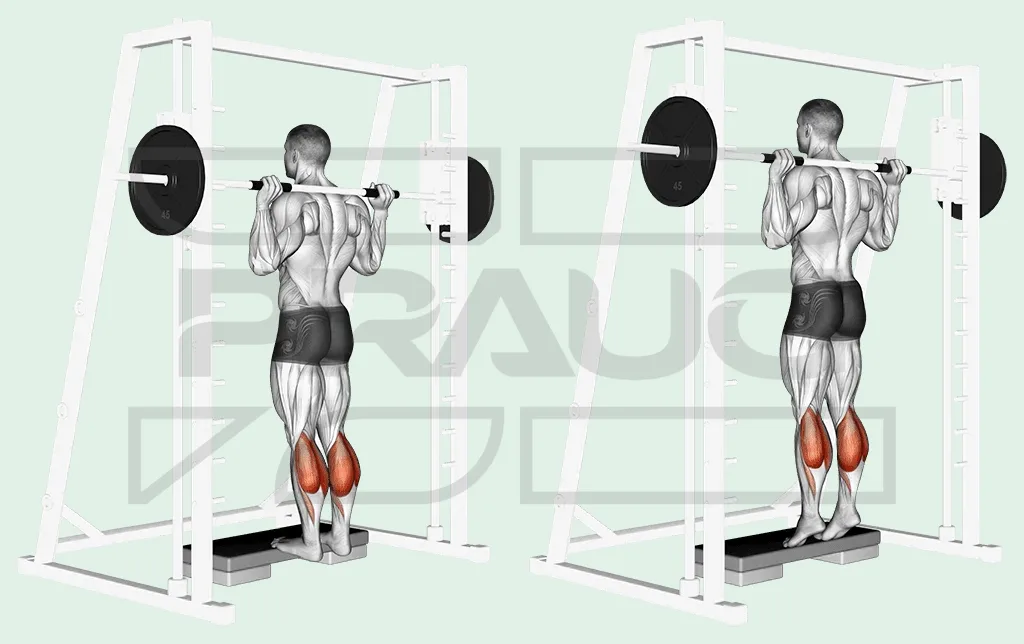
Practise a floor version or smaller range if balance or heel clearance is unsuitable. A weighted vest or other secure added load changes handling; a shifting backpack is not an automatic substitute for a machine. Single-leg work requires its own range and support.
What the cited research supports
The acute knee-angle study used unilateral heel raises; the longer-length growth trial used a horizontal leg press. Neither establishes identical machine and stair outcomes, a twenty-repetition threshold or a requirement to add household loads.
Variations and alternatives
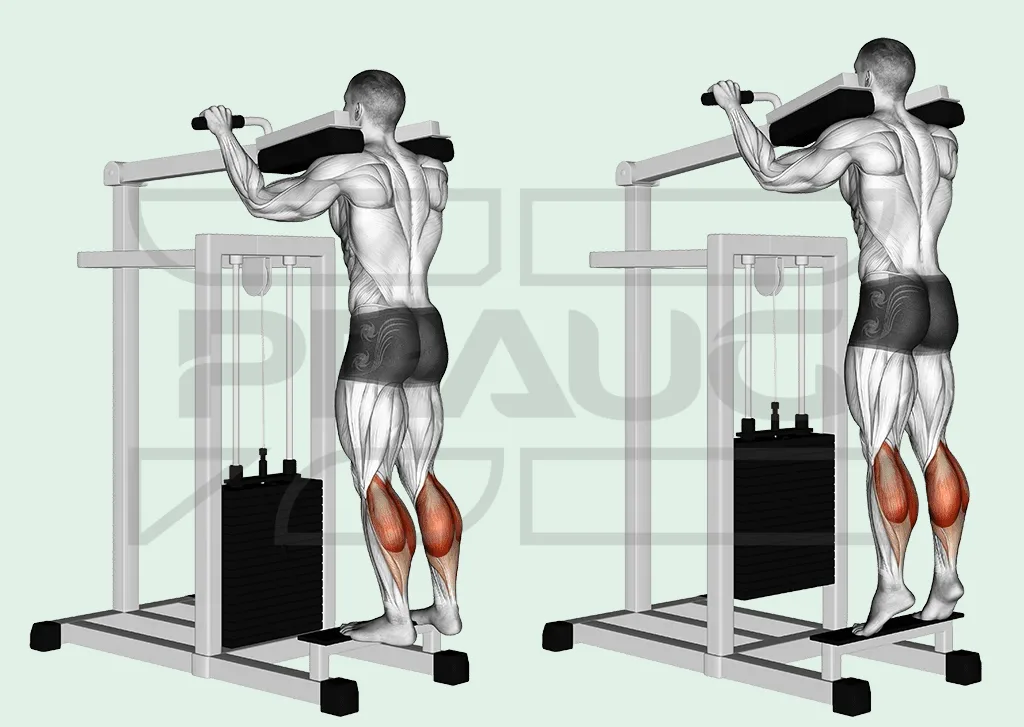
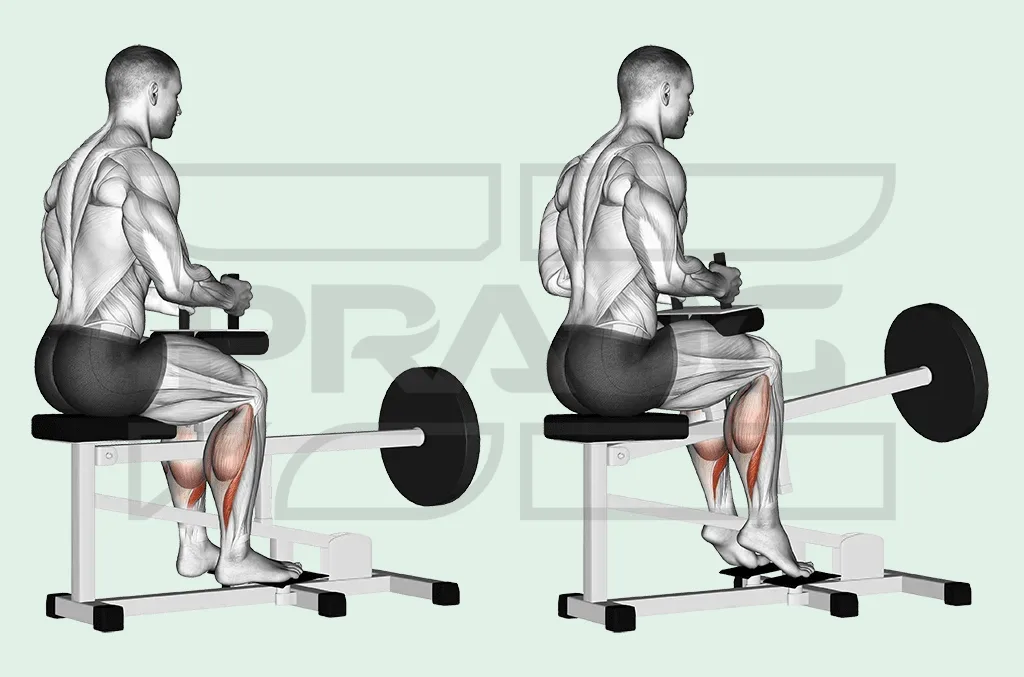
A standing machine raise changes loading and support. A seated raise changes knee position. These are choices rather than a fixed ladder.
Sets, progression and tracking
An example is 2–3 sets of 10–20 controlled repetitions. For one-leg work, three sets per side gives each side three sets. Record step height, hand help, ankle range, knee position and effort.
Frequently asked questions
Must I use a step for every repetition?
No. A floor version is a deliberate range choice. Use a support that is stable and retain control rather than a required heel depth.
When should I add demand?
When the setup, range and effort are repeatable and the next change is manageable. Log changed support or assistance rather than comparing different tasks as if they were identical.
Sources and limitations
Sources support the passages that cite them. Practical suggestions are coaching choices to adapt to your own situation.
- Hébert-Losier et al. · 2012 · Acute unilateral heel raises at two knee angles in forty-eight healthy adults. ↗
Modest activity differences, not complete muscle isolation, later growth or an individual rehabilitation outcome.
- Kassiano et al. · 2023 · Eight-week horizontal leg-press calf-range trial in forty-two young women. ↗
Longer-length partials favoured medial growth over full range; lateral change was not clearly different from full range. Not every machine or bodyweight variant.
This general information does not replace individual advice. Zepraug’s limitations.